Photo: Wikipedia
Strategic Assessment of Wahiawa, HI
Meaningful friction. Expect exposure to either population pressure, blast zones, or natural disaster risk. Consider buying a retreat property.
What does the Strategic Assessment tell us?
Our Strategic Assessment grades tactical survivability of an area. Major population centers, military targets, fallout zones, natural disasters, and border exposure all drive risk — lower exposure means a more defensible position in a crisis.
This is heavily inspired by Joel Skousen's Strategic Relocation book. Highly recommended you checkout the book ($)What does this tell us?
Our Strategic Assessment grades tactical survivability of an area. Major population centers, military targets, fallout zones, natural disasters, and border exposure all drive risk — lower exposure means a more defensible position in a crisis.
This is heavily inspired by Joel Skousen's Strategic Relocation book. Highly recommended you checkout the book ($)Strategic Pillars

Key Distances
Regional Safe Places
Below is our recommended "safe zones" in Hawaii and the surrounding area based on our strategic heuristics. For most people, it's unrealistic to live in a “safe zone” full-time due to work, family or other personal reasons. They tend to be more rural. However, many of these areas are perfect for second homes and retreat properties that double as a vacation home or even a short-term rental.

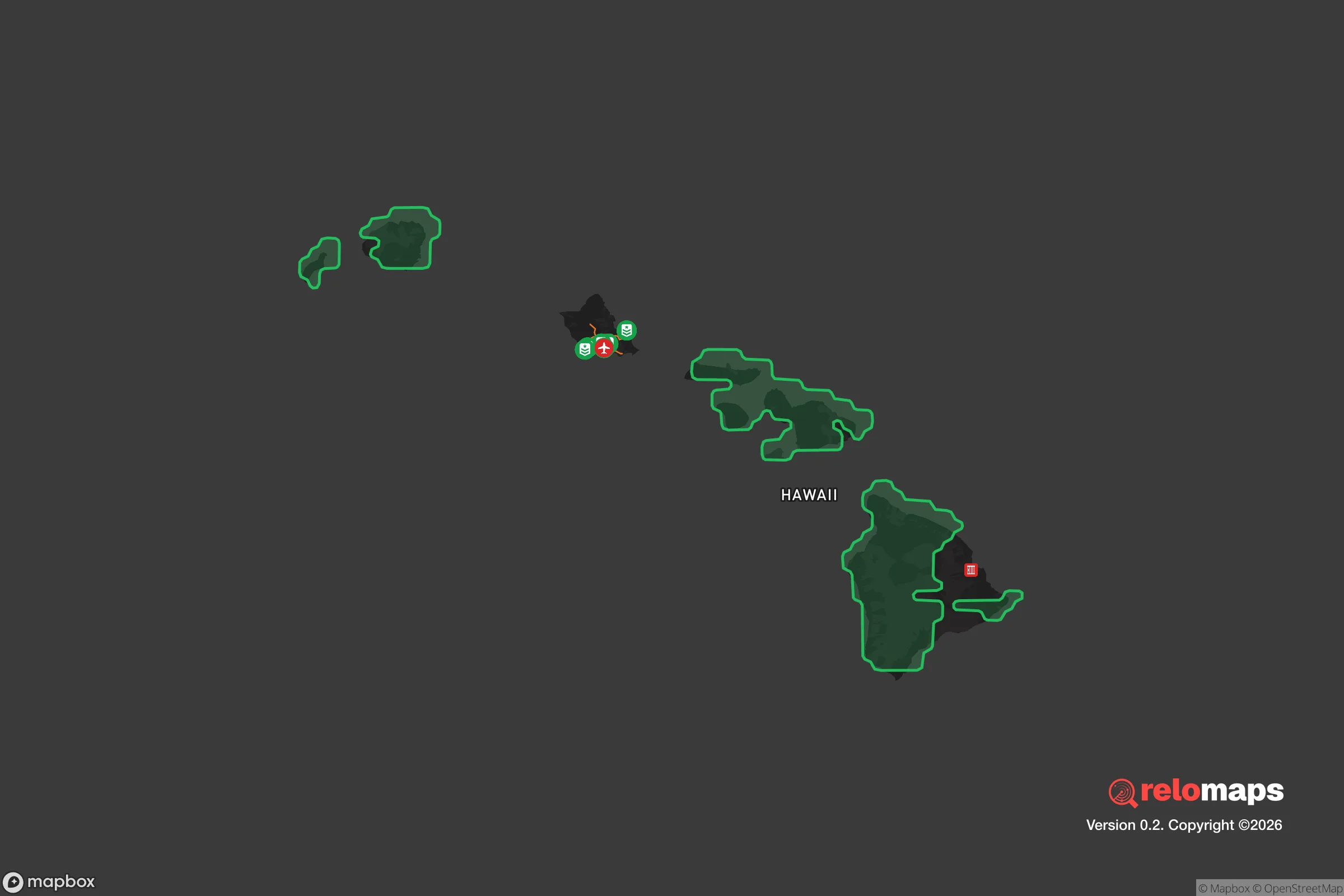


Important Note: For informational purposes only. This does not mean nothing bad ever happens in the green zones. Please use common sense. This is based on public data and modeled with AI. We tried to take a conservative approach but mistakes happen. We update this regularly as new information becomes available.
Solar Generator Recommendations
Backup power matters more here than in safer locations. We've picked three solar generators across budgets and capacity tiers — start with the budget unit if you only need a few essentials, or step up if you want to run a fridge and HVAC for days at a time.

Jackery Portable Power Station Explorer 300
Budget OptionPower on the Go: Weighing only 11 lbs, it's convenient to set up and store with book-sized foldable solar panels

BLUETTI Portable Power Station AC180
Designed for both indoor and outdoor scenarios, AC180 is highly capable as it has a robost capacity and continuous output power.

EF ECOFLOW DELTA Pro Ultra Power Station
Upgraded PickEcoFlow DELTA Pro Ultra is a whole-home energy system designed to grow with your family. Integrated with the Smart Home Panel 2, it scales to meet your evolving energy needs — keeping your home powered, intelligent, and secure through every stage of life.
We earn a commission, at no additional cost to you.
Strategic Assessment Analysis
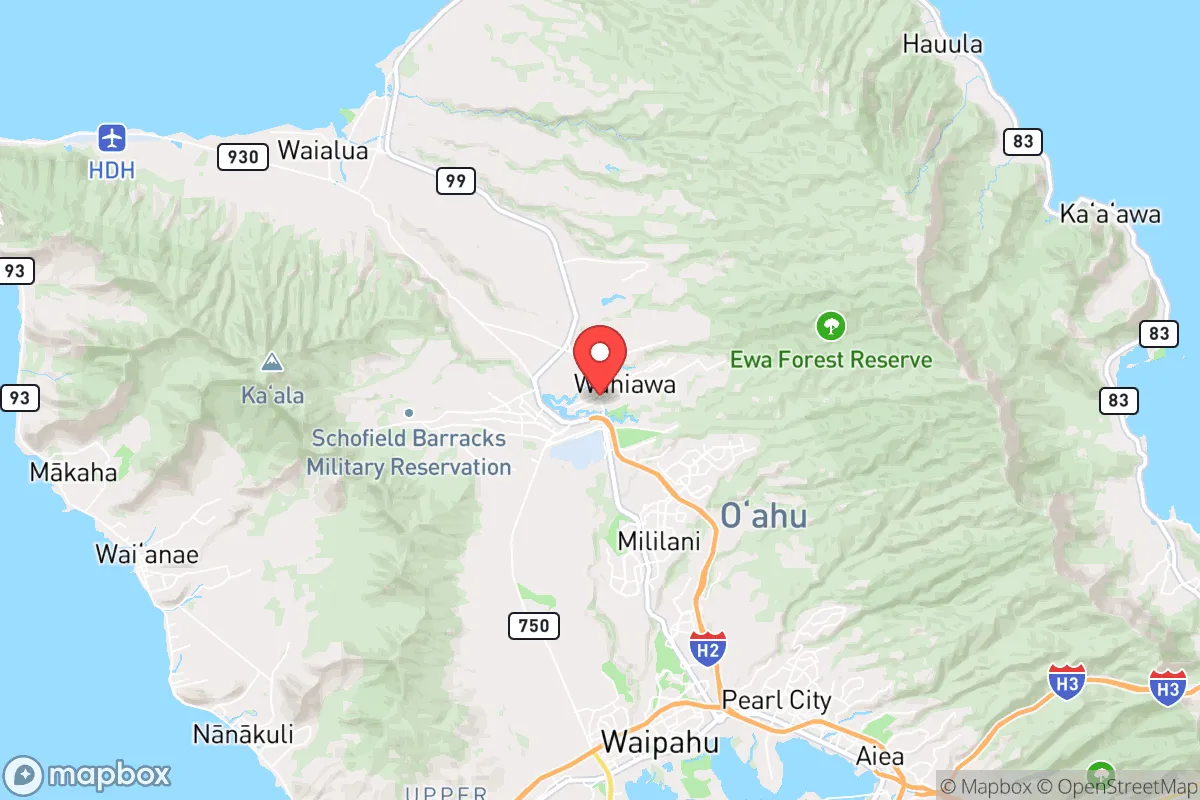
Wahiawa sits in the center of Oahu, a strategic pivot point that offers a rare combination of inland security and rapid access to both the north and south shores of the island. For a relocator with a prepper mindset, this location provides a buffer from the immediate chaos that would likely engulf Honolulu or Waikiki during a major event—whether that’s a natural disaster, civil unrest, or a mass casualty incident. The town’s position on the Leilehua Plateau, surrounded by the Waianae and Koolau mountain ranges, gives it a natural defensive posture that few other Hawaiian communities can match. While Oahu as a whole is a small, crowded island, Wahiawa’s inland geography and existing infrastructure make it one of the more resilient spots for a conservative-leaning individual or family looking to weather the storm.
Geographic position and natural defensive advantages on Oahu
Wahiawa’s elevation—roughly 1,000 feet above sea level—places it above the tsunami inundation zones that threaten coastal communities like Haleiwa, Kailua, or Ewa Beach. In the event of a Pacific-wide seismic event or a volcanic collapse from the Big Island, the low-lying coastal areas would be the first to suffer. Wahiawa’s inland perch means you’re not worrying about a wall of water sweeping through your neighborhood. The town is also flanked by two major mountain ranges: the Waianae to the west and the Koolau to the east. These ridges create natural chokepoints for any potential ground movement, whether that’s a mob fleeing Honolulu or a military convoy repositioning. The only practical routes in and out are through the H2 freeway corridor or the narrow Kamehameha Highway, both of which can be monitored and, if necessary, controlled. For a family concerned with defensibility, this is a significant advantage—you can see trouble coming from miles away.
Risks, exposures, and proximity to fallout-relevant landmarks
No strategic assessment of Wahiawa would be honest without addressing the elephant in the room: Schofield Barracks and Wheeler Army Airfield. These are major military installations sitting right on the town’s doorstep. In a conventional war scenario or a terrorist attack targeting U.S. military assets, Wahiawa would be ground zero for fallout—both literal and figurative. The presence of thousands of active-duty personnel and their families means the area is a high-value target for any adversary. Additionally, the nearby Dillingham Airfield and the Pacific Missile Range Facility on Kauai add to the regional risk profile. If you’re relocating to avoid being near large cities and military hubs, Wahiawa’s proximity to these bases is a clear negative. However, for those who see the military presence as a stabilizing force during civil unrest, it cuts both ways. The base provides a rapid-response capability that could restore order faster than in more remote areas, but it also means you’re living next to a potential flashpoint. The town itself is also within 20 miles of Pearl Harbor, another high-value target, and the Hickam Air Force Base joint base. In a worst-case scenario involving nuclear detonation or a major terrorist strike, Wahiawa’s inland location offers some protection from blast and thermal effects, but the fallout plume from a strike on Pearl Harbor or Schofield would likely pass directly over the area depending on trade winds. Prevailing winds from the northeast mean that any contamination from a strike on the southern part of the island would be carried away from Wahiawa, but a strike on Schofield itself would be catastrophic.
Practical resilience for a relocator: food, water, energy, and defensibility
For a prepper, the day-to-day resilience of a location matters as much as its strategic position. Wahiawa has a few strong points here. Water is the first concern, and the area sits atop the Oahu aquifer, one of the island’s primary freshwater sources. The Wahiawa Freshwater Treatment Plant and the nearby Lake Wilson (also known as Wahiawa Reservoir) provide a reliable supply. In a grid-down scenario, access to this water source is a major asset—but you’ll need your own filtration and storage, as municipal treatment could fail. The lake itself is stocked with tilapia, offering a protein source if you know how to fish. Food resilience is more challenging. Wahiawa is surrounded by agricultural land, including the historic Dole Plantation and various small farms, but the soil is volcanic and requires work to yield consistent crops. The town’s climate is cooler than the coast, which is good for growing leafy greens, root vegetables, and some fruits, but you’re not going to be self-sufficient on a standard suburban lot. The local farmers’ market and community gardens exist but are small-scale. Energy is a mixed bag. Hawaiian Electric’s grid is notoriously fragile and expensive, with frequent outages during storms. Solar is viable here—Wahiawa gets decent sun despite the frequent cloud cover—but battery storage is essential if you want to keep the lights on when the grid goes down. The town’s layout is mostly suburban, with single-family homes on modest lots. Defensibility is decent: the street grid is irregular, with cul-de-sacs and narrow lanes that make it hard for large groups to move through quickly. However, the population density is higher than rural areas on the Big Island or Kauai, so you’ll have neighbors close by. That’s a double-edged sword—good for mutual aid, bad for opsec. Medical access is a plus: Wahiawa General Hospital is a full-service facility, and the military bases have their own medical infrastructure. In a mass casualty event, this could be a lifeline, but it also means the hospital could become a target or a bottleneck.
The overall strategic picture for Wahiawa is one of calculated trade-offs. It’s not a remote bunker in the mountains of the mainland—it’s a working-class town on a small island with a heavy military footprint. For a conservative-leaning relocator who values community, preparedness, and a degree of separation from the urban chaos of Honolulu, Wahiawa offers a viable base of operations. The natural defenses are real, the water supply is solid, and the military presence provides a stabilizing force during unrest. But the risks are equally real: proximity to high-value targets, limited egress routes, and the inherent vulnerability of island life. If you’re looking for a place to ride out a short-term crisis—say, a week of civil unrest or a hurricane—Wahiawa is a strong choice. For a long-term collapse scenario, you’d be better off on the mainland or a less populated island. The key is to go in with eyes open: stockpile supplies, build community ties, and have a plan for getting off the island if the situation deteriorates beyond what local resources can handle. Wahiawa is a solid fallback, not a final redoubt.

* Values derived from national, state, county, city and local statistics and may differ in a specific area. Last updated: 2026-04-24T13:20:22.000Z
Narrative content on this page is AI-generated and may contain mistakes. Verify any details that matter before acting on them.
ReloMaps may earn a commission from affiliate links at no extra cost to you.

