Photo: Wikipedia
Personal Sovereignty in Wailea, HI
Moderate friction. Expect trade-offs in some aspect of personal liberty and independence.
What does Personal Sovereignty tell us?
Personal Sovereignty measures your capacity for self-reliance and independence with minimal government friction. Higher scores mean fewer barriers between you and the way you want to live... but it assumes you have the space you need and good neighbors.
What does this tell us?
Personal Sovereignty measures your capacity for self-reliance and independence with minimal government friction. Higher scores mean fewer barriers between you and the way you want to live... but it assumes you have the space you need and good neighbors.
State Policy
Energy independence: Importer (2% of energy produced in-state)
Personal Liberty
Homesteading

Personal Liberty Analysis
For a strategic relocation analysis focused on personal sovereignty, Wailea, Hawaii presents a complex and often contradictory environment. While the natural beauty and relative isolation of Maui offer a genuine retreat from mainland chaos, the state’s heavy-handed governance, high tax burden, and restrictive regulatory climate significantly erode the personal autonomy that many conservative-leaning individuals and preppers prioritize. In short, the trade-off for living in paradise is a substantial surrender of control over your finances, your property, and your personal defense—a reality that demands careful scrutiny before any move.
Tax burden and regulatory posture: How Hawaii’s state apparatus impacts your wallet and freedom
Hawaii’s tax posture is among the most aggressive in the nation, and Wailea is not exempt. The state imposes a general excise tax (GET) of 4% on nearly all business transactions, which effectively acts as a hidden sales tax on everything from groceries to construction materials—often pushing the effective rate past 4.5% when county surcharges are added. There is no local sales tax, but the GET is far more insidious because it’s levied on the business, which passes the cost to you. Property taxes in Maui County are relatively low compared to the mainland (around 0.3% of assessed value for owner-occupied homes), but this is a trap: the state’s income tax is progressive and steep, with a top marginal rate of 11% kicking in at relatively modest income levels (over $200,000 for single filers). For a survivalist mindset, this means every dollar you earn is heavily taxed before you can save, invest, or stockpile supplies. Regulatory posture is equally stifling. Hawaii’s land use commission and county planning departments exert near-total control over development, meaning any attempt to build a workshop, a root cellar, or even a substantial shed on your Wailea property will require lengthy permits and likely face neighbor opposition. The state’s Jones Act and geographic isolation drive up the cost of everything—from lumber to ammunition—by 20-40% compared to the mainland, directly undermining self-reliance efforts.
Self-defense and gun law specifics: What you can and cannot do to protect your home and family
For anyone prioritizing the right to keep and bear arms, Hawaii is one of the most restrictive states in the union. Open carry is effectively banned, and concealed carry permits are issued on a “may-issue” basis—meaning the county police chief has near-unfettered discretion to deny your application. In practice, even after the Bruen decision, Maui County has been slow to issue permits, and the process requires a demonstrated “exceptional case” of need, which is nearly impossible for a private citizen to prove. Handgun purchases require a permit-to-acquire, a 14-day waiting period, and registration with the county police. Long guns are slightly easier but still subject to a 10-day waiting period and registration. Magazine capacity is limited to 10 rounds for handguns and 10 rounds for long guns—a severe handicap for any defensive scenario. Stand-your-ground laws do not exist; Hawaii imposes a duty to retreat if safely possible before using deadly force. For a prepper, this means your home defense plan is legally constrained: you cannot simply defend your property with a firearm unless you can prove you were in imminent fear of death or great bodily harm and had no avenue of retreat. Self-defense with a knife or less-lethal tools is also legally murky, as the state’s definition of “deadly weapon” is broad. The bottom line: if personal protection is a core value, Wailea is a hostile jurisdiction.
Self-reliance and homesteading viability: Lot sizes, zoning, and off-grid feasibility in a resort community
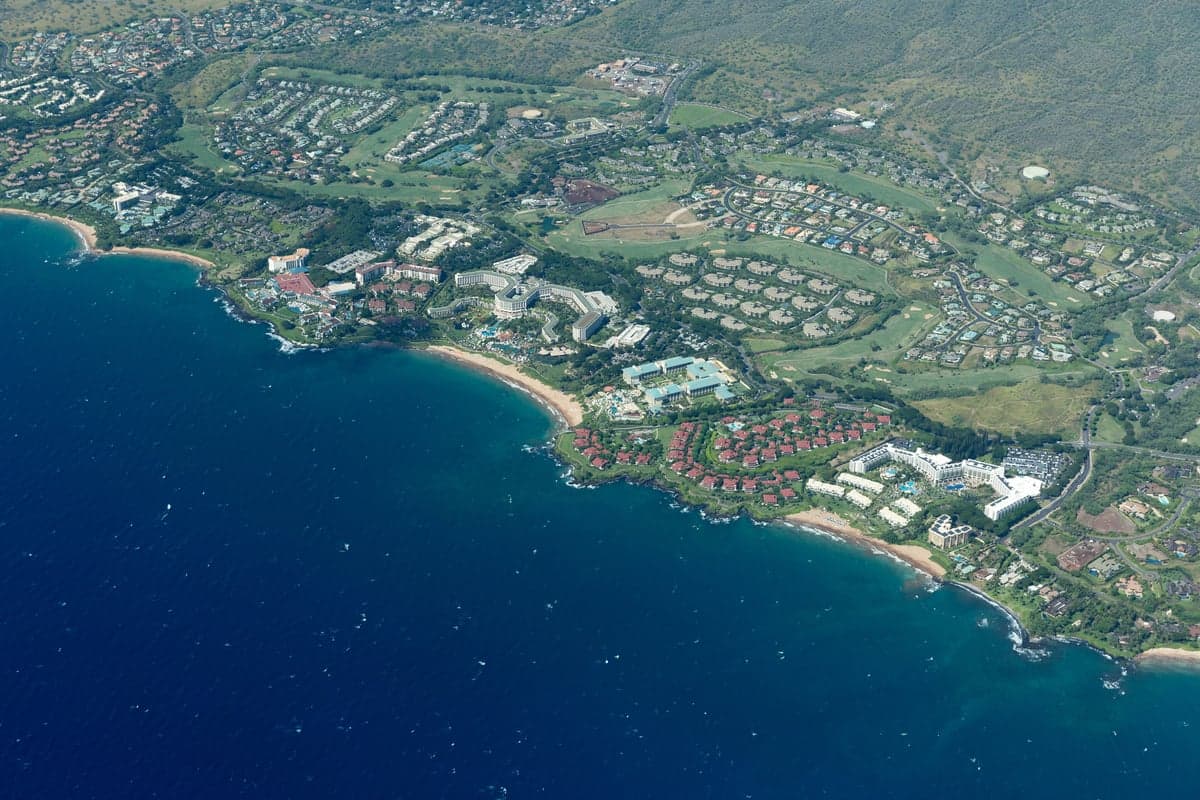
Wailea is a master-planned resort community, not a homesteading zone. The typical lot size in Wailea is 0.25 to 0.5 acres, with strict homeowners’ association (HOA) covenants that prohibit visible gardens, clotheslines, sheds, or any structure that deviates from the approved architectural style. Zoning is almost exclusively residential resort, meaning agricultural use is prohibited—you cannot keep chickens, goats, or even a substantial vegetable garden without risking fines or legal action. Off-grid feasibility is virtually nil. The county requires connection to the municipal water and sewer systems, and solar panels are allowed only if they are integrated into the roof design and approved by the HOA. Rainwater catchment is not permitted for potable use in most Wailea subdivisions due to health code restrictions. For a survivalist, this is a deal-breaker: you cannot produce your own food, collect your own water, or generate your own power without running afoul of multiple layers of regulation. The only viable option for true self-reliance on Maui is to purchase agricultural-zoned land in upcountry areas like Kula or Hana, but those come with their own challenges—fire risk, distance from medical care, and limited access to supplies. In Wailea, you are dependent on the grid, the grocery store, and the goodwill of the HOA board.
Personal liberties: Parental rights, medical autonomy, speech, and property in a progressive state
Hawaii’s political culture is deeply progressive, and this directly impacts personal liberties. Parental rights are weak compared to many mainland states. The state has broad authority to intervene in family decisions, and Hawaii’s Department of Human Services has a reputation for aggressive child protective services investigations. Medical autonomy is similarly constrained: Hawaii has strict vaccine mandates for school attendance and has shown willingness to enforce public health orders that limit individual choice. During the pandemic, the state imposed some of the longest and most restrictive lockdowns in the nation, including a mandatory 14-day quarantine for all arrivals that was enforced with police checkpoints and fines. Freedom of speech is legally protected, but the social climate in Wailea—a wealthy, left-leaning enclave—can be hostile to conservative viewpoints. Openly expressing support for Second Amendment rights, traditional family structures, or skepticism of government overreach could lead to social ostracism or even professional consequences in the tight-knit resort community. Property rights are heavily circumscribed by the state’s land use laws and the county’s strict building codes. You cannot simply modify your home or land as you see fit; every change requires a permit, and the county has the power to deny or delay projects indefinitely. For a prepper, this means you cannot build a bunker, a safe room, or even a reinforced fence without navigating a bureaucratic maze.
Overall, Wailea offers a beautiful but heavily regulated environment that is fundamentally at odds with a survivalist or conservative worldview focused on personal sovereignty. The combination of high taxes, restrictive gun laws, prohibitive zoning, and a progressive social climate means that your autonomy is significantly curtailed compared to states like Texas, Idaho, or Montana. If your priority is to live free from government overreach and to prepare for uncertain times, Wailea is a poor choice. The only scenario where it makes sense is if you have substantial financial resources and are willing to trade freedom for beauty and isolation—and even then, the trade is steep. For those serious about self-reliance, look to the mainland’s red states, where property rights, gun rights, and parental rights are still respected.

* Values derived from national, state, county, city and local statistics and may differ in a specific area. Last updated: 2026-05-15T21:54:51.000Z
Narrative content on this page is AI-generated and may contain mistakes. Verify any details that matter before acting on them.
ReloMaps may earn a commission from affiliate links at no extra cost to you.

