Photo: Wikipedia
Demographics of Wailuku, HI
Affluence Level in Wailuku, HI
An upper-middle-class area. Household wealth, education levels, and homeownership run ahead of national benchmarks.
People of Wailuku, HI
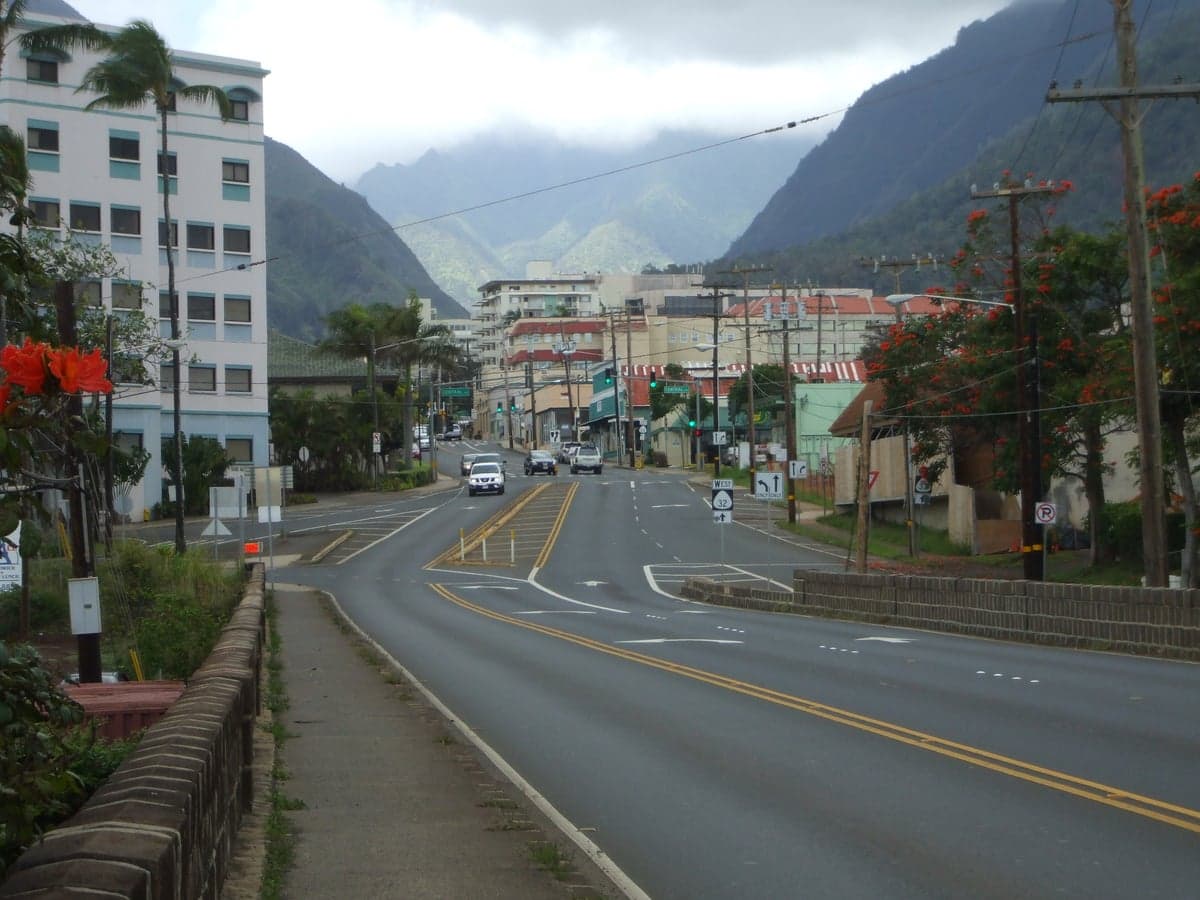
Wailuku, Hawaii, is a town of 15,754 residents where East and Southeast Asian communities form the largest single demographic group at 35.1%, followed by White residents at 21.1%, with a small Hispanic population of 7.3% and a Black population of 1.0%. The town’s character is distinctly local—less tourist-driven than nearby Kahului or Kihei—with a dense, walkable core and a strong sense of place rooted in its plantation-era past. Only 5.3% of residents are foreign-born, reflecting a population that is largely multi-generational, while 35.8% hold a college degree, a figure that aligns with Wailuku’s role as the county seat of Maui and a hub for government and professional services.
How the city was settled and grew
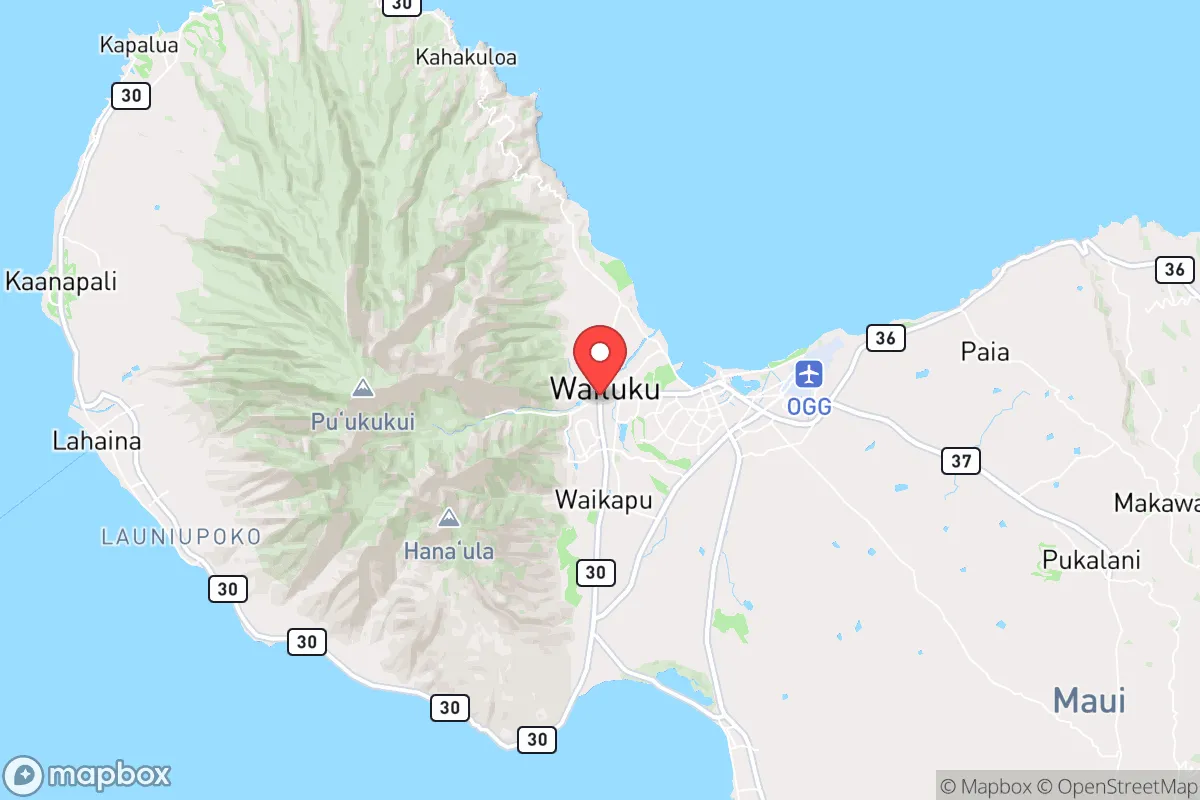
Wailuku’s population history begins with Native Hawaiian settlement along the Iao Stream, but the town’s modern demographic foundation was laid in the mid-19th century by the sugar industry. The Wailuku Sugar Company, established in 1862, drew waves of contract laborers from East Asia—first Chinese, then Japanese, and later Filipinos—who built the plantation camps that became the town’s earliest neighborhoods. Japanese immigrants concentrated in the area now known as Wailuku Town proper, particularly around Market Street and Vineyard Street, where they established stores, temples, and community halls. Chinese laborers settled in the Wailuku Heights area, while Filipino workers later formed enclaves in Waihee, just north of town. By the early 20th century, Portuguese immigrants also arrived, adding a European thread to the mix, though they never matched the numbers of the Asian groups. The sugar industry dominated until the mid-20th century, and Wailuku’s population remained overwhelmingly plantation-worker in character—dense, working-class, and ethnically stratified by camp.
Modern era (post-1965)
After the 1965 Hart-Cellar Act ended national-origin quotas, Wailuku’s Asian communities continued to grow through family reunification, but the bigger shift was domestic: the rise of tourism on Maui after the 1970s drew mainland White retirees and professionals to the island. Many settled in Wailuku Heights and the newer subdivision of Waikapu, drawn by lower housing costs compared to Kihei or Lahaina. The Asian share of the population remained dominant, but the White share rose steadily, reaching 21.1% by the 2020 census. The Hispanic population, at 7.3%, is largely of Puerto Rican and Mexican descent, many arriving for service-industry jobs in the 1990s and 2000s, and concentrated in the Wailuku Town core and along Lower Main Street. The Black population remains tiny at 1.0%, reflecting Hawaii’s overall demographics. The Indian subcontinent population is effectively zero, a notable absence compared to mainland cities. Wailuku’s foreign-born share (5.3%) is low for a Hawaii town, indicating that most residents are U.S.-born descendants of earlier waves, not recent immigrants.
The future
Wailuku’s population is slowly homogenizing in terms of nativity—the foreign-born share is declining as older immigrants age and their children remain—but the ethnic mix is stabilizing rather than shifting dramatically. The Asian plurality is likely to persist, as Japanese and Filipino families have deep roots and high retention rates. The White share may plateau as mainland in-migration slows due to high housing costs; the median home price in Wailuku exceeded $900,000 in 2025, pricing out many newcomers. Hispanic growth is modest and likely to continue at a steady pace, driven by service-sector employment. The town is not tribalizing into distinct enclaves—neighborhoods like Wailuku Town and Waikapu are increasingly mixed—but subtle clustering persists: older Japanese families remain in the historic core, while newer White and Hispanic residents favor the subdivisions. Over the next 10-20 years, Wailuku will likely remain a stable, multi-ethnic, middle-class town with a strong local identity, but its population may shrink slightly if housing costs push younger families to cheaper areas on the Big Island or the mainland.
For someone moving in now, Wailuku offers a genuine local community with deep Asian-Pacific roots, a low crime rate, and a slower pace than Maui’s resort zones. The trade-off is high housing costs and limited economic diversity—government and healthcare are the main employers outside tourism. It is a place for those who value stability and cultural continuity over rapid growth or ethnic change.

* Values derived from national, state, county, city and local statistics and may differ in a specific area. Last updated: 2026-04-24T00:40:22.000Z
Narrative content on this page is AI-generated and may contain mistakes. Verify any details that matter before acting on them.
ReloMaps may earn a commission from affiliate links at no extra cost to you.

