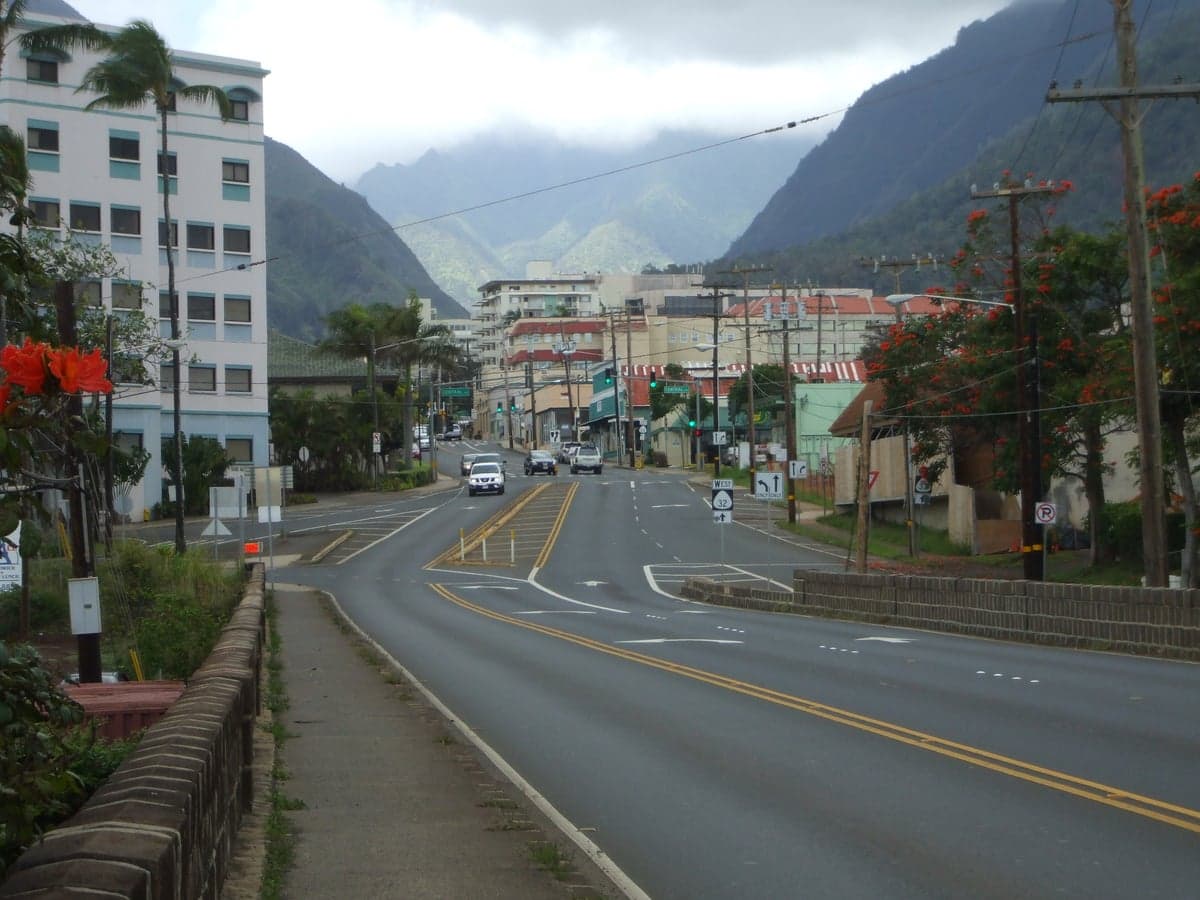
Photo: Wikipedia
Political ClimatePolitical Climate in Wailuku, HI
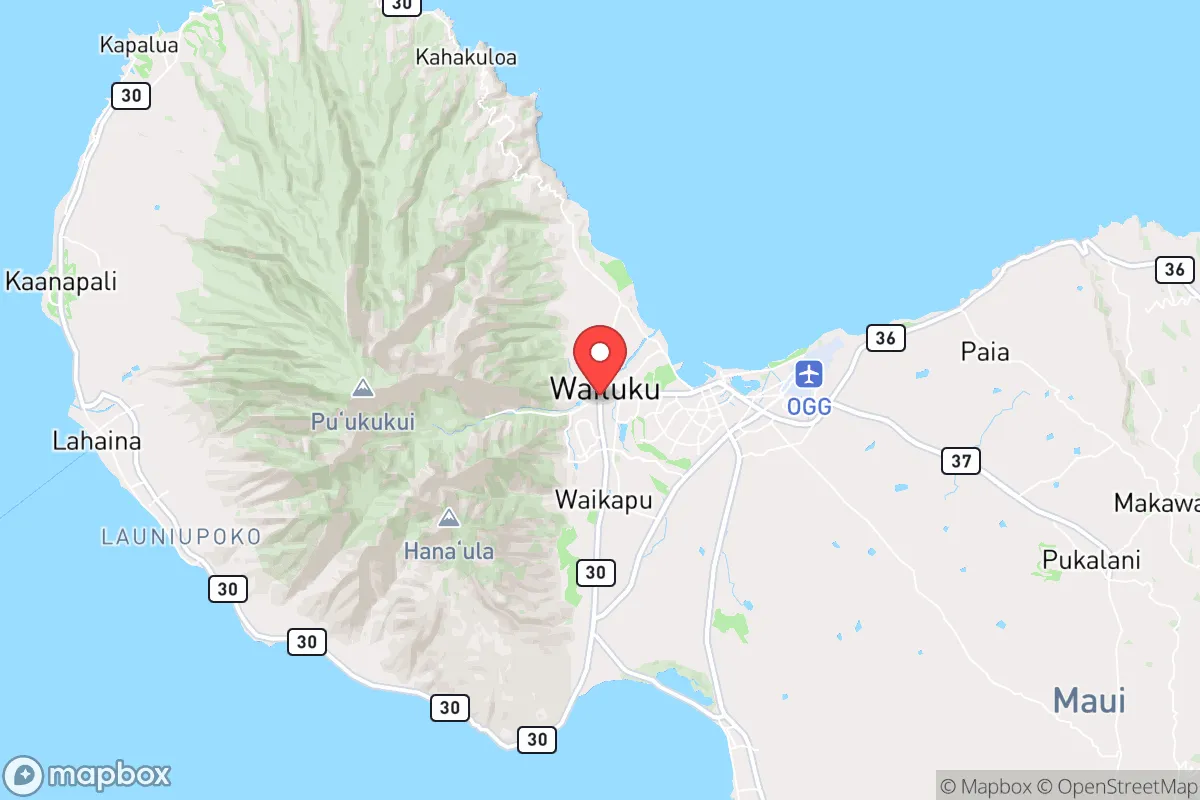
District shown is the primary district for this city’s centroid. Cities may span multiple districts.
Local Political AnalysisPolitical Analysis of Wailuku, HI
Wailuku, the county seat of Maui, has a political climate that leans heavily Democratic, with a Cook PVI of D+12, meaning it votes about 12 points more Democratic than the national average. In practice, this translates to a local government that has steadily embraced progressive policies over the past decade, from stricter land-use regulations to expanded social programs. If you’ve been around here long enough, you’ve watched the shift from a more balanced, live-and-let-live community to one where the county council and state representatives increasingly push an agenda that feels less about local needs and more about top-down ideological mandates.
How it compares
Drive just a few miles up the coast to Kahului, and you’ll find a similar Democratic stronghold, though with a slightly more working-class, union-heavy vibe. But head toward the more rural parts of Upcountry Maui—places like Kula or Makawao—and the political landscape changes noticeably. Those areas tend to vote more conservative, with residents pushing back harder on things like overreaching building codes and state-mandated environmental restrictions that can feel like they’re designed by people who don’t actually live here. Wailuku itself, though, is the epicenter of the island’s progressive bureaucracy, where county offices and state agencies churn out regulations that can make even simple home improvements a months-long ordeal. The contrast is stark: in Kula, folks still wave at you on the road; in Wailuku, you’re more likely to get a pamphlet about the latest sustainability initiative.
What this means for residents
For the average person living in Wailuku, the political climate means dealing with a government that doesn’t always trust you to make your own decisions. Want to add a small ohana unit to your property to help with the housing crisis? You’ll need to navigate a thicket of permits, impact fees, and environmental reviews that can take years and cost thousands. The local school board and county council have also pushed for curriculum changes and diversity initiatives that some parents feel prioritize ideology over academics. Property taxes have crept up, and new fees on everything from plastic bags to short-term rentals add to the cost of living. It’s not that people here don’t care about the environment or community—most do—but the feeling is that the government has become a nanny, not a partner. The long-term trajectory looks like more of the same: tighter controls on housing, more mandates on businesses, and a growing disconnect between what the government wants and what residents actually need to get by.
Culturally, Wailuku still has its old plantation-town charm, with a mix of Filipino, Japanese, Hawaiian, and Portuguese families who’ve been here for generations. But the political push toward progressive ideals has started to erode some of that easygoing local spirit. You’ll see more signs for social justice campaigns than for local rodeos or church potlucks these days. The county council has passed resolutions on national issues that have little to do with Maui, which rubs a lot of folks the wrong way. If you’re thinking of moving here, just know that the government here is active—sometimes too active—and that the days of being left alone to live your life are fading. It’s still a beautiful place, but the political climate is something you’ll have to navigate carefully, especially if you value personal freedom and local control.

State Political ClimatePolitical Climate in Hawaii
State Political AnalysisPolitical Environment in the State
Hawaii has been a one-party Democratic stronghold for decades, with Democrats holding supermajorities in both legislative chambers and every statewide office since 1962. The state’s political lean is reliably blue — no Republican has won a presidential election here since 1984, and the last GOP governor was Linda Lingle (2002–2010). Over the past 10–20 years, the dominant coalition has shifted further left, driven by a growing progressive activist base in Honolulu and a steady influx of mainland transplants, while rural and neighbor island voters have grown increasingly frustrated with high taxes, housing costs, and government overreach. The trajectory is one of deepening progressive control, but with a rising conservative countercurrent in the exurbs and agricultural zones.
Urban vs. rural divide
The political map of Hawaii is starkly divided between the urban core of Oahu and the rest of the state. Honolulu and its inner suburbs — like Waikiki, Manoa, and Kaimuki — are the engine of Democratic dominance, routinely delivering 70–80% of the vote to Democratic candidates. The city’s dense, union-heavy workforce and large Asian-American and Native Hawaiian populations have historically aligned with the party’s platform. In contrast, the rural areas of the Big Island, Maui, and Kauai are more politically mixed. Hilo leans left but is less reliably blue than Honolulu, while Kona and the Puna district have seen a surge of libertarian-leaning and conservative voters drawn by lower land prices and a desire for more personal freedom. On Maui, the upcountry towns of Kula and Makawao are known for a more independent, sometimes conservative streak, while the tourist-heavy areas of Kihei and Lahaina vote solidly Democratic. Kauai’s North Shore is progressive, but the west side around Waimea and Hanapepe has a stronger conservative presence. The key takeaway: the urban-rural divide is real, but Hawaii’s rural areas are not as uniformly red as in mainland states — they’re more of a purple patchwork.
Policy environment
Hawaii’s policy environment is among the most progressive in the nation, with a heavy hand in taxation, regulation, and social engineering. The state has the highest combined state and local tax burden in the U.S., driven by a 4% general excise tax (applied to nearly all goods and services, including rent and groceries) and a progressive income tax that tops out at 11%. Property taxes are relatively low, but the state’s land use commission and county zoning boards impose strict controls on development, contributing to the nation’s highest housing costs. Education policy is dominated by a single statewide school district — the Hawaii Department of Education — which has been criticized for bureaucratic inefficiency and low test scores. Charter schools exist but are tightly regulated, and school choice options are limited. Healthcare is heavily regulated, with a state-run insurance exchange and a strong push toward universal coverage. Election laws are moderately restrictive: Hawaii has all-mail voting, same-day registration, and no voter ID requirement, which has drawn criticism from conservatives concerned about election integrity. The state also has a “sanctuary” policy that limits cooperation with federal immigration enforcement, and it was the first state to enact a “Dreamer” tuition equity law.
Trajectory & freedom
Hawaii is moving in a direction that many conservatives view as increasingly restrictive on personal freedom. Gun rights have been systematically curtailed: in 2022, the state passed a law requiring a permit to purchase ammunition, banning “ghost guns,” and raising the minimum age to buy a firearm to 21. In 2023, it enacted a “red flag” law allowing courts to temporarily seize firearms from individuals deemed a risk. Parental rights have been eroded by a 2022 law that allows minors as young as 14 to consent to mental health treatment without parental notification, and a 2023 law that prohibits conversion therapy for minors. Medical autonomy has been expanded for some — Hawaii legalized recreational marijuana in 2023 — but the state also mandates COVID-19 vaccines for schoolchildren and healthcare workers, a policy that remains in place. Property rights are under pressure from the state’s aggressive land use regulations and a 2023 law that allows counties to impose rent control on certain properties. Taxation has become more burdensome: in 2024, the state increased the general excise tax on short-term rentals and added a new surcharge on high-income earners. The overall trend is toward more government control over daily life, with fewer opt-outs for individuals.
Civil unrest & political movements
Hawaii has a history of organized protest, often centered on land rights and environmental issues. The most visible flashpoint in recent years was the Mauna Kea telescope protests (2019–2020), which drew thousands of Native Hawaiian activists and allies to block construction of the Thirty Meter Telescope. That movement was largely left-aligned but also tapped into anti-government sentiment. More recently, the 2023 Lahaina wildfires sparked protests over government response and land management, with some residents accusing officials of prioritizing tourism over local needs. On the right, the Hawaii Republican Party remains small but has seen growth in rural areas, particularly on the Big Island, where a “Hawaii Secession” movement has gained some traction — though it’s more a fringe idea than a serious political force. Immigration politics are less heated than on the mainland, but the state’s sanctuary policies have drawn criticism from conservatives who argue they attract undocumented migrants and strain public resources. Election integrity has been a low-key issue, with some Republican activists questioning the all-mail voting system, but no major controversies have erupted. The most visible political movements are environmental and Native Hawaiian sovereignty groups, which often align with progressive causes but also challenge state authority.
Projection
Over the next 5–10 years, Hawaii’s political trajectory is likely to continue its leftward drift, but with growing friction. Demographic shifts are working against conservatives: the state’s population is aging, and younger, more progressive mainland transplants are replacing older, more conservative residents who move to cheaper states. The Native Hawaiian population, which has historically been more moderate, is becoming more politically active and aligned with progressive causes. However, the high cost of living and regulatory burden are driving a slow exodus of middle-class families and small business owners, which could eventually create a political backlash. If the state’s housing crisis worsens, expect more rural and exurban areas to flip toward libertarian or conservative candidates who promise to cut red tape and lower taxes. The Republican Party may gain a few legislative seats in districts like Kona, Puna, and upcountry Maui, but a statewide breakthrough is unlikely. A new resident moving in now should expect a decade of continued progressive governance, with occasional localized pushback in the more affordable, less regulated corners of the state.
Bottom line for a new resident: If you value low taxes, gun rights, school choice, and minimal government interference, Hawaii will be a challenging fit. The state’s political culture is deeply collectivist, and the cost of living — both financial and regulatory — is high. Your best bet for a more conservative lifestyle is to look at the rural Big Island (Kona, Puna) or upcountry Maui, where you’ll find more like-minded neighbors and slightly more breathing room. But even there, state-level policies will constrain your freedom. Come for the natural beauty, but be prepared to navigate a system that prioritizes government solutions over individual liberty.
* Values derived from national, state, county, city and local statistics and may differ in a specific area. Last updated: 2026-04-24T00:40:22.000Z
Narrative content on this page is AI-generated and may contain mistakes. Verify any details that matter before acting on them.
ReloMaps may earn a commission from affiliate links at no extra cost to you.

