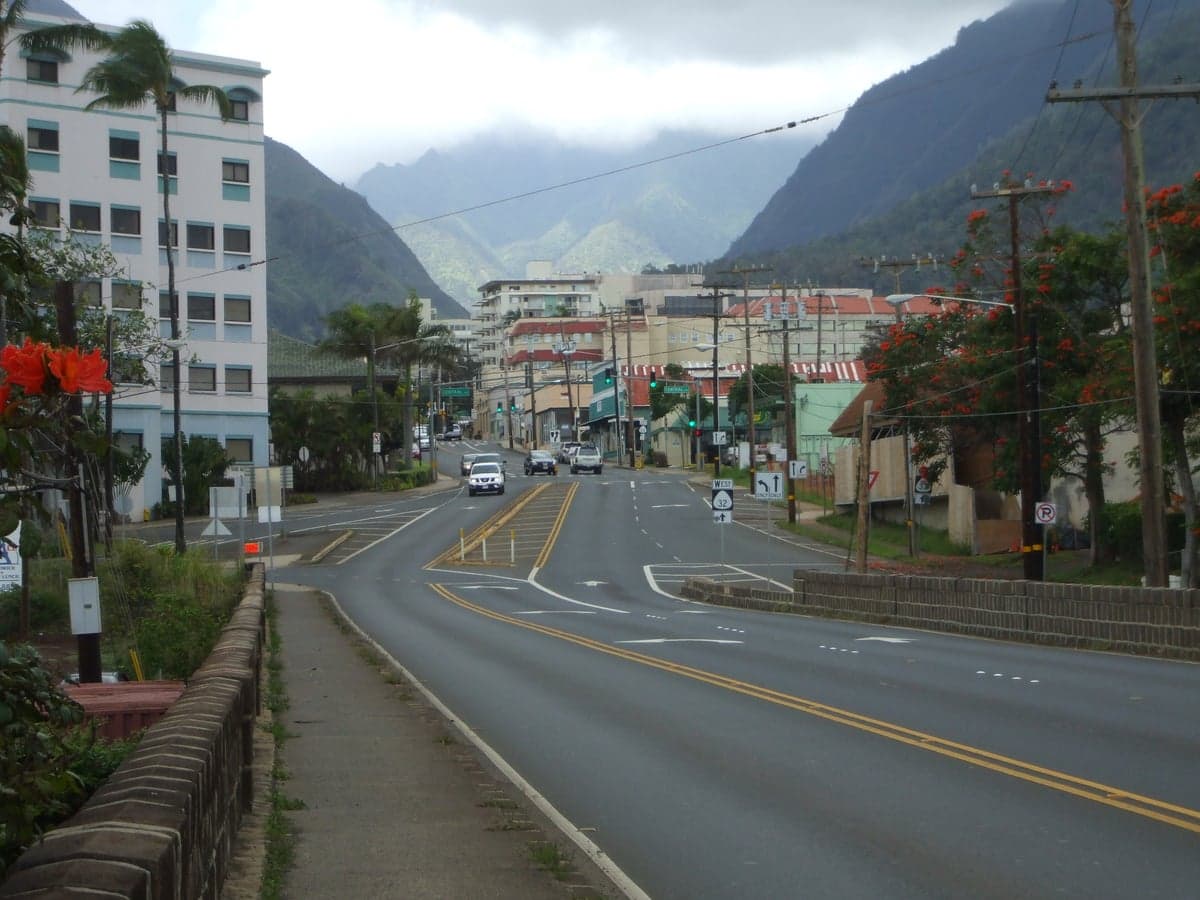
Photo: Wikipedia
Strategic Assessment of Wailuku, HI
Strong survivability profile. Good buffer from population centers, with manageable environmental and tactical risks.
What does the Strategic Assessment tell us?
Our Strategic Assessment grades tactical survivability of an area. Major population centers, military targets, fallout zones, natural disasters, and border exposure all drive risk — lower exposure means a more defensible position in a crisis.
This is heavily inspired by Joel Skousen's Strategic Relocation book. Highly recommended you checkout the book ($)What does this tell us?
Our Strategic Assessment grades tactical survivability of an area. Major population centers, military targets, fallout zones, natural disasters, and border exposure all drive risk — lower exposure means a more defensible position in a crisis.
This is heavily inspired by Joel Skousen's Strategic Relocation book. Highly recommended you checkout the book ($)Strategic Pillars

Key Distances
Regional Safe Places
Below is our recommended "safe zones" in Hawaii and the surrounding area based on our strategic heuristics. For most people, it's unrealistic to live in a “safe zone” full-time due to work, family or other personal reasons. They tend to be more rural. However, many of these areas are perfect for second homes and retreat properties that double as a vacation home or even a short-term rental.

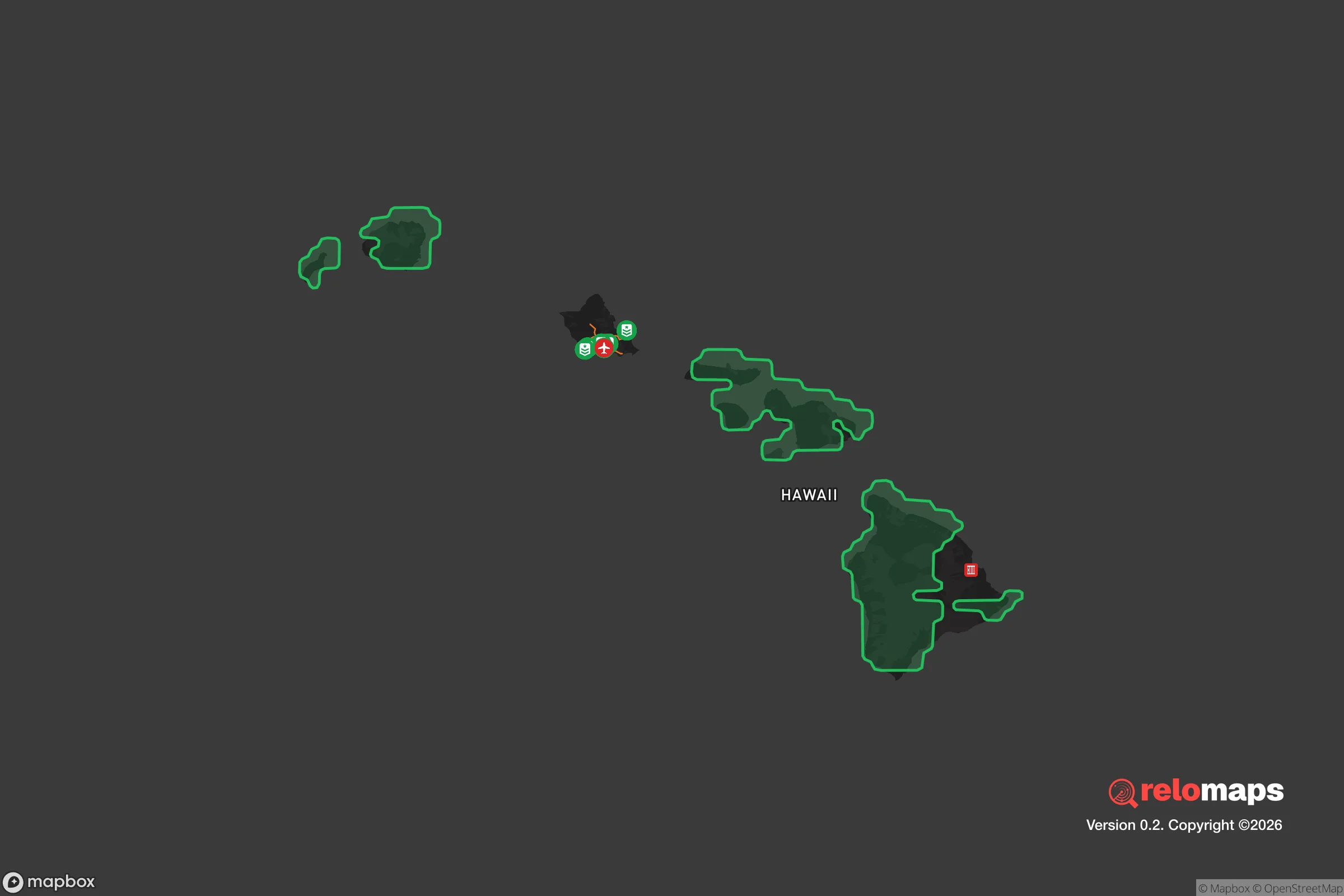


Important Note: For informational purposes only. This does not mean nothing bad ever happens in the green zones. Please use common sense. This is based on public data and modeled with AI. We tried to take a conservative approach but mistakes happen. We update this regularly as new information becomes available.
Solar Generator Recommendations
Backup power matters more here than in safer locations. We've picked three solar generators across budgets and capacity tiers — start with the budget unit if you only need a few essentials, or step up if you want to run a fridge and HVAC for days at a time.

Jackery Portable Power Station Explorer 300
Budget OptionPower on the Go: Weighing only 11 lbs, it's convenient to set up and store with book-sized foldable solar panels

BLUETTI Portable Power Station AC180
Designed for both indoor and outdoor scenarios, AC180 is highly capable as it has a robost capacity and continuous output power.

EF ECOFLOW DELTA Pro Ultra Power Station
Upgraded PickEcoFlow DELTA Pro Ultra is a whole-home energy system designed to grow with your family. Integrated with the Smart Home Panel 2, it scales to meet your evolving energy needs — keeping your home powered, intelligent, and secure through every stage of life.
We earn a commission, at no additional cost to you.
Strategic Assessment Analysis
Wailuku, situated on the island of Maui, offers a unique strategic position for those prioritizing resilience and self-sufficiency in an increasingly uncertain world. Its location away from the immediate coastal flood zones and its role as the county seat of Maui County provide a blend of administrative stability and geographic isolation that is rare in the modern United States. For the conservative-minded relocator concerned with civic unrest, supply chain disruptions, or mass casualty events, Wailuku’s distance from the mainland’s major population centers and its natural barriers—the Pacific Ocean and the West Maui Mountains—create a buffer that few inland communities can match. However, this isolation cuts both ways, and a clear-eyed assessment of its vulnerabilities is essential before making a move.
Geographic position and natural advantages for long-term survival
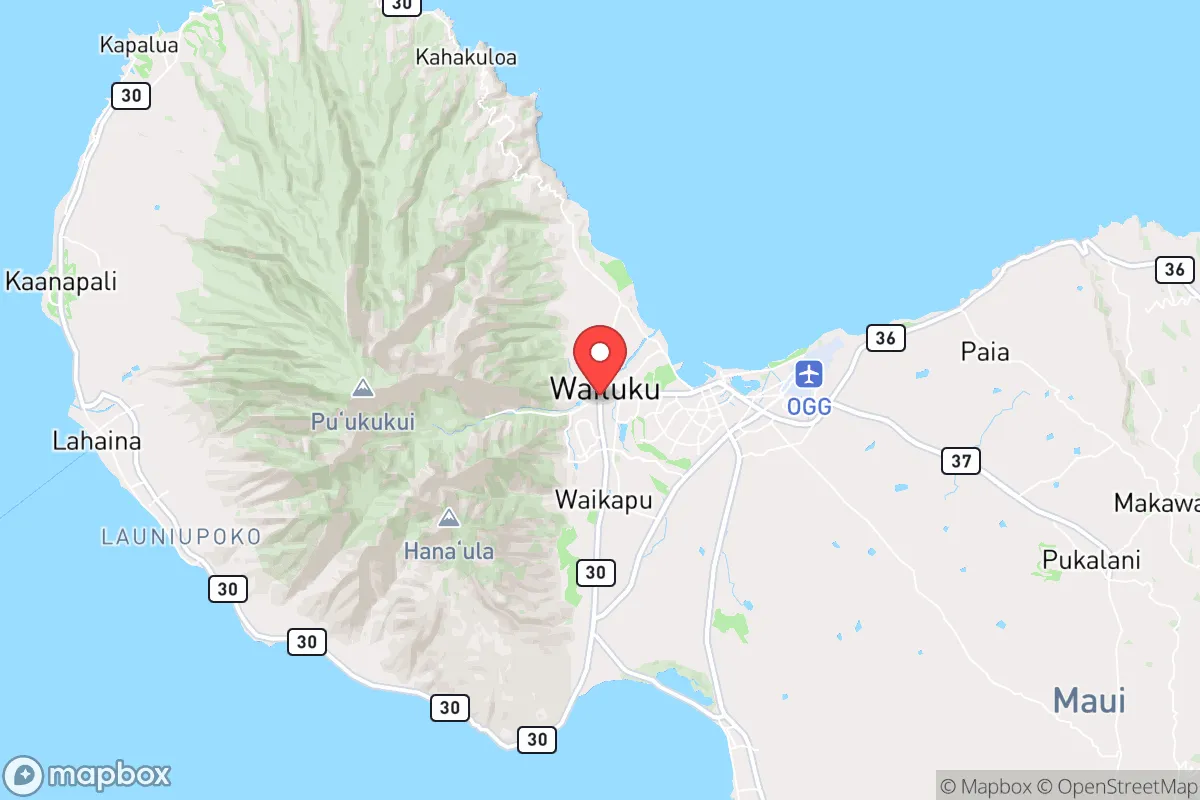
Wailuku sits at the base of the West Maui Mountains, roughly 3 miles inland from Kahului Harbor, which gives it a defensible elevation advantage over coastal towns like Lahaina or Kihei. The surrounding terrain—steep ridges, deep valleys, and limited road access—naturally funnels movement through a few choke points, primarily the Honoapiʻilani Highway (Route 30) and the Kaʻahumanu Avenue corridor. This topography makes Wailuku one of the more defensible locations on the island, as any approach from the north, south, or west must pass through narrow, easily monitored passages. The area’s volcanic soil and consistent rainfall (averaging 70 inches annually in the uplands) support year-round agriculture, a critical factor for food security in a prolonged grid-down scenario. The Iao Valley State Monument, just west of town, provides a reliable freshwater source from the Iao Stream, which flows from the mountain watershed—a natural asset that cannot be easily disrupted by external events. For the prepper, this combination of natural water, arable land, and terrain-based defensibility is a significant advantage over most suburban or urban mainland locations.
Risks, exposures, and proximity to fallout-relevant landmarks
No strategic assessment is complete without acknowledging the liabilities. Wailuku’s greatest vulnerability is its dependence on external supply chains for nearly everything beyond local produce and water. The island of Maui imports roughly 85% of its food, fuel, and manufactured goods, all of which arrive through Kahului Harbor—a single point of failure located just 4 miles east of Wailuku. A major earthquake, tsunami, or deliberate disruption at the harbor would cripple the island’s ability to resupply within days. Additionally, Kahului Airport (OGG) is a major civilian and military transit hub, handling over 7 million passengers annually and serving as a staging point for Pacific operations. In a national emergency, this airport would become a focal point for federal mobilization, drawing attention and potential unrest. The proximity to these two critical infrastructure nodes means that Wailuku is not as isolated as it first appears; it is within a 10-minute drive of the island’s logistical lifelines, making it a potential target for those seeking to control resources. The 2023 Lahaina wildfires, which killed over 100 people and destroyed thousands of structures, demonstrated that even remote Hawaiian communities are not immune to cascading disasters—and that emergency response can be overwhelmed by geography and limited resources.
Practical resilience for a relocator: food, water, energy, and defensibility
For the individual or family looking to establish a resilient homestead, Wailuku offers a mixed but workable picture. Water security is the strongest asset: the Iao aquifer provides high-quality groundwater, and many older homes in the area have catchment systems or access to county water that is gravity-fed from mountain reservoirs. A well-installed rainwater catchment system with first-flush diverters and UV filtration can provide a family of four with 10,000+ gallons annually, even in drier months. Food production is viable but requires effort: the climate supports tropical staples like breadfruit, taro, bananas, and papaya, as well as temperate crops in the cooler uplands. However, soil quality varies widely, and many lots in Wailuku proper are small (0.1–0.25 acres), limiting large-scale gardening. For serious food security, look to the rural subdivisions in Waikapu or the slopes of Haleakalā, where 1–5 acre parcels are more common. Energy independence is achievable but expensive: Maui Electric Company’s grid is vulnerable to storms and demand spikes, but net-zero solar-plus-battery systems are increasingly common. A 10 kW solar array with 30 kWh of battery storage can cover most household needs, but installation costs run $25,000–$40,000—a worthwhile investment given the island’s high electricity rates (averaging $0.40/kWh). Defensibility is situational: Wailuku’s dense residential core offers little in the way of standoff distance or concealment, but the surrounding rural areas—particularly along Kahekili Highway and the Piʻiholo Road corridor—provide properties with natural cover, limited access points, and long sightlines. A well-chosen property in these uplands can be made highly defensible with basic perimeter measures and a reliable communications setup (ham radio or Starlink).
The overall strategic picture for Wailuku is one of calculated trade-offs. It offers genuine advantages in water security, agricultural potential, and geographic isolation that are rare in the mainland United States, especially for those willing to invest in off-grid infrastructure. But the reliance on a single harbor and airport, the high cost of living (median home price over $900,000), and the demonstrated risk of natural disasters mean that this is not a location for the unprepared or underfunded. For the conservative relocator who values self-reliance and community cohesion, Wailuku can be a strong base—provided you arrive with a clear plan for food storage, energy backup, and a network of like-minded neighbors. The island’s small population (roughly 17,000 in Wailuku proper) and strong local culture of mutual aid can be a stabilizing force in times of crisis, but the key is to integrate into that community before trouble arrives. In short, Wailuku is a high-potential, high-effort location that rewards preparation and punishes complacency—exactly the kind of place a serious prepper should consider, but only after a thorough reconnaissance and a realistic budget.

* Values derived from national, state, county, city and local statistics and may differ in a specific area. Last updated: 2026-04-24T00:40:22.000Z
Narrative content on this page is AI-generated and may contain mistakes. Verify any details that matter before acting on them.
ReloMaps may earn a commission from affiliate links at no extra cost to you.

