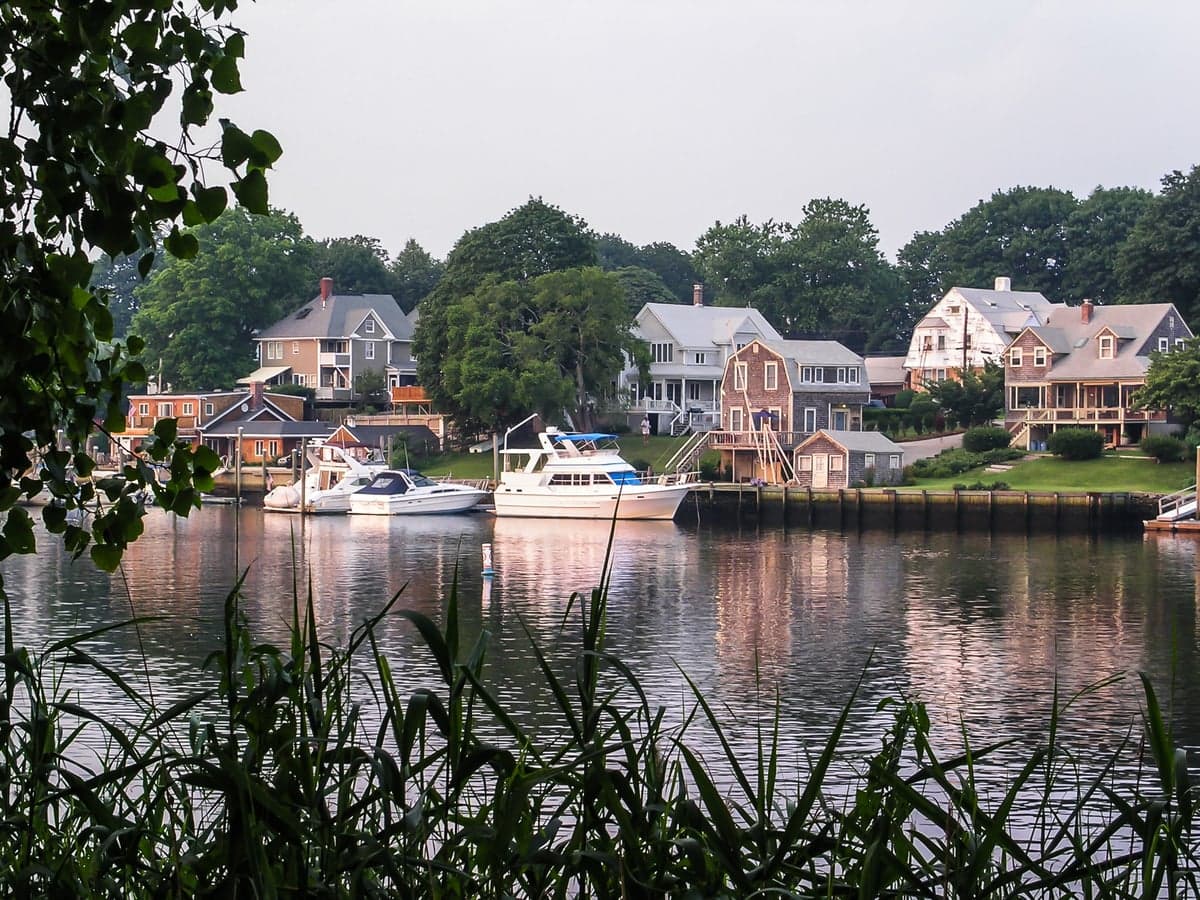
Photo: Wikipedia
Political ClimatePolitical Climate in Warwick, RI
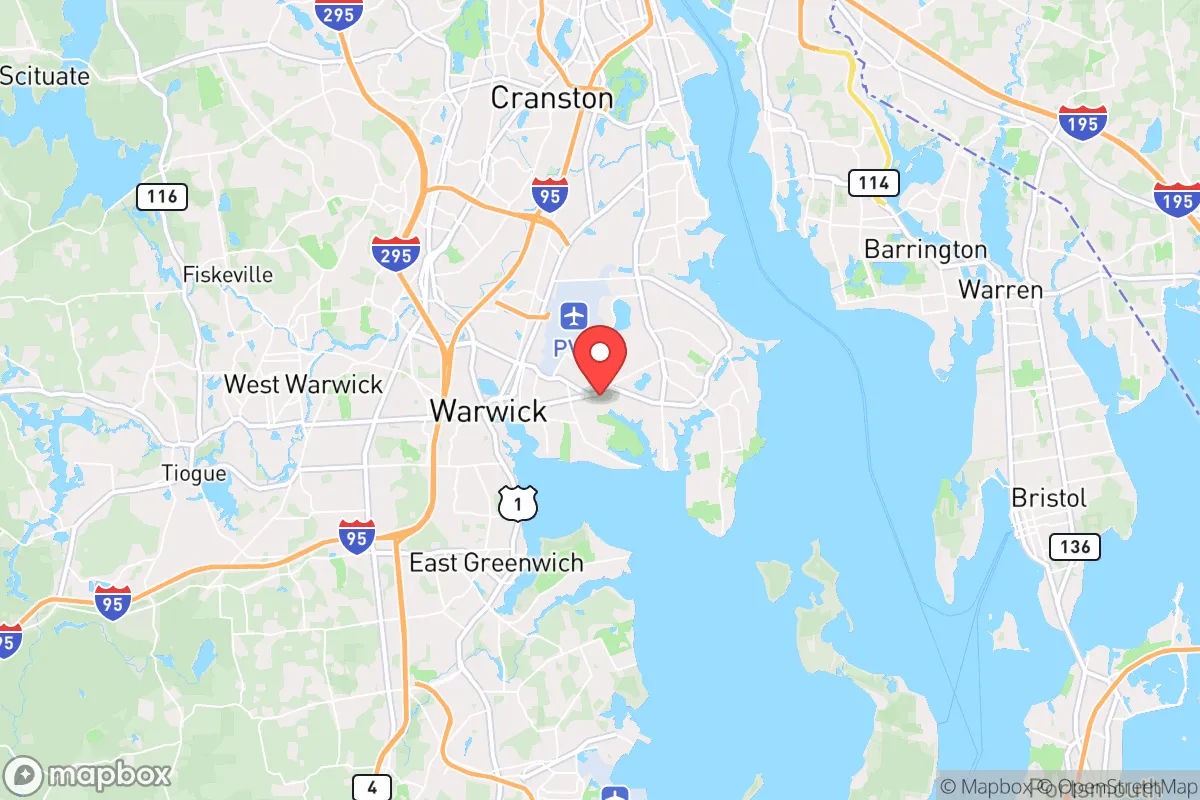
District shown is the primary district for this city’s centroid. Cities may span multiple districts.
Local Political AnalysisPolitical Analysis of Warwick, RI
Warwick, Rhode Island, has a Cook PVI of D+4, meaning it leans Democratic by a modest four points compared to the national average. But if you’ve lived here as long as I have, you know that number doesn’t tell the whole story. This used to be a rock-solid blue-collar town where folks voted their conscience, not a party line. Nowadays, you’re seeing a slow but steady shift—more progressive energy creeping in from Providence and the coastal towns, and a lot of us long-time residents are watching it with a wary eye. The old Warwick, the one that valued hard work, common sense, and keeping government out of your backyard, is still here, but it’s fighting for air.
How it compares
Drive ten miles north to Providence, and you’re in a whole different world—a deep-blue city where progressive policies are the norm, from rent control to sanctuary city status. Head south to East Greenwich or Narragansett, and you’ll find more fiscal conservatism and a general distrust of big government. Warwick sits right in the middle, but it’s getting squeezed. The state legislature in Providence keeps pushing mandates—like the 2023 law banning plastic bags and the push for statewide rent control—that feel like they were written for the capital, not for a suburban town like ours. Meanwhile, our local city council has been a mixed bag. Some members are fighting to keep property taxes low and push back on state overreach, but others are cozying up to the progressive agenda. It’s a real tug-of-war, and the direction we’re heading is the concerning part.
What this means for residents
For the average Warwick family, the biggest red flag is how much government is creeping into daily life. Property taxes have been climbing—up about 3% in 2025 alone—partly because the state keeps adding unfunded mandates for schools and social programs. Then there’s the school board. A few years back, they quietly adopted a diversity, equity, and inclusion framework that a lot of us feel prioritizes ideology over actual education. And don’t get me started on the push for “climate action plans” that could mean new fees or restrictions on home renovations. If you value personal freedom—like the right to fix up your own house without a dozen permits, or the right to send your kid to school without them being taught that America is the problem—Warwick is still okay, but the trend line is worrying. The old-timers like me remember when the biggest political fight was over a new stoplight. Now it’s about how much the state can tell you what to do.
One thing that still sets Warwick apart is its stubborn streak. We’ve got a strong veterans’ community, a lot of union households that lean more conservative on social issues, and a general “leave us alone” attitude that hasn’t totally faded. But the younger crowd moving in from out of state, especially from Massachusetts and New York, are bringing different values. They want bike lanes, higher density housing, and more government programs. I see the writing on the wall: if we don’t start pushing back at the ballot box, Warwick will look a lot more like Providence in ten years. For now, it’s still a place where you can have a beer with your neighbor and complain about the taxes without being called a bigot. But keep your eye on the next few elections—that’s where the real fight is.

State Political ClimatePolitical Climate in Rhode Island
State Political AnalysisPolitical Environment in the State
Rhode Island has long been a one-party Democratic stronghold, but the political reality on the ground is more nuanced than the state’s deep-blue registration numbers suggest. The Ocean State has voted for the Democratic presidential candidate by double digits in every election since 2008, but the coalition is fracturing: working-class voters in the exurbs and rural towns are drifting right, while the Providence metro and coastal enclaves have shifted sharply left on social and cultural issues. Over the last 20 years, the state has moved from a moderate, union-driven Democratic machine to a more progressive, activist-dominated party, with the GOP reduced to a rump that holds only a handful of legislative seats and no statewide offices. For a conservative considering relocation, the headline is clear: the state’s political center of gravity is in Providence, and it’s pulling the entire state toward policies that prioritize government expansion over individual liberty.
Urban vs. rural divide
The political map of Rhode Island is a tale of two worlds. Providence, the capital and largest city, is the engine of the state’s progressive tilt — it’s home to Brown University, the Rhode Island State House, and a dense concentration of public-sector unions and nonprofit activists. In 2024, Providence County gave Kamala Harris over 65% of the vote, with precincts in the city itself hitting 80%+. The rest of the state is far more competitive. Washington County, which includes the affluent coastal towns of Newport and Narragansett, leans Democratic but with a more moderate, fiscally conservative bent — think high property taxes but a preference for competent governance. The real battleground is Kent County (Warwick, West Warwick) and Bristol County, where working-class and middle-class voters have been drifting right. In 2024, Donald Trump actually won the town of West Warwick by a narrow margin, a sign that the old blue-collar Democratic base is eroding. The rural northwest — Burrillville, Glocester, Foster — is the most conservative part of the state, with Trump winning those towns by 15-20 points. But these areas are sparsely populated and have little political power in the General Assembly, which is gerrymandered to favor Providence and the urban core. The divide isn’t just urban vs. rural; it’s also coastal vs. inland. The wealthy shoreline towns of Barrington and East Greenwich vote Democratic but are culturally distinct from the gritty mill towns of Pawtucket and Central Falls, where poverty and immigration drive a different kind of Democratic politics.
Policy environment
Rhode Island’s policy environment is a case study in progressive governance with a heavy price tag. The state has the highest combined state and local tax burden in New England, with income taxes topping 5.99% and property taxes among the nation’s highest — the median effective property tax rate is 1.53%, nearly double the national average. Sales tax is 7%, and there’s a meals and beverage tax that can push dining out to 9% or more. The regulatory posture is dense: the state has a strict renewable energy mandate (100% by 2033), a $15 minimum wage that’s indexed to inflation, and some of the most restrictive zoning laws in the country, which have choked housing supply and driven up costs. On education, Rhode Island has a robust public school system in wealthy suburbs like Barrington and East Greenwich, but Providence’s schools are chronically underfunded and plagued by low performance. The state has also embraced expansive healthcare policies, including a state-based health insurance exchange and Medicaid expansion under the Affordable Care Act. Election laws are among the most liberal in the nation: no-excuse mail voting, same-day registration, and automatic voter registration are all in place. For a conservative, the policy environment feels like a slow-motion squeeze: high taxes fund generous public services, but the trade-off is less personal financial freedom and a regulatory climate that discourages business growth.
Trajectory & freedom
Rhode Island is moving decisively toward less personal freedom, particularly on issues of speech, parental rights, and property. In 2023, the legislature passed the Rhode Island Reproductive Privacy Act, codifying abortion access and removing parental notification requirements for minors — a direct blow to parental rights. The same year, the state enacted a red flag law (the “Extreme Risk Protection Order Act”) that allows courts to temporarily seize firearms from individuals deemed a risk, with due process protections that critics argue are weak. In 2024, the legislature passed a ban on “conversion therapy” for minors, which conservatives see as an infringement on religious liberty and parental authority. On the economic front, the state’s 2021 “Green Buildings Act” mandates net-zero energy standards for new commercial construction, driving up building costs. Property rights have been eroded by a series of rent control ordinances in Providence and Newport, which cap annual rent increases at 3-4%. Meanwhile, the state’s sanctuary policies — including a 2014 executive order limiting cooperation with federal immigration enforcement — have made Rhode Island a magnet for illegal immigration, straining local resources. The trajectory is clear: the state is expanding government’s role in personal decisions, from healthcare to housing to speech, and there’s little organized resistance to stop it.
Civil unrest & political movements
Rhode Island has seen its share of political flashpoints, though they tend to be less dramatic than in larger states. In 2020, Providence was the site of large Black Lives Matter protests, with some turning violent and resulting in property damage downtown. The state’s sanctuary status has been a recurring source of tension: in 2023, the town of Cranston passed a resolution opposing the state’s sanctuary policies, but it was largely symbolic. The most visible conservative movement is the Rhode Island Right to Life and a small but vocal network of Second Amendment activists who have fought the red flag law in court. There’s also a growing school choice movement, with parents in Providence and Pawtucket pushing for charter schools and vouchers, though the teachers’ union has blocked most expansion. On the left, the Rhode Island Democratic Socialists of America have a small but active presence, particularly in Providence, where they’ve pushed for rent control and defunding the police. Election integrity has been a minor issue: in 2022, the state’s use of mail-in ballots without signature verification drew criticism from the GOP, but no major fraud was uncovered. For a new resident, the political atmosphere is one of low-grade tension — the left dominates the conversation, but there are pockets of resistance in the suburbs and rural areas.
Projection
Over the next 5-10 years, Rhode Island will likely become even more progressive, driven by demographic trends. The state’s population is aging and shrinking, but the growth that does occur is concentrated in Providence and the coastal suburbs, where young professionals and out-of-state transplants (many from Massachusetts and New York) bring left-leaning politics. The rural northwest will continue to lose population and political influence. The state’s tax burden and regulatory climate will likely worsen: expect a state-level wealth tax or a higher income tax bracket for high earners to be proposed in the next few years, as the legislature looks to fund pension obligations and green energy mandates. Gun rights will continue to erode — a magazine capacity ban and a “safe storage” law are likely within the decade. Parental rights will face further challenges, with potential legislation requiring schools to hide a child’s gender identity from parents. The one wild card is housing: if the state doesn’t reform zoning, the cost of living will drive out the very working-class families that have historically anchored the Democratic coalition, potentially creating a more polarized, wealthy-progressive vs. poor-conservative dynamic. For a conservative moving in now, the expectation should be that the state will be less free in 2035 than it is today.
For a conservative considering Rhode Island, the bottom line is this: you’ll find like-minded communities in the rural northwest and some working-class suburbs, but you’ll be fighting an uphill battle against a state government that is actively expanding its reach into your life. The taxes are high, the regulations are thick, and the cultural tide is against you. If you value low taxes, strong property rights, and local control, Rhode Island is a tough place to call home. But if you’re willing to pay the price for proximity to the ocean and New England’s history, you can carve out a life — just know that you’ll be swimming against a strong current.
* Values derived from national, state, county, city and local statistics and may differ in a specific area. Last updated: 2026-04-22T22:51:39.000Z
Narrative content on this page is AI-generated and may contain mistakes. Verify any details that matter before acting on them.
ReloMaps may earn a commission from affiliate links at no extra cost to you.

