Photo: Wikipedia
Demographics of Kitsap County
Affluence Level in Kitsap County
An upper-middle-class area. Household wealth, education levels, and homeownership run ahead of national benchmarks.
People of Kitsap County
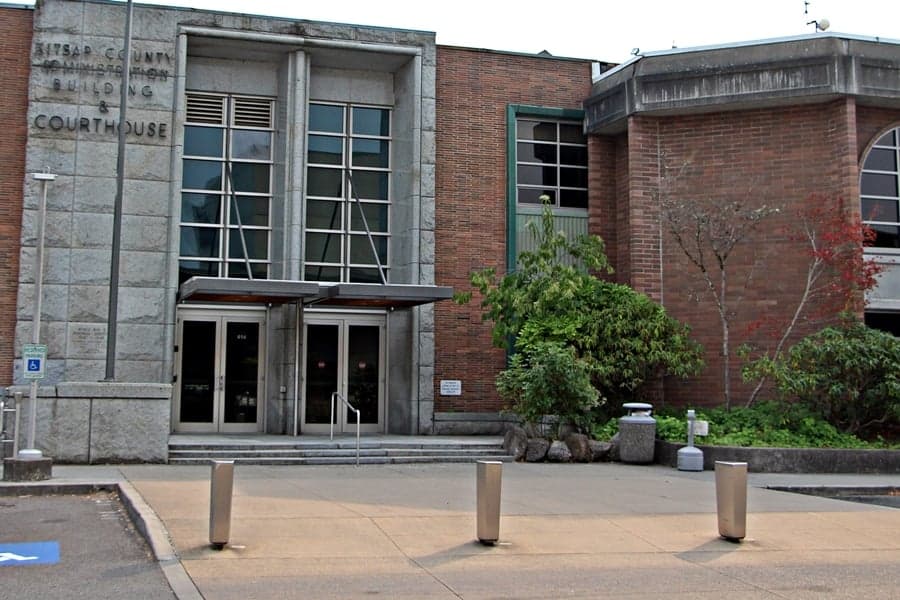
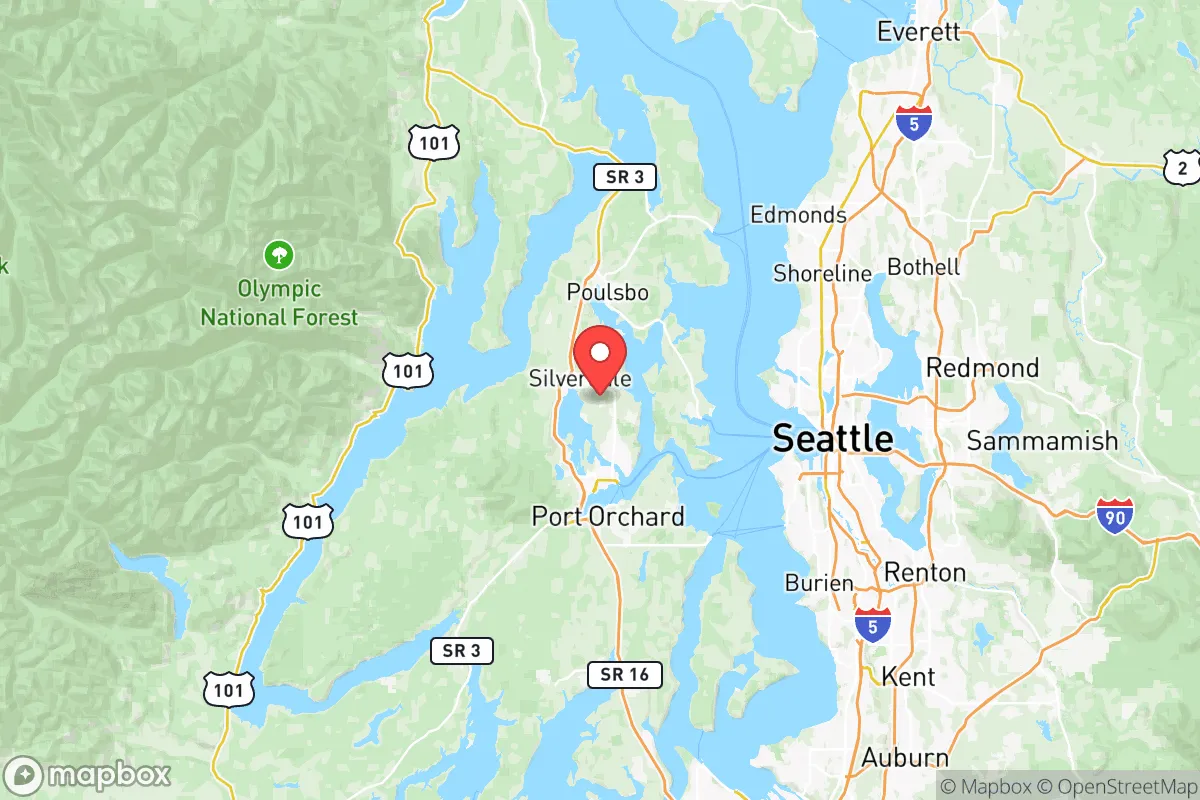
Kitsap County today is home to 276,581 residents, a population shaped by its deep-rooted maritime economy and its role as a bedroom community for Seattle’s workforce. The county is notably less diverse than the national average, with a 73.6% white population and a foreign-born share of just 2.8%, reflecting a history of slow, steady domestic migration rather than international influx. Its identity is defined by a mix of Navy families stationed at Naval Base Kitsap, long-time logging and fishing families, and newer remote workers drawn to the Olympic Peninsula’s natural setting. The county’s population is older and more settled than the state average, with a distinct character that blends small-town conservatism with a practical, outdoors-oriented lifestyle.
Settlement & growth (pre-1960)
The original inhabitants of the Kitsap Peninsula were the Suquamish and S'Klallam peoples, whose villages dotted the shoreline from present-day Port Madison to Port Gamble. The Suquamish, led by Chief Seattle, used the protected waters of Puget Sound for fishing and trade, leaving a legacy visible today at the Port Madison Indian Reservation near Suquamish. European contact began with Spanish and British explorers in the late 18th century, but permanent settlement did not take hold until the 1850s, when American loggers and homesteaders arrived under the Donation Land Claim Act.
The first major wave of American settlers were Yankees from New England and the Upper Midwest, drawn by the region’s towering old-growth forests. They founded Port Gamble in 1853 as a company town for the Puget Mill Company, and Port Orchard grew as a supply hub for the logging camps. These early arrivals were overwhelmingly white, Protestant, and politically conservative, establishing a cultural baseline that persists in much of the county today. By the 1880s, Scandinavian immigrants—Norwegians, Swedes, and Finns—arrived to work the forests and the new shipyards, settling in Poulsbo, which became known as "Little Norway" for its dense Nordic population. The town’s architecture and annual Viking Fest still reflect this heritage.
The U.S. Navy’s arrival during World War II transformed Kitsap County. The construction of Naval Base Kitsap at Bangor and the expansion of the Puget Sound Naval Shipyard in Bremerton drew thousands of workers from across the country, many from the Midwest and the Dust Bowl states. These newcomers were predominantly white and blue-collar, and they settled in Bremerton and Silverdale, which grew from a crossroads into a commercial center. The county’s population more than doubled between 1940 and 1960, but the demographic character remained overwhelmingly white and native-born, with the Scandinavian and Yankee foundations still dominant.
Modern era (post-1965)
The 1965 Hart-Cellar Act had a muted effect on Kitsap County compared to urban centers like Seattle or Tacoma. The foreign-born population today is just 2.8%, far below the national average of 13.7%. The limited international immigration that did occur came primarily from East and Southeast Asia—Filipino, Korean, and Vietnamese families—many of whom arrived as military spouses or defense contractors connected to Naval Base Kitsap. These communities are small but visible, with Filipino-American families concentrated in Bremerton and Silverdale, where they have established churches and cultural organizations. The Indian-subcontinent population remains tiny at 0.4%, with no significant enclave.
The most significant demographic shift since 1965 has been domestic, not international. The county’s Hispanic population grew from negligible in 1970 to 9.0% today, driven by Mexican-American families moving from agricultural areas in Eastern Washington and California for construction and service jobs. This community is dispersed rather than concentrated, though Bremerton and Port Orchard have seen the largest increases. The Black population, at 2.4%, is primarily composed of military families stationed at the naval base, with a small historic presence in Bremerton dating to the World War II shipyard boom.
Suburbanization reshaped the county after the 1980s. The completion of the Tacoma Narrows Bridge in 1950 and its replacement in 2007 made commuting to Seattle and Tacoma feasible, turning Bainbridge Island into an affluent bedroom community for tech workers and professionals. Bainbridge Island’s population is notably more educated and liberal than the rest of the county, with a 36.5% college-educated rate that matches the county average but is concentrated in a small area. Meanwhile, Kingston and Hansville grew as quieter, more conservative exurbs for families seeking waterfront property and lower housing costs than Seattle.
The future
Kitsap County is projected to grow slowly, reaching roughly 300,000 by 2040, with most new residents coming from domestic migration rather than international immigration. The county is becoming slightly more diverse, but the pace is glacial: the white share is expected to decline to around 68-70% by 2040, with Hispanic and Asian populations growing modestly. The foreign-born share may rise to 4-5%, still well below the national average, as military-connected immigration continues and a small number of remote workers relocate from Seattle.
The cultural identity of Kitsap County is likely to remain bifurcated. The urbanizing areas around Bremerton and Silverdale will become more politically mixed and slightly more diverse, while the rural northern and western parts of the county—Poulsbo, Port Gamble, and Seabeck—will retain their older, whiter, and more conservative character. The Navy’s presence will continue to anchor the economy and bring in a transient population that keeps the county from becoming insular, but the deep roots of the Scandinavian and Yankee founding families will remain the dominant cultural force.
For someone moving to Kitsap County today, the region offers a stable, low-diversity environment with a strong sense of place and a practical, outdoors-focused lifestyle. It is not a place of rapid demographic change or cultural upheaval, but rather a community where the past remains visible in the names of its towns, the faces of its longtime residents, and the rhythms of its daily life. Newcomers will find a county that is welcoming but not rapidly transforming, where the Navy, the forests, and the water still define who lives here and why.

* Values derived from national, state, county, city and local statistics and may differ in a specific area. Last updated: 2026-10-20T23:16:14.000Z
Narrative content on this page is AI-generated and may contain mistakes. Verify any details that matter before acting on them.
ReloMaps may earn a commission from affiliate links at no extra cost to you.

