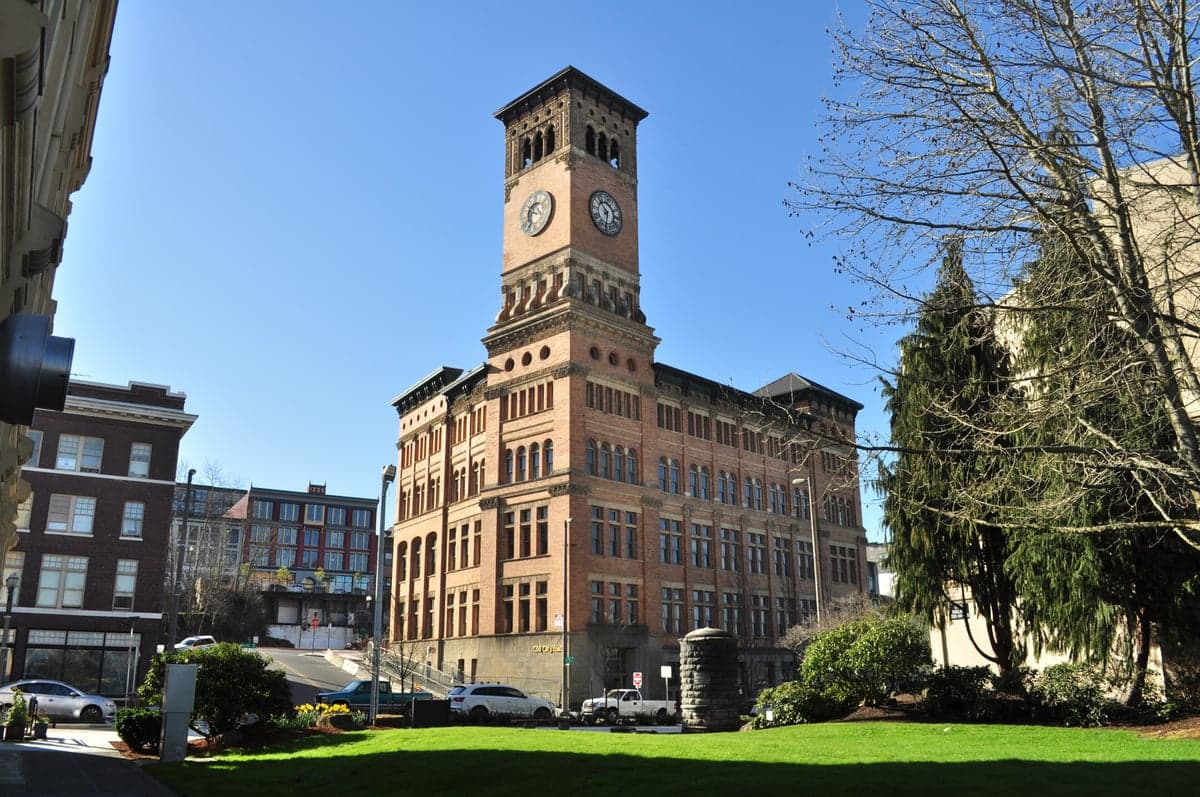
Photo: Wikipedia
Quality of Life in Pierce County
A livable area that tracks near national norms for affordability, walkability, and neighborhood health.
What does Quality of Life tell us?
Quality of Life measures an area by evaluating factors like cost of living, nearby amenities, country club access, airport proximity, socioeconomic signals and neighborhood character. For large states, this is a general average — quality of life can vary dramatically between metro areas, suburbs, and rural communities within the same state.
What does this tell us?
Quality of Life measures an area by evaluating factors like cost of living, nearby amenities, country club access, airport proximity, socioeconomic signals and neighborhood character. For large states, this is a general average — quality of life can vary dramatically between metro areas, suburbs, and rural communities within the same state.
Cost of Living
58% above national average
70%
The Real Cost of Living in Pierce County for 2026
| Tier | Individual | Family (4) |
|---|---|---|
| Survival | $27k | $52k |
| Comfortable | $94k | $138k |
| Luxury | $152k+ | $236k+ |
| Elite (Top 5%) | $179k+ | $278k+ |
Quality-of-Life Analysis
Pierce County, Washington offers one of the most dramatic quality-of-life spectrums in the Puget Sound region, ranging from the dense, transit-connected urban core of Tacoma to the agricultural valleys of Orting and the mountain-adjacent rural stretches of Eatonville and Ashford. The county draws a wide mix of residents: military families and defense contractors near Joint Base Lewis-McChord, creative-class professionals in Tacoma’s revitalized downtown, commuters seeking lower home prices in Puyallup and Bonney Lake, and homesteaders and outdoor enthusiasts in the foothills of Mount Rainier. With a cost-of-living index of 158 (58% above the national average) and a median home value of $484,400, the county demands trade-offs between commute time, space, and access to nature.
Largest town(s) & population centers
Tacoma is the county seat and by far its largest city, with roughly 220,000 residents. Daily life here is increasingly urban: the Brewery District, the Museum District along Pacific Avenue, and the Thea Foss Waterway offer walkable dining, arts, and waterfront access. The city has seen a wave of apartment construction, with median rent at $1,722, and the Link light rail extension to the Hilltop neighborhood has improved transit connectivity. Puyallup (pop. ~43,000) functions as a major suburban hub, anchored by the Puyallup Fair & Events Center and a historic downtown. It attracts families and commuters with a mix of single-family homes and newer subdivisions, though the average commute of 31.6 minutes reflects the heavy traffic on State Route 167 and I-5. Lakewood (pop. ~63,000) is a more affordable, diverse suburb adjacent to Joint Base Lewis-McChord, with a large military and veteran population. Its retail corridors along South Tacoma Way and Bridgeport Way serve a practical, car-dependent lifestyle, and home values here tend to run below the county median.
Smaller towns & rural pockets
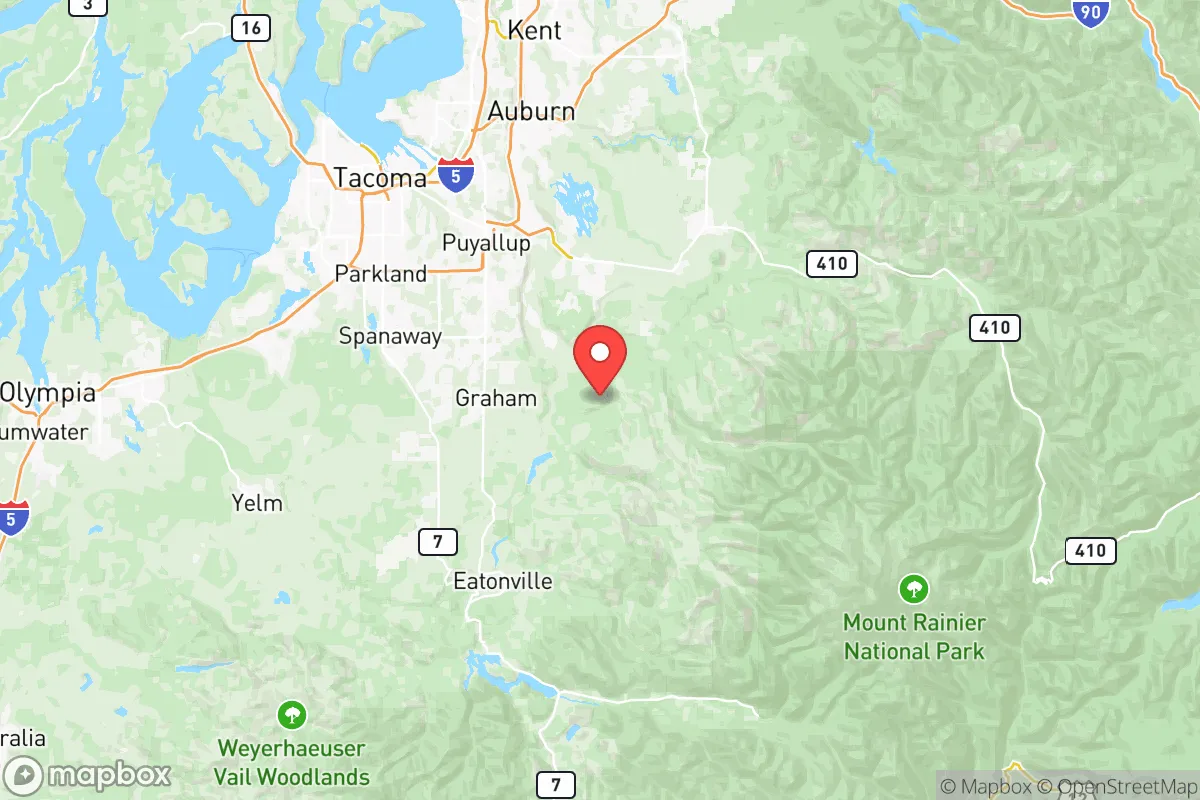
East of Puyallup, Orting (pop. ~9,000) sits in the Carbon River valley, a small farming community that has grown with new subdivisions but retains a quiet, small-town feel. Further south, Eatonville (pop. ~2,900) is the gateway to Mount Rainier National Park, with a historic main street and a strong outdoor-recreation identity. Ashford (pop. ~340), just outside the park’s Nisqually entrance, is a true rural hamlet with cabins, lodges, and a handful of services for hikers and climbers. On the Key Peninsula, Vaughn and Home are unincorporated communities with waterfront properties, septic systems, and limited retail—offering a completely different pace from Tacoma’s core. The Graham area (unincorporated, ~30,000 residents) is a sprawling exurban zone of hobby farms, new subdivisions, and strip malls along State Route 161, popular with families seeking acreage without a full rural commute.
Cost & lifestyle range
The cost-of-living spread across Pierce County is wide. At the high end, Gig Harbor (a separate city within the county) and University Place have median home values well above $600,000, with waterfront views, top-rated schools, and a suburban-country club atmosphere. At the lower end, Parkland and Spanaway (unincorporated areas near Tacoma) offer median home values closer to $350,000–$400,000, but with higher crime rates and fewer amenities. The county’s median home value of $484,400 is roughly $100,000 below King County’s median, making it a popular alternative for Seattle-area workers willing to endure the 31.6-minute average commute. Renters face a median of $1,722, though newer Tacoma apartments often command $1,800–$2,200 for a one-bedroom. Property taxes vary by school district and fire district, with rural areas like Eatonville and Ashford typically having lower mill rates than Tacoma or Puyallup.
Pierce County works best for residents who can match their lifestyle expectations to a specific sub-area. Commuters and urbanites thrive in Tacoma’s walkable core or along the light rail corridor. Military families and budget-conscious buyers find value in Lakewood and Parkland. Rural homesteaders and nature seekers are drawn to the mountain foothills and the Key Peninsula. The county’s diversity of settings—from dense city blocks to forested acreage—means that the right fit exists, but the wrong one can mean a long commute, limited services, or a mismatch in community character.

Crime in Pierce County
Crime rates similar to the national median for U.S. locations.
Violent CrimeViolent Crime Analysis
Property CrimeProperty Crime Analysis
Crime Analysis
Pierce County, Washington, presents a mixed safety profile where property crime rates significantly exceed both state and national averages, while violent crime remains slightly below the national benchmark. The county's 2023-2024 data shows a violent crime rate of 266 incidents per 100,000 residents and a property crime rate of 1,829.5 per 100,000, placing it in a higher-risk category for theft and burglary compared to neighboring King County. Residents in cities like Tacoma, Lakewood, and Puyallup experience notably different safety realities, with Tacoma's urban core driving much of the county's crime statistics.
Crime in context
Pierce County's violent crime rate of 266 per 100,000 is roughly 24% below the national average of 380 per 100,000, but it sits above Washington state's overall rate of 290 per 100,000. Property crime, however, tells a more concerning story: at 1,829.5 per 100,000, the county's rate is nearly 40% higher than the national average of 1,316 per 100,000 and significantly above Washington's state rate of 1,550 per 100,000. This disparity is driven largely by auto theft and larceny, which have spiked across the Puget Sound region since 2020. The county's proximity to Joint Base Lewis-McChord (JBLM) and major highway corridors like I-5 creates transient crime patterns, with property offenses often linked to organized retail theft rings operating between Tacoma and Seattle.
What residents experience
Daily life in Pierce County varies sharply by jurisdiction. Tacoma, the county seat, reports the highest concentration of violent crime, particularly in neighborhoods like Hilltop, Eastside, and the downtown core, where aggravated assaults and robberies are common. The Tacoma Police Department has struggled with staffing shortages, and the city's progressive prosecutorial policies under the Pierce County Prosecutor's Office have drawn criticism for lenient charging decisions on property crimes and drug offenses. In contrast, suburban cities like Gig Harbor and University Place consistently report violent crime rates below 100 per 100,000, making them among the safest areas in the county. Puyallup and Bonney Lake fall in the middle, with property crime rates that mirror the county average but lower violent crime. Lakewood, which borders JBLM, sees elevated rates of both property and violent crime, driven by transient populations and a concentration of motels and apartment complexes. Residents in these higher-crime areas frequently report car break-ins, package theft, and occasional gang-related shootings, while those in safer suburbs describe a more typical suburban experience with occasional burglaries.
Neighborhood-level variation is stark. Within Tacoma, the North End and Proctor District are significantly safer than the South End and Salishan, with property crime rates roughly half those of the city's highest-crime zones. The Pierce County Sheriff's Department covers unincorporated areas like Parkland and Spanaway, where property crime rates are elevated but violent crime remains moderate. The county's liberal judicial philosophy—exemplified by the Pierce County Superior Court's emphasis on diversion programs and reduced sentences for non-violent offenders—has been linked to higher recidivism rates for property crimes, as offenders cycle through the system quickly. For prospective residents, choosing a neighborhood with a strong neighborhood watch program and proximity to a police substation can meaningfully reduce risk. Overall, Pierce County demands vigilance, particularly around property security, but offers many pockets where families can feel safe, especially in the western and southern suburbs.
* Values derived from national, state, county, city and local statistics and may differ in a specific area. Last updated: 2026-05-14T16:36:36.000Z
Narrative content on this page is AI-generated and may contain mistakes. Verify any details that matter before acting on them.
ReloMaps may earn a commission from affiliate links at no extra cost to you.

