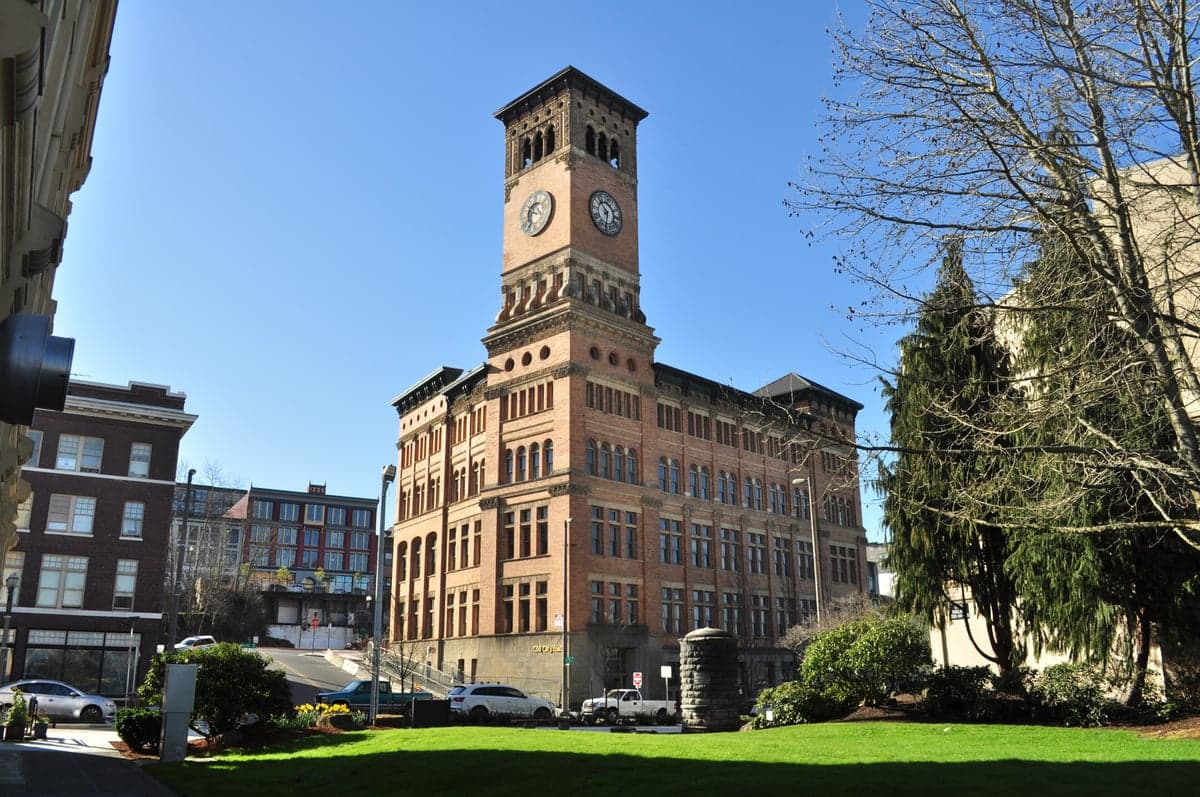
Photo: Wikipedia
Political ClimatePolitical Climate in Pierce County
Showing district-level results — no local-only data available.
Local Political AnalysisPolitical Analysis of Pierce County
Pierce County, Washington, has historically been a bellwether for the state’s political mood, but over the last decade it’s shifted noticeably leftward, now sitting at a Cook PVI of D+3. That’s a far cry from the deep-red territory it was in the 1980s and 90s, and while it’s still more conservative than King County to the north, the trend line is concerning for anyone who values limited government and personal freedoms. The county’s political center of gravity has moved from the rural, gun-friendly outskirts toward the urban core of Tacoma, and that shift is accelerating with every new housing development and out-of-state transplant.
How it compares
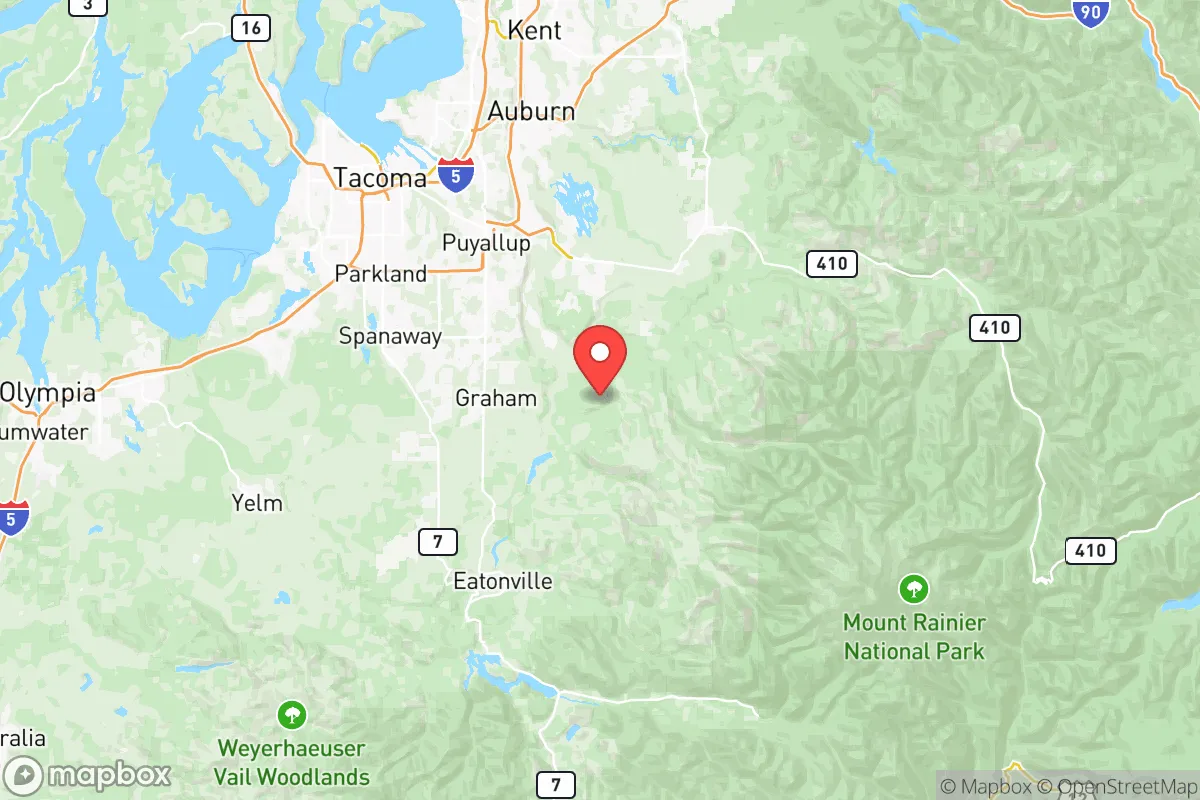
Compared to Washington state as a whole, which carries a D+9 PVI, Pierce County is a relative moderate—but that’s faint praise. The gap between the county and the state is shrinking fast. In the 2020 presidential election, Pierce County went for Biden by about 12 points, while the state overall went for him by 19. That 7-point gap is down from a 10-point gap in 2016, meaning the county is converging with the state’s progressive trajectory. The real story is the internal divide: the city of Tacoma and its inner suburbs (University Place, Fircrest, Lakewood) vote reliably blue, often by 20-30 point margins, while the rural east and south ends—Eatonville, Orting, Buckley, and the Graham area—still lean red by similar margins. The swing precincts are in the unincorporated areas around Puyallup and Bonney Lake, where working-class families who used to vote straight-ticket Republican are now splitting tickets or staying home. That’s where the battle for the county’s soul is being fought, and right now, the blue side is winning.
What this means for residents
For folks who moved here to escape the overreach of King County, the warning signs are flashing. Tacoma’s city council has already passed a “sanctuary city” ordinance, limiting local cooperation with federal immigration enforcement, and the county council has flirted with similar measures. Property taxes have climbed steadily to fund expanded social services, and the county’s health department has been aggressive with mask and vaccine mandates that go beyond state requirements. Meanwhile, the rural towns are fighting back with “Second Amendment sanctuary” resolutions and pushback against the county’s land-use planning, which they see as a backdoor way to force higher-density development and limit private property rights. The cultural divide is real: drive 20 minutes from Tacoma’s 6th Avenue to the farm country outside Eatonville, and you’ll feel like you’ve crossed into a different state.
Looking ahead, the trajectory is clear. As more remote workers and retirees from Seattle and Bellevue discover Pierce County’s lower home prices, the political complexion will continue to shift. The 2024 election will be a key test: if the county’s margin for the Democratic presidential candidate widens again, it’ll signal that the old moderate-conservative coalition is truly dead. For now, the best advice is to pay close attention to local races—city council, school board, and county commission—because those are the battlegrounds where your personal freedoms and tax burden will be decided. The state may be D+9, but Pierce County still has a fighting chance to remain a place where government stays out of your life, if enough people show up and vote like it matters.

State Political ClimatePolitical Climate in Washington
State Political AnalysisPolitical Environment in the State
Washington state has been a reliably Democratic stronghold for over a decade, with a Cook Partisan Voting Index of D+9, meaning it votes about nine points more Democratic than the national average. The dominant coalition is a powerful alliance of tech-industry liberals from the Seattle metro area, unionized public-sector workers, and environmentally-focused voters in the western part of the state. Over the past 20 years, the state has shifted steadily leftward, driven by explosive population growth in King County and the influx of out-of-state tech workers, while rural and eastern counties have become increasingly Republican but lack the population to counterbalance the urban vote.
Urban vs. rural divide
The political map of Washington is a stark study in contrast. The entire western third of the state, anchored by Seattle, Bellevue, and Redmond, is a deep blue stronghold where Democrats routinely win by 40-50 point margins. King County alone casts about a third of all votes in the state, and its progressive tilt effectively decides statewide elections. Moving east, the Cascade Range acts as a political firewall. Spokane, the largest city east of the mountains, is a purple-to-light-red island in a sea of red, with Spokane County trending more Republican in recent cycles. Yakima and the Tri-Cities (Kennewick, Pasco, Richland) are reliably conservative, driven by agricultural and energy-sector voters. The most dramatic shift has been in Clark County (Vancouver), which was once a swing county but has moved left as Portland exurbs expand northward. Meanwhile, rural counties like Ferry, Stevens, and Lincoln vote 70-80% Republican but have tiny populations. The net effect is a state where Democrats control every statewide office and both legislative chambers, yet large swaths of the interior feel completely unrepresented.
Policy environment
Washington’s policy environment is aggressively progressive, with a tax structure that is uniquely burdensome. The state has no personal income tax, but relies heavily on a high sales tax (state rate 6.5%, with local add-ons pushing it over 10% in many cities), high property taxes, and a new capital gains tax on high earners that was upheld by the state Supreme Court in 2023. This creates a regressive tax system that hits middle-class families hard. The regulatory posture is among the most stringent in the nation, particularly for housing, energy, and land use. The state has a cap-and-trade program (Climate Commitment Act) that drives up gas prices, and a strict ban on natural gas in new construction in many cities. Education policy is dominated by teachers’ unions, with per-pupil spending among the highest in the country but mediocre outcomes in urban districts. Healthcare is heavily regulated, with a state-run insurance exchange and some of the nation’s most generous Medicaid expansion. Election laws are among the most liberal: universal mail-in voting is the norm, same-day voter registration is allowed, and felons regain voting rights upon release from prison. There is no voter ID requirement, which has been a flashpoint for conservatives.
Trajectory & freedom
Over the past five years, Washington has become demonstrably less free by any measure of personal liberty. On gun rights, the state passed a ban on "assault weapons" (HB 1240) in 2023, a magazine capacity limit, and a 10-day waiting period for all firearm purchases. These laws were pushed through without a public vote, overriding the will of many rural counties that declared themselves "Second Amendment sanctuaries." On parental rights, the state passed a law in 2023 that allows minors as young as 13 to receive gender-affirming care without parental consent, and schools are prohibited from notifying parents if a child changes their name or pronouns. Medical autonomy was further restricted by a 2024 law requiring COVID-19 vaccine mandates for healthcare workers to be permanent. Property rights have been eroded by the state’s Growth Management Act, which heavily restricts development in rural areas, and by a 2023 law that effectively eliminated single-family zoning in most cities, allowing duplexes and fourplexes in neighborhoods previously zoned for detached homes. The state also passed a law in 2024 that bans for-profit detention centers, effectively ending private immigration detention. On the positive side for conservatives, the state has no personal income tax and no estate tax on estates under $2.2 million, though the capital gains tax is a clear step toward broader income taxation.
Civil unrest & political movements
Washington has been a hotbed of political activism, with Seattle’s Capitol Hill Autonomous Zone (CHAZ) in 2020 being a national symbol of progressive overreach. The state has a robust network of left-wing activist groups, including the Washington State Labor Council and environmental organizations like 350 Seattle, that regularly push for more aggressive climate and labor policies. On the right, the Washington State Republican Party has been weakened by infighting, but grassroots movements like the Washington Gun Rights group and the Moms for Liberty chapters in suburban counties have been active. Immigration politics are a major flashpoint: Washington is a sanctuary state with a 2019 law (HB 1923) that prohibits state and local law enforcement from cooperating with federal immigration authorities. This has led to tensions in border counties like Whatcom (Bellingham), where illegal border crossings from Canada have increased. Election integrity remains a concern for conservatives, with the 2020 and 2022 elections seeing widespread use of ballot drop boxes and no voter ID, though no major fraud has been proven. The most visible flashpoint for a new resident would be the homelessness crisis in Seattle, Tacoma, and Spokane, which has spawned frequent clashes between city officials and activists over encampment sweeps.
Projection
Over the next 5-10 years, Washington is likely to become even more Democratic and more progressive. Demographic trends are clear: the state’s fastest-growing populations are in King County and the Seattle suburbs, driven by tech industry expansion and international immigration. The rural and eastern parts of the state are losing population or growing slowly. The state’s Democratic supermajority in the legislature is likely to persist, and further restrictions on gun rights, higher taxes on the wealthy, and more aggressive climate mandates are probable. A state income tax remains unlikely in the near term due to the state constitution’s strict uniformity clause, but the capital gains tax is a clear foot in the door. For a conservative-leaning individual or family moving in now, the expectation should be that the political environment will continue to shift left, with fewer protections for religious liberty, parental rights, and gun ownership. The best bet for like-minded community is in the eastern counties—Spokane Valley, Liberty Lake, or the Tri-Cities—where local governments are more conservative and the state’s reach is somewhat blunted by distance and local resistance.
For a new resident, the bottom line is this: Washington offers stunning natural beauty and a strong economy, but it comes with a political price tag. You will pay high sales taxes, deal with aggressive state regulation, and live under a government that is actively hostile to many conservative values. If you value personal freedom in the traditional sense—gun rights, parental authority, low taxes, and limited government—this state is likely a poor fit unless you settle in one of the few conservative enclaves east of the mountains. The trajectory is clear, and it is not bending back toward the center anytime soon.
* Values derived from national, state, county, city and local statistics and may differ in a specific area. Last updated: 2026-05-14T16:36:36.000Z
Narrative content on this page is AI-generated and may contain mistakes. Verify any details that matter before acting on them.
ReloMaps may earn a commission from affiliate links at no extra cost to you.

