Demographics of Watertown Town, MA
Affluence Level in Watertown Town, MA
An upper-middle-class area. Household wealth, education levels, and homeownership run ahead of national benchmarks.
People of Watertown Town, MA
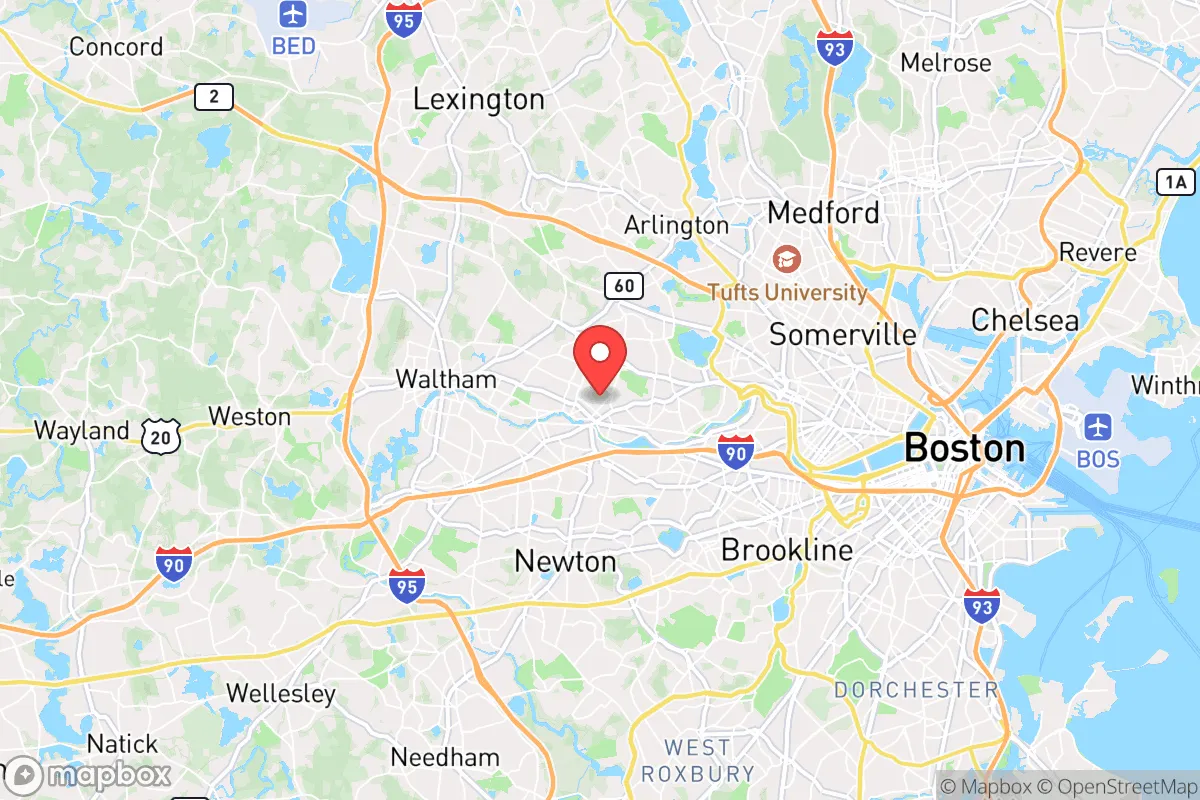
Watertown Town, Massachusetts, is a dense, historically layered city of 35,270 residents where a once-overwhelmingly Irish and Italian Catholic population has given way to a highly educated, ethnically diverse community. With 67.2% of adults holding a college degree, the city is now defined by its professional-class character, a significant East/Southeast Asian and Indian-subcontinent presence, and a distinct identity as a quiet, family-oriented alternative to neighboring Cambridge and Boston. Its population is 69.8% white, 13.1% foreign-born, and increasingly shaped by immigrant professionals and their families who have reshaped neighborhoods once dominated by factory workers and second-generation ethnics.
How the city was settled and grew
Watertown’s original population was English Puritan settlers who arrived in the 1630s, drawn by fertile land along the Charles River and the promise of religious autonomy. The town’s first neighborhoods—Arsenal Village and East Watertown—grew around the Watertown Arsenal (established 1816) and later the Charles River mills, which attracted Irish immigrants fleeing the Great Famine in the 1840s and 1850s. By the late 19th century, the arsenal and nearby shoe factories drew Italian immigrants, who settled heavily in Coolidge Hill and Bemis, building tight-knit Catholic parishes like Saint Patrick’s. A smaller wave of Polish and Armenian families arrived in the early 1900s, clustering in West Watertown near the Mount Auburn Cemetery border. These groups formed the city’s white ethnic backbone through the mid-20th century, with the population peaking at roughly 40,000 in the 1950s before suburban flight began.
Modern era (post-1965)
The 1965 Hart-Cellar Act opened the door to non-European immigration, but Watertown’s modern demographic shift accelerated after 1990, driven by the expansion of Harvard University, MIT, and biotech firms in nearby Cambridge. The first major post-1965 group was East/Southeast Asian immigrants—primarily Chinese and Vietnamese—who settled in East Watertown and Watertown Square, drawn by affordable triple-deckers and proximity to Boston’s Chinatown. By 2000, the Asian share (East/Southeast) had reached roughly 4%, climbing to 6.7% by the 2020s. A more dramatic shift came from Indian-subcontinent immigrants (now 5.2% of the population), who began arriving in the 2000s as tech and healthcare professionals. They concentrated in Coolidge Hill and Bemis, areas with larger single-family homes and top-rated public schools like Watertown High School. The Hispanic population (6.5%) grew more slowly, with many families settling in West Watertown near the Arsenal Mall corridor. The white share dropped from 85% in 1990 to 69.8% today, but the city remains majority-white, with the foreign-born share (13.1%) lower than neighboring Cambridge (29%) or Somerville (25%).
The future
Watertown’s population is trending toward further diversification, but not rapid homogenization. The East/Southeast Asian and Indian-subcontinent communities are growing steadily, driven by continued tech-sector employment and the city’s reputation for strong schools (Watertown High School ranks in the top 20% of Massachusetts high schools). These groups are not forming isolated enclaves; instead, they are assimilating into existing neighborhoods, with Coolidge Hill and Bemis seeing the most mixed-race households. The white population is aging and slowly declining, though it remains the majority. The Hispanic share is plateauing, while the Black share (4.1%) is stable. New development—particularly the Arsenal Yards mixed-use project—is attracting younger, childless professionals, but the city’s high housing costs (median home price over $700,000) limit in-migration from lower-income groups. Over the next 10–20 years, Watertown will likely become more Asian and Indian, more educated, and slightly denser, but it will retain its core character as a stable, family-oriented suburb with a strong sense of local identity.
For a conservative-leaning individual or parent considering relocation, Watertown offers a safe, well-run city with excellent schools and a population that is increasingly professional and diverse—but not chaotic. The city is becoming more Asian and Indian, not less white, and its immigrant communities are largely middle-class and family-focused. It is not a place of rapid ethnic turnover or cultural fragmentation, but a steady, upwardly mobile suburb where newcomers of any background can find a stable, community-oriented home.

* Values derived from national, state, county, city and local statistics and may differ in a specific area. Last updated: 2026-04-23T04:55:31.000Z
Narrative content on this page is AI-generated and may contain mistakes. Verify any details that matter before acting on them.
ReloMaps may earn a commission from affiliate links at no extra cost to you.

