Strategic Assessment of Watertown Town, MA
Multiple tactical vulnerabilities. Population density, target proximity, or disaster risk are likely compounding. A retreat property and exit planning is required.
What does the Strategic Assessment tell us?
Our Strategic Assessment grades tactical survivability of an area. Major population centers, military targets, fallout zones, natural disasters, and border exposure all drive risk — lower exposure means a more defensible position in a crisis.
This is heavily inspired by Joel Skousen's Strategic Relocation book. Highly recommended you checkout the book ($)What does this tell us?
Our Strategic Assessment grades tactical survivability of an area. Major population centers, military targets, fallout zones, natural disasters, and border exposure all drive risk — lower exposure means a more defensible position in a crisis.
This is heavily inspired by Joel Skousen's Strategic Relocation book. Highly recommended you checkout the book ($)Strategic Pillars

Key Distances
Regional Safe Places
Below is our recommended "safe zones" in Massachusetts and the surrounding area based on our strategic heuristics. For most people, it's unrealistic to live in a “safe zone” full-time due to work, family or other personal reasons. They tend to be more rural. However, many of these areas are perfect for second homes and retreat properties that double as a vacation home or even a short-term rental.
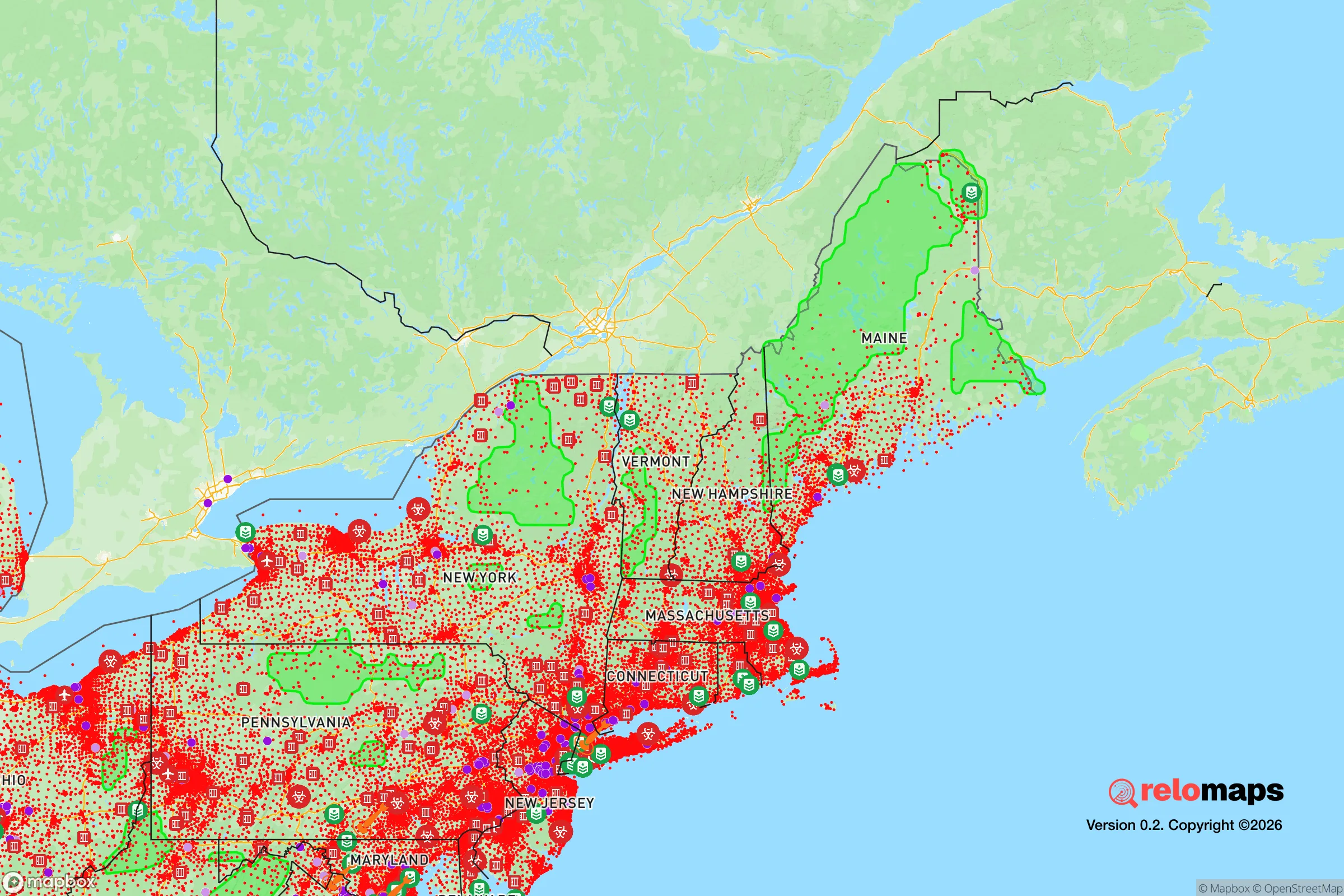
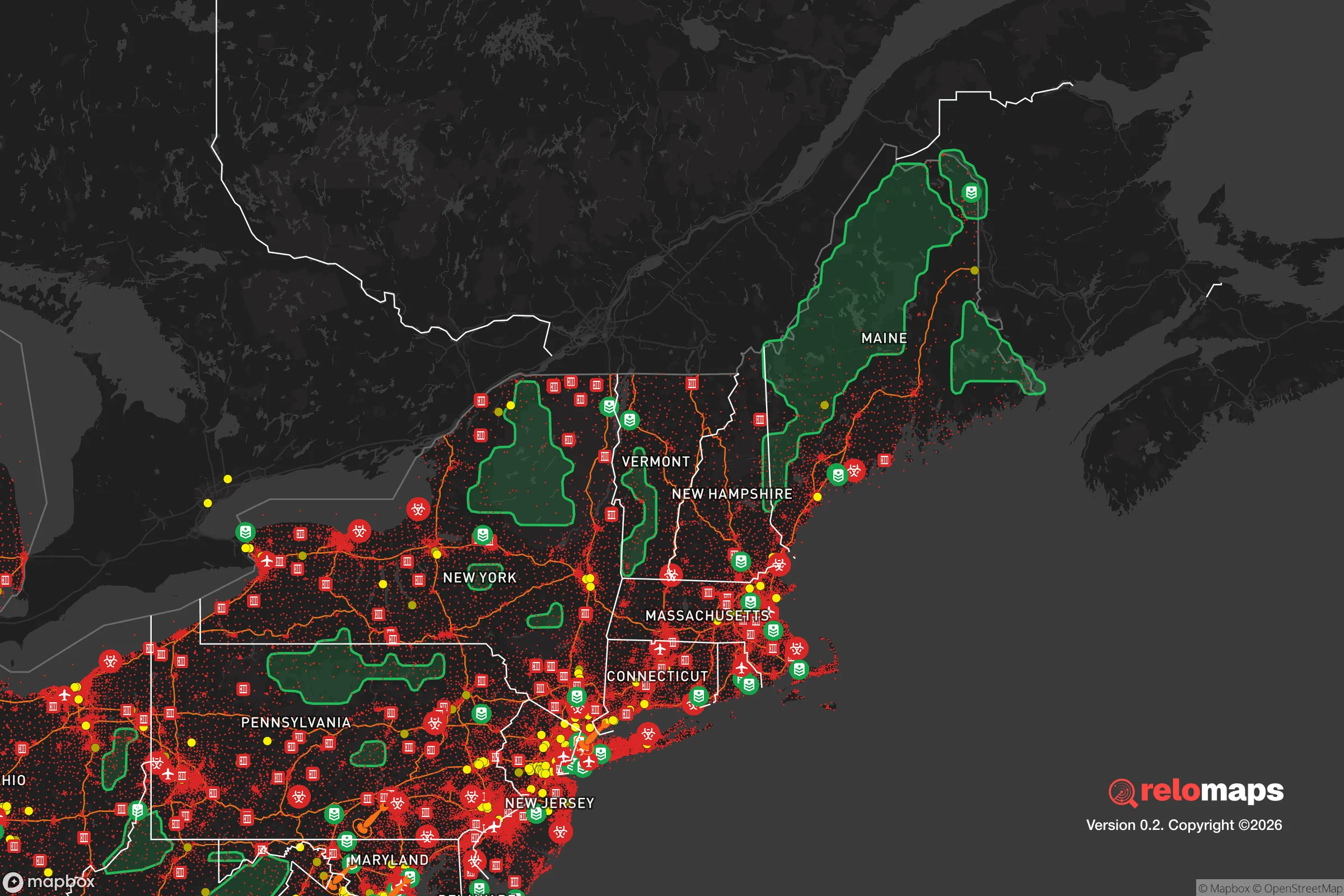


Important Note: For informational purposes only. This does not mean nothing bad ever happens in the green zones. Please use common sense. This is based on public data and modeled with AI. We tried to take a conservative approach but mistakes happen. We update this regularly as new information becomes available.
Solar Generator Recommendations
Backup power matters more here than in safer locations. We've picked three solar generators across budgets and capacity tiers — start with the budget unit if you only need a few essentials, or step up if you want to run a fridge and HVAC for days at a time.

Jackery Portable Power Station Explorer 300
Budget OptionPower on the Go: Weighing only 11 lbs, it's convenient to set up and store with book-sized foldable solar panels

BLUETTI Portable Power Station AC180
Designed for both indoor and outdoor scenarios, AC180 is highly capable as it has a robost capacity and continuous output power.

EF ECOFLOW DELTA Pro Ultra Power Station
Upgraded PickEcoFlow DELTA Pro Ultra is a whole-home energy system designed to grow with your family. Integrated with the Smart Home Panel 2, it scales to meet your evolving energy needs — keeping your home powered, intelligent, and secure through every stage of life.
We earn a commission, at no additional cost to you.
Strategic Assessment Analysis
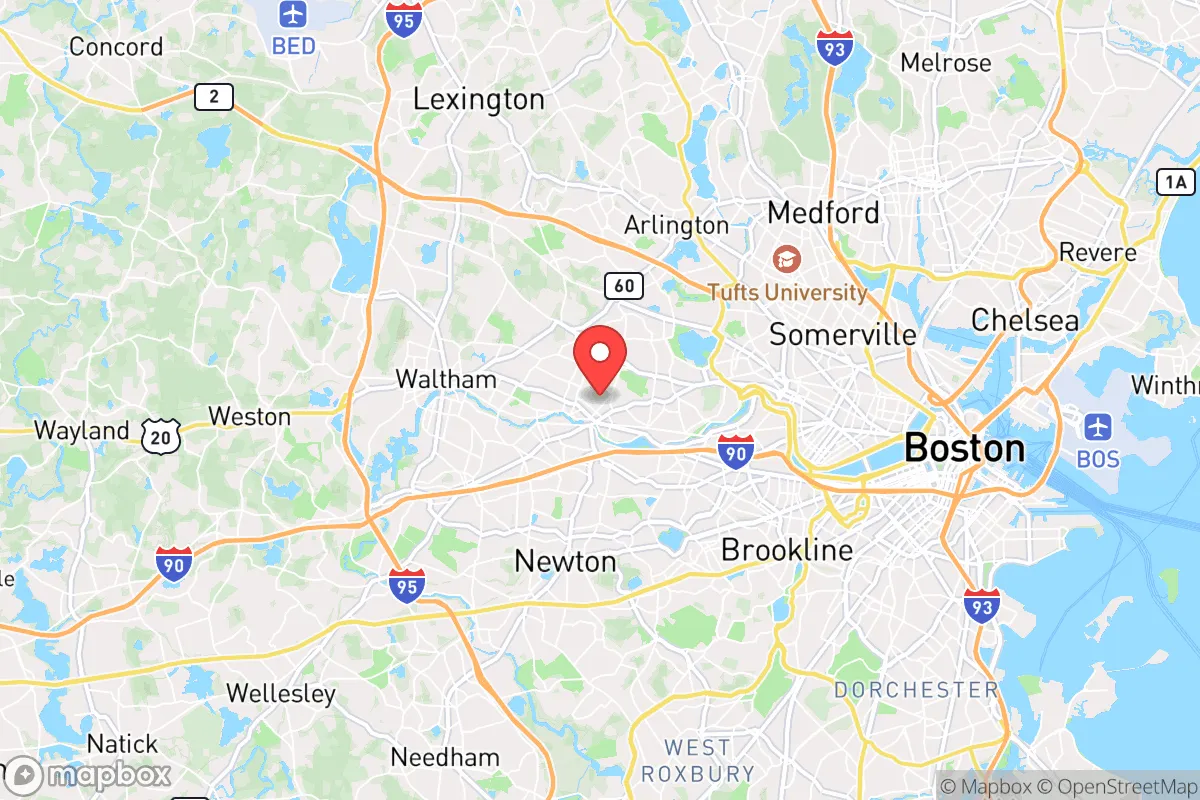
Watertown Town, Massachusetts, presents a complex strategic picture for the conservative prepper or survivalist. Its primary advantage is its location along the Charles River, providing a reliable water source and a degree of natural defensibility, but its proximity to Boston—just six miles west—is a double-edged sword that introduces severe vulnerabilities. For those prioritizing resilience against civic unrest, mass casualty events, and large-scale disasters, Watertown offers a few tactical benefits but is ultimately a high-risk, low-reward proposition for long-term survival, especially compared to more rural New England options.
Geographic position and natural advantages for a survival retreat
Watertown sits on the south bank of the Charles River, which is a significant natural asset. The river provides a potential source of fresh water for filtration and basic needs, though it is heavily urbanized and would require robust treatment. The town's topography is generally flat to gently rolling, with some wooded areas like the Mount Auburn Cemetery and the Arsenal Park green spaces, but these are not large enough for sustainable hunting or foraging. The major natural advantage is the Charles River itself, which could serve as a natural barrier to movement from the north, slowing potential threats. However, the town is crisscrossed by major arteries—Route 16, Route 20, and the Massachusetts Turnpike (I-90) just south—which are evacuation chokepoints and likely targets for civil unrest or infrastructure failure. The proximity to the Boston metropolitan area means that any major event in the city will quickly spill into Watertown, making it a de facto suburb under siege rather than a defensible redoubt.
Risks, exposures, and proximity to fallout-relevant landmarks
The most glaring risk is Watertown's location within the Boston metroplex. It is less than 10 miles from Logan International Airport, a high-value target for any coordinated attack or mass casualty event. The town is also adjacent to Cambridge, home to Harvard University and MIT, which are symbolic and practical targets for civil unrest or terrorist actions. The Watertown Arsenal, a former U.S. Army base now redeveloped into a mixed-use commercial and residential area, is a historical landmark but also a potential target due to its past military significance and current high-density population. The town is within the blast and fallout radius of any major incident in Boston, including a potential dirty bomb or conventional strike on the city's financial district or government centers. Furthermore, the town's dense population—over 35,000 people in just 4.1 square miles—means that any evacuation or supply disruption would lead to rapid gridlock and resource depletion. The Charles River dams and locks are also potential points of failure or sabotage, threatening flooding or water contamination.
Practical resilience for a relocator: food, water, energy, and defensibility
For a relocator, Watertown's practical resilience is poor. Food security is virtually nonexistent; the town has no significant agricultural land, and the few community gardens are insufficient for a population of this size. Local grocery stores would be stripped within hours of a crisis. Water access is the one bright spot—the Charles River is a year-round source, but it requires advanced filtration and chemical treatment due to urban runoff, industrial pollutants, and sewage overflows. The town's water supply is piped from the Quabbin Reservoir, a vulnerable infrastructure that could be cut or contaminated. Energy dependence is extreme; Watertown relies entirely on the regional grid, with no local power generation or natural gas reserves. Solar panels on individual homes are possible but would be obvious targets for looting. Defensibility is a major weakness. The town's street grid is dense and interconnected, with few natural chokepoints. The Charles River provides a northern barrier, but the south and east are wide open to Boston's sprawl. The town's police force is small (around 60 officers) and would be overwhelmed in a mass casualty event or civil unrest scenario. The presence of the Massachusetts National Guard's 101st Field Artillery Regiment at the Arsenal could be a stabilizing force or a target, depending on the nature of the crisis. For a single individual or family, the best defensive strategy would be to fortify a single-family home with a basement, but the lack of standoff distance from neighbors and roads makes this a temporary solution at best.
The overall strategic picture for Watertown is one of high risk with limited reward. It offers a reliable water source and a location that is not immediately in the blast zone of a Boston-centric event, but the density, infrastructure vulnerabilities, and lack of food or energy independence make it a poor choice for long-term survival. For the conservative prepper, Watertown might serve as a temporary staging point or a location for short-term urban operations, but it is not a sustainable retreat. The town's best use is as a place to build skills and network with like-minded individuals before a crisis, then execute a planned evacuation to a more defensible rural location in western Massachusetts or New Hampshire. If you are committed to the Boston area for work or family, Watertown is a reasonable compromise for day-to-day life, but do not mistake its suburban comfort for genuine resilience. The smart money is on a property with a well, solar panels, and a defensible perimeter—none of which Watertown can reliably provide.

* Values derived from national, state, county, city and local statistics and may differ in a specific area. Last updated: 2026-04-23T04:55:31.000Z
Narrative content on this page is AI-generated and may contain mistakes. Verify any details that matter before acting on them.
ReloMaps may earn a commission from affiliate links at no extra cost to you.

