Photo: Wikipedia
Demographics of Watertown, WI
Affluence Level in Watertown, WI
A below-average socioeconomic profile. Incomes, home values, and educational attainment trail the U.S., with higher poverty and unemployment.
People of Watertown, WI
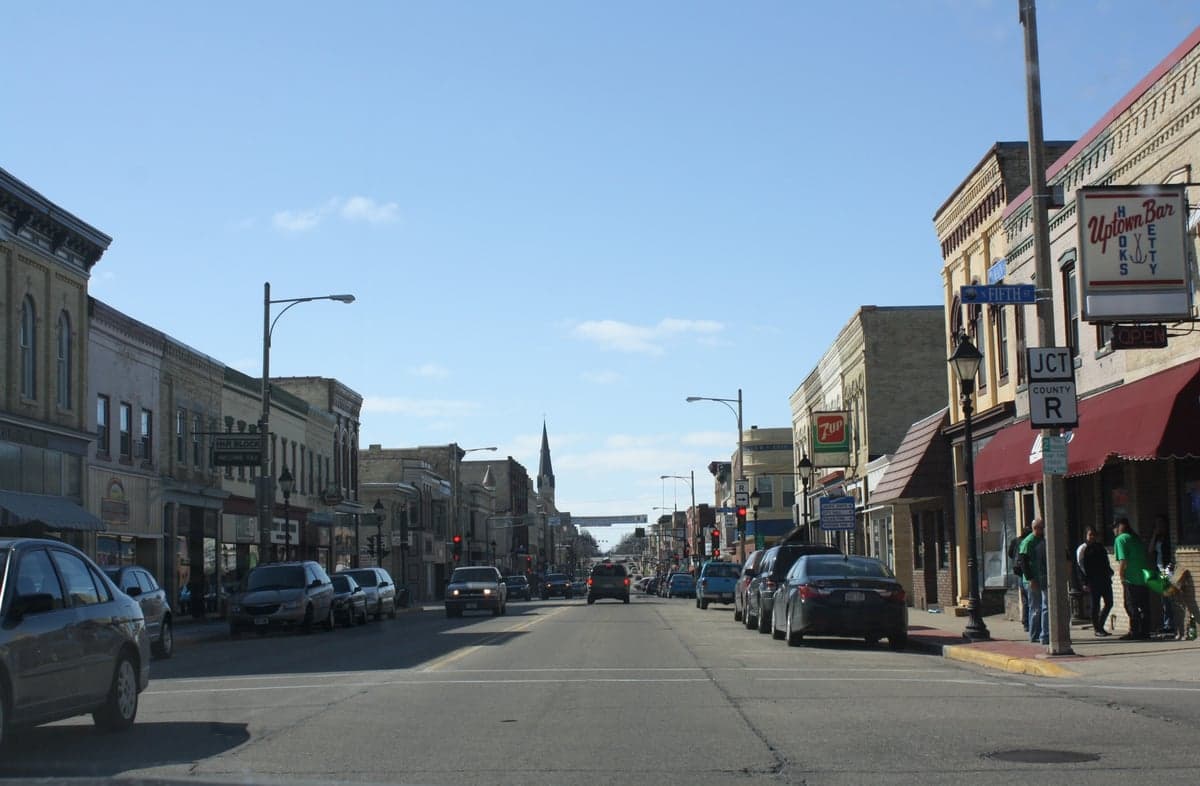
Watertown, Wisconsin, is a historically German and Irish industrial city of 22,873 residents that remains overwhelmingly white (85.1%) with a growing Hispanic minority (11.5%) and a very small foreign-born population (1.5%). The city’s character is shaped by its 19th-century immigrant roots, a strong manufacturing base, and a notably low college attainment rate (19.0%) that reflects a blue-collar, family-oriented culture. Today, Watertown feels like a stable, working-class community where ethnic identity is still tied to old neighborhoods, though a modest Hispanic influx is slowly diversifying the city’s southern and western edges.
How the city was settled and grew
Watertown’s first permanent settlers were Yankees from New York and New England who arrived in the 1830s, drawn by water power from the Rock River. The real population boom came with German and Irish immigrants in the 1840s–1880s, who built the city’s breweries, tanneries, and flour mills. The Germans settled heavily in the North Side around Main Street and the river, establishing Lutheran churches and German-language schools, while the Irish concentrated in the South Side near the railroad yards and St. Bernard’s Catholic Church. A smaller wave of Polish immigrants arrived around 1900, forming a tight-knit enclave in the East Side along Concord Avenue. By 1910, Watertown was nearly 90% German or German-American, with English and Irish making up most of the remainder. The city’s population peaked at roughly 16,000 in 1960 before suburbanization and factory consolidation caused a slow decline.
Modern era (post-1965)
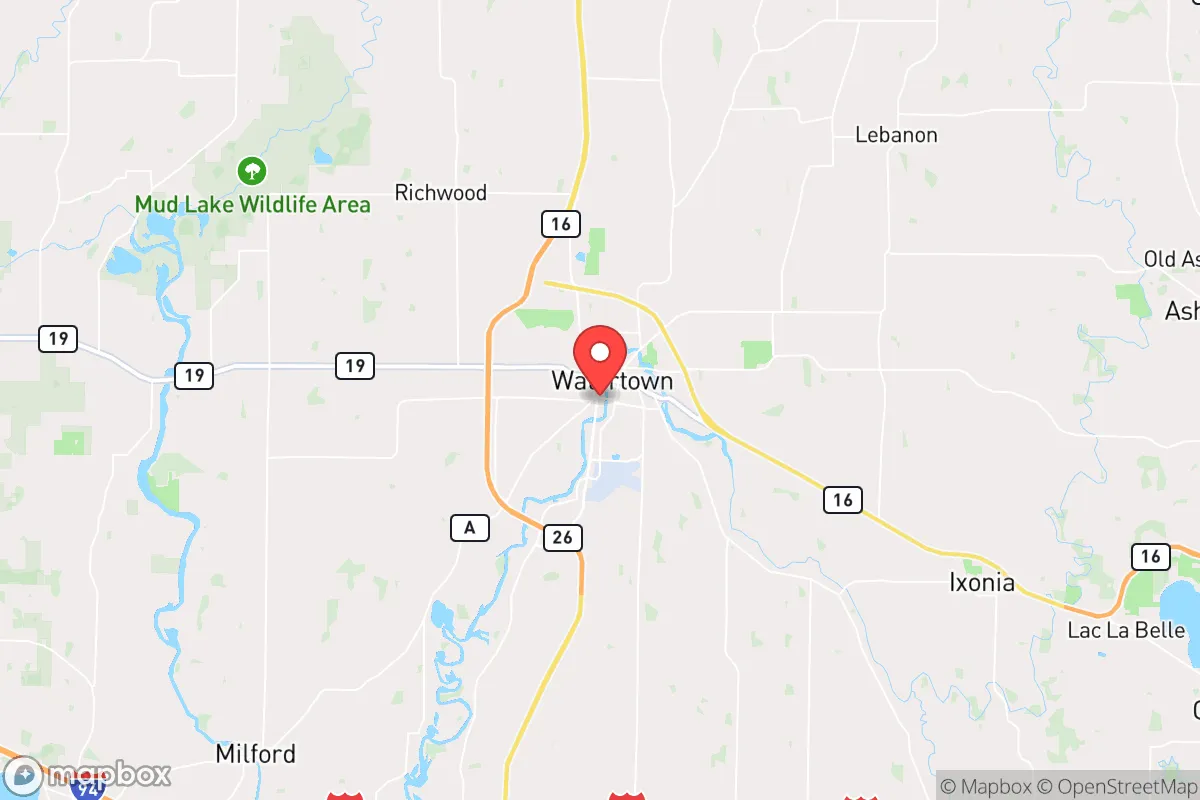
After the 1965 Immigration Act, Watertown saw almost no new immigration from Asia, Africa, or the Middle East — the city’s East/Southeast Asian population is just 0.1% and its Indian-subcontinent population is 0.0%. Instead, the major demographic shift has been domestic: a gradual out-migration of younger, college-educated residents to larger metros like Madison and Milwaukee, replaced by an influx of Hispanic families, primarily of Mexican origin, starting in the 1990s. These new residents have concentrated in the Southwest Side around Watertown High School and along Highway 26, where affordable housing and jobs at manufacturers like Quad/Graphics and Metalcraft of Mayville drew them. The Downtown core, once the German commercial heart, has seen its ethnic identity fade as older generations moved out and retail shifted to the highway strip. The Black population remains negligible at 0.2%, and the city has no significant Arab or Indian communities. The result is a city that is still overwhelmingly white but with a visible Hispanic minority that is growing faster than any other group.
The future
Watertown’s population is projected to remain stable or grow slowly, driven almost entirely by Hispanic births and continued in-migration from other parts of Wisconsin and the Midwest. The white population is aging and declining slightly, while the Hispanic share is expected to rise from 11.5% to perhaps 15–18% by 2040. New residential development is occurring in the West Side near the new Watertown Regional Medical Center campus and in the Northwest Side along Highway 16, where subdivisions are attracting families from both white and Hispanic backgrounds. The city’s cultural identity is slowly shifting from a purely German-American heritage to a more blended Midwestern-Hispanic character, though the pace is gradual and the city remains far less diverse than nearby Madison or Milwaukee. The low college attainment rate suggests that Watertown will continue to be a blue-collar, family-oriented community, not a destination for knowledge-economy workers.
For someone moving in now, Watertown offers a stable, affordable, and safe environment with a clear sense of its German and Irish past, but with a slowly diversifying population that is concentrated in specific neighborhoods. The city is not becoming a melting pot — it is becoming a slightly more Hispanic version of its former self, while remaining one of the whitest and least foreign-born cities of its size in Wisconsin. New residents should expect a community where old ethnic identities still matter, but where the biggest change ahead is the gradual integration of Hispanic families into the city’s social and economic fabric.

* Values derived from national, state, county, city and local statistics and may differ in a specific area. Last updated: 2026-08-11T01:35:41.000Z
Narrative content on this page is AI-generated and may contain mistakes. Verify any details that matter before acting on them.
ReloMaps may earn a commission from affiliate links at no extra cost to you.

