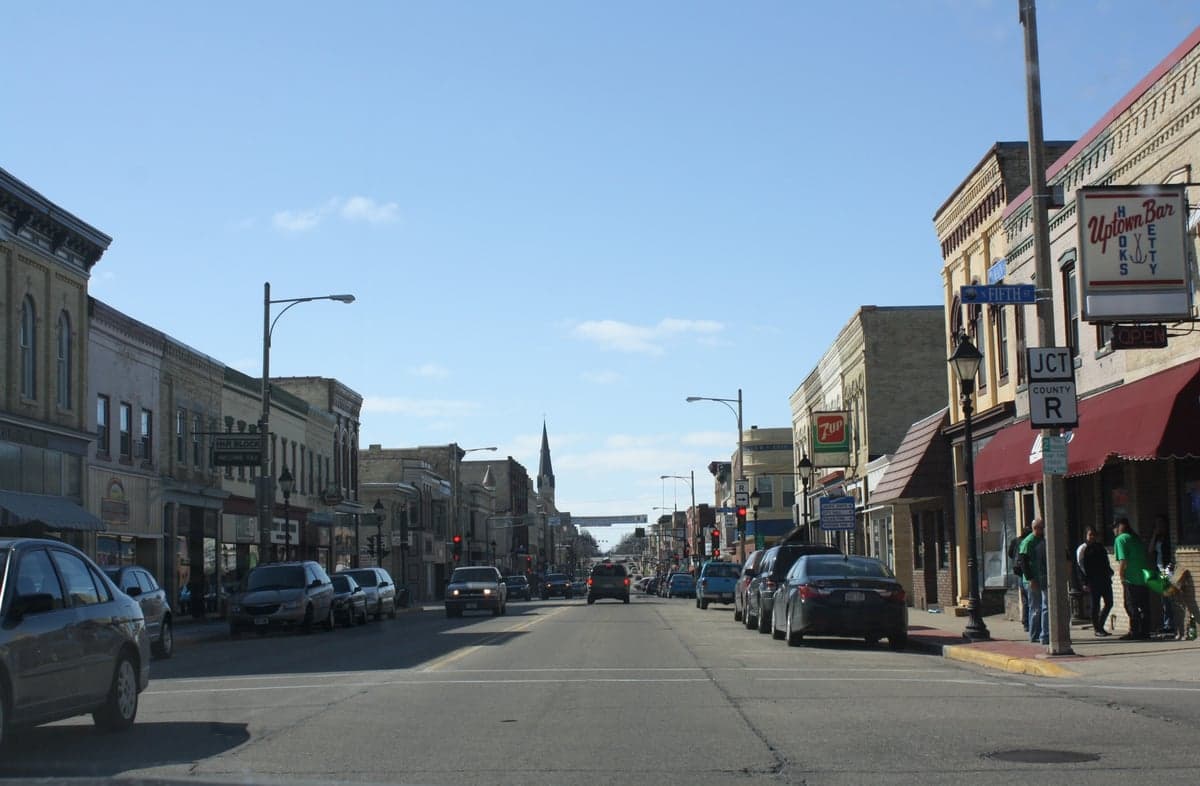
Photo: Wikipedia
Strategic Assessment of Watertown, WI
Meaningful friction. Expect exposure to either population pressure, blast zones, or natural disaster risk. Consider buying a retreat property.
What does the Strategic Assessment tell us?
Our Strategic Assessment grades tactical survivability of an area. Major population centers, military targets, fallout zones, natural disasters, and border exposure all drive risk — lower exposure means a more defensible position in a crisis.
This is heavily inspired by Joel Skousen's Strategic Relocation book. Highly recommended you checkout the book ($)What does this tell us?
Our Strategic Assessment grades tactical survivability of an area. Major population centers, military targets, fallout zones, natural disasters, and border exposure all drive risk — lower exposure means a more defensible position in a crisis.
This is heavily inspired by Joel Skousen's Strategic Relocation book. Highly recommended you checkout the book ($)Strategic Pillars

Key Distances
Regional Safe Places
Below is our recommended "safe zones" in Wisconsin and the surrounding area based on our strategic heuristics. For most people, it's unrealistic to live in a “safe zone” full-time due to work, family or other personal reasons. They tend to be more rural. However, many of these areas are perfect for second homes and retreat properties that double as a vacation home or even a short-term rental.
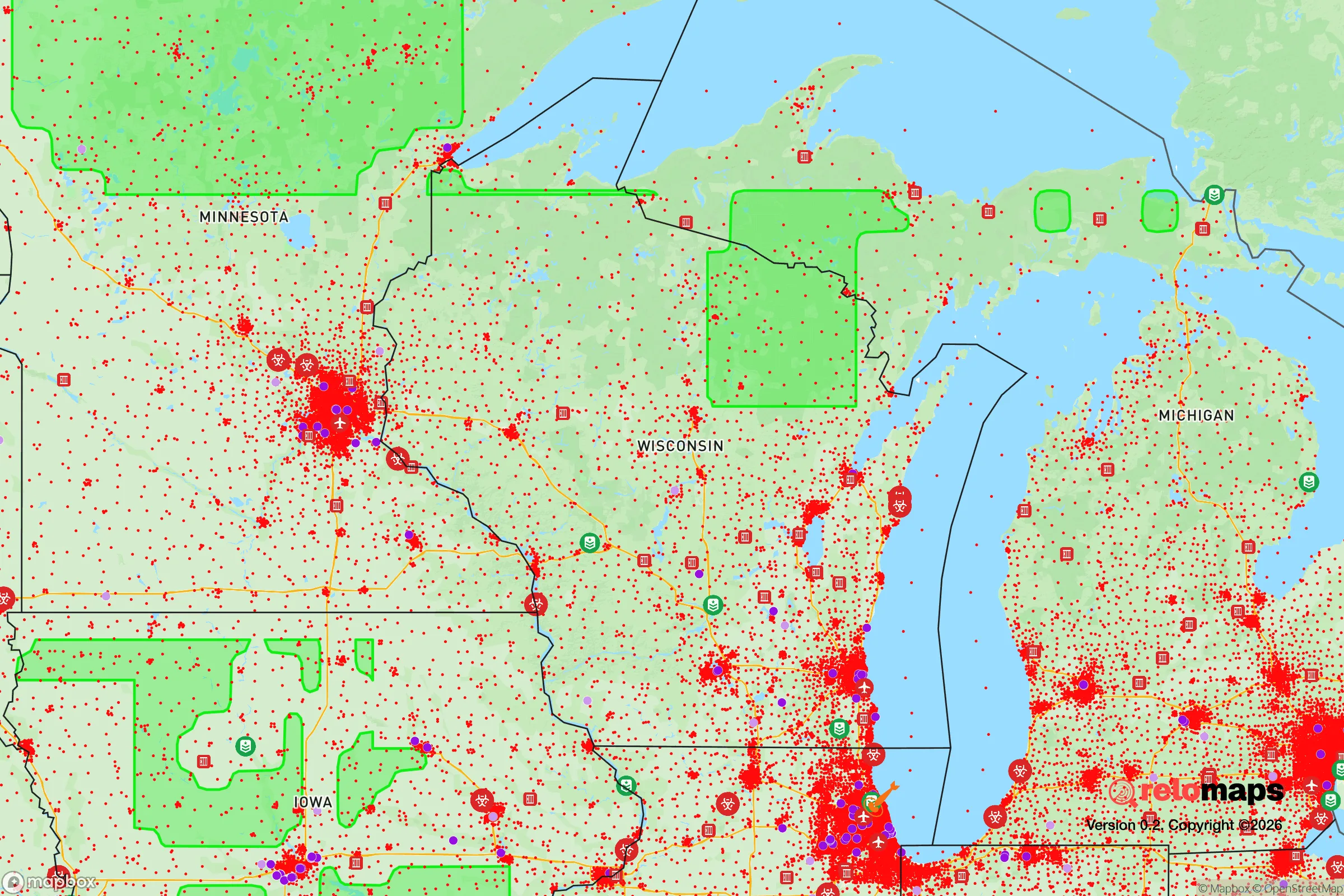
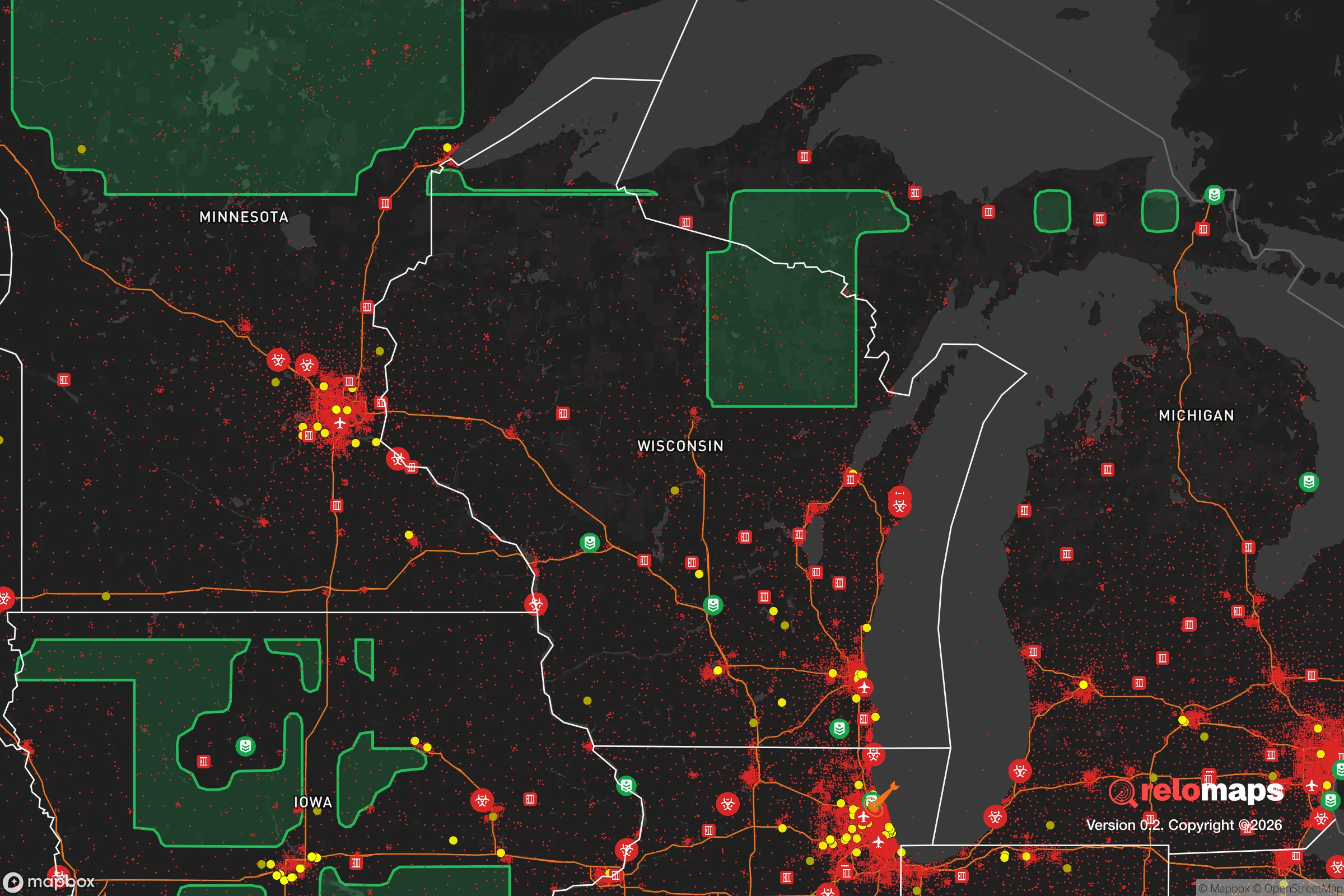


Important Note: For informational purposes only. This does not mean nothing bad ever happens in the green zones. Please use common sense. This is based on public data and modeled with AI. We tried to take a conservative approach but mistakes happen. We update this regularly as new information becomes available.
Solar Generator Recommendations
Backup power matters more here than in safer locations. We've picked three solar generators across budgets and capacity tiers — start with the budget unit if you only need a few essentials, or step up if you want to run a fridge and HVAC for days at a time.

Jackery Portable Power Station Explorer 300
Budget OptionPower on the Go: Weighing only 11 lbs, it's convenient to set up and store with book-sized foldable solar panels

BLUETTI Portable Power Station AC180
Designed for both indoor and outdoor scenarios, AC180 is highly capable as it has a robost capacity and continuous output power.

EF ECOFLOW DELTA Pro Ultra Power Station
Upgraded PickEcoFlow DELTA Pro Ultra is a whole-home energy system designed to grow with your family. Integrated with the Smart Home Panel 2, it scales to meet your evolving energy needs — keeping your home powered, intelligent, and secure through every stage of life.
We earn a commission, at no additional cost to you.
Strategic Assessment Analysis
Watertown, Wisconsin, occupies a strategic middle ground that resilience-minded relocators should take seriously: it sits roughly 40 miles east of Madison and 50 miles west of Milwaukee, far enough from both to avoid the worst of urban collapse scenarios yet close enough to access critical supplies and medical care in a pinch. The city’s position along the Rock River and its agricultural surroundings offer genuine self-sufficiency potential, but its proximity to major transportation corridors and potential fallout targets demands a clear-eyed assessment. For a single individual or family weighing disaster readiness alongside daily livability, Watertown presents a mixed but workable picture — one that rewards preparation rather than complacency.
Geographic position and natural advantages for long-term stability
Watertown’s location in southeastern Wisconsin places it within the glaciated plains region, a landscape of rolling hills, fertile loam soils, and abundant surface water. The Rock River runs directly through the city, providing a reliable freshwater source that is less prone to contamination than shallow wells in more developed areas. The surrounding Dodge and Jefferson County farmlands are among the most productive in the state, with corn, soybeans, and dairy operations dominating the local economy. This agricultural base means that even in a supply-chain disruption, food production within a 20-mile radius remains viable — a significant advantage over purely suburban or exurban communities that depend entirely on trucked-in groceries. The terrain itself offers modest defensibility: the river creates natural chokepoints at several bridges, and the gently rolling hills provide limited but useful vantage points. Winters are cold and snowy, which can be a hardship but also a natural barrier to movement during the coldest months. The area is not prone to earthquakes, hurricanes, or wildfires, and tornado risk is moderate — Dodge County averages about 5 tornadoes per decade, none of which have produced catastrophic damage in Watertown proper. Flooding along the Rock River is the primary natural hazard, with the 2008 and 2019 floods causing basement and low-lying road damage, but the city’s floodplain management has improved since then. Overall, the natural setting supports a long-term stay if basic preparations are made.
Risks, exposures, and proximity to fallout-relevant landmarks
The most serious risk for Watertown in a national emergency scenario is its proximity to multiple high-value targets. Madison, home to the state capitol, the University of Wisconsin, and Epic Systems (a major healthcare software employer), is a likely target for both conventional and strategic attacks. Milwaukee, with its port on Lake Michigan and industrial infrastructure, is another. Watertown lies roughly equidistant from both, putting it within the fallout plume zone for a ground burst at either city, depending on wind direction. Additionally, the nearby town of Johnson Creek is home to a major rail yard and a large Amazon distribution center — both potential secondary targets. Interstate 94 runs 10 miles south of Watertown, a major east-west logistics corridor that could become a military or refugee movement route in a crisis. The city itself has no obvious strategic value, which is a double-edged sword: it reduces the chance of a direct strike but also means it would receive little priority for federal resources during a recovery. The local hospital, Watertown Regional Medical Center, is a 60-bed facility that could be overwhelmed quickly. For a relocator, the key takeaway is that Watertown is not a fallout-free zone — it sits within the moderate-risk ring around major cities. Realistic preparation means having a basement or interior shelter with at least two weeks of supplies, and a plan to monitor wind patterns if an event occurs. The area’s lack of military bases, nuclear power plants, or major government facilities is a net positive, but the transportation infrastructure nearby is a vulnerability that cannot be ignored.
Practical resilience for a relocator: food, water, energy, and defensibility
Watertown’s practical resilience is above average for a city of its size (about 24,000 residents) but requires active effort from a relocator. The municipal water supply draws from the Rock River and is treated at the city’s water plant; in a prolonged power outage, the plant has backup generators, but residents should have a personal filtration system or a means to boil river water. Well water is available in rural areas just outside city limits, but most in-town properties rely on municipal supply. For food, the local farmers’ market operates from May through October, and several u-pick orchards and vegetable farms are within a 15-minute drive. The city has two grocery stores (Piggly Wiggly and Walmart) and a handful of smaller markets, but supply chains here are thin compared to Madison or Milwaukee — a panic-buying event would empty shelves within 24 hours. Gardening space is plentiful: many homes in Watertown sit on quarter-acre or larger lots, and the soil quality is excellent for vegetables. The city’s zoning allows for backyard chickens and small livestock, though pigs and cattle require more acreage. For energy, the local grid is served by We Energies, which has a mixed reliability record — winter ice storms have caused multi-day outages in outlying areas. Solar panels are a viable option, with the area receiving about 4.5 peak sun hours per day, but net metering policies in Wisconsin are less favorable than in some states. Wood heat is a practical backup, as firewood is abundant and affordable from local suppliers. Defensibility is moderate: the city’s layout is a traditional grid with a compact downtown, making it hard to secure a large perimeter. However, the river and several parks create natural barriers, and the surrounding farmland offers clear sightlines. A relocator would be wise to choose a home on a dead-end street or near the river’s edge for better situational control. The local police department has about 30 officers, and the Dodge County Sheriff’s Office provides backup, but in a prolonged crisis, law enforcement presence would thin quickly. Community cohesion is a genuine asset here — Watertown has a strong sense of local identity, with active churches, a volunteer fire department, and a history of mutual aid during floods. Building relationships with neighbors is arguably the single most important resilience step a newcomer can take.
The overall strategic picture for Watertown is one of cautious optimism for a prepared relocator. It avoids the worst vulnerabilities of big-city living — congestion, target density, and brittle supply chains — while retaining enough infrastructure to make daily life comfortable. The agricultural surroundings and river access provide a foundation for self-sufficiency that many suburban communities lack entirely. But the proximity to Madison and Milwaukee, and the transportation corridors that connect them, means Watertown is not a remote sanctuary. A serious disaster would bring refugees, resource competition, and potential contamination from upwind targets. For a single individual or family willing to invest in a basement shelter, a year’s worth of stored food, and a network of local contacts, Watertown offers a realistic balance of safety and opportunity. It is not a bug-out location for the paranoid, but a functioning small city where resilience can be built incrementally — and where the daily quality of life remains high enough that the preparations don’t feel like a burden. In the calculus of strategic relocation, Watertown earns a solid B+: strong fundamentals, manageable risks, and room to improve through personal effort.

* Values derived from national, state, county, city and local statistics and may differ in a specific area. Last updated: 2026-08-11T01:35:41.000Z
Narrative content on this page is AI-generated and may contain mistakes. Verify any details that matter before acting on them.
ReloMaps may earn a commission from affiliate links at no extra cost to you.

