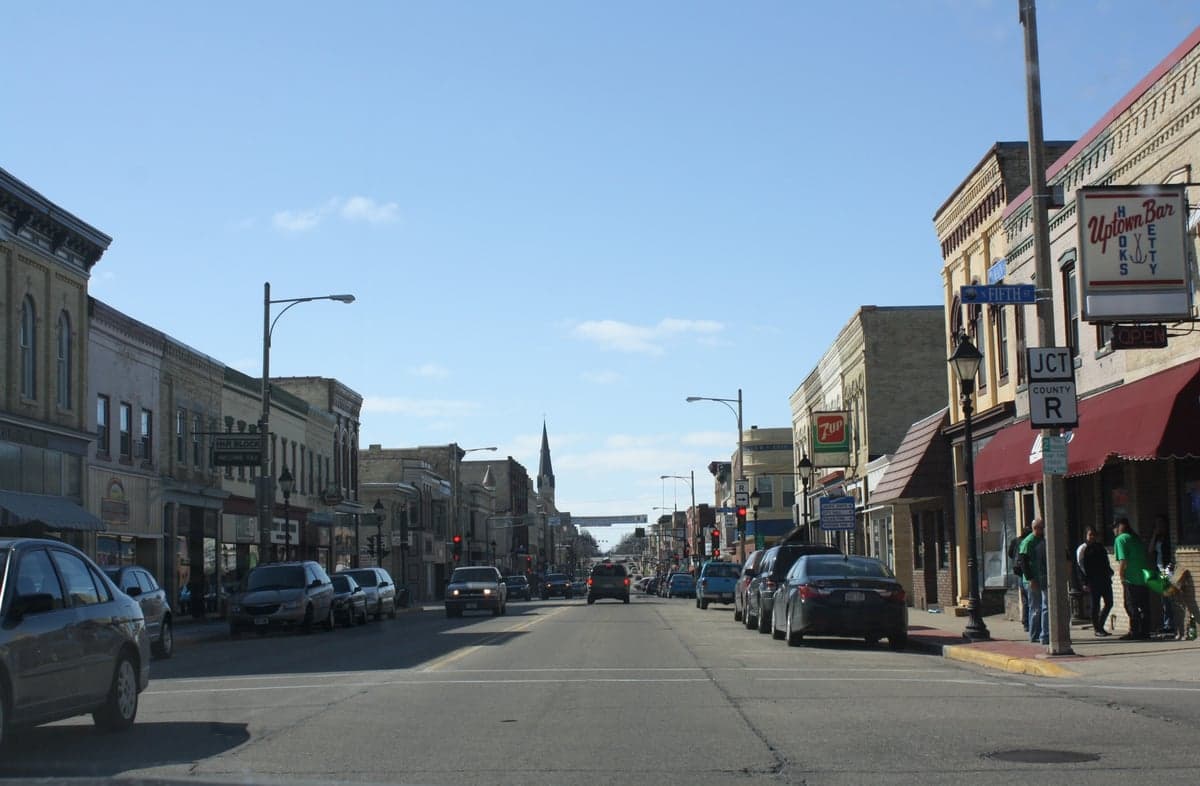
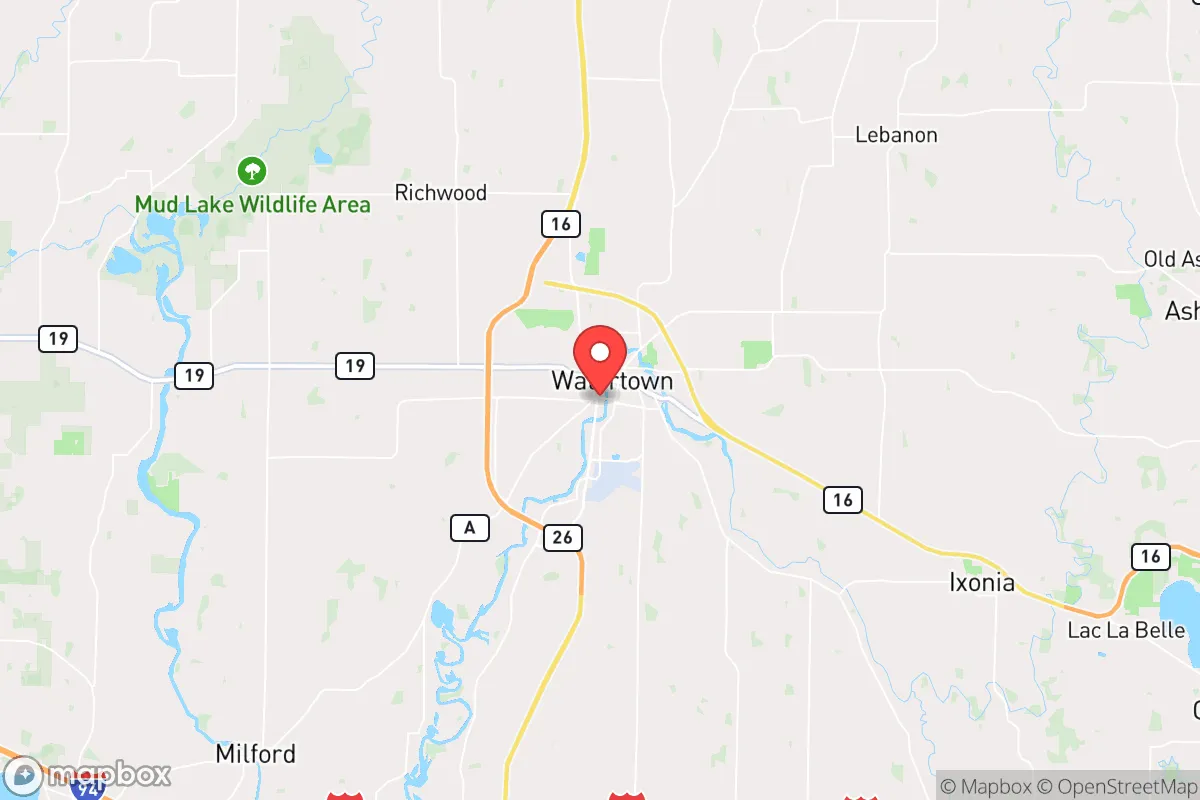
Photo: Wikipedia
Quality of Life in Watertown, WI
A high quality of life with strong walkability, manageable living costs, healthy neighborhood signals, and solid amenity access.
What does Quality of Life tell us?
Quality of Life blends cost of living, nearby amenities, socioeconomic signals, and neighborhood character. City-level scores represent the whole municipality; individual neighborhoods can differ.
What does this tell us?
Quality of Life blends cost of living, nearby amenities, socioeconomic signals, and neighborhood character. City-level scores represent the whole municipality; individual neighborhoods can differ.
Cost of Living
15% below national average
The Real Cost of Living in Watertown, WI for 2026
| Tier | Individual | Family (4) |
|---|---|---|
| Survival | $17k | $32k |
| Comfortable | $41k | $60k |
| Luxury | $89k+ | $138k+ |
| Elite (Top 5%) | $104k+ | $162k+ |
113%
The Area Signal
A metric tracking the socioeconomic signals of the area.
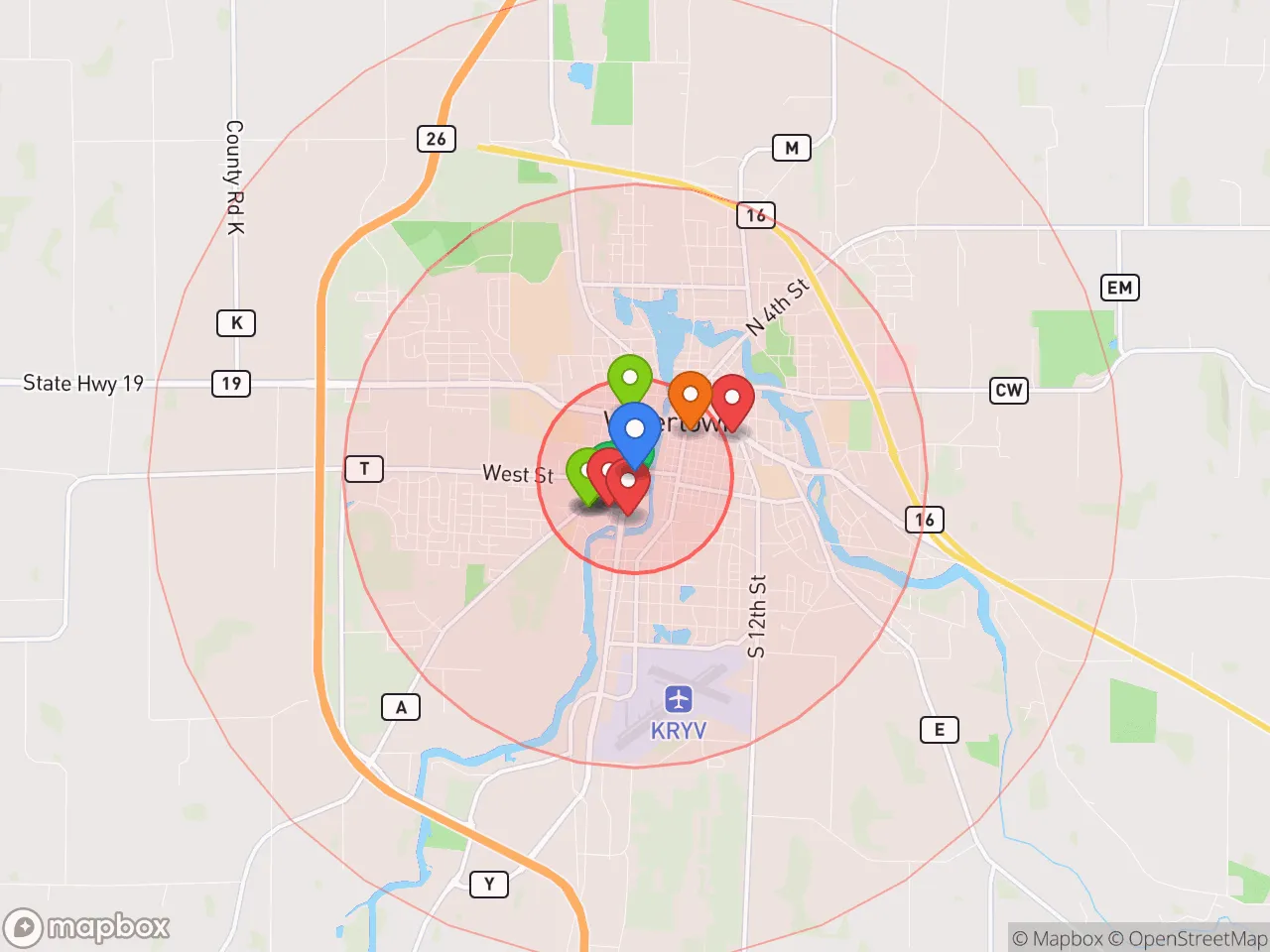
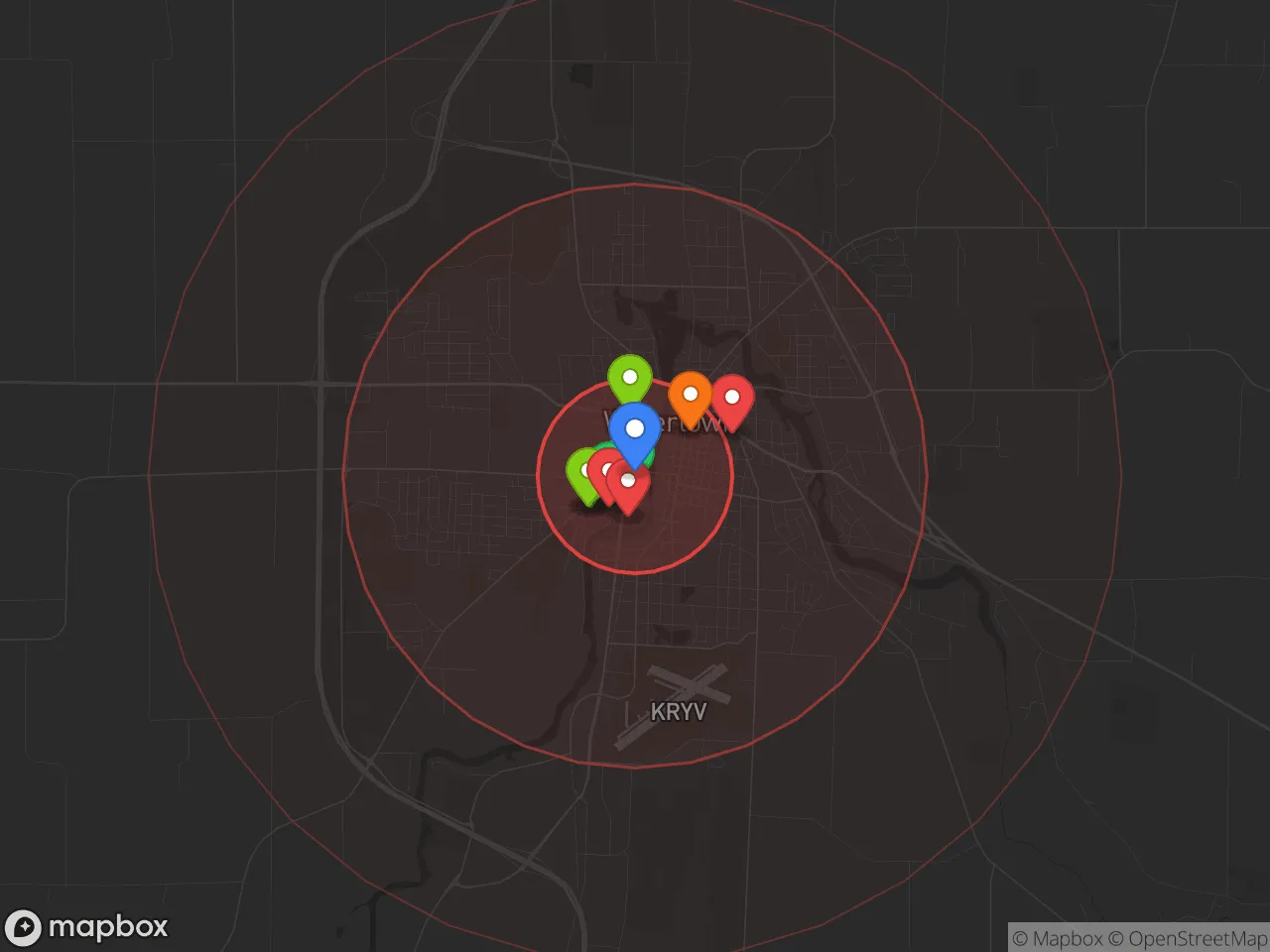
Hobbies
Explore the areaGroceries
4 within 10 miles
Gas
15 within 10 miles
Hospital
8 within 20 miles
Airport
ORD — O'Hare International
Post Office
USPS — Watertown, WI
Critical Amenities
Quality-of-Life Analysis
Watertown, Wisconsin offers a quality of life defined by small-town affordability and a cost of living well below national averages, attracting a mix of young families, tradespeople, and retirees seeking a quieter pace within commuting distance of larger job centers. With a cost of living index of 85 (where 100 equals the U.S. average), residents spend significantly less on housing, groceries, and transportation than the typical American household. The city’s population of roughly 23,000 leans middle-income and family-oriented, with a notable presence of workers employed in manufacturing, healthcare, and education sectors that anchor the local economy.
How housing costs and affordability compare to nearby cities
Watertown’s housing market remains one of the most accessible in Jefferson County, with a median home value of $211,500 — roughly $100,000 less than the median in Madison (about 45 minutes west) and $50,000 below the Milwaukee metro average. Renters also benefit: the median rent of $1,061 is roughly 20% lower than the statewide median, making it feasible for single-income households and entry-level workers. Property taxes in Watertown run about 1.8% of assessed value, which is typical for Wisconsin but higher than neighboring Dodge County. The average commute of 23.7 minutes is notably shorter than the national average of 26 minutes, and many residents drive to jobs in Johnson Creek, Oconomowoc, or even the Madison suburbs without enduring heavy traffic. For buyers priced out of Dane County or Waukesha County, Watertown offers a clear trade-off: lower upfront costs in exchange for fewer immediate urban amenities.
What daily life is like for families: schools, parks, and local amenities
Daily life in Watertown centers on a walkable downtown along the Rock River, where the historic Octagon House and local coffee shops like Café on Main draw residents on weekends. The Watertown Unified School District serves roughly 3,700 students and includes Riverside Middle School and Watertown High School, both of which maintain graduation rates above 90%. For recreation, the city operates over a dozen parks — Brandt Park and Riverside Park offer riverfront trails, playgrounds, and picnic shelters that host summer concerts and farmers markets. Grocery shopping is served by a Piggly Wiggly and a Walmart Supercenter, while specialty shopping requires a 20-minute drive to Johnson Creek’s outlet mall or a 40-minute trip to Madison’s Hilldale shopping district. Healthcare is handled locally by Watertown Regional Medical Center, a 60-bed facility that partners with UW Health for specialist referrals. The rhythm of life here is unhurried: school sports, church suppers, and the annual Watertown Riverfest in July define the social calendar more than nightlife or fine dining.
Watertown is best suited for people who prioritize affordable homeownership, short commutes, and a safe, family-oriented environment over urban density or cultural variety. First-time buyers, remote workers who need a quiet home base, and retirees on fixed incomes will find the low cost of living especially attractive. Those seeking vibrant nightlife, diverse restaurant scenes, or rapid career growth in tech or finance may feel limited — Madison or Milwaukee are better fits. For anyone willing to trade big-city energy for financial breathing room and a strong sense of community, Watertown delivers a stable, practical quality of life that is increasingly rare in the Midwest.

Crime in Watertown, WI
Lower crime rates than 89% of comparable U.S. locations.
Violent CrimeViolent Crime Analysis
Property CrimeProperty Crime Analysis
Crime Analysis
Watertown, Wisconsin, presents a mixed safety profile that is notably better than the national average but slightly elevated compared to the state's safest small cities. With a violent crime rate of 168.6 incidents per 100,000 residents and a property crime rate of 559.1 per 100,000, the city offers a relatively secure environment for families and retirees, though residents should remain vigilant about property-related offenses. These figures place Watertown in a moderate-risk category, where proactive community policing and neighborhood awareness play a significant role in daily safety.
Crime in context
Watertown's violent crime rate is roughly half the national average of 380 per 100,000, making it a safer option than many comparably sized Midwestern towns. However, its property crime rate sits just below the national figure of 600 per 100,000, indicating that theft and burglary are the primary concerns. Compared to the state of Wisconsin's overall violent crime rate of approximately 290 per 100,000, Watertown is a clear outlier on the safer end. It is important to note that Watertown is not part of a large, liberal-leaning metro area with progressive prosecutors; instead, it operates under the jurisdiction of Jefferson County, which has a more traditional approach to law enforcement and sentencing. This local judicial philosophy tends to prioritize public safety and accountability, which helps keep recidivism lower than in areas with lenient district attorneys.
What residents experience
Most residents report feeling safe walking downtown and in residential neighborhoods during daylight hours, though caution is advised after dark in less-trafficked areas. The city's police department maintains a visible presence, and community programs like neighborhood watch groups are active. Property crime—including vehicle break-ins, shed burglaries, and package theft—is the most common issue, particularly near the city's commercial corridors and apartment complexes. Violent incidents are rare and typically involve individuals known to one another, rather than random attacks on strangers. For families, the low violent crime rate is reassuring, but securing homes and vehicles with locks and lighting is a practical necessity.
Neighborhood-level variation
Safety in Watertown varies noticeably by area. The historic downtown core and the newer subdivisions on the city's west side consistently report the lowest crime rates, benefiting from higher property values and active community engagement. In contrast, neighborhoods near the industrial zones along Highway 26 and the older rental-heavy blocks east of the Rock River see slightly elevated property crime numbers. The city's public housing areas, while not dangerous, require more vigilance. Overall, Watertown's crime geography is predictable: the farther from major thoroughfares and multi-unit housing, the lower the risk. Prospective residents should drive through potential neighborhoods at different times of day to gauge activity and lighting, and consult the Jefferson County Sheriff's Office online crime map for block-level data.
* Values derived from national, state, county, city and local statistics and may differ in a specific area. Last updated: 2026-08-11T01:35:41.000Z
Narrative content on this page is AI-generated and may contain mistakes. Verify any details that matter before acting on them.
ReloMaps may earn a commission from affiliate links at no extra cost to you.

