Photo: Wikipedia
Political ClimatePolitical Climate in Waverly, PA
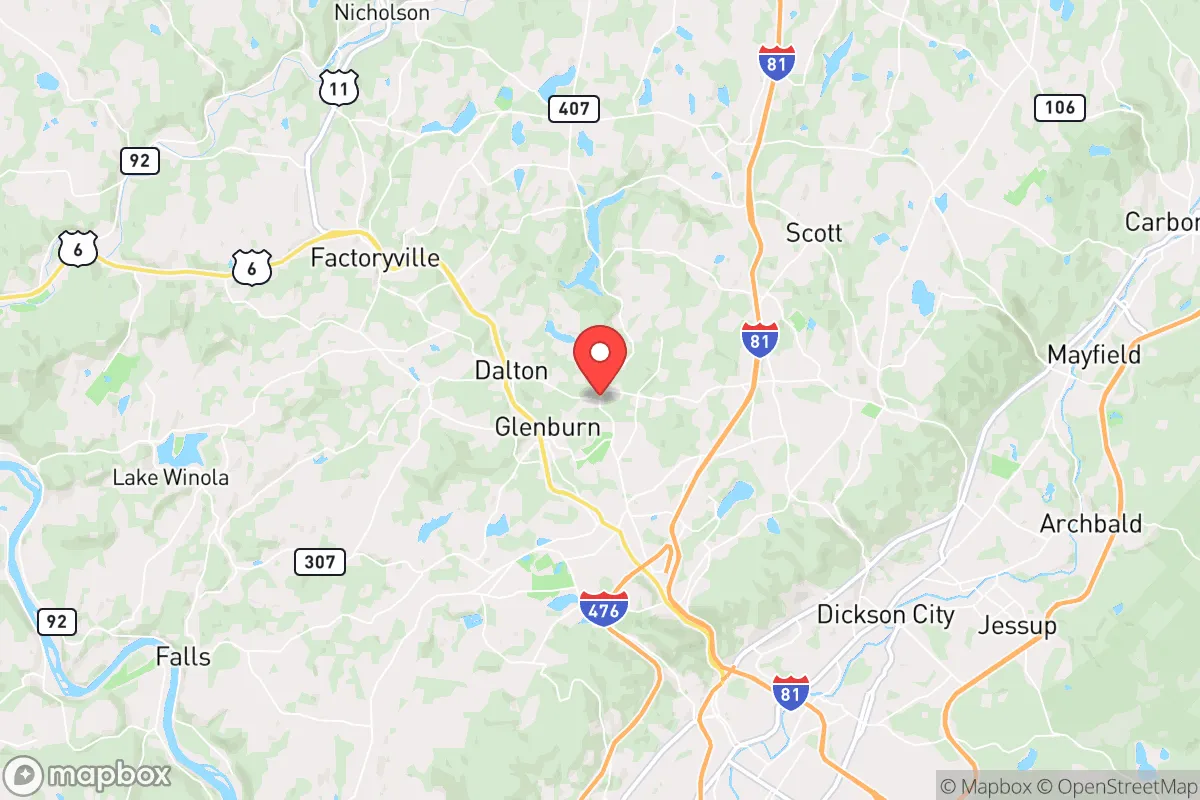
District shown is the primary district for this city’s centroid. Cities may span multiple districts.
Local Political AnalysisPolitical Analysis of Waverly, PA
Waverly, Pennsylvania, leans reliably Republican, with a Cook Partisan Voting Index of R+4, meaning it votes about four points more conservative than the national average. That’s a noticeable shift from the statewide picture: Pennsylvania as a whole sits at EVEN on the same index, making it one of the most closely divided battlegrounds in the country. Over the past decade, Waverly has held steady in its red lean, even as the surrounding Lackawanna County has trended slightly more Democratic in presidential years, driven by Scranton’s union and college-town voters. If you’re moving here, you’re landing in a place where Republican candidates routinely win local races, but the broader regional and state dynamics keep things competitive.
How it compares
Waverly’s R+4 puts it squarely to the right of Pennsylvania’s overall EVEN rating, but it’s not an outlier in northeastern Pennsylvania. Nearby towns like Clarks Summit and Dalton also lean Republican, though by narrower margins, while Scranton, just 10 miles south, is a Democratic stronghold with a Cook PVI around D+8. The contrast is stark: drive 15 minutes from Waverly’s tree-lined streets into downtown Scranton, and you move from a place where “Trump 2024” signs dot lawns to one where Harris-Walz yard signs are common. That split mirrors the state’s urban-rural divide—Pennsylvania’s EVEN rating masks a deep chasm between Philadelphia and Pittsburgh’s blue votes and the redder exurbs and small towns like Waverly. In practice, this means Waverly residents often feel out of step with state-level policy on issues like energy regulation and gun rights, but they’re not isolated; the county itself is purple enough that both parties compete for attention.
What this means for residents
For conservative residents, Waverly offers a comfortable political home. Local school board and township elections tend to favor Republicans, and you’ll find a strong network of GOP clubs and church-affiliated civic groups. Taxes and zoning decisions here reflect a preference for limited government—property tax rates are moderate compared to Scranton’s higher levies. For liberal residents, life is more about finding your niche. You won’t be alone—Lackawanna County as a whole voted for Biden in 2020 by about 11 points—but you’ll need to drive to Scranton for a reliably progressive coffee shop or activist meetup. The practical reality is that most neighbors are civil; political arguments happen at barbecues, not in the grocery aisle. The trajectory, as I see it, is stable: Waverly’s R+4 isn’t likely to flip blue, but it’s not drifting further right either, because the area’s population is aging and new arrivals from New York and New Jersey tend to bring moderate-to-liberal leanings.
Culturally, Waverly stands apart from the rest of Lackawanna County in a few subtle ways. The town has a stronger tradition of volunteer fire departments and local land-use control, which aligns with its Republican ethos of localism. You won’t find the same density of union halls or ethnic clubs that define Scranton’s Democratic machine. Policy-wise, this means Waverly has resisted some state-level pushes on renewable energy mandates and housing density rules, preferring to keep development low-key. For both conservatives and liberals, the takeaway is that Waverly is a place where your vote matters locally but gets swallowed in statewide races—a classic small-town Pennsylvania story that’s unlikely to change much in the next decade.

State Political ClimatePolitical Climate in Pennsylvania
State Political AnalysisPolitical Environment in the State
Pennsylvania is the ultimate swing state, and it wears that label like a badge of honor — or a target, depending on your perspective. With a Cook PVI of EVEN, the state has been deadlocked for cycles, flipping from Obama in 2008 and 2012 to Trump in 2016 by a razor-thin 44,000 votes, then back to Biden in 2020 by about 80,000 votes. Over the last 10-20 years, the dominant coalition has been a shrinking union-and-blue-collar Democratic base in the old industrial cities, increasingly offset by a surging Republican tide in the exurbs, small towns, and rural stretches. The trajectory is a slow, grinding rightward shift in the middle of the state, even as the southeastern Philadelphia suburbs and the southwestern Pittsburgh metro hold the line for Democrats. For a conservative-leaning relocator, the key takeaway is that your vote matters here more than almost anywhere else in the country — and the state’s political future is being fought block by block.
Urban vs. rural divide
The political map of Pennsylvania is a study in contrasts. Philadelphia and its inner-ring suburbs like Montgomery County and Delaware County are deep blue, delivering massive Democratic margins that often decide statewide races. Pittsburgh and Allegheny County are also reliably Democratic, though the surrounding southwestern counties — Washington, Westmoreland, Fayette — have swung hard red over the past decade. The real battleground is the I-81 corridor and the Lehigh Valley, where cities like Allentown and Bethlehem are growing and trending left, while the rural townships around them are staunchly Republican. Lancaster County, once a GOP stronghold, is becoming a purple bellwether as suburbanites from Philly push in. Meanwhile, the vast Northern Tier counties — Tioga, Bradford, Potter — and the south-central region around York and Franklin County are as red as any place in the country. The divide isn’t just urban vs. rural; it’s also old industrial vs. new economy, with former steel and coal towns like Johnstown and Scranton flipping hard to Trump after generations of Democratic loyalty.
Policy environment
Pennsylvania’s policy landscape is a mixed bag that reflects its purple status. The state income tax is a flat 3.07%, one of the lowest in the Northeast, and property taxes are high but vary wildly by district — expect $3,000-$6,000 annually on a median home. There is no state sales tax on groceries or clothing, but the base rate is 6%. The regulatory posture is moderate; Pennsylvania is not Texas, but it’s also not California. Education policy is locally controlled, with strong school choice options including charter schools and a growing Education Improvement Tax Credit (EITC) program that funds private school scholarships. Healthcare is dominated by large systems like UPMC and Jefferson Health, and the state expanded Medicaid under the ACA. Election laws are relatively accessible: no-excuse mail-in voting was enacted in 2019 (Act 77), though it remains a flashpoint. Voter ID is required for first-time voters at the polls, but not for returning voters — a middle ground that frustrates both sides.
Recent policy direction
The last five years have seen Pennsylvania lurch in both directions, depending on which party holds the governor’s mansion. Under Democratic Governor Josh Shapiro (elected 2022), the state has moved left on several fronts. Act 77 expanded mail-in voting, but a 2024 court ruling tightened signature verification rules. On gun rights, Pennsylvania is a shall-issue state for concealed carry, with no permit required for open carry (except in Philadelphia). In 2022, the legislature passed a constitutional carry bill, but it was vetoed by then-Governor Tom Wolf. Shapiro has signaled he would also veto such a bill. On education, the state’s fair funding lawsuit (2023) ordered a massive overhaul of school funding, which could shift resources from rural to urban districts. On abortion, the procedure remains legal up to 24 weeks, with no major restrictions passed since Roe fell — though the Republican-controlled legislature has pushed for a 20-week ban and heartbeat bills, all vetoed. On parental rights, the state has no explicit “Parents’ Bill of Rights” law, but local school boards in conservative counties like York and Cumberland have passed their own policies on curriculum transparency and library books. Property rights are generally strong, with no statewide rent control and relatively low eminent domain use. On privacy, Pennsylvania has a Biometric Privacy Act (2023) that restricts facial recognition use by private companies, but no comprehensive data privacy law yet. The net effect: a state where your experience depends heavily on which county you live in.
Civil unrest & political movements
Pennsylvania has seen its share of political heat. The 2020 election was a flashpoint, with Trump’s campaign challenging mail-in ballot procedures and the state Supreme Court issuing multiple rulings that drew national attention. Election integrity remains a live issue, with Republican-led counties like Lancaster and York conducting their own audits and calling for hand recounts. On the left, Black Lives Matter protests in Philadelphia and Pittsburgh in 2020 were large and occasionally violent, leading to property damage and a lasting police reform debate. The anti-fracking movement is active in the Marcellus Shale region, though natural gas extraction remains a major economic driver in counties like Washington and Susquehanna. Immigration politics are quieter than in border states, but Philadelphia’s sanctuary city policy has drawn criticism from conservative lawmakers, who have tried (and failed) to pass a statewide ban on such policies. The Second Amendment sanctuary movement has spread to over 30 counties, where local sheriffs have pledged not to enforce any future “red flag” laws. A new resident in a rural county will see “We the People” signs and active local GOP committees; in Philly or Pittsburgh, you’ll see progressive activist groups and frequent protests at the state capitol in Harrisburg.
Projection
Over the next 5-10 years, Pennsylvania is likely to remain a toss-up, but the demographic trends favor a slow rightward shift. The Philadelphia suburbs are getting bluer as educated professionals move in, but the exurbs and small cities like Reading, Allentown, and Scranton are seeing an influx of conservative-leaning migrants from New York and New Jersey. The Pittsburgh region is aging and shrinking, which could weaken the Democratic base there. The Hispanic population is growing fastest in the Lehigh Valley and south-central counties, and while national trends suggest this group is moving right, it’s too early to call. The state’s gerrymandered legislative maps (drawn by a court-ordered commission in 2018) give Republicans a structural advantage in the state House and Senate, meaning even if Democrats win statewide races, policy will remain gridlocked. A conservative moving in now should expect a state where their vote is genuinely competitive, where local control is strong, and where the policy environment will not swing dramatically in either direction without a sustained majority — which neither party has.
For a new resident, the bottom line is this: Pennsylvania offers a low-tax, high-local-control environment in its red counties, with strong gun rights, school choice options, and a growing conservative infrastructure. In blue counties, you’ll find higher taxes, more regulation, and progressive social policies. The state’s political reality is that you can choose your community to match your values — but you cannot escape the statewide drama of being the nation’s most watched swing state. If you want your vote to matter, and you’re okay with living in a place where the political temperature is always high, Pennsylvania is your state.
* Values derived from national, state, county, city and local statistics and may differ in a specific area. Last updated: 2026-08-24T20:10:25.000Z
Narrative content on this page is AI-generated and may contain mistakes. Verify any details that matter before acting on them.
ReloMaps may earn a commission from affiliate links at no extra cost to you.

