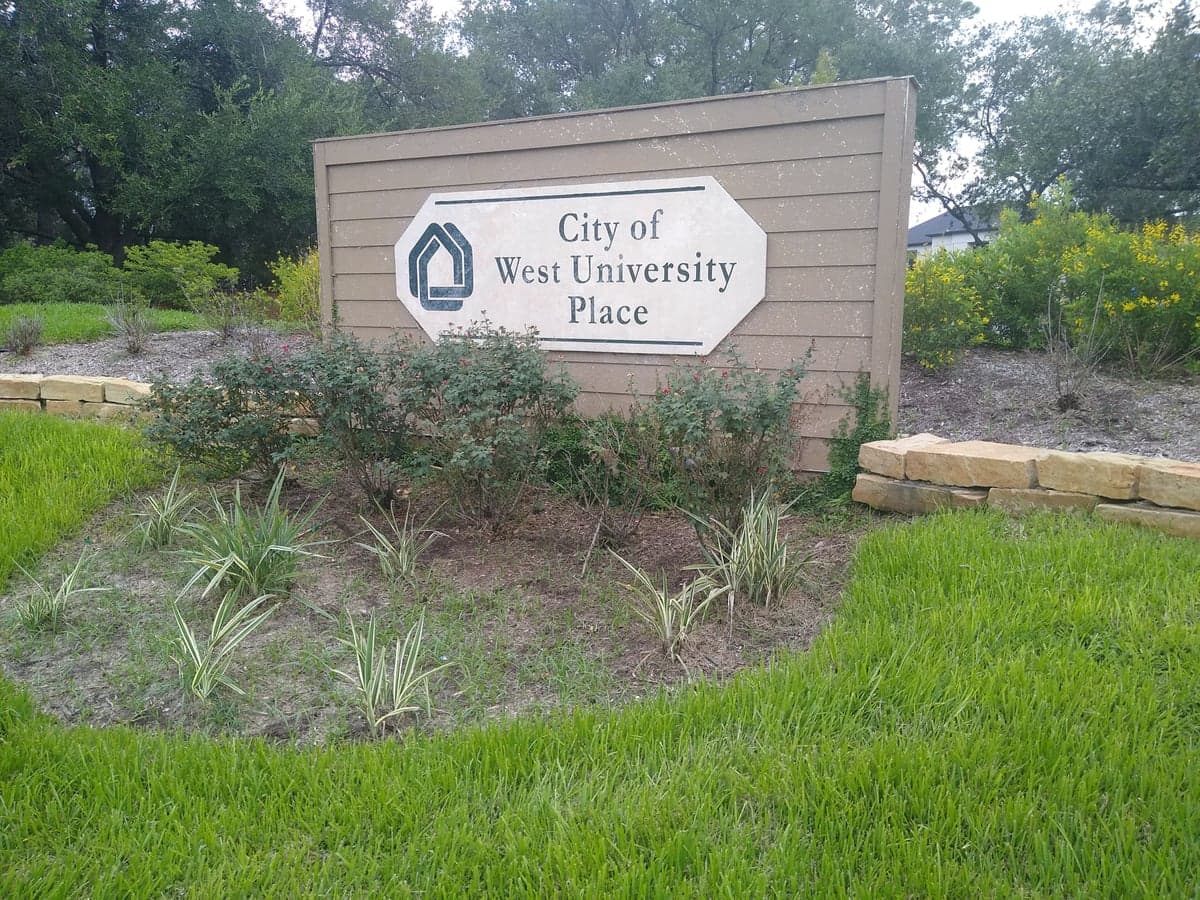
Photo: Wikipedia
Demographics of West University Place, TX
Affluence Level in West University Place, TX
A wealthy area with high-earning, well-educated households. Incomes, home values, and educational attainment meaningfully outpace national averages.
Census doesn't track above $250K
People of West University Place, TX
West University Place, Texas, is a densely settled, highly educated inner-ring suburb of Houston where 90.5% of adults hold a college degree and the population of 14,907 is overwhelmingly white (73.7%) but marked by a significant and growing East/Southeast Asian presence (7.6%) and a smaller Indian-subcontinent cohort (3.8%). The city is known for its walkable, tree-lined blocks, strong public schools, and a character that blends old-money Houston tradition with a newer wave of professional families seeking proximity to the Texas Medical Center and downtown. With only 5.1% foreign-born and a Hispanic share of 6.9%, West U remains one of the most demographically stable and affluent enclaves in Harris County, though its Asian and Indian populations have reshaped the city's cultural and educational landscape over the past two decades.
How the city was settled and grew
West University Place was platted in 1917 as a streetcar suburb on former rice farmland, part of a wave of planned residential communities that sprang up along Houston's expanding rail lines. The original settlers were middle-class white professionals—doctors, lawyers, and small business owners—who were drawn by the promise of a quiet, self-governing village with its own school system and strict deed restrictions. The city incorporated in 1924, and its early growth was concentrated in the Colonial Terrace and University Place neighborhoods, where modest bungalows and Craftsman homes were built on wide lots. The post-World War II boom accelerated development in the West University Place Historic District, where returning GIs and their families filled newly constructed ranch-style homes. By 1960, the city was nearly entirely white and native-born, with a population of around 12,000 that had stabilized as Houston's urban core expanded outward.
Modern era (post-1965)
The 1965 Hart-Cellar Act had little immediate effect on West University Place, which remained a predominantly white, upper-middle-class enclave through the 1970s and 1980s. The major demographic shift began in the 1990s and accelerated after 2000, as the Texas Medical Center's expansion drew highly educated professionals from East Asia and the Indian subcontinent. These new residents settled primarily in the Southside Place and Bellaire West sections of the city, where larger, newer homes replaced older teardowns. The East/Southeast Asian population—now 7.6%—is concentrated among families with children in the city's top-rated public schools, while the Indian-subcontinent community (3.8%) is similarly clustered in the Edgemont and Westridge neighborhoods. The white share has declined from over 90% in 1990 to 73.7% today, but this shift reflects not out-migration but rather the in-migration of Asian and Indian professionals replacing older white homeowners. The Black population remains negligible at 0.2%, and the Hispanic share (6.9%) is largely composed of service workers employed by West U households.
The future
West University Place is likely to continue its gradual diversification at the top of the income and education ladder. The East/Southeast Asian and Indian populations are expected to grow modestly, plateauing at perhaps 12-15% combined over the next decade, as the city's high home prices ($1.2 million median) limit new arrivals to the most affluent professionals. The white share will continue to decline slowly, but the city will remain overwhelmingly white and native-born, with no signs of ethnic enclave formation or tribalization. The Hispanic population is likely to remain stable or decline slightly as service workers are priced out of the rental market. The city's strict zoning and historic preservation rules will prevent large-scale redevelopment, meaning the population will stay near its current 14,907 with little new construction. The next 10-20 years will see West U become slightly more Asian and Indian, but its core identity as a wealthy, family-oriented, education-obsessed suburb will persist.
For a conservative-leaning individual or family considering a move, West University Place offers a stable, high-amenity environment where demographic change is slow and driven entirely by professional-class migration. The city is not becoming more diverse in the broad sense—it is becoming more Asian and Indian at the top, while remaining culturally and politically conservative. New arrivals will find a community that values property rights, local schools, and low crime, with a population that is highly educated but not particularly cosmopolitan. The bottom line: West U is a place where the people are becoming slightly more varied in origin but not in outlook, and that stability is likely to endure.

* Values derived from national, state, county, city and local statistics and may differ in a specific area. Last updated: 2026-04-14T00:03:05.000Z
Narrative content on this page is AI-generated and may contain mistakes. Verify any details that matter before acting on them.
ReloMaps may earn a commission from affiliate links at no extra cost to you.

