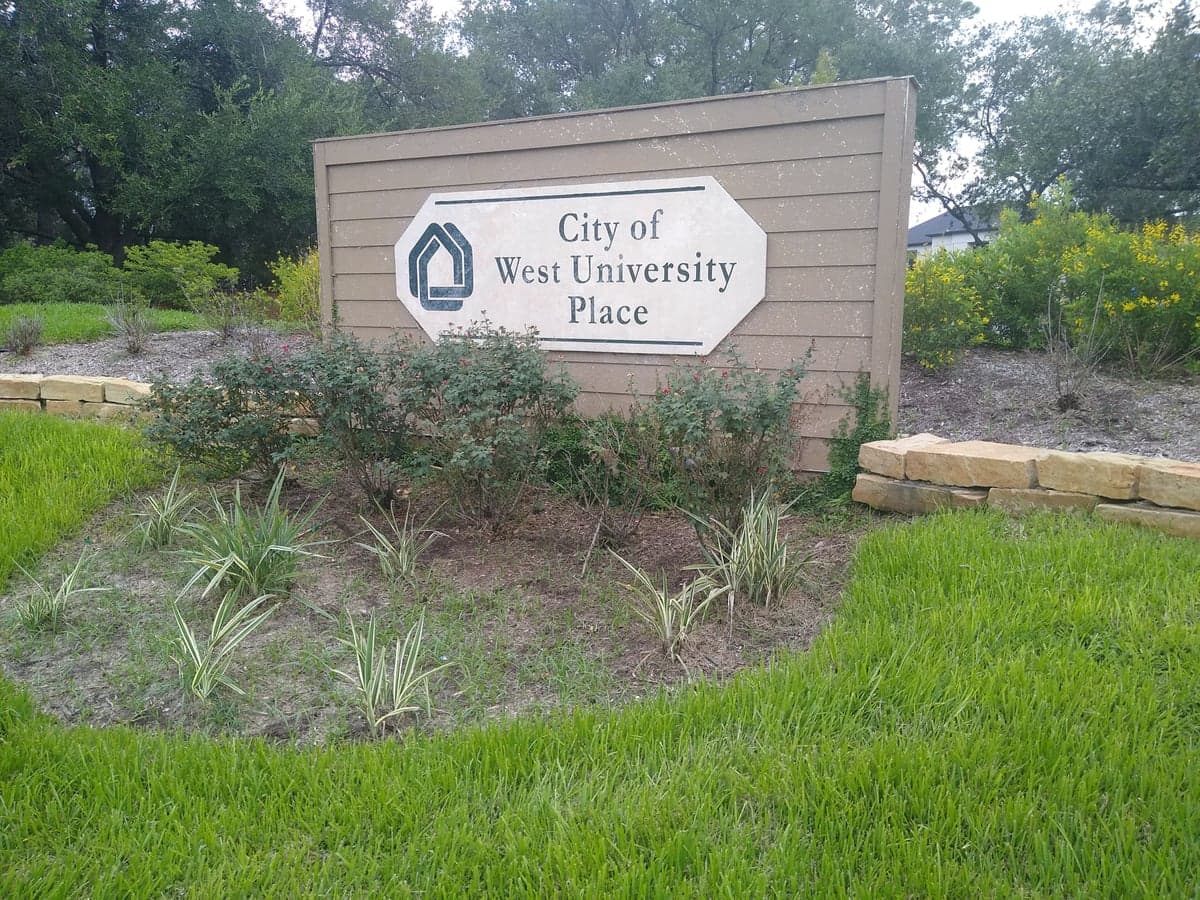
Photo: Wikipedia
Political ClimatePolitical Climate in West University Place, TX
District shown is the primary district for this city’s centroid. Cities may span multiple districts.
Local Political AnalysisPolitical Analysis of West University Place, TX
West University Place, or West U as we call it, has always been a bit of a blue dot in a sea of red, but lately, it feels like the political winds have shifted hard to the left. The Cook PVI of D+12 tells the story: this isn't just a slightly Democratic area anymore; it's a stronghold. I remember when this town was more about quiet, conservative values—fiscal responsibility, local control, and keeping government out of your backyard. Now, you see more yard signs for progressive candidates than you'd ever expect in a place like this, and the trajectory is clearly toward more government involvement in daily life.
How it compares
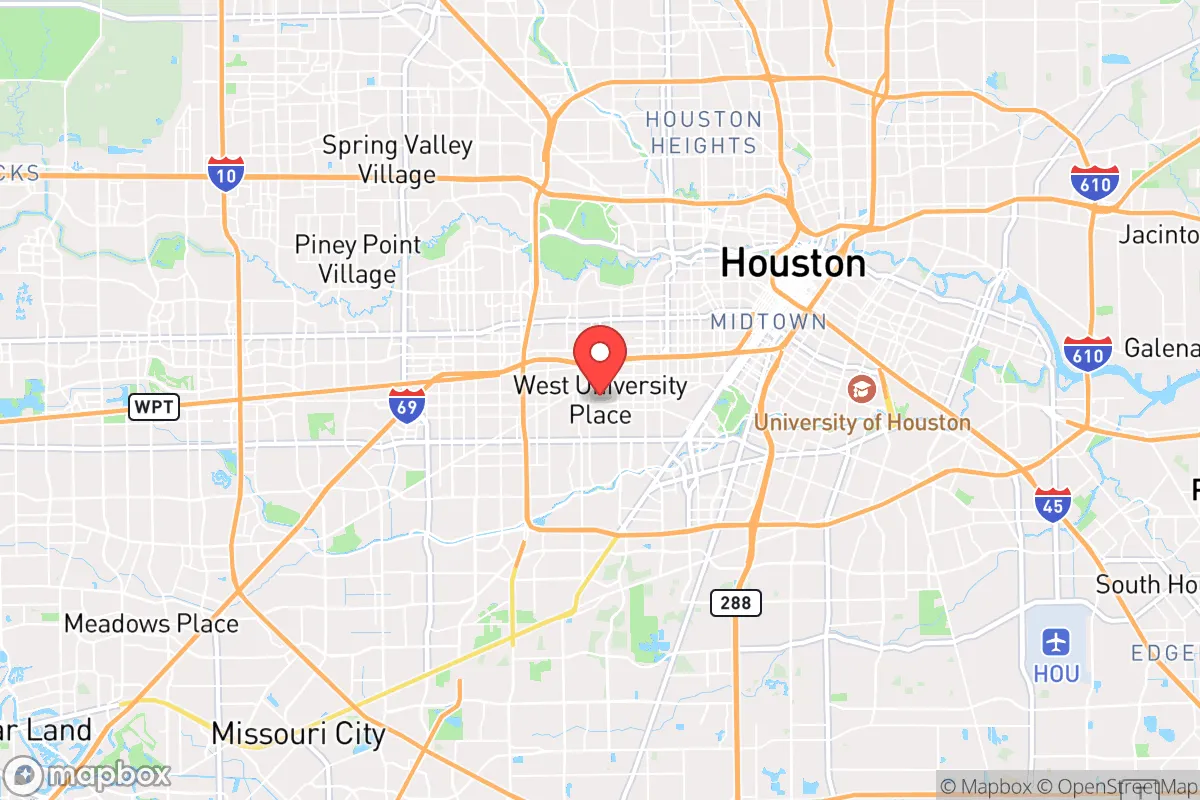
To really get the picture, you have to look at the neighbors. Drive ten minutes west to Bellaire, and you'll find a similar story—another wealthy enclave that's trending blue, though maybe not as aggressively as West U. But head south to Meyerland or further out to places like Sugar Land or Katy, and the political landscape flips. Those areas still lean heavily Republican, with a focus on lower taxes and individual liberties. West U, though, feels like an island of progressive thought, surrounded by a more traditional Texas mindset. It's a stark contrast: you can go from a neighborhood where people are worried about school board overreach to one where the biggest concern is whether the city council is doing enough on climate resolutions.
What this means for residents
For those of us who value personal freedoms and limited government, the shift is concerning. You see it in the local ordinances—more regulations on what you can do with your property, stricter noise rules, and a general push for "community standards" that often feel like government overreach. The city council has become more vocal on state-level issues, which is a red flag for anyone who believes local government should stick to potholes and police. The school board, too, has seen a tilt toward progressive curriculum changes, which has a lot of parents worried about what their kids are being taught. It's not the "live and let live" West U I grew up in; it's becoming a place where your personal choices—from energy use to lawn care—are increasingly subject to public scrutiny and regulation.
On the cultural side, the biggest distinction is the shift in what's considered "community values." It used to be about keeping the neighborhood safe and property values high. Now, there's a growing emphasis on social justice initiatives and environmental mandates, even if they come with higher costs or more bureaucracy. The local farmers market and community events are great, but they're often wrapped in messaging that feels more like a political statement than a simple gathering. If you're looking for a place where government stays out of your business and lets you live your life, West U is moving in the opposite direction. I'd keep an eye on the next few election cycles—if this trend continues, it'll be a very different town in five years, and not necessarily for the better.

State Political ClimatePolitical Climate in Texas
State Political AnalysisPolitical Environment in the State
Texas has been a reliably Republican state for the past three decades, but the coalition that keeps it red is shifting under your feet. The state hasn’t voted for a Democratic presidential candidate since Jimmy Carter in 1976, and in 2024 Donald Trump carried it by roughly 14 points. But that margin has been shrinking from the high-water mark of 26 points in 2012, driven by explosive growth in the blue-leaning metros of Austin, Dallas, Houston, and San Antonio. The Republican base remains formidable—anchored by the suburbs, exurbs, and vast rural stretches—but the state is now a battleground for the soul of the GOP itself, with a populist, liberty-minded wing increasingly challenging the old business-friendly establishment.
Urban vs. rural divide
The political map of Texas is a study in stark contrasts. The big four metros—Houston, Dallas-Fort Worth, San Antonio, and Austin—are the engines of Democratic growth. Harris County (Houston) and Dallas County have both flipped blue at the county level, while Travis County (Austin) is a deep-blue stronghold where progressive activists hold sway over city council and school board races. Bexar County (San Antonio) is trending blue but remains more moderate. The real action is in the suburbs: Collin County (north of Dallas) and Fort Bend County (southwest of Houston) were once reliably red but have become competitive, with Collin County voting for Trump by only 4 points in 2024. Meanwhile, the rural and small-town spine of the state—places like Lubbock, Midland-Odessa, Tyler, and the Rio Grande Valley—remains deeply conservative. The Valley, once a Democratic stronghold, has shifted hard right over immigration and cultural issues, with Hidalgo County voting for Trump in 2024. The divide isn’t just about geography; it’s about worldview. Rural Texans see the state government as a shield against federal overreach, while urbanites increasingly view it as an obstacle to progressive change.
Policy environment
Texas’s policy environment is a mixed bag for a conservative. On the plus side, there’s no state income tax, property taxes are high but capped at 10% annual growth for homesteads (thanks to Proposition 4 in 2023), and the regulatory climate is business-friendly—no state-level minimum wage above the federal $7.25, and right-to-work laws keep unions weak. The state’s education policy is a flashpoint: the 2023 school voucher bill (SB 1) failed in the House, but Governor Greg Abbott has made it his top priority for 2025, promising to give parents direct control over education funding. On healthcare, Texas refused Medicaid expansion under the ACA, keeping the system lean but leaving 18% of residents uninsured—the highest rate in the nation. Election laws tightened after 2021’s SB 1, which restricted mail-in voting, banned drive-through voting, and empowered partisan poll watchers. The state’s abortion ban (trigger law from 2021, effective after Dobbs) is one of the strictest in the country, with no exceptions for rape or incest. For a conservative, the policy environment is largely aligned with traditional values, but the property tax burden and the failure of school choice are sore points.
Trajectory & freedom
The trajectory of freedom in Texas is a tug-of-war. On one hand, the state has expanded personal liberty in key areas: permitless carry of handguns (HB 1927, 2021) means no license needed to carry a firearm; the Heartbeat Act (SB 8, 2021) effectively banned abortion after six weeks through private enforcement, bypassing federal courts; and the state has passed multiple laws protecting parental rights in education, including the ban on critical race theory in K-12 (HB 3979, 2021) and the “Save Women’s Sports” act (SB 15, 2023). On the other hand, the state has clamped down on medical autonomy: gender-affirming care for minors was banned in 2023 (SB 14), and the state’s medical marijuana program remains one of the most restrictive in the nation—only low-THC oil for a narrow list of conditions. Property rights are strong, with no statewide rent control and a robust eminent domain compensation framework, but homeowners associations (HOAs) wield significant power in suburban developments. The biggest concern for liberty-minded residents is the growing power of local governments in blue cities to impose their own regulations—like Austin’s ban on homeless camping (repealed in 2019, then reinstated in 2021 after state pressure) or Houston’s non-discrimination ordinances. The state legislature has pushed back with preemption laws, but the battle is ongoing.
Civil unrest & political movements
Texas has seen its share of political flashpoints. The 2020 Black Lives Matter protests in Austin were among the largest in the country, leading to a city council defunding of the police by $150 million—a move that was partially reversed after a backlash and a state law (HB 1900, 2021) that penalizes cities for cutting police budgets. The “Trump Train” incident in 2020, where a Biden-Harris campaign bus was surrounded by vehicles on I-35 near San Antonio, became a national symbol of political polarization. Immigration politics are a constant: Governor Abbott’s Operation Lone Star has deployed state troopers and National Guard to the border, bused migrants to sanctuary cities like New York and Chicago, and installed razor wire along the Rio Grande—leading to a legal standoff with the Biden administration. The “sanctuary city” ban (SB 4, 2017) remains in effect, requiring local law enforcement to cooperate with federal immigration authorities. Secession talk is more than a fringe hobby: the Texas Nationalist Movement has gained traction, with a 2022 poll showing 18% of Texans supporting independence, though it remains a symbolic gesture. Election integrity remains a hot-button issue, with the 2020 audit of Harris County’s results (ordered by the state) finding no widespread fraud but fueling ongoing distrust. A new resident will notice the political energy at the grassroots level—yard signs, bumper stickers, and local activist groups are far more visible than in most states.
Projection
Over the next 5-10 years, Texas is likely to remain Republican at the state level, but the margin will continue to narrow. The in-migration from blue states—California, New York, Illinois—is bringing a mix of conservative refugees and progressive professionals. The suburbs of Dallas-Fort Worth and Houston are the key battlegrounds: if Collin County and Fort Bend County continue to trend left, the state could become competitive by 2032. The GOP’s internal fight between the business wing and the populist wing will intensify, with school choice and property tax reform as the defining issues. The state’s demographic shift—Texas is now 40% Hispanic, a group that voted 55% for Trump in 2024—suggests a realignment rather than a simple blue wave. The biggest wildcard is the federal government: if a future Democratic administration cracks down on Texas’s border policies or abortion laws, the state’s sovereignty push will escalate. For a conservative moving in now, expect a state that remains culturally red but politically contested, with a legislature that will continue to pass conservative bills but face increasing resistance from blue cities and federal courts.
For a new resident, the bottom line is this: Texas offers a low-tax, high-freedom environment for those who align with its values, but you’ll need to pick your county carefully. If you want a deep-red, rural lifestyle with strong gun rights and minimal government interference, look at Lubbock or the Permian Basin. If you want a suburban mix with good schools and a more moderate political climate, Collin County or Fort Bend County are your best bets. Avoid Austin and El Paso if progressive policies bother you—they’re blue islands in a red sea. The state is still a net positive for personal liberty, but the fight to keep it that way is just getting started.
* Values derived from national, state, county, city and local statistics and may differ in a specific area. Last updated: 2026-04-14T00:03:05.000Z
Narrative content on this page is AI-generated and may contain mistakes. Verify any details that matter before acting on them.
ReloMaps may earn a commission from affiliate links at no extra cost to you.

