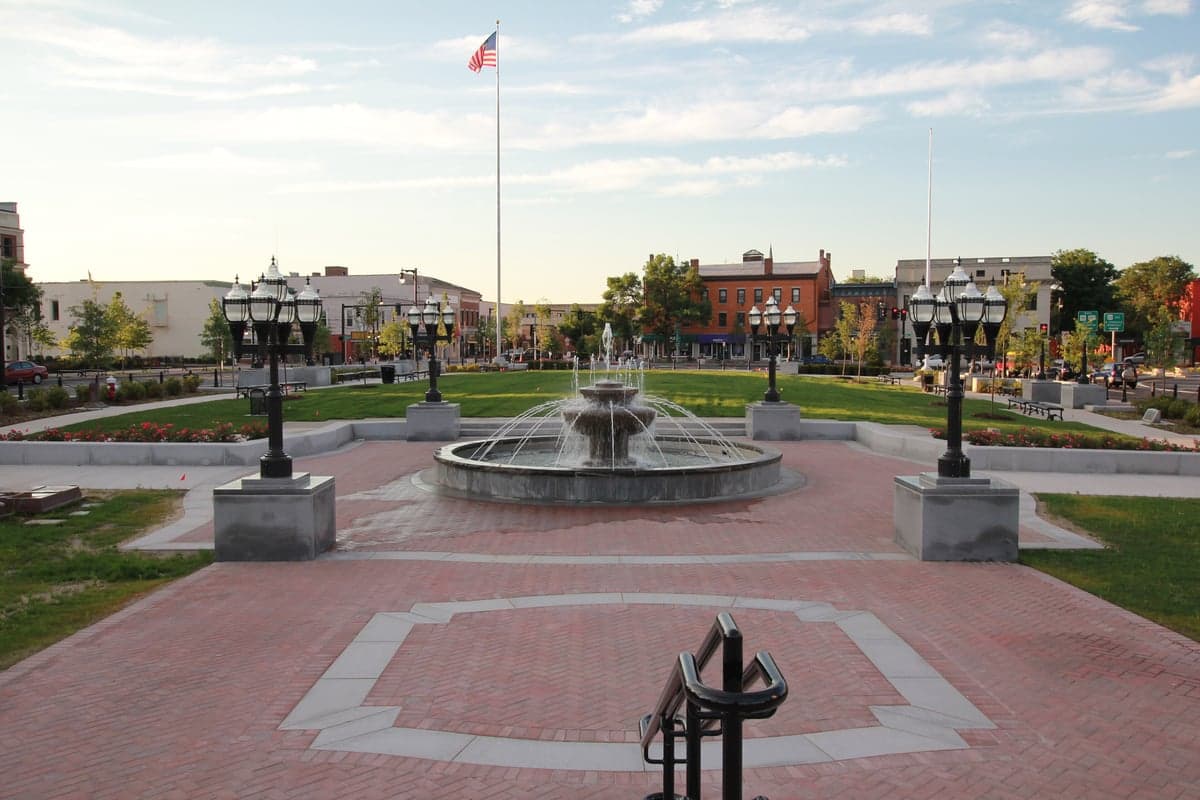
Photo: Wikipedia
Political ClimatePolitical Climate in Westfield, MA
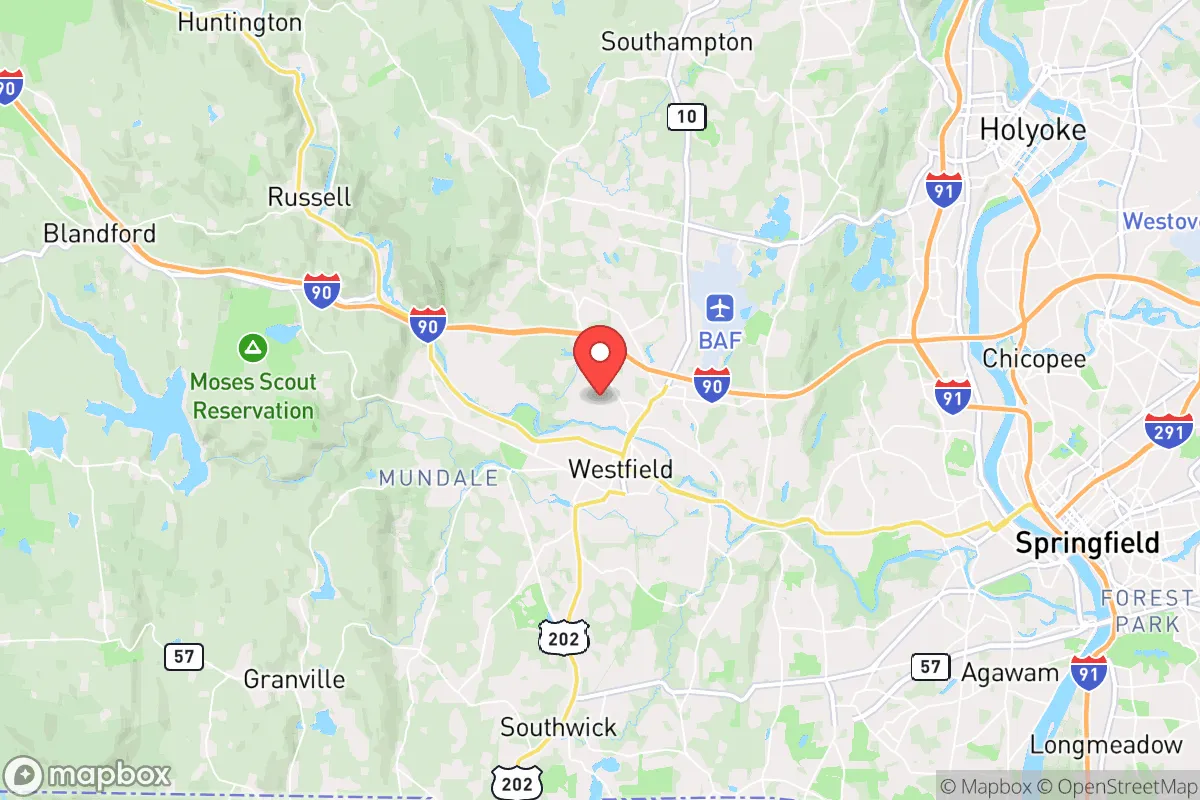
District shown is the primary district for this city’s centroid. Cities may span multiple districts.
Local Political AnalysisPolitical Analysis of Westfield, MA
Westfield, Massachusetts, has a Cook PVI of D+8, meaning it leans about eight points more Democratic than the national average, but don’t let that number fool you into thinking it’s a progressive stronghold. This city has deep roots in blue-collar work and family values, and for decades it was a reliably moderate place where folks just wanted to be left alone to live their lives. Lately, though, you can feel the political winds shifting—more progressive policies are creeping in from Boston and the statehouse, and it’s starting to chafe a lot of the old-timers and younger families who moved here for the quiet, affordable living.
How it compares
Westfield sits in a bit of a political bubble compared to its neighbors. Head east to Springfield or Holyoke, and you’re in deep-blue territory where progressive agendas are the norm—higher taxes, more regulations, and a government that seems to have its hand in everything. Drive west to the Berkshires, and you’ll find a similar story in places like Pittsfield. But look north to Westfield’s rural outskirts, like the hill towns of Montgomery or Russell, and you’ll see a different picture: those areas vote reliably Republican, with a strong libertarian streak. Westfield itself is caught in the middle—it’s not as conservative as those small towns, but it’s not as far-left as Springfield. The D+8 rating reflects that tension, but the trend is worrying: each election cycle, the city inches a little closer to the progressive side, pushed by state mandates on energy, housing, and education that leave less room for local control.
What this means for residents
For the average Westfield resident, the biggest concern is how much the state government is dictating daily life. You’ve got the MBTA Communities Act forcing the city to rezone for higher-density housing, even in quiet neighborhoods where people bought homes specifically for the space and privacy. There’s the push for electric vehicle mandates and net-zero building codes that drive up costs for homeowners and small businesses. And don’t get me started on the school curriculum battles—parents are increasingly worried about progressive social policies being pushed in classrooms without their input. The city council and mayor’s office have tried to push back on some of these state overreaches, but they’re fighting an uphill battle against a legislature in Boston that doesn’t seem to care what Western Mass thinks. If you value personal freedoms—like choosing your own energy source, deciding how to use your property, or having a say in your kids’ education—Westfield is still a decent place, but you’ve got to stay vigilant.
Culturally, Westfield has a few distinctions that set it apart from the surrounding progressive tide. The city is home to Westfield State University, which brings a more liberal student population, but the town itself still holds onto traditions like the annual Westfield Fair and a strong sense of community around local sports and churches. The gun culture here is alive and well—lots of hunters and sport shooters—and the Second Amendment is taken seriously. Property taxes are moderate, but they’re creeping up as the state mandates more spending on green initiatives and social programs. In the long run, if the state keeps tightening its grip, you might see more families heading north to New Hampshire or south to Connecticut for a lighter touch. For now, Westfield is a battleground—a place where the old-school values of self-reliance and limited government are still fighting for air against a growing tide of top-down control.

State Political ClimatePolitical Climate in Massachusetts
State Political AnalysisPolitical Environment in the State
Massachusetts has been a one-party Democratic stronghold for decades, but the real story is how far left the state has moved even within that dominance. In 2024, Kamala Harris carried the state by over 25 points, and the legislature is a supermajority of Democrats in both chambers. The shift isn’t just about party labels—it’s about a wholesale embrace of progressive governance that would have been unthinkable even 20 years ago. For a conservative considering relocation, the state’s political climate is less about “blue vs. red” and more about how aggressively government intervenes in daily life, from your paycheck to your child’s classroom.
Urban vs. rural divide
The political map of Massachusetts is a tale of two worlds. Greater Boston—including Boston proper, Cambridge, Somerville, and Brookline—is the engine of the state’s progressive tilt, with precincts routinely voting 80-90% Democratic. These areas drive policy through sheer population density and donor networks. Western Massachusetts, by contrast, is more mixed: Springfield is reliably blue but with a working-class, less ideological bent, while Pittsfield and the Berkshires lean left but with a libertarian streak on land use. The true redoubts are the small towns and exurbs like Sturbridge, Oxford, and the Cape Cod town of Sandwich, where Trump won precincts in 2020 and 2024. But these areas lack the numbers to counterbalance Boston’s dominance. The divide isn’t just geographic—it’s cultural. In Boston, politics is a lifestyle; in the hill towns, it’s an afterthought.
Policy environment
Massachusetts’ policy environment is a case study in progressive governance with a heavy hand. The state income tax is a flat 5%, but voters rejected a 2022 ballot measure to cut it to 4%, and a 2024 surtax on incomes over $1 million (the “Millionaire’s Tax”) now funds education and transportation. Property taxes are high, averaging 1.2% of home value, and are set locally—so Newton and Lexington pay far more than Worcester. The regulatory climate is dense: building permits, business licenses, and environmental reviews can take years. Education policy is centralized, with the state Board of Education imposing curriculum standards that emphasize DEI and climate activism. Healthcare is near-universal via the state’s 2006 mandate, which predated the ACA, and costs are among the highest in the nation. Election laws are permissive: no voter ID, automatic registration, and mail-in voting for all. For a conservative, the takeaway is that the state’s policy apparatus is designed to maximize government reach into every corner of life.
Trajectory & freedom
On the freedom front, Massachusetts is moving decisively in one direction: less. The 2024 gun law (Chapter 135) banned the sale of many semi-automatic rifles, required licenses for ammunition purchases, and expanded the state’s “red flag” law to allow family members to petition for gun removal without a criminal standard. Parental rights took a hit with the 2023 “Safe Schools” law, which allows schools to withhold a child’s gender identity from parents if the child requests it—effectively creating a state-sanctioned secret between schools and minors. Medical autonomy is constrained: the state has strict vaccine mandates for schoolchildren (including COVID-19 for K-12) and a 2024 law that allows pharmacists to prescribe birth control without a doctor’s visit, but also mandates insurance coverage for abortion and gender transition procedures. Property rights are weak—the state’s rent control ban was repealed in 2024, allowing Boston and Cambridge to impose rent caps. The trend is clear: each legislative session chips away at individual choice in favor of state-directed outcomes.
Civil unrest & political movements
Massachusetts has a long history of organized protest, but the character has shifted. The 2020 George Floyd protests in Boston turned into weeks of nightly demonstrations, with property damage in the Downtown Crossing area. Since then, the left has institutionalized: groups like the Massachusetts Teachers Association and the ACLU of Massachusetts are permanent fixtures in the State House. On the right, the “Massachusetts Fiscal Alliance” and local GOP clubs in Worcester and Plymouth hold rallies, but they’re dwarfed by the left’s infrastructure. Immigration politics are a flashpoint: the state is a “sanctuary” jurisdiction under the 2017 Trust Act, which limits local police cooperation with ICE. In 2024, a controversy erupted in Revere when a migrant shelter was placed in a former hotel, sparking local protests and a lawsuit. Election integrity is a low-grade concern—the state’s lack of voter ID and universal mail-in voting have led to sporadic allegations of fraud, but no major scandals. What a new resident would notice is the constant hum of activism: petitions, town hall meetings, and school board battles over curriculum and library books.
Projection
Over the next 5-10 years, Massachusetts will likely become more progressive, not less. Demographic trends favor the left: the state’s population is aging, but in-migration from other states is disproportionately young, educated, and left-leaning, drawn to the Boston tech and biotech sectors. The state’s Republican Party is a shell, unable to field credible statewide candidates—the last GOP governor, Charlie Baker, was a moderate who left office in 2023. The legislature’s supermajority will continue to pass laws on guns, education, and healthcare with little opposition. The wild card is housing: if the cost of living continues to skyrocket, some working-class families may leave, further concentrating the electorate in liberal urban cores. For a conservative moving in now, expect a decade of more taxes, more regulation, and less personal autonomy. The state’s trajectory is toward a European-style social democracy, with all the freedom trade-offs that entails.
For a new resident, the bottom line is this: Massachusetts offers world-class schools, healthcare, and infrastructure, but you will pay for them with your wallet and your liberty. If you value low taxes, gun rights, parental control over education, and minimal government interference, this state will be a constant source of friction. If you can afford the cost and tolerate the overreach, the natural beauty and economic opportunity are real. But don’t move here expecting to change it—the political machine is too entrenched. Know what you’re signing up for.
* Values derived from national, state, county, city and local statistics and may differ in a specific area. Last updated: 2026-05-01T11:37:58.000Z
Narrative content on this page is AI-generated and may contain mistakes. Verify any details that matter before acting on them.
ReloMaps may earn a commission from affiliate links at no extra cost to you.

