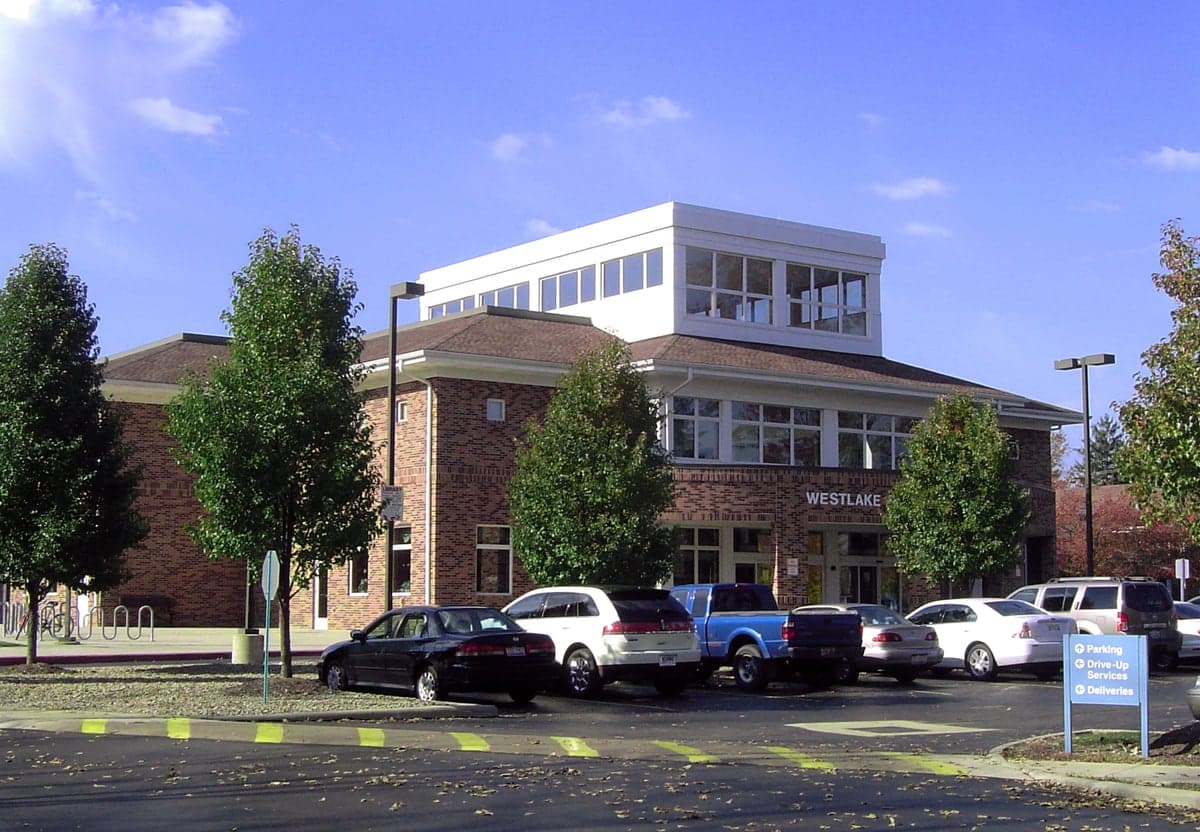
Photo: Wikipedia
Political ClimatePolitical Climate in Westlake, OH
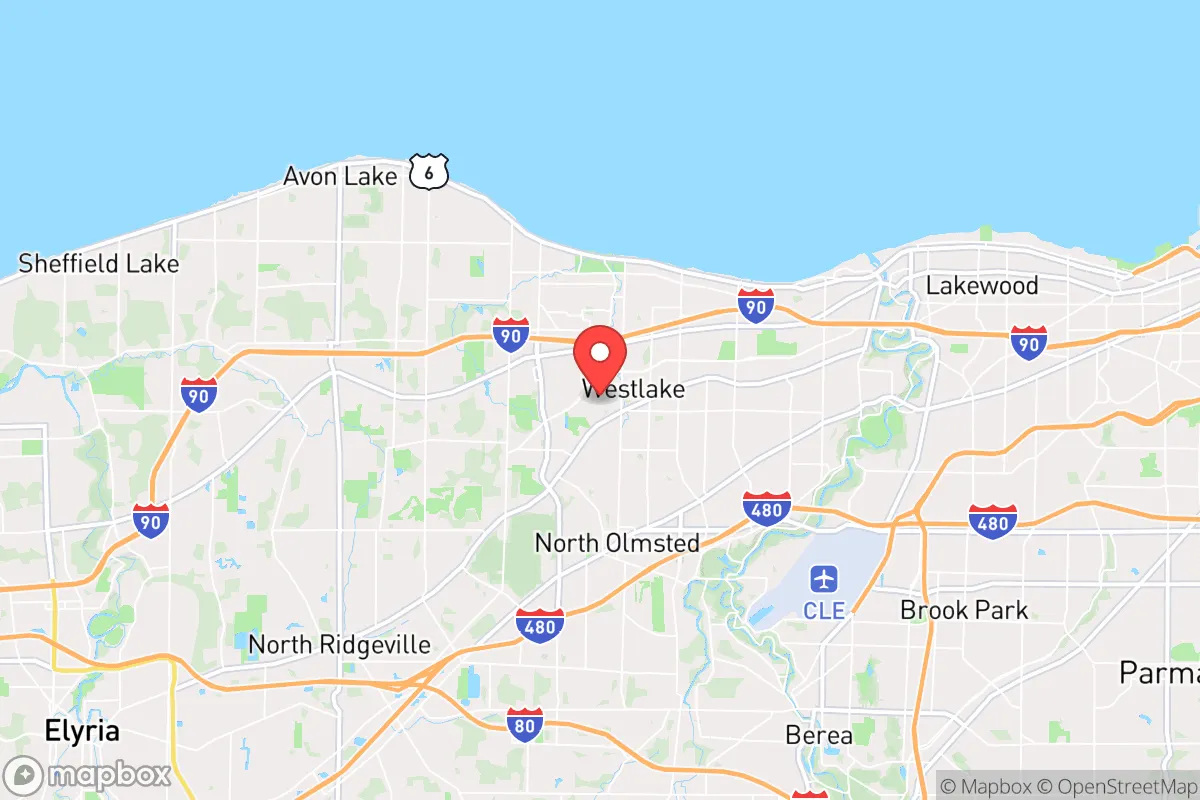
District shown is the primary district for this city’s centroid. Cities may span multiple districts.
Local Political AnalysisPolitical Analysis of Westlake, OH
Westlake, Ohio, sits solidly in the Republican column, matching the state’s overall Cook PVI of R+5. But if you’ve lived here a while, you know the story is more nuanced than a single number. The city has long been a reliable GOP stronghold in Cuyahoga County, a county that itself leans heavily Democratic thanks to Cleveland. That means Westlake is a red island in a blue sea, and the local politics reflect that tension. Over the last decade, the Republican tilt has held steady, but you’ll find a growing number of independent and moderate voters, especially among younger families moving in from the east side of Cleveland. The trajectory isn’t a sharp swing left, but a slow softening of the hard edges.
How it compares
Westlake’s R+5 rating is identical to Ohio’s statewide lean, but the lived experience is completely different. In Ohio, the R+5 reflects a broad, rural-suburban mix where Trump won by 8 points in 2020. In Westlake, that same R+5 plays out in a dense, affluent suburb where local races are often decided by a few hundred votes. Drive 15 minutes east into Cleveland proper, and you’re in a D+30 environment. Head west to Avon or Avon Lake, and you’ll find similar R+5 to R+8 territory, but with a more libertarian, less socially conservative flavor. The real contrast is with Lakewood to the east, a D+15 suburb where progressive policies dominate. Westlake residents often joke that crossing the Rocky River is like crossing a political border. The city council here has been reliably Republican for decades, but you’ll see a handful of Democrats and independents on the school board and in local commissions, reflecting the suburb’s growing diversity of thought.
What this means for residents
For conservative residents, Westlake is comfortable. The local government tends to favor low taxes, business-friendly zoning, and a cautious approach to spending. You’ll find Republican candidates regularly winning city council seats, and the mayor’s office has been held by the GOP for years. That means conservative policies on development, public safety, and fiscal management are the norm. For liberal residents, it’s not hostile, but it can feel like swimming upstream. You won’t find a lot of overt progressive activism, but you will find a vocal minority that pushes for things like environmental initiatives, diversity programs, and more public transit. The key is that Westlake is a pragmatic place. Most residents, regardless of party, care about property values, school quality, and safety. That shared ground keeps the temperature lower than in many other suburbs. If you’re a liberal, you won’t feel unwelcome, but you’ll need to engage in local politics to see your priorities reflected. If you’re a conservative, you’ll find the status quo largely on your side, but you’ll also see the occasional moderate or Democrat win a seat, especially in years with high national turnout.
Culturally, Westlake is a bit of a policy outlier in Cuyahoga County. The city has its own school district, which is well-funded and consistently high-performing, and it has resisted some of the regional tax-sharing and housing policies pushed by Cleveland and its inner-ring suburbs. You’ll see a strong emphasis on local control, with the city council often pushing back against county or state mandates. The local police department is well-regarded and community-oriented, and the city invests heavily in parks and recreation. There’s a noticeable lack of the kind of culture-war battles you see in other parts of Ohio; Westlake tends to focus on nuts-and-bolts governance. The biggest political fights in recent years have been over development density, school levies, and the balance between commercial and residential growth. If you’re moving here, expect a stable, predictable political environment where the biggest drama is whether a new apartment complex will get approved, not a debate over national politics.

State Political ClimatePolitical Climate in Ohio
State Political AnalysisPolitical Environment in the State
Ohio is a classic swing state that has shifted decisively rightward over the past decade, now carrying a Cook PVI of R+5 after voting for Donald Trump by 8 points in both 2016 and 2020 and by a wider margin in 2024. The state’s political center of gravity has moved from the moderate, union-heavy manufacturing towns of the northeast toward the more culturally conservative, exurban and rural areas of the southwest and central regions. Over the last 20 years, Ohio has gone from a perennial battleground—where both parties invested heavily—to a reliably red state in presidential elections, even as it retains pockets of deep blue strength in its major cities and some inner-ring suburbs.
Urban vs. rural divide
The political map of Ohio is a textbook study in the urban-rural split. The Democratic strongholds are concentrated in the three C’s: Cleveland (Cuyahoga County), Columbus (Franklin County), and Cincinnati (Hamilton County). Cuyahoga County alone delivered roughly 200,000 more votes for Joe Biden in 2020 than Donald Trump, but that margin is shrinking as the city’s population declines. Columbus, the fastest-growing major city in the state, remains reliably blue and is the engine of Democratic turnout in central Ohio. Cincinnati’s Hamilton County has been trending purple, flipping from Obama in 2012 to Trump in 2016 and back to Biden in 2020, driven by the city’s growing professional class and the suburbs of Madeira and Wyoming, which lean left. Meanwhile, the rural and exurban counties—like Mercer, Holmes, and Brown—routinely vote 75-80% Republican. The real story is the collapse of Democratic support in the once-reliable “Blue Wall” counties of eastern and southeastern Ohio, places like Jefferson and Belmont, which flipped hard to Trump in 2016 and have stayed red. The suburbs of Delaware and Union counties, north of Columbus, have also shifted right as they’ve grown with conservative-leaning transplants.
Policy environment
Ohio’s policy environment reflects its rightward tilt, though with some notable moderating influences. The state has a flat income tax rate of 3.5% (as of 2025, down from a top rate of nearly 5% a decade ago), and the state legislature has been steadily reducing it, with a goal of elimination. Sales tax is 5.75% at the state level, with local add-ons that can push it over 8% in some cities. Property taxes are moderate but vary widely by district. The state is a “right-to-work” state in practice if not by law—a 2011 law was repealed by referendum, but union membership has continued to decline. Education policy is dominated by the school voucher program, which has been expanded significantly under Governor Mike DeWine, making Ohio one of the most expansive voucher states in the country. Healthcare policy is mixed: the state expanded Medicaid under the Affordable Care Act, but the legislature has passed restrictions on abortion (a six-week ban that was in effect briefly in 2022, then blocked, then effectively superseded by a 2023 constitutional amendment protecting abortion access up to fetal viability). Election laws have been tightened: voter ID requirements were strengthened in 2023, and early voting windows were slightly reduced, though absentee voting remains widely available.
Recent policy direction
The last five years have seen Ohio move aggressively on several fronts that matter to relocators weighing personal liberties. On gun and self-defense law, Ohio became a permitless carry state in 2022, meaning anyone 21 or older who can legally possess a firearm may carry it concealed without a license. Stand-your-ground language was also strengthened. On parental and education rights, the state passed the “Parents’ Bill of Rights” in 2023, requiring schools to notify parents of any changes to a student’s health or well-being and restricting instruction on sexual orientation and gender identity in early grades. On speech and privacy, Ohio has not passed any major social media content moderation laws, but it has joined multistate lawsuits against federal vaccine mandates. On medical and bodily autonomy, the 2023 Issue 1 constitutional amendment enshrined abortion rights up to fetal viability, a direct rebuke to the legislature’s earlier six-week ban. This makes Ohio an outlier among R+5 states—voters here explicitly protected abortion access even as they voted for Trump. On property rights, the state has limited local governments’ ability to regulate oil and gas drilling through zoning, a boon for landowners in the Utica and Marcellus shale regions. On taxation, the trajectory is clearly downward: income tax rates have been cut in each of the last four budgets, and the commercial activity tax is being phased out. On voting and ballot access, the 2023 law requiring photo ID for in-person voting and limiting drop boxes has made voting slightly more cumbersome, though same-day registration is still not available.
Civil unrest & political movements
Ohio has seen its share of political flashpoints. The 2020 protests over George Floyd’s death in Columbus and Cincinnati were large but largely peaceful, though Columbus saw some property damage and a controversial police response. The state has been a battleground over election integrity: the 2020 election in Ohio was widely considered smooth and secure, but the 2024 primary saw some controversy over the state’s new voter ID law, with long lines reported in Cleveland and Toledo. Immigration politics are less heated here than in border states, but the issue flared in 2023 when the city of Springfield became a national flashpoint over Haitian migrant resettlement, with local officials claiming the influx strained social services. There is no sanctuary city policy in any major Ohio municipality, though Columbus and Cleveland have “welcoming city” ordinances that limit cooperation with federal immigration enforcement. The state has seen organized activism on both sides: the 2023 Issue 1 abortion rights campaign drew massive grassroots support from progressive and moderate groups, while the 2024 campaign to restrict transgender youth healthcare (which failed) was driven by conservative religious organizations. Election integrity groups on the right remain active, conducting regular audits and poll-watching operations.
Projection
Over the next 5-10 years, Ohio is likely to become more reliably Republican at the state level, but with a persistent progressive counterweight in the cities. The demographic trends are clear: the rural and exurban areas that vote 75%+ Republican are growing slowly or stagnating, while the urban cores of Columbus and Cincinnati are growing and diversifying. Columbus, in particular, is attracting young professionals and immigrants, which could slowly shift the state’s partisan balance back toward purple over a longer horizon. The state’s Republican Party is likely to continue its focus on tax cuts, school choice, and cultural issues, while the Democratic Party will remain competitive only in the cities and a handful of inner-ring suburbs like Shaker Heights and Upper Arlington. The abortion rights amendment has created a durable coalition of suburban moderates and urban liberals that will make it difficult for the legislature to pass further restrictions, even as it continues to push on other cultural fronts. In-migration patterns are mixed: Ohio is gaining domestic migrants from the Northeast and Midwest, but losing some to the Sun Belt. The net effect is a state that will remain red in presidential elections for the foreseeable future, but with a more competitive down-ballot environment than its PVI suggests.
For a new resident, the bottom line is that Ohio offers a conservative-leaning policy environment with a few notable liberal exceptions (abortion rights, Medicaid expansion). You’ll find lower taxes than in neighboring states like Michigan or Pennsylvania, a strong school choice system, and permissive gun laws. If you’re conservative, you’ll feel at home in most of the state outside the major cities. If you’re liberal, you’ll find your political community in Columbus, Cleveland, or Cincinnati, but you’ll be living under a state government that is often at odds with your values. The political climate is polarized but not hostile—most Ohioans are neighborly and pragmatic, and the state’s swing-state legacy means that both parties still compete here in a way they don’t in deep-red or deep-blue states.
* Values derived from national, state, county, city and local statistics and may differ in a specific area. Last updated: 2026-08-10T17:42:38.000Z
Narrative content on this page is AI-generated and may contain mistakes. Verify any details that matter before acting on them.
ReloMaps may earn a commission from affiliate links at no extra cost to you.

