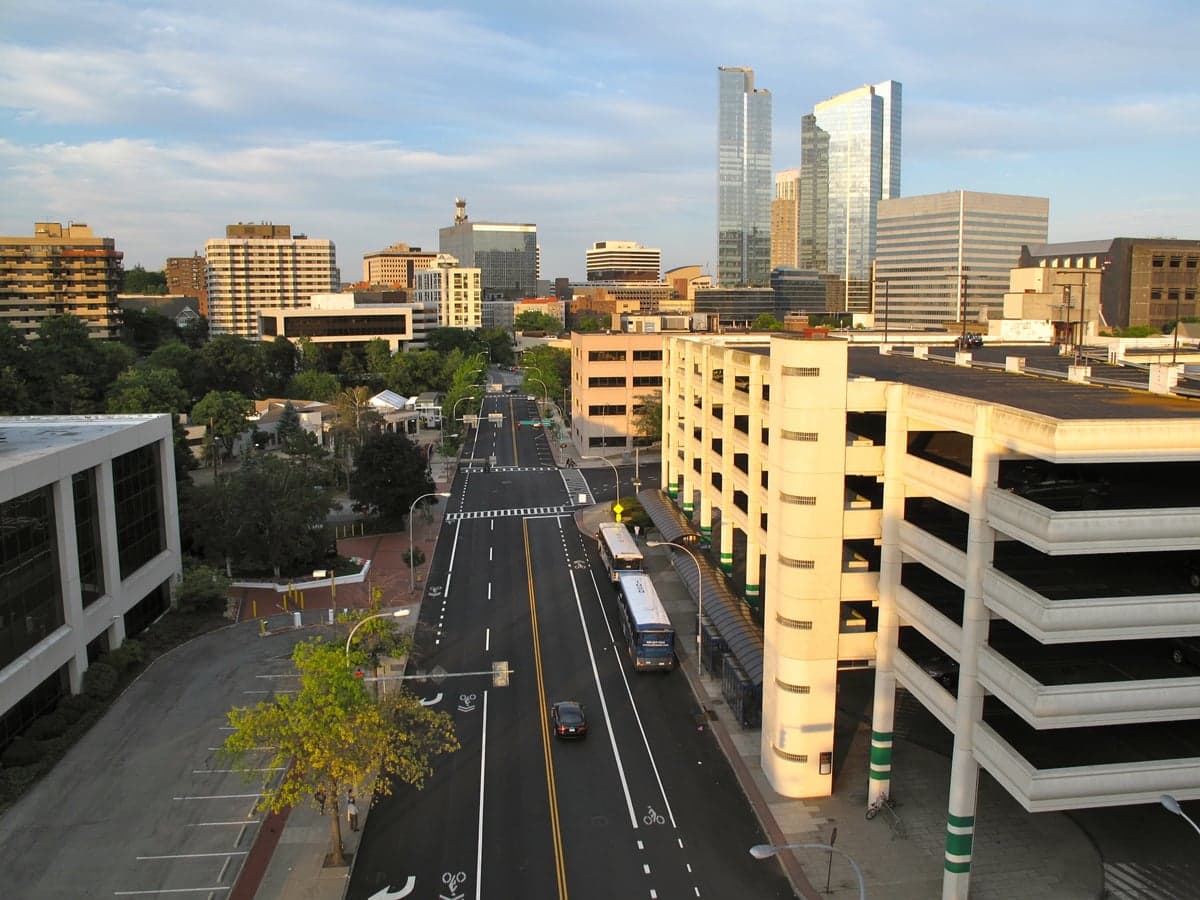
Photo: Wikipedia
Political ClimatePolitical Climate in White Plains, NY
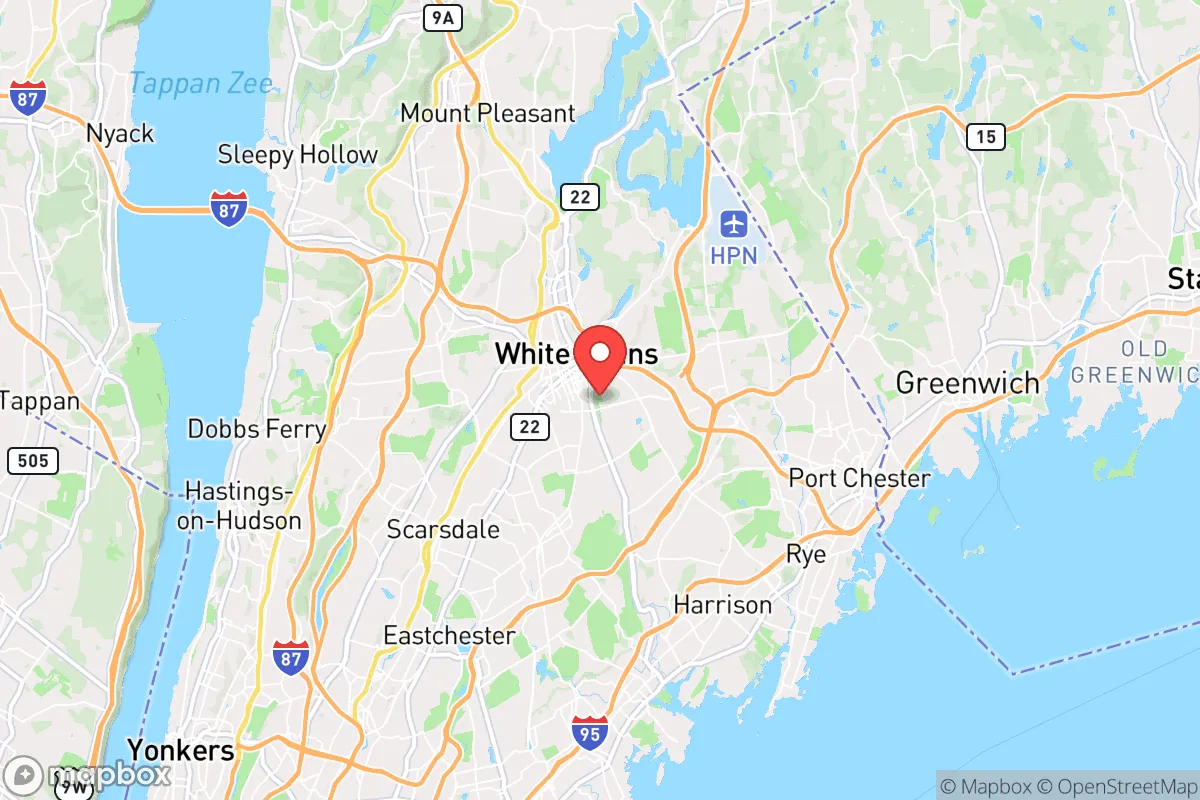
District shown is the primary district for this city’s centroid. Cities may span multiple districts.
Local Political AnalysisPolitical Analysis of White Plains, NY
White Plains has shifted hard to the left over the past decade, and it’s not slowing down. The city now carries a Cook PVI of D+18, meaning it votes about 18 points more Democratic than the national average. That’s a big swing from even 15 years ago, when Westchester County as a whole was still a purple battleground. Today, local elections are all but decided in the Democratic primary, and the general election is a formality. If you value a balance of ideas or a government that stays out of your daily life, that’s a red flag worth paying attention to.
How it compares
Drive 15 minutes north to Greenburgh or Scarsdale, and you’ll find the same deep-blue tilt—those towns are D+15 or higher. But head east to Rye Brook or Port Chester, and you start to see a slightly more mixed picture, with more registered independents and a handful of competitive local races. The real contrast is west of the Hudson: places like Nanuet or New City in Rockland County lean more moderate, and Carmel in Putnam County is outright red-leaning. White Plains, though, is the epicenter of Westchester’s progressive machine. The county executive, the district attorney, and most of the city council are all Democrats who rarely face serious opposition. That means one-party rule, and with it, a steady march toward higher taxes, more regulations, and policies that prioritize social engineering over personal freedom.
What this means for residents
For the average person living here, the political climate translates into a few concrete realities. First, property taxes are among the highest in the nation, and they keep climbing—the city’s budget has grown by double digits in recent years, with new spending on diversity initiatives, climate action plans, and affordable housing mandates. Second, local government tends to be heavy-handed. During the pandemic, White Plains was one of the first cities in the region to impose mask mandates and vaccine passports for indoor dining, and it kept restrictions longer than surrounding towns. Third, school policy is increasingly ideological. The White Plains school district has adopted DEI training for staff, gender-inclusive bathroom policies, and a curriculum that emphasizes social justice—changes that were pushed through with little public debate. If you’re a parent who wants a say in what your kids are taught, you’ll find the school board largely unresponsive to conservative or even moderate concerns.
Culturally, White Plains has become a place where traditional values are quietly sidelined. The city council has passed resolutions supporting sanctuary city status, defunding police proposals (though they were ultimately watered down), and a local law that effectively bans new gas stations and fossil fuel infrastructure. The annual Fourth of July parade still happens, but it’s now preceded by a “Pride Month” flag-raising and a “Juneteenth” celebration that get more official promotion. None of this is illegal, of course, but it creates an atmosphere where conservative viewpoints are treated as outdated or even offensive. If you’re looking for a community that respects your right to live your life without government interference, White Plains is moving in the opposite direction. The long-term trend is clear: more regulation, higher costs, and a narrowing of what’s considered acceptable opinion.

State Political ClimatePolitical Climate in New York
State Political AnalysisPolitical Environment in the State
New York State has shifted from a classic purple battleground to a solidly blue state over the past 20 years, driven primarily by the massive Democratic turnout in New York City and its inner suburbs. While the state as a whole hasn't voted Republican in a presidential election since 1984, the real story is the growing chasm between the five boroughs and the rest of the state. The dominant coalition is a progressive urban machine in Manhattan and Brooklyn, combined with the powerful public-sector unions in Albany, that now dictates policy for the entire state, often overriding the preferences of the more conservative upstate and rural regions.
Urban vs. rural divide
The political map of New York is a tale of two states. New York City alone accounts for roughly 40% of the state's vote, and its five boroughs—Manhattan, Brooklyn, Queens, the Bronx, and Staten Island—are a Democratic stronghold. Manhattan and Brooklyn are among the most liberal jurisdictions in the country, while Staten Island is the only borough that consistently votes Republican, though its influence is negligible. The immediate suburbs—Nassau County on Long Island and Westchester County north of the city—have trended blue over the last decade, flipping from swing counties to reliable Democratic wins. Further out, the "collar counties" like Orange, Dutchess, and Ulster are more competitive, with Orange County often voting Republican in local races. Upstate, the picture flips dramatically. Erie County (Buffalo) and Monroe County (Rochester) are Democratic-leaning due to their urban cores, but the vast rural expanses—the North Country, the Southern Tier, and the Finger Lakes region—are deeply red. Allegany, Wyoming, and Orleans counties routinely vote 65-70% Republican. The divide isn't just about population density; it's about economic reliance on state government versus private industry, and cultural values around gun rights, taxes, and family structure.
Policy environment
New York's policy environment is defined by high taxes and heavy regulation. The state has a progressive income tax that tops out at 10.9% for the highest earners, and property taxes are among the highest in the nation, especially in the suburbs of Albany, Rochester, and Buffalo. The regulatory posture is aggressive: the state has some of the strictest environmental laws in the country, a near-total ban on new natural gas hookups in new construction, and a "Green New Deal" mandate that aims for zero-emissions electricity by 2040. On education, New York has a powerful teachers' union that has successfully resisted school choice and charter school expansion, though the state does have a robust system of public universities (SUNY). Healthcare is heavily regulated, with the state expanding Medicaid under the Affordable Care Act and enacting a public option for health insurance. Election laws have been loosened significantly: no-excuse absentee voting, early voting, and automatic voter registration are all in place. The state also passed the "John R. Lewis Voting Rights Act" in 2022, which imposes pre-clearance requirements on local election changes, a move critics argue centralizes power in Albany.
Trajectory & freedom
New York is becoming less free across multiple dimensions, particularly for conservatives. The most significant recent contraction of personal liberty came with the 2019 SAFE Act enhancements and the 2022 "Concealed Carry Improvement Act" (CCIA), which effectively banned firearms in most public places, including Times Square, subways, and parks, and required "good moral character" for permits. This was a direct response to the Supreme Court's Bruen decision, and it has been challenged in court. On parental rights, the state passed a law in 2022 that prohibits schools from notifying parents if a child changes their gender identity or pronouns, overriding local school board control. Medical autonomy has been expanded for abortion—New York codified Roe v. Wade protections in 2019 and passed a constitutional amendment in 2024 enshrining abortion rights—but restricted for COVID-19 vaccine mandates, which remain in place for healthcare workers. Property rights have been weakened by the 2019 rent control laws that expanded tenant protections statewide, making it harder for landlords to evict non-paying tenants or raise rents. The state also passed a "good cause eviction" law in 2024 that requires landlords to prove "just cause" before evicting a tenant, even after a lease expires. Taxation remains a major freedom issue: the state has no right-to-work law, and union dues are effectively mandatory for many public-sector jobs.
Civil unrest & political movements
New York has been a flashpoint for political movements on both sides. The 2020 George Floyd protests in New York City were among the largest and most destructive in the nation, with looting and arson in Manhattan and Brooklyn that led to a significant police reform package, including the repeal of 50-a (which had shielded police disciplinary records). The state also passed a law banning chokeholds and requiring body cameras. On the right, the "Second Amendment" movement is strong upstate, with regular rallies in Albany and at county fairs, particularly in Oneida and Herkimer counties. The "New York State Rifle & Pistol Association" is a major political force. Immigration politics are a constant flashpoint: New York City is a sanctuary city, and the state has a "Green Light Law" that allows undocumented immigrants to obtain driver's licenses. The influx of over 100,000 asylum seekers to the city since 2022 has strained resources and sparked backlash in working-class neighborhoods in Queens and Staten Island. There is a small but vocal secession movement in Western New York and the Southern Tier, with groups like "Divide NY" pushing for a separate state of "New Amsterdam," though it remains a fringe idea. Election integrity controversies have been minimal compared to other states, but the 2020 and 2022 elections saw lawsuits over mail-in ballot counting and the state's "no-excuse" absentee voting law.
Projection
Over the next 5-10 years, New York is likely to become more progressive and more centralized. Demographic trends are clear: the upstate population is stagnant or declining, while New York City and its immediate suburbs continue to grow, albeit slowly. The state's Democratic supermajority in the legislature is unlikely to be broken, as gerrymandering and the concentration of Democratic voters in the city make it nearly impossible for Republicans to win a majority. The biggest wildcard is out-migration: New York lost a net 300,000 residents to other states between 2020 and 2023, mostly to Florida, Texas, and the Carolinas. If this trend accelerates, it could shift the political calculus, but for now, the state's tax base is eroding faster than its political power. Expect further expansions of rent control, a push for single-payer healthcare (the "New York Health Act"), and stricter gun laws. The state's "Climate Leadership and Community Protection Act" will drive up energy costs and likely lead to more manufacturing job losses. A new resident moving in now should expect to see higher taxes, more regulations on housing and business, and a continued erosion of Second Amendment rights, but also a robust public infrastructure and a strong social safety net.
For a conservative individual or family considering a move to New York, the bottom line is this: you'll find your values represented in the rural counties of the Southern Tier, the North Country, and parts of the Finger Lakes, but you'll be fighting an uphill battle against a state government that is increasingly hostile to gun ownership, school choice, and low taxes. If you can afford the property taxes in a red county like Wyoming or Allegany, and you're willing to drive an hour to the nearest Walmart, you can carve out a decent life. But if you're looking for a state that respects your personal freedoms and keeps government out of your family's decisions, New York is not trending in that direction. The best advice from a longtime resident: visit the specific county you're considering, talk to the locals at the diner, and understand that Albany's reach is long and expensive.
* Values derived from national, state, county, city and local statistics and may differ in a specific area. Last updated: 2026-05-01T23:54:06.000Z
Narrative content on this page is AI-generated and may contain mistakes. Verify any details that matter before acting on them.
ReloMaps may earn a commission from affiliate links at no extra cost to you.

