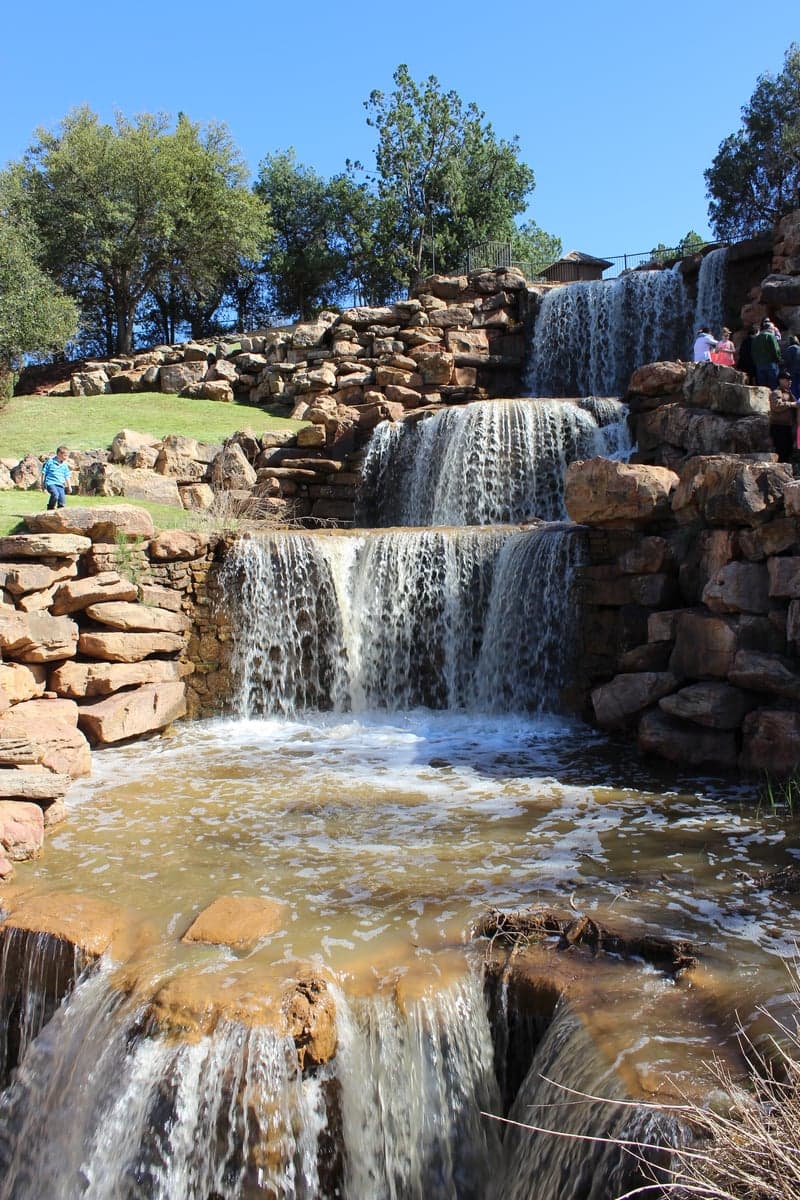
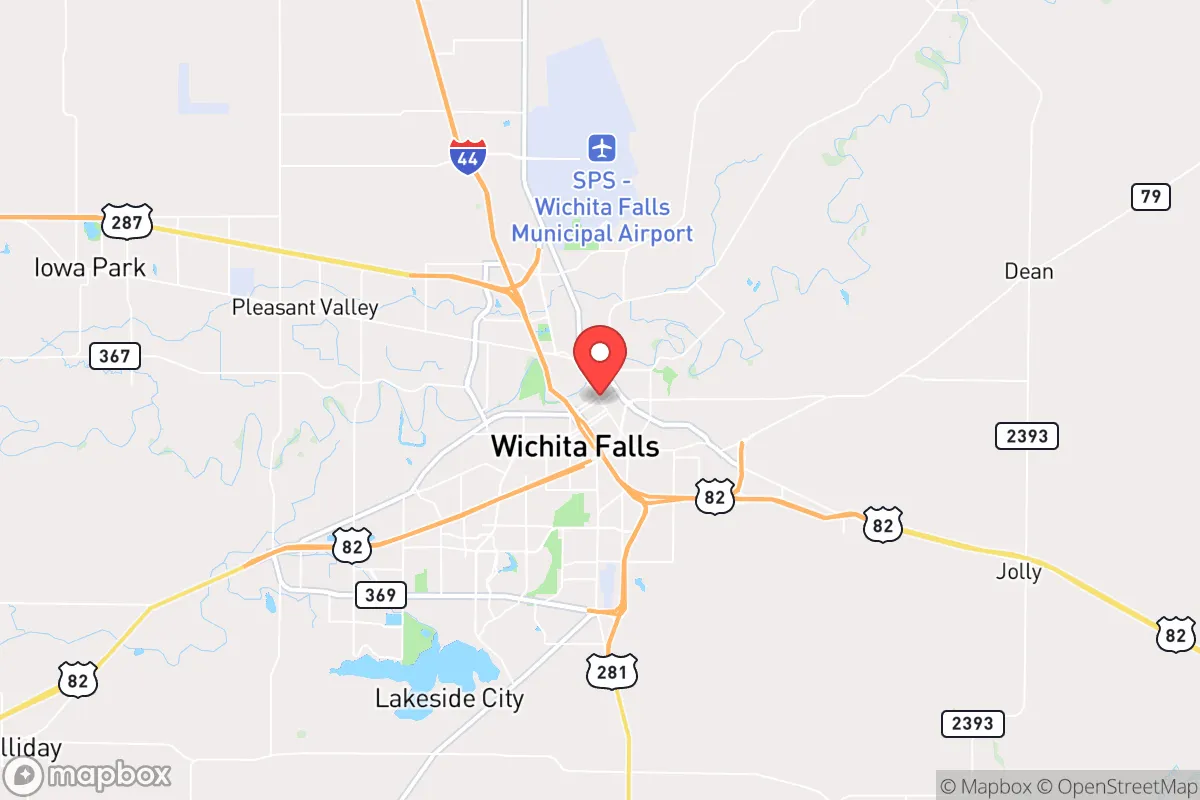
Photo: Wikipedia
Demographics of Wichita Falls, TX
Affluence Level in Wichita Falls, TX
A middle-class area roughly in line with national averages across income, home values, education, and employment.
People of Wichita Falls, TX
Wichita Falls is a mid-sized North Texas city of 102,558 residents that remains predominantly white (58.4%) but has grown significantly more diverse over the past three decades, with a Hispanic population of 22.4% and a Black population of 12.5%. The city’s character is shaped by its roots as a railroad and oil boomtown, a military presence from Sheppard Air Force Base, and a relatively low foreign-born share of just 4.5%. Residents tend to describe the city as family-oriented, conservative, and affordable, with a strong sense of local identity that sets it apart from the fast-growing Dallas-Fort Worth metroplex two hours to the south.
How the city was settled and grew
Wichita Falls was founded in 1872 as a trading post on the Wichita River, but its first major population wave arrived with the railroad in the 1880s. The Fort Worth and Denver City Railway reached the area in 1882, bringing Anglo-American settlers, merchants, and cattlemen who established the original downtown core around what is now the Depot Square historic district. A second, larger wave came with the 1918 oil boom after the discovery of the Burkburnett field just north of town. Thousands of workers—mostly white migrants from Oklahoma, Kansas, and the rural South—flooded into makeshift camps that later became neighborhoods like Fairway Bend and Lake Park. The city’s population surged from 8,200 in 1910 to over 40,000 by 1930. During this era, Black workers also arrived, primarily as domestic laborers and railroad porters, settling in the East Side neighborhood near the rail yards. Hispanic migration was minimal before 1950; the small Mexican-origin population clustered near the stockyards and packing plants in the South Side industrial corridor. Sheppard Air Force Base, established in 1941, brought a steady stream of military families and civilian employees, many of whom settled in the Burkburnett Road corridor and the Northside neighborhoods near the base.
Modern era (post-1965)
After the 1965 Hart-Cellar Act, Wichita Falls saw only modest immigration growth compared to larger Texas cities. The foreign-born share remains low at 4.5%, with the largest groups being Hispanic (primarily from Mexico and Central America) and a small but visible East/Southeast Asian community (2.0%) tied to Sheppard Air Force Base’s international training programs. Indian-subcontinent residents account for just 0.6% and are concentrated among professionals at the base and the local hospital system. The most significant demographic shift since the 1980s has been the growth of the Hispanic population, which rose from roughly 8% in 1990 to 22.4% today. This wave of domestic in-migration—mostly from South Texas and the Rio Grande Valley—settled in the Southwest Parkway corridor and the Sunset Terrace area, where new housing developments and service-sector jobs drew families. The Black population, which was 10.2% in 2000, has grown modestly to 12.5%, with many families remaining in the historic East Side while others have moved to newer subdivisions in the Northwest quadrant near the base. White residents have suburbanized into the University Park and Lake Wichita areas, creating a pattern where older central neighborhoods are becoming more diverse while newer periphery developments remain predominantly white.
The future
Wichita Falls is not homogenizing; instead, it is gradually tribalizing into distinct enclaves along income and ethnicity lines. The Hispanic population is projected to continue growing, potentially reaching 28-30% by 2040, driven by higher birth rates and continued domestic migration from South Texas. The white share will likely decline to around 50-52% as older residents age out and younger white families continue to move to the Dallas-Fort Worth suburbs for job opportunities. The Black and East/Southeast Asian shares are expected to remain stable, with growth tied primarily to Sheppard Air Force Base assignments. The foreign-born share may rise slightly but will remain below 7% due to the city’s limited economic draw for international immigrants. The Southwest Parkway corridor will likely become the city’s most diverse area, while University Park and Lake Wichita will remain predominantly white and higher-income. The East Side will continue as the historic Black neighborhood, though with some Hispanic in-movement.
For someone moving in now, Wichita Falls offers a stable, affordable, and increasingly diverse community where the dominant culture remains white and conservative, but where Hispanic and Black residents are becoming more visible in civic and business life. The city is not experiencing rapid demographic upheaval, but rather a slow, steady diversification that will continue over the next two decades. New residents should expect a place where traditional values hold strong, where Sheppard Air Force Base anchors the economy and culture, and where the neighborhoods they choose will largely determine the ethnic and economic character of their daily life.

* Values derived from national, state, county, city and local statistics and may differ in a specific area. Last updated: 2026-04-19T07:24:44.000Z
Narrative content on this page is AI-generated and may contain mistakes. Verify any details that matter before acting on them.
ReloMaps may earn a commission from affiliate links at no extra cost to you.

