
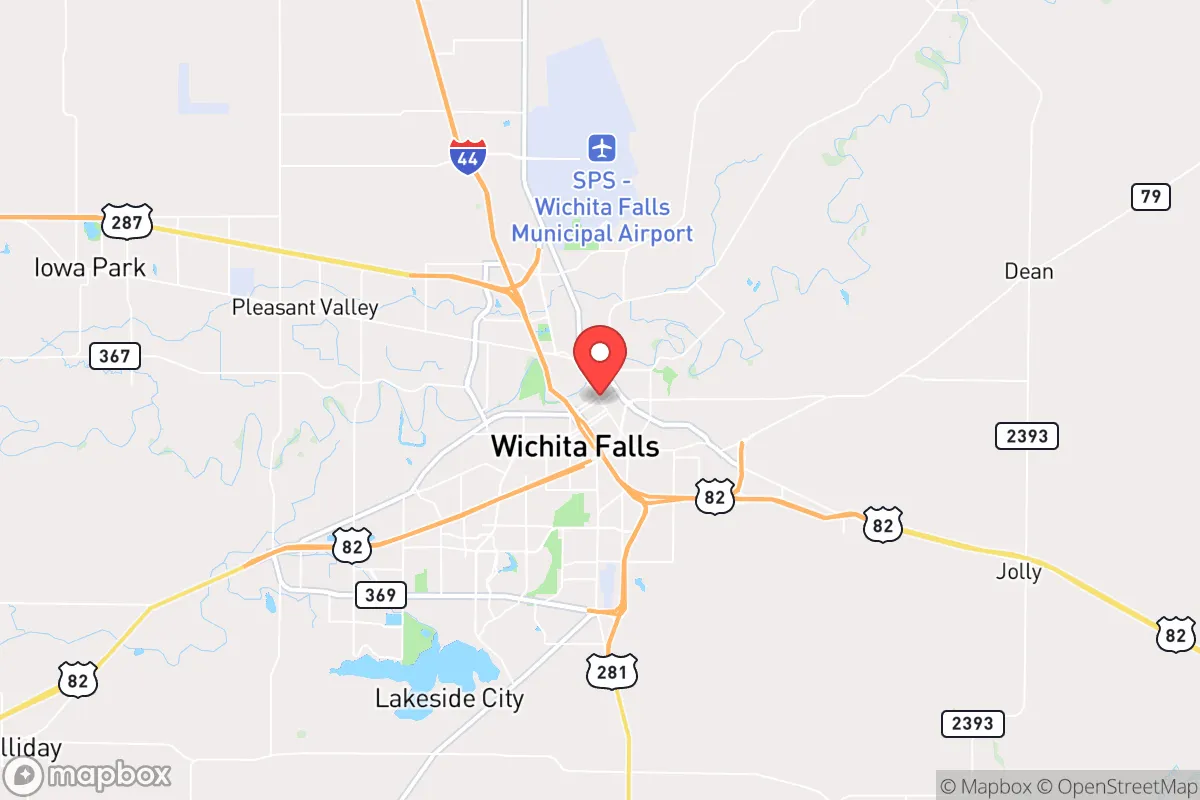
Photo: Wikipedia
Quality of Life in Wichita Falls, TX
A high quality of life with strong walkability, manageable living costs, healthy neighborhood signals, and solid amenity access.
What does Quality of Life tell us?
Quality of Life blends cost of living, nearby amenities, socioeconomic signals, and neighborhood character. City-level scores represent the whole municipality; individual neighborhoods can differ.
What does this tell us?
Quality of Life blends cost of living, nearby amenities, socioeconomic signals, and neighborhood character. City-level scores represent the whole municipality; individual neighborhoods can differ.
Cost of Living
29% below national average
The Real Cost of Living in Wichita Falls, TX for 2026
| Tier | Individual | Family (4) |
|---|---|---|
| Survival | $16k | $29k |
| Comfortable | $28k | $41k |
| Luxury | $106k+ | $164k+ |
| Elite (Top 5%) | $136k+ | $210k+ |
144%
The Area Signal
A metric tracking the socioeconomic signals of the area.


Hobbies
Explore the areaGroceries
5 within 10 miles
Gas
0 within 10 miles
Hospital
3 within 20 miles
Airport
DFW — Dallas/Fort Worth International
Post Office
USPS — Wichita Falls, TX
Critical Amenities
Quality-of-Life Analysis
Wichita Falls offers a notably lower cost of living than most of the United States, with a composite index of 71 (where 100 equals the national average). This affordability attracts a mix of military families stationed at Sheppard Air Force Base, retirees seeking to stretch their savings, and young professionals drawn to the region's steady job market in healthcare, manufacturing, and education. The city's median household income of roughly $52,000 aligns with its modest housing costs, creating a community where middle-class stability is more common than either extreme wealth or deep poverty.
How housing costs and everyday expenses compare to nearby cities
The most striking quality-of-life factor in Wichita Falls is its housing market. The median home value sits at $142,600, less than half the national median of roughly $350,000, while the median rent is $978 per month. This makes homeownership accessible for households earning the area's median income, a sharp contrast to larger Texas metros like Dallas-Fort Worth (median home value ~$380,000) or Austin (~$500,000). Even compared to nearby mid-sized cities like Lawton, Oklahoma (index 78) or Abilene (index 74), Wichita Falls remains the most affordable option in the region. The average commute of just 14.4 minutes further reduces transportation costs, as most residents live within a short drive of their workplace, schools, and shopping centers. Utility costs and grocery prices also track below national averages, though property taxes in Wichita County (roughly 2.3% of assessed value) are slightly higher than the Texas average, a factor buyers should weigh against the low purchase price.
What daily life is like for families, professionals, and retirees
Daily life in Wichita Falls centers on a manageable, car-dependent routine with few traffic headaches. The Wichita Falls Independent School District serves most families, with notable options like Hirschi High School's career and technical programs and the magnet-style Wichita Falls High School. For higher education, Midwestern State University provides a public liberal-arts college experience with about 5,500 students. The city's amenities punch above its size: the River Bend Nature Center offers 20 acres of trails and a butterfly house, while the 9,000-seat Memorial Auditorium hosts concerts and Broadway tours. Outdoor recreation revolves around Lake Arrowhead and Lake Wichita, both popular for fishing and boating. The Sheppard Air Force Base presence adds a transient, diverse population that keeps the local economy stable and supports a range of chain and independent restaurants along Kemp Boulevard and Southwest Parkway. Healthcare access is solid, with United Regional Health Care System providing a Level II trauma center and specialized services that reduce the need to travel to Dallas (about 140 miles south) for most medical needs.
Wichita Falls is best suited for people who prioritize financial breathing room over urban excitement. Families with young children can afford a three-bedroom home on a single middle-class salary, while retirees on fixed incomes find their dollars go further here than in almost any other Texas city of comparable size. Remote workers will appreciate the low commute and fast internet options from providers like Suddenlink and AT&T. The trade-off is limited nightlife, fewer high-end dining choices, and a slower pace that can feel isolating for those accustomed to big-city energy. For anyone willing to trade cultural density for a lower cost of living and a 14-minute commute, Wichita Falls delivers a practical, low-stress quality of life that is increasingly rare in modern Texas.

Crime in Wichita Falls, TX
Crime rates similar to the national median for U.S. locations.
Violent CrimeViolent Crime Analysis
Property CrimeProperty Crime Analysis
Crime Analysis
Wichita Falls presents a mixed safety profile, with property crime rates significantly exceeding national averages while violent crime remains slightly below the U.S. median. The city's overall crime picture is shaped by its status as a mid-sized independent urban center in North Texas, where local law enforcement and judicial approaches play a central role in public safety outcomes.
Crime in context
Wichita Falls reports a violent crime rate of 351.8 incidents per 100,000 residents, which is below the national average of roughly 380 per 100,000 but above the Texas state median of approximately 330 per 100,000. Property crime, however, is a more pressing concern at 2,154.5 per 100,000 — notably higher than both the U.S. average (around 1,950) and the Texas average (approximately 1,850). This disparity means residents face a greater likelihood of burglary, theft, and motor vehicle theft than in many comparable Texas cities. The city's location along U.S. Highway 287 and Interstate 44 contributes to transient property crime, as major thoroughfares facilitate quick movement of stolen goods.
What residents experience
For daily life in Wichita Falls, the elevated property crime rate translates into practical precautions: securing vehicles, using outdoor lighting, and avoiding leaving valuables in plain sight. Violent crime, while less frequent, is concentrated in specific areas and often involves individuals known to one another rather than random attacks on strangers. The local judicial system operates under a conservative framework — Wichita County's elected district attorneys and judges generally pursue tough-on-crime policies, including mandatory minimum sentences for repeat offenders and limited use of pretrial diversion for violent crimes. This contrasts with more progressive jurisdictions in larger Texas metros like Dallas or Houston, where liberal district attorneys have implemented policies such as cash bail reform and reduced prosecution of certain drug and property offenses. In Wichita Falls, the absence of such progressive reforms means offenders face more consistent consequences, which can deter some criminal activity but does not eliminate the underlying property crime challenges tied to economic conditions and drug addiction cycles.
Neighborhood-level variation
Safety varies considerably by neighborhood within Wichita Falls. The southwestern quadrant, including areas around Sikes Senter Mall and the Midwestern State University campus, sees higher property crime due to retail density and student populations. The northern and eastern sections, particularly near the downtown core and the old Sheppard Air Force Base housing areas, report elevated violent crime rates. In contrast, the newer subdivisions along the city's western edge — such as the area around Lake Wichita Park and the Country Club district — experience significantly lower crime rates, often below 150 violent crimes per 100,000. Prospective residents should consult the Wichita Falls Police Department's online crime mapping tool and consider visiting neighborhoods at different times of day to assess lighting, foot traffic, and overall community vigilance.
* Values derived from national, state, county, city and local statistics and may differ in a specific area. Last updated: 2026-04-19T07:24:44.000Z
Narrative content on this page is AI-generated and may contain mistakes. Verify any details that matter before acting on them.
ReloMaps may earn a commission from affiliate links at no extra cost to you.

