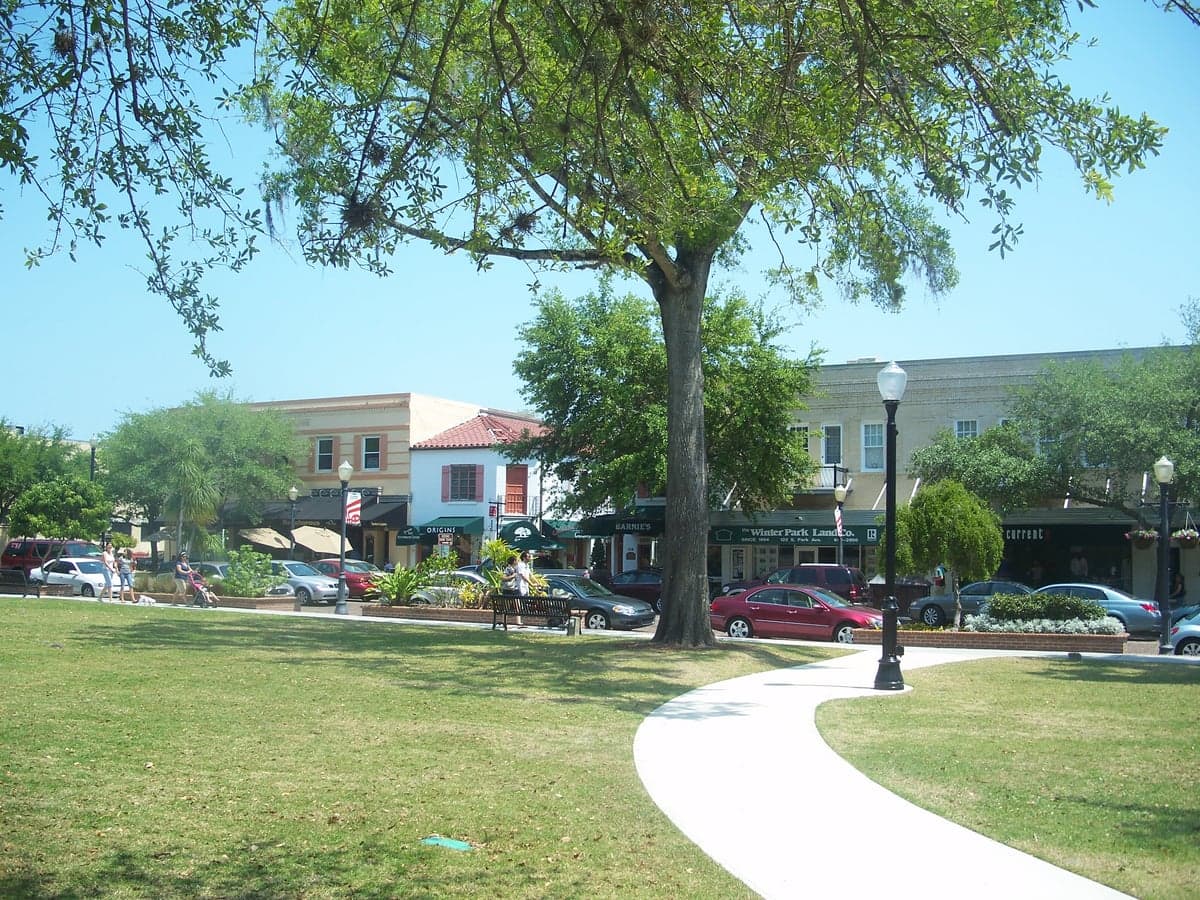
Photo: Wikipedia
Strategic Assessment of Winter Park, FL
Multiple tactical vulnerabilities. Population density, target proximity, or disaster risk are likely compounding. A retreat property and exit planning is required.
What does the Strategic Assessment tell us?
Our Strategic Assessment grades tactical survivability of an area. Major population centers, military targets, fallout zones, natural disasters, and border exposure all drive risk — lower exposure means a more defensible position in a crisis.
This is heavily inspired by Joel Skousen's Strategic Relocation book. Highly recommended you checkout the book ($)What does this tell us?
Our Strategic Assessment grades tactical survivability of an area. Major population centers, military targets, fallout zones, natural disasters, and border exposure all drive risk — lower exposure means a more defensible position in a crisis.
This is heavily inspired by Joel Skousen's Strategic Relocation book. Highly recommended you checkout the book ($)Strategic Pillars

Key Distances
Regional Safe Places
Below is our recommended "safe zones" in Florida and the surrounding area based on our strategic heuristics. For most people, it's unrealistic to live in a “safe zone” full-time due to work, family or other personal reasons. They tend to be more rural. However, many of these areas are perfect for second homes and retreat properties that double as a vacation home or even a short-term rental.

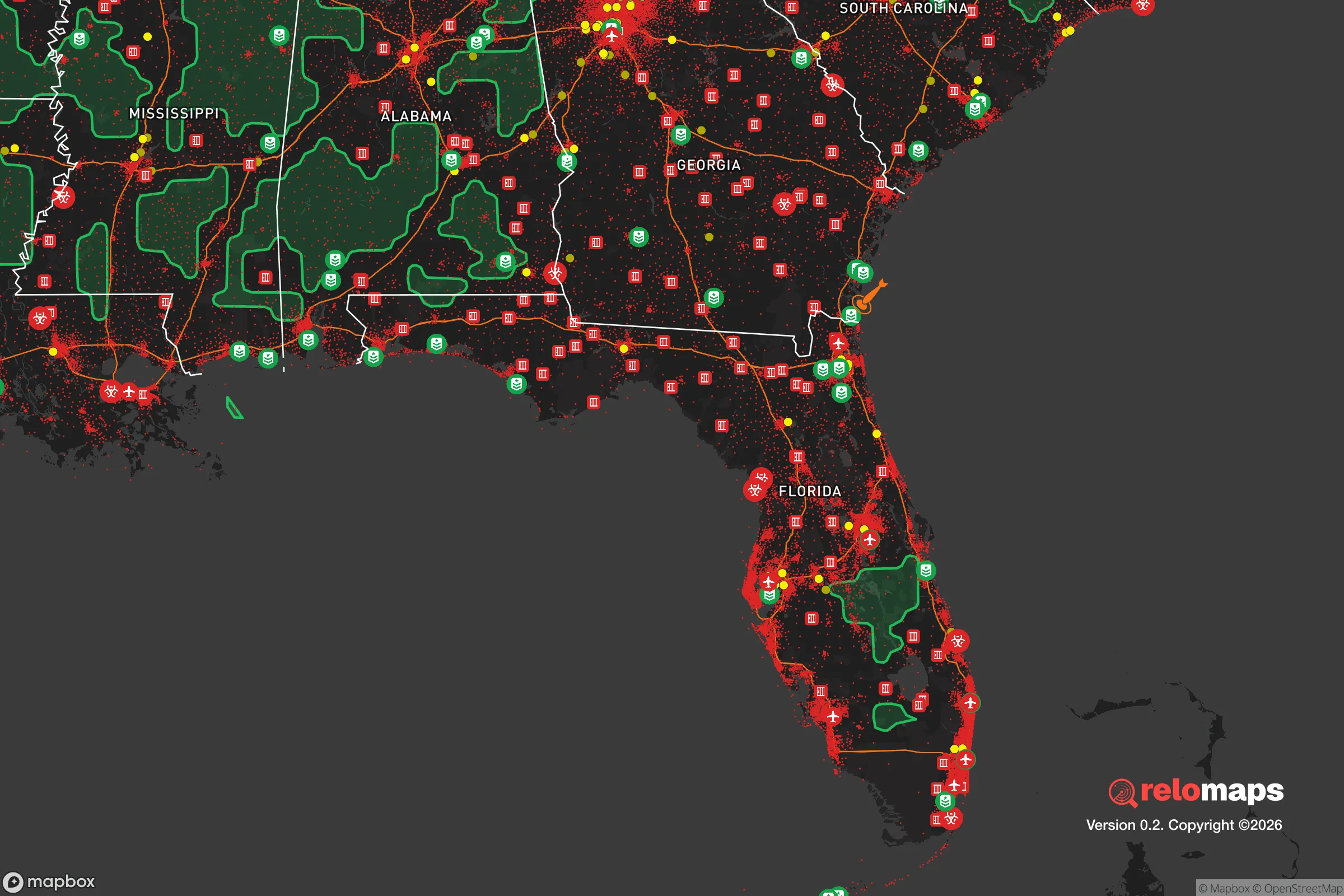


Important Note: For informational purposes only. This does not mean nothing bad ever happens in the green zones. Please use common sense. This is based on public data and modeled with AI. We tried to take a conservative approach but mistakes happen. We update this regularly as new information becomes available.
Solar Generator Recommendations
Backup power matters more here than in safer locations. We've picked three solar generators across budgets and capacity tiers — start with the budget unit if you only need a few essentials, or step up if you want to run a fridge and HVAC for days at a time.

Jackery Portable Power Station Explorer 300
Budget OptionPower on the Go: Weighing only 11 lbs, it's convenient to set up and store with book-sized foldable solar panels

BLUETTI Portable Power Station AC180
Designed for both indoor and outdoor scenarios, AC180 is highly capable as it has a robost capacity and continuous output power.

EF ECOFLOW DELTA Pro Ultra Power Station
Upgraded PickEcoFlow DELTA Pro Ultra is a whole-home energy system designed to grow with your family. Integrated with the Smart Home Panel 2, it scales to meet your evolving energy needs — keeping your home powered, intelligent, and secure through every stage of life.
We earn a commission, at no additional cost to you.
Strategic Assessment Analysis
Winter Park, Florida, presents a complex strategic picture for the conservative prepper. Its immediate advantages—a stable inland location, a robust local economy, and a community with deep-rooted civic institutions—are offset by its proximity to Orlando, a major metropolitan target for both civil unrest and potential kinetic events. For the individual or family prioritizing resilience, Winter Park is not a bug-out location but a potential "gray man" staging ground, provided you understand its specific vulnerabilities and assets. The key is leveraging its natural buffers while actively mitigating the risks that come with being a wealthy suburb of a major city.
Geographic position and natural advantages for long-term stability
Winter Park sits on a chain of lakes—six major ones, including Lake Virginia, Lake Maitland, and Lake Osceola—which provides a natural defensive barrier against the sprawl of Orlando. This water network is not just aesthetic; it creates chokepoints for vehicle traffic and offers a degree of separation from the densest population centers. The area is part of the Florida Peninsula, which means it is insulated from the direct fallout of a nuclear event targeting a coastal strategic asset like Cape Canaveral or a major port like Jacksonville, though prevailing winds would need to be monitored. The terrain is flat but heavily wooded with live oaks and pines, offering decent concealment from aerial observation. The underlying geology is limestone and sand, which, while not ideal for deep bunkers, allows for effective water filtration and well drilling in many areas. The climate is subtropical, meaning a year-round growing season for food, though this comes with the trade-off of hurricane risk. For a relocator, the chain of lakes offers a potential secondary water source and a natural barrier against mass movement from the south and east.
Risks, exposures, and proximity to fallout-relevant landmarks
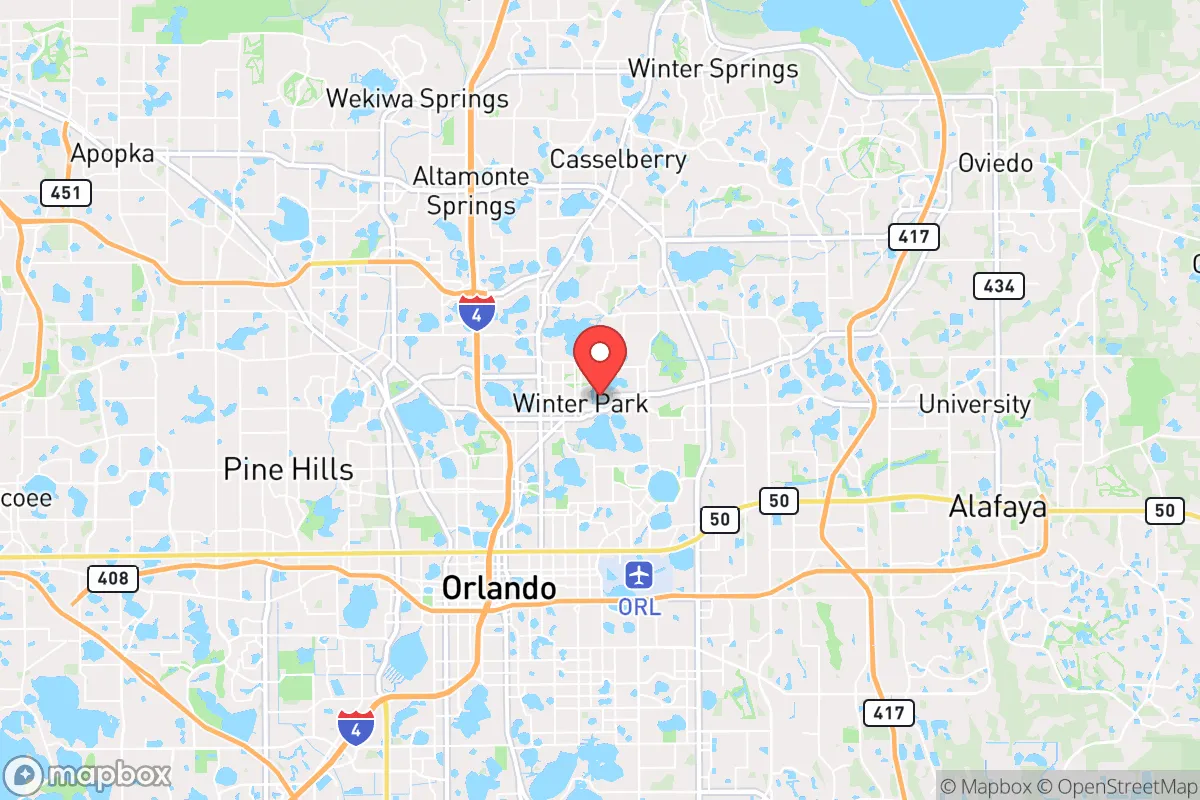
The most significant strategic liability is Winter Park’s location just 10 miles north of downtown Orlando. Orlando is a Tier-1 target for civil unrest due to its tourism-dependent economy, large transient population, and high-profile events. It is also home to the Orlando International Airport (MCO), a major military airlift hub (McCoy Annex), and the Naval Air Warfare Center Training Systems Division. In a scenario involving a mass casualty event or a breakdown of order, these are primary targets for disruption. Winter Park itself is a wealthy enclave, which means it would be a magnet for looting and resource-seeking populations from less affluent areas to the south and east. The I-4 corridor, which runs directly through the area, is a major evacuation route and a likely chokepoint for both fleeing civilians and potential military checkpoints. The proximity to the Orlando Utilities Commission's Stanton Energy Center (a coal and natural gas plant) and the nearby oil terminals in Taft are secondary concerns; a disruption there would affect power and fuel availability for the entire region. The area is also in a high-risk hurricane zone, with the 2004 season (Charley, Frances, Jeanne) demonstrating that even inland areas can face prolonged power outages and infrastructure damage. For the prepper, the key takeaway is that Winter Park is not a remote sanctuary; it is a high-value suburb that will be affected by any major event in Orlando.
Practical resilience for a relocator: food, water, energy, and defensibility
For a relocator, Winter Park offers a mixed bag. Water is the strongest asset. The chain of lakes is a reliable surface water source, and the Floridan Aquifer is accessible via private wells in many neighborhoods, though permitting and depth vary. A prepper should prioritize a property with a well or the ability to drill one. Food security is moderate. The area has a strong local food scene with farmers' markets (Winter Park Farmers' Market is a year-round staple) and a number of community gardens, but large-scale agricultural land is being consumed by development. Stockpiling is essential, as the local grocery supply chain is heavily dependent on trucking along I-4. Energy is a vulnerability. Duke Energy and OUC provide power, but the grid is above-ground and susceptible to hurricane damage and potential EMP effects. Solar is viable, but the frequent cloud cover from afternoon thunderstorms reduces efficiency. A backup generator with a propane or natural gas hookup is a must. Defensibility is the hardest factor. Winter Park is a dense, interconnected suburb. Single-family homes on large lots (the "Park Avenue" area) offer some standoff, but most neighborhoods are accessible by multiple roads. The best defensive posture is a home on a lake with limited road access, or a property in the more rural areas to the north (near the Seminole County line) where lot sizes increase. The local police department is well-funded and responsive, but in a widespread event, they will be overwhelmed. The community's strength is its social capital; a prepper should integrate into local homeowner associations and neighborhood watch groups to build a mutual-aid network. Medical access is excellent with AdventHealth Winter Park and Orlando Health nearby, but these hospitals would be overwhelmed in a mass casualty event. A robust personal medical kit and training are non-negotiable.
The overall strategic picture for Winter Park is one of calculated risk. It is not a retreat; it is a forward operating base with good resources and a stable community, but it sits in the shadow of a major target. The conservative prepper who chooses Winter Park must be prepared to "hunker in place" for the first 72 hours to a week, relying on stored supplies and a defensible property, while monitoring the situation in Orlando. The long-term play is to use the area's natural advantages—water, growing season, and a relatively stable local government—to build a self-sufficient household while maintaining a low profile. The biggest mistake would be to assume that wealth and proximity to theme parks equate to safety. Winter Park requires active preparation, not passive optimism. If you can secure a property with a well, solar backup, and a defensible perimeter, and you are willing to build a network of like-minded neighbors, it can serve as a viable base for weathering the coming storms. If you are looking for a remote, off-grid sanctuary, look further north or west. Winter Park is for the strategic operator who wants to stay close to resources while maintaining a credible defense.

* Values derived from national, state, county, city and local statistics and may differ in a specific area. Last updated: 2026-05-13T16:24:03.000Z
Narrative content on this page is AI-generated and may contain mistakes. Verify any details that matter before acting on them.
ReloMaps may earn a commission from affiliate links at no extra cost to you.

