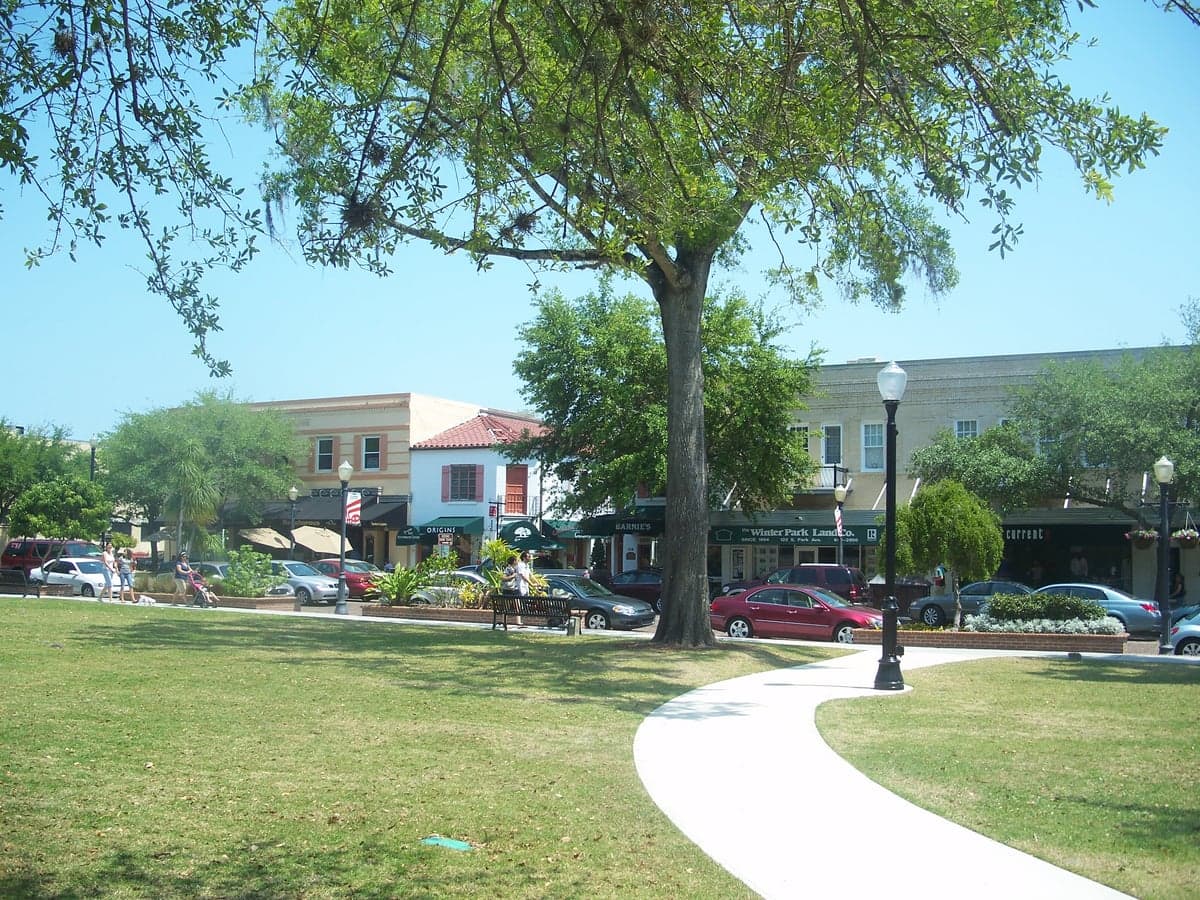
Photo: Wikipedia
Political ClimatePolitical Climate in Winter Park, FL
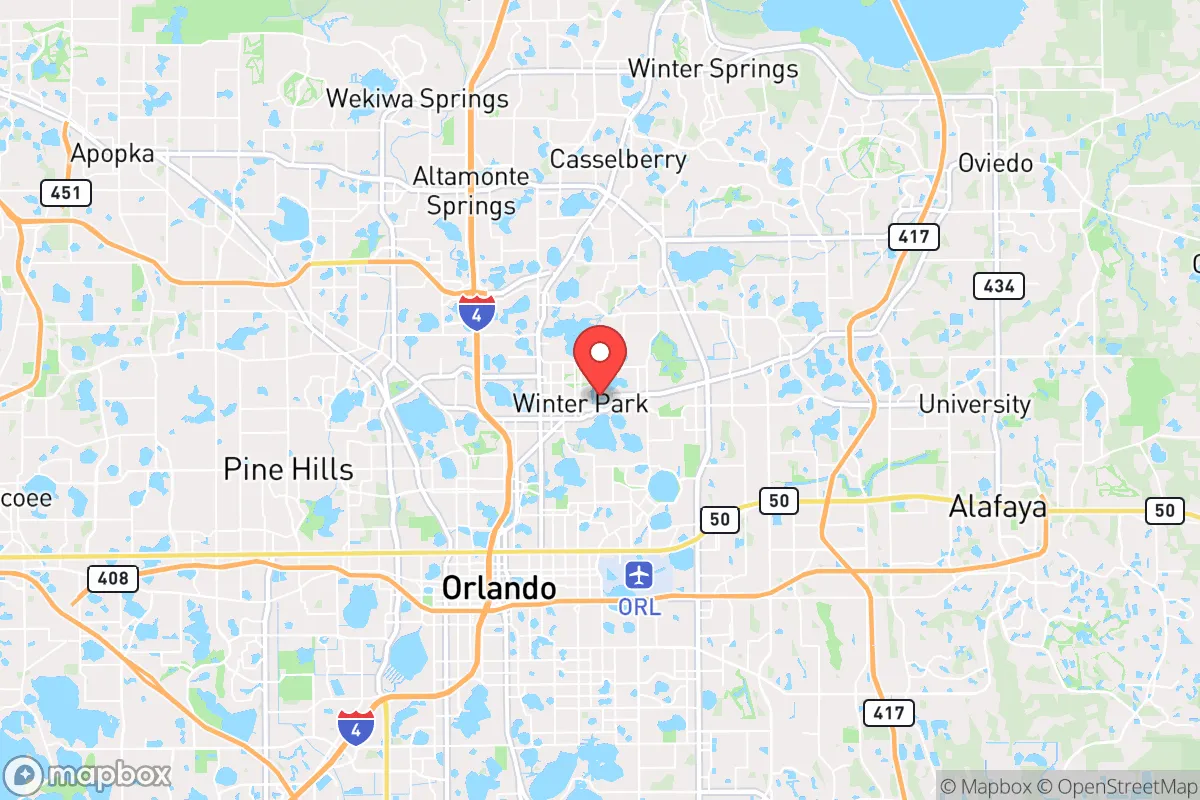
District shown is the primary district for this city’s centroid. Cities may span multiple districts.
Inherited from parent state — no local data available.
Local Political AnalysisPolitical Analysis of Winter Park, FL
Winter Park, Florida, has long been a blue island in a red state, and that’s becoming more pronounced. The Cook PVI of D+13 tells you everything you need to know: this is one of the most reliably Democratic areas in Central Florida. Back in the 90s and early 2000s, you could still find a healthy mix of conservative and moderate voices at the local coffee shops and city commission meetings. Now, the political energy is overwhelmingly progressive, and the shift has been accelerating over the last decade. If you’re a conservative moving here, you’re going to feel like a minority in your own neighborhood, especially compared to the surrounding areas like Maitland, Ocoee, or even Apopka, which still lean more purple or red.
How it compares
The contrast between Winter Park and the rest of Florida is stark. The state as a whole has a Cook PVI of R+5, meaning it leans Republican by a solid margin. That’s the Florida you see in the suburbs of Jacksonville, the Panhandle, and even parts of rural Central Florida. But Winter Park? It’s a different world. Drive 15 minutes west to Ocoee or Winter Garden, and you’ll find a much more balanced political environment, with plenty of conservative families and small business owners who value limited government. Head east to Oviedo or Lake Mary, and you’ll see the same. Winter Park, by contrast, has become a haven for the kind of progressive activism that pushes for higher taxes, more regulations, and a government that feels increasingly comfortable telling you how to live your life. The city council and school board are dominated by voices that prioritize social engineering over personal freedom.
What this means for residents
For a conservative living here, daily life means navigating a local government that often seems more interested in symbolic gestures than practical solutions. You’ll see ordinances that feel like overreach—things like strict rental regulations, aggressive environmental mandates, and a general attitude that the city knows best. Property taxes are higher than in surrounding towns, and the city has a habit of spending on pet projects that don’t always align with what residents actually need. The school system, while well-funded, has embraced curriculum shifts that many parents find concerning, with a focus on social justice themes that can crowd out traditional academics. If you value the Second Amendment, you’ll find Winter Park’s local politics chilly; the city has been a staging ground for gun control advocacy that goes beyond state law. It’s not a place where you can just live your life without the government peeking over your shoulder.
Looking ahead, the trajectory is clear: Winter Park will only get more progressive. The influx of out-of-state transplants, many from blue states, is accelerating the shift. The old guard of moderate Democrats and Republicans who kept things balanced is retiring or moving out. If you’re considering a move here, be prepared for a community where your values on personal freedom, fiscal restraint, and limited government will be in the minority. The charm of Park Avenue and the beautiful lakes are real, but so is the political climate that comes with them. For a conservative, it’s a trade-off—you get a lovely town, but you’ll be swimming against the current every time you vote or speak up at a town hall.

State Political ClimatePolitical Climate in Florida
State Political AnalysisPolitical Environment in the State
Florida is a solidly Republican state with a Cook PVI of R+5, but it’s not a monolith—it’s a battleground of transplants, retirees, and young families that has shifted rightward over the past two decades. The dominant coalition is a mix of conservative-leaning seniors, suburban families, and exiles from blue states, while Democrats hold sway in dense urban cores and a few college towns. Over the last 10-20 years, the state has moved from a classic swing state (think 2000 recount) to a reliably red powerhouse, driven by massive in-migration from the Northeast and Midwest, and a GOP that has locked down the legislature and governor’s mansion since 1999.
Urban vs. rural divide
The political map breaks down into three distinct zones. The Miami-Dade metro area, including Miami and Hialeah, is a Democratic stronghold, but even there, Cuban-American and Venezuelan voters have shifted right in recent cycles—Miami-Dade voted for Trump in 2024 after backing Biden in 2020, a stunning flip. Orlando and Tampa are purple-leaning blue, with Orange and Hillsborough counties often deciding statewide races. But the real red engine is the Panhandle—places like Pensacola, Panama City, and Tallahassee’s surrounding rural counties—plus the sprawling exurbs of Jacksonville and Fort Myers. The I-4 corridor from Tampa to Daytona Beach is the classic swing zone, but it’s trending redder as conservative retirees fill The Villages and new subdivisions in Lakeland and Ocala. Rural counties like Liberty and Dixie routinely vote 80%+ Republican, while urban cores like Gainesville (home to UF) and St. Petersburg remain blue islands.
Policy environment
Florida’s policy environment is a conservative dream in many ways, but with some caveats. There’s no state income tax, a huge draw for high-earners and retirees. Property taxes are moderate, and the state has a homestead exemption that caps annual increases. The regulatory posture is business-friendly—permitting is fast, and there’s no state-level rent control. Education policy has been a flashpoint: Governor DeSantis pushed the Parental Rights in Education Act (HB 1557, the “Don’t Say Gay” law) and the Stop WOKE Act (HB 7), which restrict classroom discussion of gender identity and critical race theory. School choice is robust, with vouchers and charter schools widely available. Healthcare is mixed—Medicaid expansion was rejected, but the state has a competitive private insurance market. Election laws tightened after 2020: SB 90 (2021) limited drop boxes, required ID for mail ballots, and restricted third-party ballot collection. The state also passed a 15-week abortion ban (HB 5) in 2022, later tightened to six weeks in 2023. For conservatives, this is a state that generally respects local control and parental rights, though some worry about overreach in areas like property insurance (state-backed Citizens has grown) and homeowner association (HOA) rules.
Trajectory & freedom
On balance, Florida has become more free over the last decade, especially compared to blue states. The Constitutional Carry law (SB 150, 2023) allows permitless carry of firearms, a major win for gun rights. The Parental Rights in Education Act expanded freedom for parents to control what their kids learn. The Stop WOKE Act limited compelled speech in workplaces and schools. Property rights got a boost with SB 250 (2023), which restricted HOA fines and foreclosure powers. But there are concerns: the state’s live local ordinance (HB 403, 2023) preempted local rent control, which some see as protecting property owners but others as limiting local autonomy. The Florida Clean Waterways Act (2020) tightened environmental regulations on agriculture, a mixed bag for rural landowners. The biggest freedom concern is insurance—the state has effectively become the insurer of last resort for coastal property, with Citizens Property Insurance ballooning to over 1 million policies, raising questions about long-term fiscal freedom. Overall, the trajectory is toward more personal liberty in education, guns, and speech, but with growing state intervention in insurance and property markets.
Civil unrest & political movements
Florida has seen its share of political flashpoints, but they’re less dramatic than in some states. The 2020 Black Lives Matter protests in Miami, Orlando, and Tampa were large but mostly peaceful, though there were isolated looting incidents. The state responded with HB 1 (2021), the “Combating Public Disorder Act,” which enhanced penalties for rioting and blocking roads—a direct response to those protests. Immigration politics are hot: the SB 1718 (2023) law requires businesses with 25+ employees to use E-Verify, bans local “sanctuary” policies, and makes transporting undocumented immigrants a crime. This has led to some worker shortages in agriculture and construction, but it’s popular with the base. There’s been no serious secession or nullification rhetoric, but the state has fought the feds on immigration (busing migrants to Martha’s Vineyard) and COVID mandates (banning vaccine passports). Election integrity controversies flared after 2020, with the state creating a Office of Election Crimes and Security (2022) that has prosecuted a handful of cases. A new resident would notice a palpable sense of political engagement—yard signs, bumper stickers, and local news coverage of school board races are common, especially in the I-4 corridor.
Projection
Over the next 5-10 years, Florida will likely get redder, but with a twist. The massive in-migration from blue states—roughly 1,000 people per day—is bringing more conservative-leaning families, but also some left-leaning tech workers and creatives to Miami and Tampa. The Miami-Dade flip in 2024 suggests the Hispanic vote is trending right, especially among Cuban, Venezuelan, and Nicaraguan communities. The Panhandle and rural areas will stay deep red. The biggest wildcard is climate change—rising sea levels and stronger hurricanes could drive insurance costs up and push some coastal residents inland, potentially shifting political dynamics in Orlando and Gainesville. The state’s six-week abortion ban will likely be tested in court, and a future Democratic governor could moderate it, but the legislature is solidly GOP for the foreseeable future. Expect more school choice expansion, continued tax cuts (the state just cut the corporate income tax rate to 4.5%), and possibly a push for a state-level school voucher program that covers all students. The biggest risk for conservatives is that the state’s growth could dilute its character—more traffic, higher home prices, and a more transient population could erode the sense of community that makes Florida attractive.
For a new resident, the bottom line is this: Florida offers a low-tax, high-freedom environment with a government that generally respects parental rights, gun rights, and property rights. You’ll find a state that’s actively pushing back against federal overreach and progressive ideology, but you’ll also face real challenges—skyrocketing home prices in Miami and Tampa, a dicey insurance market, and a political scene that can feel like a non-stop culture war. If you’re a conservative looking for a place where your values are reflected in state law, Florida is one of the best bets in the country. Just be prepared for the heat—both the weather and the politics.
* Values derived from national, state, county, city and local statistics and may differ in a specific area. Last updated: 2026-05-13T16:24:03.000Z
Narrative content on this page is AI-generated and may contain mistakes. Verify any details that matter before acting on them.
ReloMaps may earn a commission from affiliate links at no extra cost to you.

