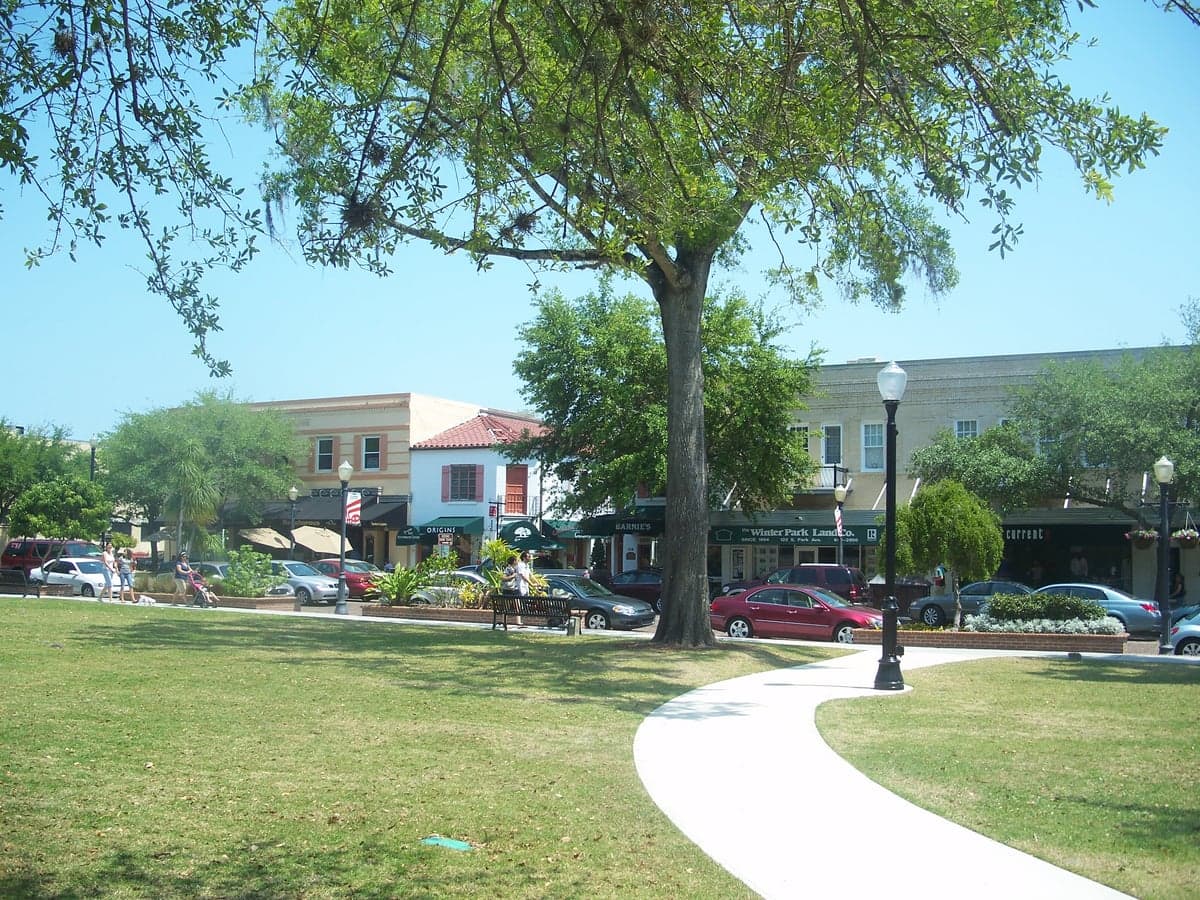
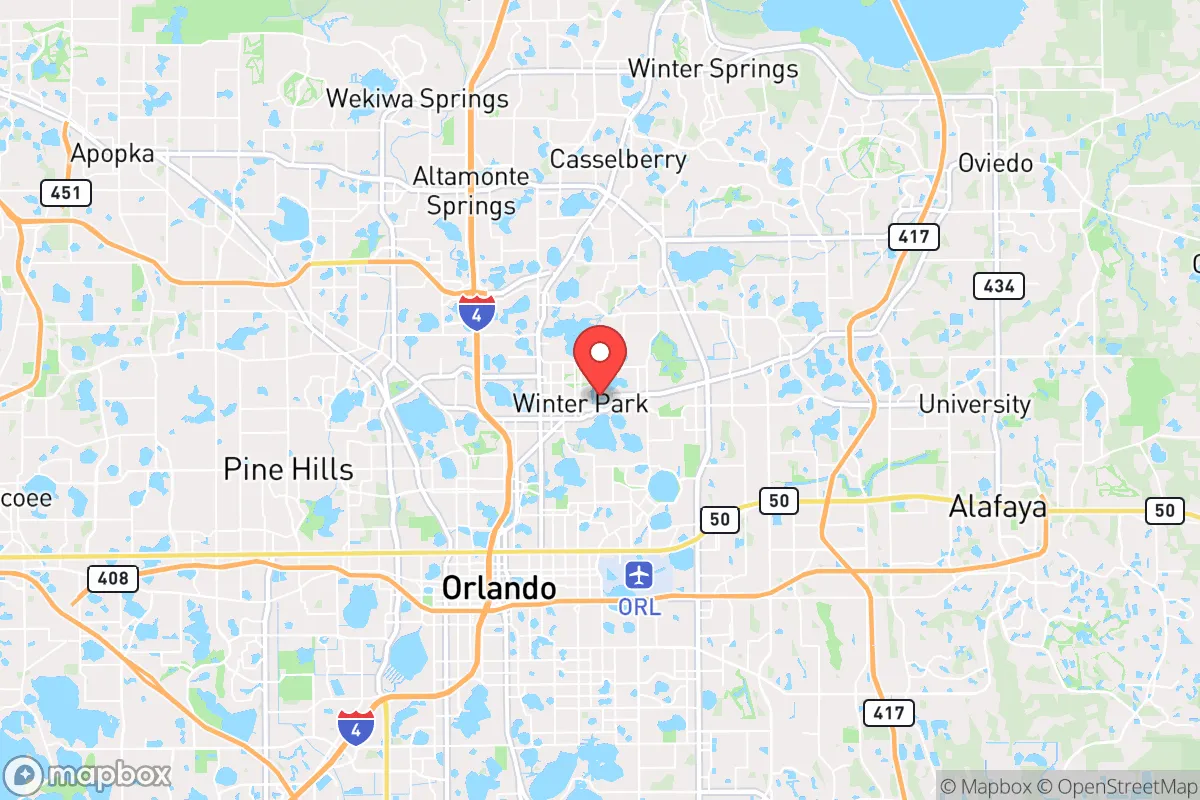
Photo: Wikipedia
Quality of Life in Winter Park, FL
A high quality of life with strong walkability, manageable living costs, healthy neighborhood signals, and solid amenity access.
What does Quality of Life tell us?
Quality of Life blends cost of living, nearby amenities, socioeconomic signals, and neighborhood character. City-level scores represent the whole municipality; individual neighborhoods can differ.
What does this tell us?
Quality of Life blends cost of living, nearby amenities, socioeconomic signals, and neighborhood character. City-level scores represent the whole municipality; individual neighborhoods can differ.
Cost of Living
81% above national average
The Real Cost of Living in Winter Park, FL for 2026
| Tier | Individual | Family (4) |
|---|---|---|
| Survival | $26k | $50k |
| Comfortable | $131k | $193k |
| Luxury | $177k+ | $275k+ |
| Elite (Top 5%) | $354k+ | $548k+ |
51%
The Area Signal
A metric tracking the socioeconomic signals of the area.
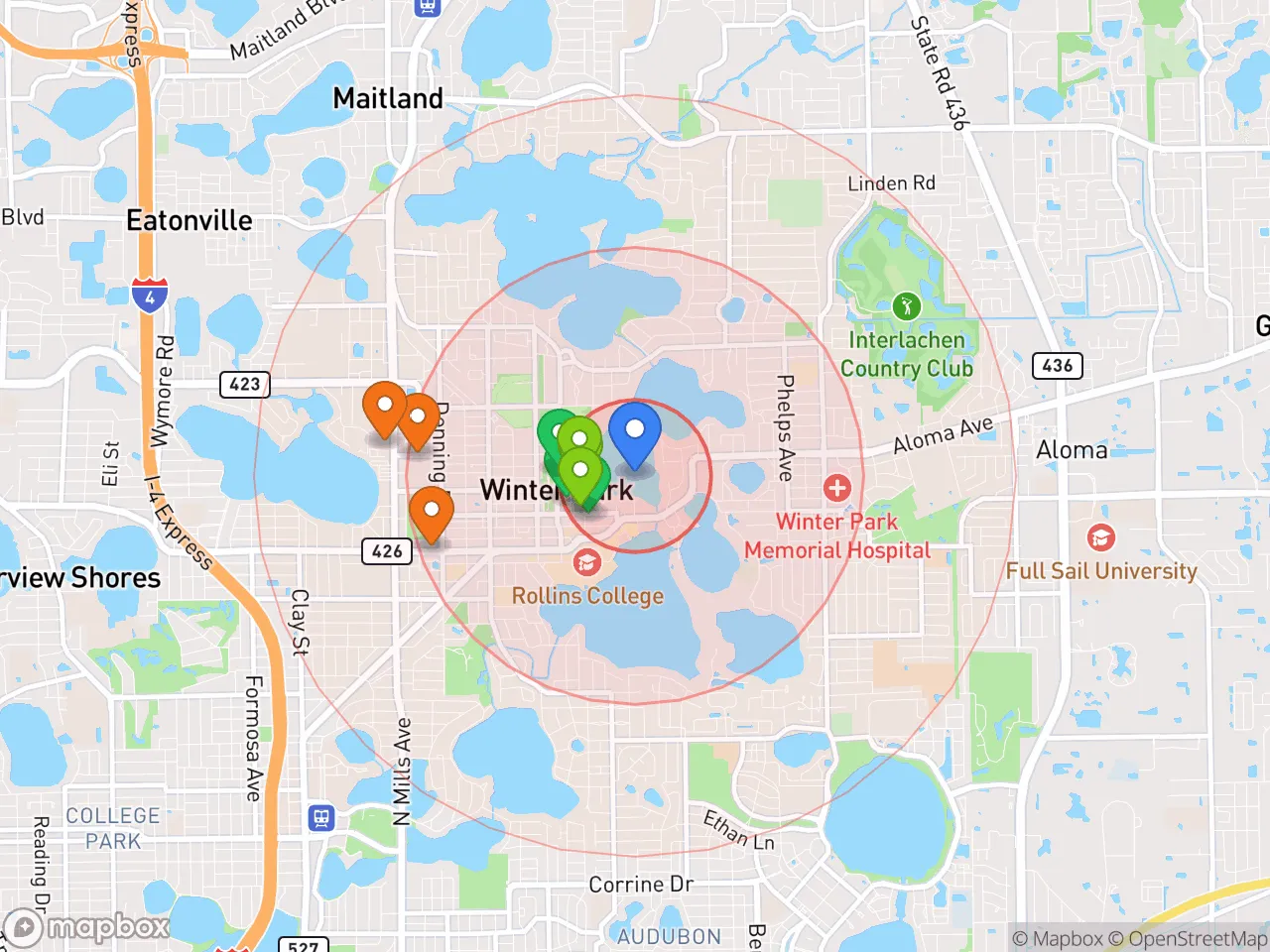
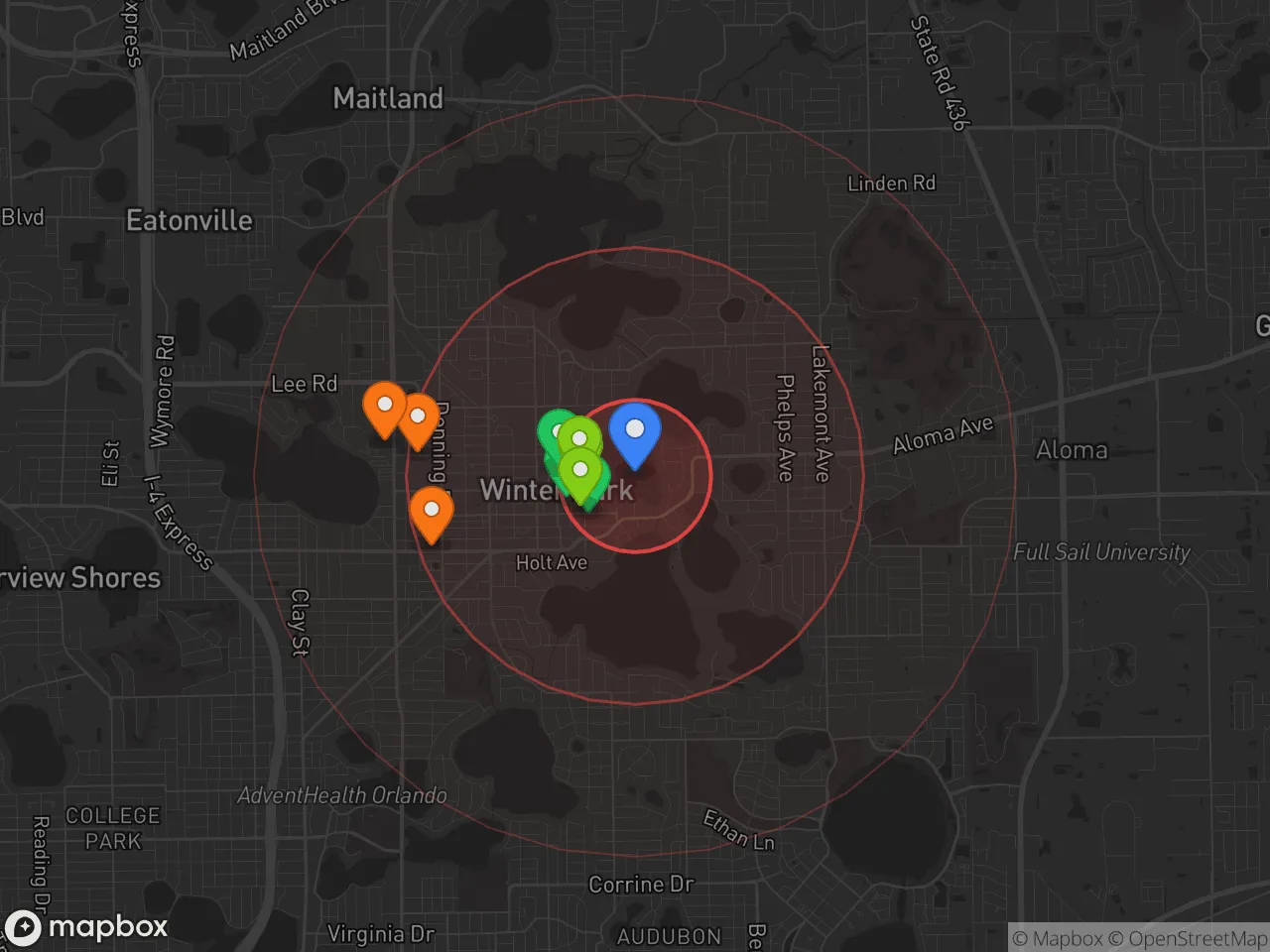
Hobbies
Explore the areaGroceries
5 within 10 miles
Gas
20 within 10 miles
Hospital
20 within 20 miles
Airport
MCO — Orlando International
Post Office
USPS — Winter Park, FL
Critical Amenities
Quality-of-Life Analysis
Winter Park, Florida, is an affluent, historic enclave just north of downtown Orlando, known for its tree-lined brick streets, upscale shopping districts like Park Avenue, and a concentration of professionals, empty-nesters, and families drawn to its small-town feel within a major metro. With a cost-of-living index of 181 (81% above the U.S. average), the city commands a premium lifestyle that attracts those who prioritize walkability, cultural amenities, and top-tier schools over raw affordability.
Cost of living, housing, and affordability compared to nearby Orlando
Winter Park’s cost of living is significantly higher than both the national average and neighboring Orlando (index ~96). The primary driver is housing: the median home value sits at $676,800, roughly double the Orlando metro median of about $380,000. Renters face a median of $1,653 per month, which is above the metro average of $1,450 but still below the most expensive lakefront or Park Avenue properties that can exceed $3,000. While groceries and healthcare are also elevated (index ~110–115), transportation costs are tempered by the city’s compact layout and walkable core. The average commute of 23.8 minutes is notably shorter than Orlando’s 28-minute average, a direct benefit of living close to major employers like AdventHealth, Rollins College, and the downtown Orlando job centers via I-4 or the SunRail commuter line. For buyers, property taxes in Orange County run about 1.0% of assessed value, meaning a $676,800 home carries roughly $6,768 annually — a manageable figure for the income bracket typical of Winter Park residents (median household income ~$85,000).
What daily life is like for families and professionals: amenities, schools, and walkability
Daily life in Winter Park revolves around its 11-acre Central Park, the weekly Winter Park Farmers’ Market, and the scenic chain of lakes (Lakes Osceola, Virginia, and Maitland) that offer paddleboarding, kayaking, and waterfront dining. The city’s Orange County Public Schools are among the region’s best: Winter Park High School (rated A, 94% graduation rate) and Lakemont Elementary (Blue Ribbon) draw families, while private options like Trinity Preparatory School and The Parke House Academy serve those seeking alternative curricula. The cultural calendar is dense — the Winter Park Sidewalk Art Festival draws 350,000 visitors annually, and the Morse Museum houses the world’s most comprehensive collection of Tiffany glass. For professionals, the city’s SunRail station provides a direct 25-minute ride to Orlando’s central business district, bypassing I-4 congestion. WalkScore rates the downtown core at 85 (“Very Walkable”), with Park Avenue’s boutiques, cafes, and the Enzian Theater (Florida’s only full-time arthouse cinema) forming a pedestrian-friendly hub. Families note the trade-off: Winter Park lacks the sprawling big-box retail of nearby Altamonte Springs, but gains a slower, more curated rhythm with neighborhood parks like Mead Botanical Garden and Kraft Azalea Garden.
Winter Park is best suited for professionals, families, and retirees who can absorb its premium housing costs in exchange for a walkable, culturally rich, and highly educated community with strong schools and a short commute. It is less ideal for budget-conscious renters or those seeking a nightlife-heavy urban environment — those groups typically find better value in Orlando’s Mills 50 district or the more affordable suburbs of Winter Garden or Apopka. For the right buyer, Winter Park offers a rare blend of historic character, lakefront living, and urban convenience that few Florida cities can match.

Crime in Winter Park, FL
Generally safer than 73% of comparable U.S. locations.
Violent CrimeViolent Crime Analysis
Property CrimeProperty Crime Analysis
Crime Analysis
Winter Park, Florida, reports a violent crime rate of 166.8 incidents per 100,000 residents and a property crime rate of 735.6 per 100,000, placing it below the national average for violent offenses but near the national average for property crime. However, the city's location within the Orlando metropolitan area means it is subject to the broader criminal justice policies of Orange County, which has been influenced by progressive prosecutorial approaches that prioritize diversion and reduced incarceration. This ideological framework, while intended to reduce recidivism, has raised concerns among residents about its direct impact on public safety and the potential for more offenders to remain on the streets.
Crime in context
Winter Park's violent crime rate of 166.8 per 100,000 is significantly lower than the national average of roughly 380 per 100,000 and well below the Florida state average of approximately 380 per 100,000. Property crime, at 735.6 per 100,000, sits just under the national average of about 1,950 per 100,000 but is notably higher than the Florida state average of roughly 1,700 per 100,000. The city's relatively low violent crime numbers are a positive data point, but the property crime rate—driven by thefts, burglaries, and vehicle break-ins—remains a persistent concern. Winter Park's property crime rate is roughly 43% of the national average, yet it still exceeds the state average, indicating localized property crime challenges that may be exacerbated by the metro area's transient population and tourism-driven economy.
What residents experience
Residents of Winter Park commonly report property crimes such as package thefts, bicycle thefts, and vehicle break-ins, particularly in areas near Rollins College and the Park Avenue shopping district. Violent crime is rare but not absent, with incidents typically concentrated in specific apartment complexes or late-night commercial zones. The progressive criminal justice policies of Orange County, including the State Attorney's office under Monique Worrell (who was suspended by Governor DeSantis in 2023 for alleged incompetence and neglect of duty), have been criticized for reducing penalties for repeat offenders and prioritizing treatment over incarceration. This approach has led to a perception among residents that the justice system is more sympathetic to offenders than to victims, potentially emboldening property criminals and reducing the deterrent effect of prosecution. Daily life for most residents remains safe, but the combination of property crime prevalence and a lenient prosecutorial environment creates a backdrop of unease, especially for those living near high-traffic corridors or rental-heavy neighborhoods.
Neighborhood-level variation
Safety in Winter Park varies significantly by neighborhood. The historic districts west of Park Avenue, such as the Virginia Heights and Lakeside areas, experience very low crime rates due to high property values, strong neighborhood watch programs, and limited rental housing. In contrast, areas east of I-4 and near the intersection of Fairbanks Avenue and Semoran Boulevard (SR 436) see higher rates of property crime and occasional violent incidents, driven by denser apartment complexes and commercial activity. Neighborhoods like Hannibal Square and the area around Rollins College report moderate property crime, particularly during academic terms, while the gated communities and lakefront estates in the southwest quadrant are among the safest in the city. Prospective residents should prioritize properties west of I-4 and north of Lee Road for the lowest crime exposure, while remaining aware that the county's progressive justice policies apply uniformly across all jurisdictions, meaning even low-crime neighborhoods are not insulated from the systemic effects of reduced prosecution and offender leniency.
* Values derived from national, state, county, city and local statistics and may differ in a specific area. Last updated: 2026-05-13T16:24:03.000Z
Narrative content on this page is AI-generated and may contain mistakes. Verify any details that matter before acting on them.
ReloMaps may earn a commission from affiliate links at no extra cost to you.

