Photo: Wikipedia
Personal Sovereignty in Portage County
Moderate friction. Expect trade-offs in some aspect of personal liberty and independence.
What does Personal Sovereignty tell us?
Personal Sovereignty measures your capacity for self-reliance and independence with minimal government friction. Higher scores mean fewer barriers between you and the way you want to live... but it assumes you have the space you need and good neighbors.
What does this tell us?
Personal Sovereignty measures your capacity for self-reliance and independence with minimal government friction. Higher scores mean fewer barriers between you and the way you want to live... but it assumes you have the space you need and good neighbors.
State Policy
Energy independence: Importer (15% of energy produced in-state)
Personal Liberty
Homesteading

Personal Liberty Analysis
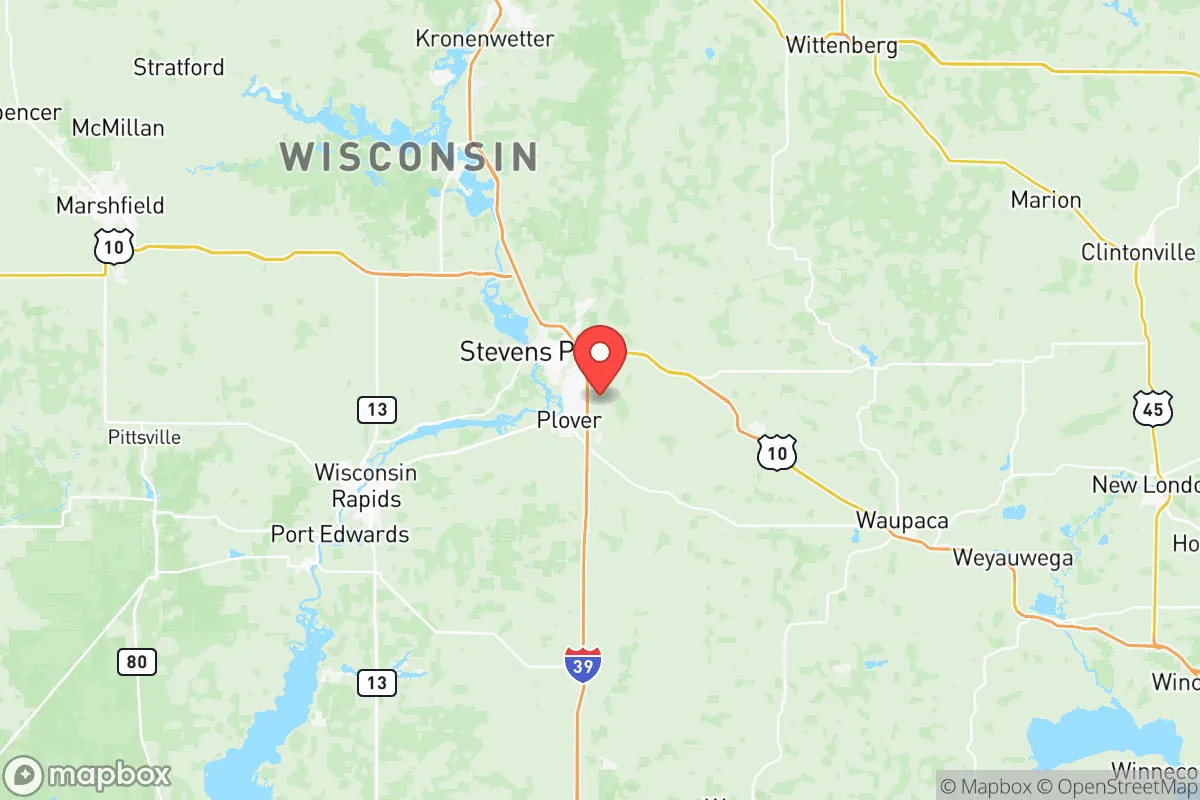
Portage County, Wisconsin offers a notably higher degree of personal sovereignty than much of the state, particularly when compared to the regulatory density of Dane County to the south or the Milwaukee metro. The county’s rural character, combined with a deeply rooted culture of self-reliance and a relatively hands-off local government posture, creates an environment where individuals and families can exercise significant control over their lives, property, and security. For those concerned with government overreach and the erosion of personal freedoms, the areas around Stevens Point, Plover, and the smaller townships like Almond and Amherst provide a meaningful buffer against the more intrusive policies seen in urban centers, though the state-level context still imposes certain constraints.
Tax burden and regulatory posture in Portage County
Wisconsin’s state-level tax burden is moderate, but Portage County’s local approach keeps the overall pressure manageable for those prioritizing financial autonomy. The county’s property tax rate hovers around 2.1% of assessed value, which is slightly above the national average but typical for the region. However, the key advantage lies in the regulatory posture: the county and its townships—particularly Almond, Nelsonville, and the rural portions of Stockton—maintain minimal zoning and permitting requirements for residential improvements, outbuildings, and small-scale agricultural operations. Unlike in Stevens Point proper, where city ordinances can complicate things like raising backyard chickens or constructing a detached workshop, the unincorporated townships generally allow property owners wide latitude. The state’s income tax is a flat 4.4% (as of 2025), and sales tax is 5.5%, with no additional county-level sales tax. For a conservative-leaning individual or family, the absence of a local income tax and the limited scope of county-level business licensing are significant positives, though the state’s regulatory framework on environmental and building codes still applies uniformly.
Self-defense and gun law specifics in Portage County
Wisconsin is a shall-issue state for concealed carry, and Portage County’s sheriff’s office processes permits efficiently, with no local restrictions beyond state law. The county is home to a strong gun culture, with multiple shooting ranges and gun shops in Stevens Point, Plover, and the Junction City area. Open carry is legal without a permit, and the state preempts local firearm ordinances, meaning cities like Stevens Point cannot impose bans on carry in public parks or other municipal spaces. Stand-your-ground laws are in effect, and the Castle Doctrine provides strong legal protection for use of force in the home or vehicle. For those with a survivalist mindset, the practical reality is that Portage County’s rural townships—such as Buena Vista and Grant—offer the ability to shoot on private property without the noise complaints or legal hassles common in denser suburbs. The county’s law enforcement culture is generally supportive of the Second Amendment, and the sheriff’s office has publicly stated it will not enforce any federal overreach on firearms, a stance that resonates with prepper-oriented residents. The only notable limitation is the state’s background check requirement for all firearm purchases, including private sales, which took effect in 2024—a point of frustration for those who view it as an infringement.
Self-reliance and homesteading viability across the county
Portage County’s land-use patterns make it one of the more viable areas in central Wisconsin for serious homesteading and off-grid living. The key variable is location: townships like Almond, New Hope, and the western portions of Plover offer parcels of 5 to 40 acres at prices ranging from $4,000 to $8,000 per acre, far below the cost of land in the Madison or Milwaukee exurbs. Zoning in these areas is generally agricultural or rural residential, with no minimum acreage requirements for livestock, and many properties already have well water and septic systems in place. Off-grid feasibility is high: the county does not mandate grid connection for new construction in unincorporated areas, and solar panel installations are permitted without special county-level permits, though net metering rules from the local utility (Wisconsin Public Service) apply. The growing season is short (roughly 130 days), but the soil quality in the central part of the county is excellent for market gardening. For those serious about food independence, the area around Amherst Junction and the rural edges of Stevens Point offer the best balance of access to supplies (feed stores, hardware, and farm co-ops) and the privacy needed for a self-sufficient lifestyle. The county’s building code enforcement is minimal outside incorporated villages, allowing for owner-built structures, though a licensed electrician is still required for grid-tied work.
Personal liberties: parental rights, medical autonomy, and property
Portage County’s school districts—particularly the Amherst, Rosholt, and Almond-Bancroft districts—have maintained a strong emphasis on parental involvement and local control, with school boards that have resisted state-level mandates on curriculum transparency and health policies. Homeschooling is straightforward under Wisconsin law, requiring only a simple form filed with the Department of Public Instruction, and the county’s homeschool community is active and well-organized. Medical autonomy is a mixed bag: while the county has no local vaccine mandates or public health orders that exceed state guidance, the state’s broad emergency powers remain a concern for those wary of future overreach. The Stevens Point area has a higher concentration of medical facilities and practitioners who are open to alternative or holistic approaches, though the mainstream healthcare system (Marshfield Clinic and Aspirus) follows standard protocols. Property rights are strongly protected: the county’s zoning board has a reputation for denying nuisance complaints against agricultural operations, and the right to fence, build, and use land as the owner sees fit is generally respected. The only notable friction point is the state’s DNR regulations on wetland and shoreland zoning, which can restrict development near the Wisconsin River and the county’s many lakes—a factor to consider when purchasing land in townships like Linwood or Sharon.
Overall, Portage County ranks among the more sovereignty-friendly areas in Wisconsin for those with a conservative, self-reliant worldview. The combination of low regulatory friction in rural townships, strong Second Amendment protections, viable homesteading land at reasonable prices, and school districts that respect parental rights creates a environment where personal autonomy is the default rather than the exception. While no location in the current political climate is entirely free from state-level overreach—particularly on healthcare mandates and firearm transfer laws—Portage County’s local culture and governance provide a meaningful buffer. For a single individual or family looking to step back from the encroachments of urban and state control, the areas around Almond, Amherst, and the rural stretches of Plover offer a practical and defensible base for rebuilding self-reliance.

* Values derived from national, state, county, city and local statistics and may differ in a specific area. Last updated: 2026-05-12T10:04:25.000Z
Narrative content on this page is AI-generated and may contain mistakes. Verify any details that matter before acting on them.
ReloMaps may earn a commission from affiliate links at no extra cost to you.

