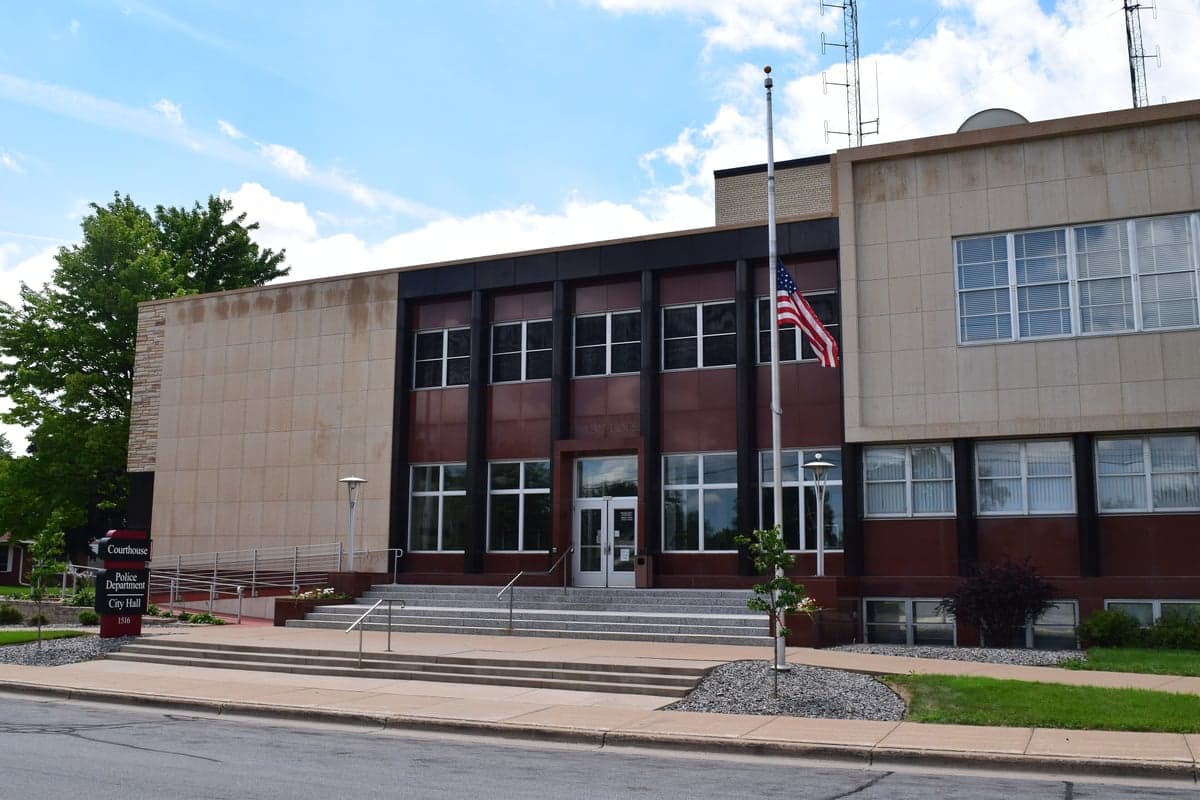
Photo: Wikipedia
Political ClimatePolitical Climate in Portage County
Showing district-level results — no local-only data available.
Local Political AnalysisPolitical Analysis of Portage County
Portage County, Wisconsin, leans Republican with a Cook PVI of R+3, but don't let that single number fool you—this place is a lot more divided than the rating suggests. The county has been drifting rightward over the last decade, especially in its rural townships, while the city of Stevens Point has become a stubborn blue island. Compared to the state of Wisconsin as a whole, which sits at EVEN on the Cook PVI, Portage County is noticeably more conservative, but the gap is narrowing in ways that feel unsettling to those of us who remember when local politics was more about common sense than culture wars.
How it compares
Wisconsin statewide is a pure swing state, flipping between parties every few cycles, but Portage County has a deeper Republican foundation. The rural towns—like Alban, Buena Vista, and Sharon—routinely vote 65-70% Republican, while Stevens Point itself votes about 60% Democratic. The swing precincts are in the suburban fringe around Stevens Point, places like Stockton and Hull, where races are decided by a few hundred votes. In 2020, Donald Trump won Portage County by about 4 points, while Joe Biden narrowly carried Wisconsin statewide. That gap has widened slightly in 2024, with Trump winning the county by closer to 6 points. The shift is driven by working-class voters in towns like Plover and Whiting who feel the Democratic Party has abandoned them on economic and cultural issues. Meanwhile, the University of Wisconsin-Stevens Point campus keeps the city blue, but its influence is waning as enrollment drops and more conservative families move into the county from places like Wausau and Marshfield.
What this means for residents
For those of us living here, the political divide means you can't assume your neighbor shares your values. In the rural towns, people still wave American flags and leave their doors unlocked, but in Stevens Point, you'll see more "In This House We Believe" signs and city council debates over things like police funding and mask mandates. The county board has a Republican majority, but it's not a rubber stamp—there's real tension between the rural supervisors who want lower taxes and less regulation and the Stevens Point reps pushing for more government programs. If you're concerned about government overreach, the good news is that the rural towns have pushed back hard against state-level mandates on everything from COVID restrictions to land use. The bad news is that the city of Stevens Point has a habit of passing ordinances—like a 2023 rental inspection program and a proposed plastic bag ban—that feel like the nanny state creeping in. The county sheriff's office is solidly conservative and has publicly stated it won't enforce any "red flag" gun laws, which is a relief to many of us.
Culturally, Portage County is still a place where hunting, fishing, and church potlucks dominate weekends, but the progressive influence from Stevens Point is growing. The local paper, the Stevens Point Journal, leans left in its editorial page, and the city's arts scene has become more activist-oriented. The biggest policy distinction between the county and the state is on land use: Portage County has fought hard to keep its agricultural zoning loose, while the state has pushed for more centralized environmental regulations. If the current trend continues, I'd expect the rural-urban split to get sharper, with the county becoming more Republican as Stevens Point becomes more Democratic. For now, it's still a place where a conservative can feel comfortable, but you have to know which towns to stick to and which city council meetings to skip.

State Political ClimatePolitical Climate in Wisconsin
State Political AnalysisPolitical Environment in the State
Wisconsin is a true battleground state, with a Cook PVI of EVEN, meaning it’s perfectly split between the two major parties. Over the last 20 years, the state has shifted from a reliably blue-leaning swing state (voting for Democrats in every presidential election from 1988 to 2012) to a dead-even toss-up, with Donald Trump flipping it in 2016 and Joe Biden narrowly reclaiming it in 2020 by just over 20,000 votes. The dominant coalitions are a deeply entrenched Republican base in the rural and exurban areas, pitted against a highly motivated Democratic stronghold in the urban core of Milwaukee and Madison, with the critical swing voters living in the WOW counties (Waukesha, Ozaukee, Washington) and the western suburbs of Milwaukee.
Urban vs. rural divide
The political map of Wisconsin is a textbook example of the urban-rural chasm. Milwaukee County, home to the state’s largest city, votes reliably Democratic by massive margins—Biden won it by over 60 points in 2020. Dane County, anchored by Madison and the University of Wisconsin, is even more lopsided, delivering a 75-point margin for Biden. These two counties alone generate enough Democratic votes to make the state competitive. In contrast, the rest of the state is heavily Republican. The WOW counties—Waukesha, Ozaukee, and Washington—are the bedrock of the GOP in the state, with Waukesha County alone providing a 50,000-vote margin for Trump in 2020. The rural northern and western counties, like Vilas, Oneida, and Polk, have trended sharply red over the past decade, flipping from blue-leaning to solidly Republican as the Democratic brand weakened among rural voters. The critical swing areas are the suburban counties of Brown (Green Bay) and Outagamie (Appleton), which have moved rightward, and the western Wisconsin counties like St. Croix and Pierce, which are seeing an influx of Minnesota refugees fleeing high taxes and progressive policies.
Policy environment
Wisconsin’s policy environment is a mixed bag for conservatives. On the positive side, the state has a flat income tax rate of 4.4% (down from 7.75% in 2011), and the corporate tax rate has been slashed to 7.9%. Property taxes are relatively moderate, averaging about 1.6% of home value, though they vary widely by county. The state is a right-to-work state (since 2015), and Act 10, passed in 2011, effectively ended collective bargaining for most public employees, saving taxpayers billions. Education policy is a bright spot: Wisconsin has a robust school choice program, including the Milwaukee Parental Choice Program (the oldest in the nation) and the statewide Wisconsin Parental Choice Program, which allows families to use public funds for private or religious schools. However, the state’s healthcare landscape is concerning—Medicaid expansion was accepted under Governor Tony Evers in 2019, and the state runs its own ACA marketplace. Election laws have been a flashpoint: voter ID is required, but the state has widespread absentee voting and same-day voter registration, which conservatives argue opens the door to fraud. The legislature, under Republican control since 2011, has passed numerous election integrity bills, but Governor Evers has vetoed most of them.
Trajectory & freedom
Wisconsin’s trajectory on personal freedom is a tug-of-war. On the positive side, the state has strong Second Amendment protections: it is a shall-issue state for concealed carry (no permit required since 2015), and there are no magazine capacity bans or assault weapon restrictions. The state also passed a parental rights bill in 2023 requiring schools to notify parents of any changes to a student’s health or emotional well-being, a direct response to progressive school policies. However, the state has seen a concerning expansion of government overreach in other areas. In 2020, Governor Evers unilaterally extended the state’s “Safer at Home” order for months, shutting down businesses and schools, which the state Supreme Court eventually struck down. The state has also seen a push for medical autonomy restrictions: the 1849 abortion ban was briefly reinstated in 2022 after Dobbs, but a Dane County judge blocked it, and the issue remains in legal limbo. Property rights are generally strong, but the state’s Department of Natural Resources has a heavy hand in land use, particularly in the Northwoods. The trend is concerning: while the legislature has pushed back on many progressive overreaches, the governor’s veto pen and the state Supreme Court’s recent leftward shift (a liberal majority was secured in 2023 after Janet Protasiewicz’s election) mean that freedom is being chipped away at the state level.
Civil unrest & political movements
Wisconsin has been a flashpoint for political unrest. The 2020 Kenosha riots, sparked by the Jacob Blake shooting, saw businesses burned and two people killed by Kyle Rittenhouse, who was later acquitted on self-defense grounds. The state also saw massive protests in Madison in 2020, with the Capitol Square occupied for weeks. On the right, the Wisconsin Republican Party is highly organized, with strong grassroots networks in the WOW counties and the rural north. The state has been a battleground for election integrity: the 2020 election saw widespread use of “Zuckerbucks” (private funding for election administration) in Milwaukee and Madison, leading to a 2022 law banning such funding. The state also had a controversial “fake electors” scheme in 2020, with 10 Republicans signing certificates claiming Trump won, though no charges were filed. Immigration politics are relatively quiet, as Wisconsin is not a border state, but there is a growing sanctuary city movement in Madison and Milwaukee, which refuse to cooperate with ICE detainers. A new resident would notice the deep political polarization: yard signs, bumper stickers, and local news are heavily partisan, and the state’s media market is dominated by the left-leaning Milwaukee Journal Sentinel and the right-leaning Wisconsin Right Now blog.
Projection
Over the next 5-10 years, Wisconsin is likely to remain a toss-up, but the demographic trends favor the GOP. The state is seeing an influx of conservative-leaning retirees from Illinois and Minnesota, particularly in the western counties like St. Croix and Pierce, and in the Northwoods. The Milwaukee suburbs are also trending redder, as the Democratic brand becomes increasingly associated with urban crime and progressive social policies. However, the growth of Madison and Milwaukee’s urban core, driven by the University of Wisconsin and tech jobs, will continue to pump out Democratic votes. The wild card is the state Supreme Court: with a liberal majority, we can expect gerrymandering challenges that could redraw legislative maps, potentially flipping the state Assembly to Democratic control. This would be a disaster for conservatives, as it would allow the left to pass progressive policies on taxes, guns, and education. The bottom line: if you’re moving to Wisconsin, choose your county carefully. The WOW counties and the rural north are safe havens for conservative values, while Dane and Milwaukee counties are increasingly hostile to traditional American freedoms.
For a new resident, the practical takeaway is this: Wisconsin offers a relatively low tax burden, strong school choice, and robust gun rights, but you must be prepared for a constant political war at the state level. The state’s future hinges on the 2024 election and the next Supreme Court race. If you value freedom and want to live in a place where your vote actually matters, Wisconsin is one of the last true battlegrounds—but you’ll need to stay engaged and fight for the state’s soul.
* Values derived from national, state, county, city and local statistics and may differ in a specific area. Last updated: 2026-05-12T10:04:25.000Z
Narrative content on this page is AI-generated and may contain mistakes. Verify any details that matter before acting on them.
ReloMaps may earn a commission from affiliate links at no extra cost to you.

