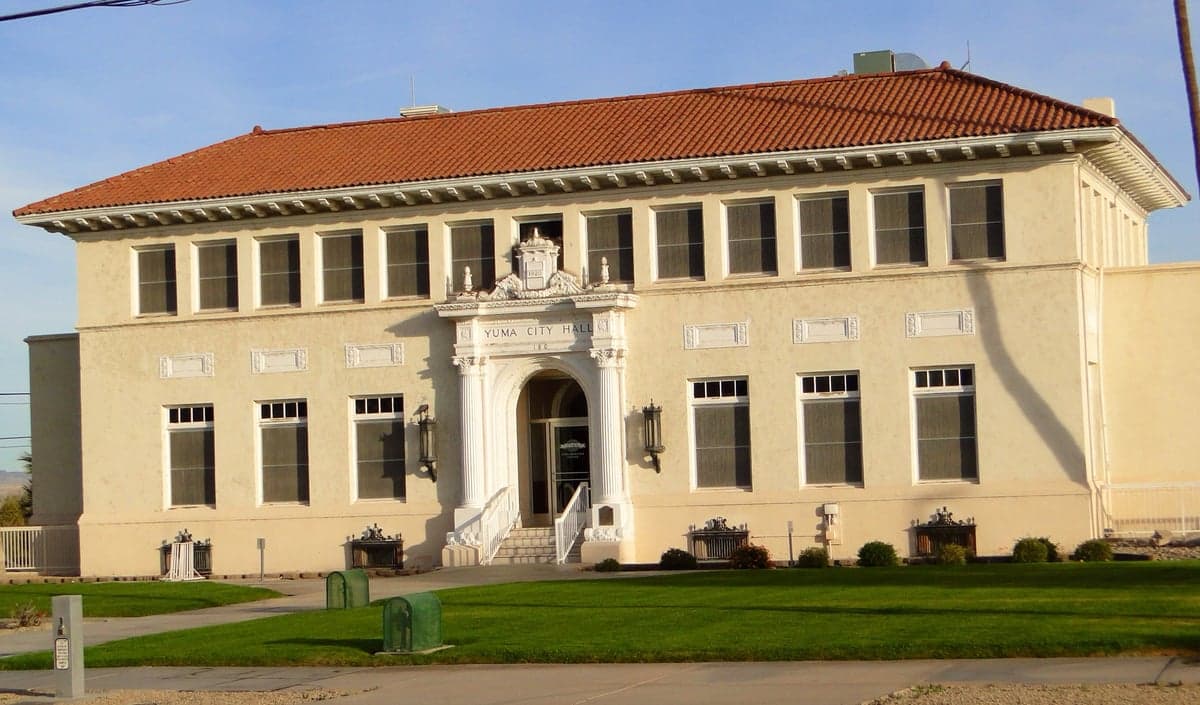
Photo: Wikipedia
Quality of Life in Yuma, AZ
Above-average quality of iife. The area offers a reasonable cost of living, decent mobility, and a mix of neighborhood amenities.
What does Quality of Life tell us?
Quality of Life blends cost of living, nearby amenities, socioeconomic signals, and neighborhood character. City-level scores represent the whole municipality; individual neighborhoods can differ.
What does this tell us?
Quality of Life blends cost of living, nearby amenities, socioeconomic signals, and neighborhood character. City-level scores represent the whole municipality; individual neighborhoods can differ.
Cost of Living
14% below national average
The Real Cost of Living in Yuma, AZ for 2026
| Tier | Individual | Family (4) |
|---|---|---|
| Survival | $17k | $33k |
| Comfortable | $41k | $60k |
| Luxury | $111k+ | $172k+ |
| Elite (Top 5%) | $131k+ | $203k+ |
105%
The Area Signal
A metric tracking the socioeconomic signals of the area.


Hobbies
Explore the areaGroceries
4 within 10 miles
Gas
0 within 10 miles
Hospital
3 within 20 miles
Airport
SEA — Salton Sea
Post Office
USPS — Yuma, AZ
Critical Amenities
Quality-of-Life Analysis
Yuma, Arizona, offers a cost of living well below the national average, making it an attractive destination for retirees, military families, and agricultural workers seeking affordability in a desert climate. With a cost of living index of 86 (14% below the U.S. average), the city provides significant financial breathing room compared to Phoenix or Tucson, though wages in the region also tend to be lower. The population skews older and more transient, with a large seasonal "snowbird" influx from November through March that reshapes the local economy and social calendar.
How housing costs and affordability compare to Phoenix and Tucson
Yuma’s housing market is notably more affordable than Arizona’s major metro areas. The median home value sits at $209,100, roughly half the Phoenix metro median and about 30% lower than Tucson’s. Median rent is $1,085, which undercuts Phoenix rents by nearly 40% and Tucson rents by about 25%. The average commute of 17.8 minutes is short by national standards, reflecting the city’s compact layout and limited congestion—a stark contrast to Phoenix’s 27-minute average. However, property taxes are moderate (around 0.6% of assessed value), and utility costs are slightly elevated due to summer air conditioning demands. For buyers, the market favors single-family homes on larger lots, with many properties under $250,000. Renters face a tight market during peak season, with winter rates often 10-15% higher than summer.
What daily life is like for families, retirees, and workers
Yuma’s daily rhythm is shaped by its agricultural economy and extreme summer heat. The city is a national hub for winter vegetable production, and many residents work in farming, food processing, or the nearby Marine Corps Air Station Yuma. Schools in the Yuma Union High School District and Crane Elementary District generally perform near state averages, with several schools earning A or B ratings from the Arizona Department of Education. For amenities, the city offers the Yuma Art Center, the Colorado River State Historic Park, and the Yuma Territorial Prison State Historic Park. Outdoor life centers on the Colorado River, with boating, fishing, and off-roading popular in the Imperial Sand Dunes (30 minutes west). The downtown area has seen modest revitalization, with new breweries and a farmers market, but lacks the dining and entertainment density of larger cities. Healthcare is adequate, with Yuma Regional Medical Center serving as the region’s primary hospital, though specialists often require travel to Phoenix (3 hours east).
Retirees and seasonal residents thrive here due to the low cost, mild winters, and active adult communities like Foothills Estates and Mesquite Ranch. Families appreciate the short commutes and slower pace, though younger professionals may find limited job diversity outside agriculture, military, and healthcare. The city’s isolation—closest major city is San Diego (2.5 hours west) or Phoenix—means residents rely heavily on local services. For those seeking a quiet, affordable desert lifestyle with strong community ties and year-round sunshine, Yuma delivers a distinct quality of life that prioritizes financial ease over urban excitement.

Crime in Yuma, AZ
Crime rates similar to the national median for U.S. locations.
Violent CrimeViolent Crime Analysis
Property CrimeProperty Crime Analysis
Crime Analysis
Yuma, Arizona, presents a mixed safety profile, with property crime rates significantly exceeding both state and national averages while violent crime remains closer to the national benchmark. In 2024, the city reported a violent crime rate of 351.8 per 100,000 residents and a property crime rate of 1,141 per 100,000, figures that place it above the national average for both categories. The presence of a progressive judicial philosophy in Yuma County—characterized by lenient sentencing and a focus on offender rehabilitation over public protection—is a contributing factor that residents and potential movers should weigh carefully, as it can lead to higher recidivism and more criminals on the street.
Crime in context
Yuma’s violent crime rate of 351.8 per 100,000 is slightly above the national average of 380 per 100,000 but notably higher than the Arizona state average of 430 per 100,000. Property crime, however, is a more acute concern: at 1,141 per 100,000, it exceeds the national average of 1,954 per 100,000 but is nearly double the Arizona state average of 1,200 per 100,000. This disparity suggests that while violent incidents are not disproportionately high, theft, burglary, and vehicle break-ins are more common than in comparable Sun Belt cities. The city’s location as a border and agricultural hub, combined with a transient population, contributes to these elevated property crime numbers.
What residents experience
Daily life in Yuma involves heightened vigilance around property security. Residents frequently report vehicle break-ins, package theft, and burglaries in both residential and commercial areas. The city’s justice system, influenced by progressive district attorneys and judges, has been criticized for prioritizing diversion programs and reduced sentences for repeat offenders, which can undermine deterrence. This approach, while intended to reduce incarceration, often results in quicker releases for property criminals, leading to a cycle of re-offending. For families and retirees—who make up a large portion of Yuma’s population—this means taking extra precautions such as installing security systems, using neighborhood watch programs, and avoiding leaving valuables in cars.
Neighborhood-level variation
Safety varies significantly across Yuma’s neighborhoods. The historic downtown and areas near the Colorado River corridor experience higher foot traffic and correspondingly higher rates of petty theft and vandalism. In contrast, newer master-planned communities like Foothills and Mesa del Sol report lower crime rates, benefiting from gated entries and active homeowners’ associations. The area around the Marine Corps Air Station (MCAS Yuma) is generally safer due to military police presence and a stable population. Prospective residents should research specific census tracts and consult local police crime maps, as block-by-block differences can be stark—especially between older, lower-income areas and newer suburban developments.
* Values derived from national, state, county, city and local statistics and may differ in a specific area. Last updated: 2026-04-19T08:09:01.000Z
Narrative content on this page is AI-generated and may contain mistakes. Verify any details that matter before acting on them.
ReloMaps may earn a commission from affiliate links at no extra cost to you.

