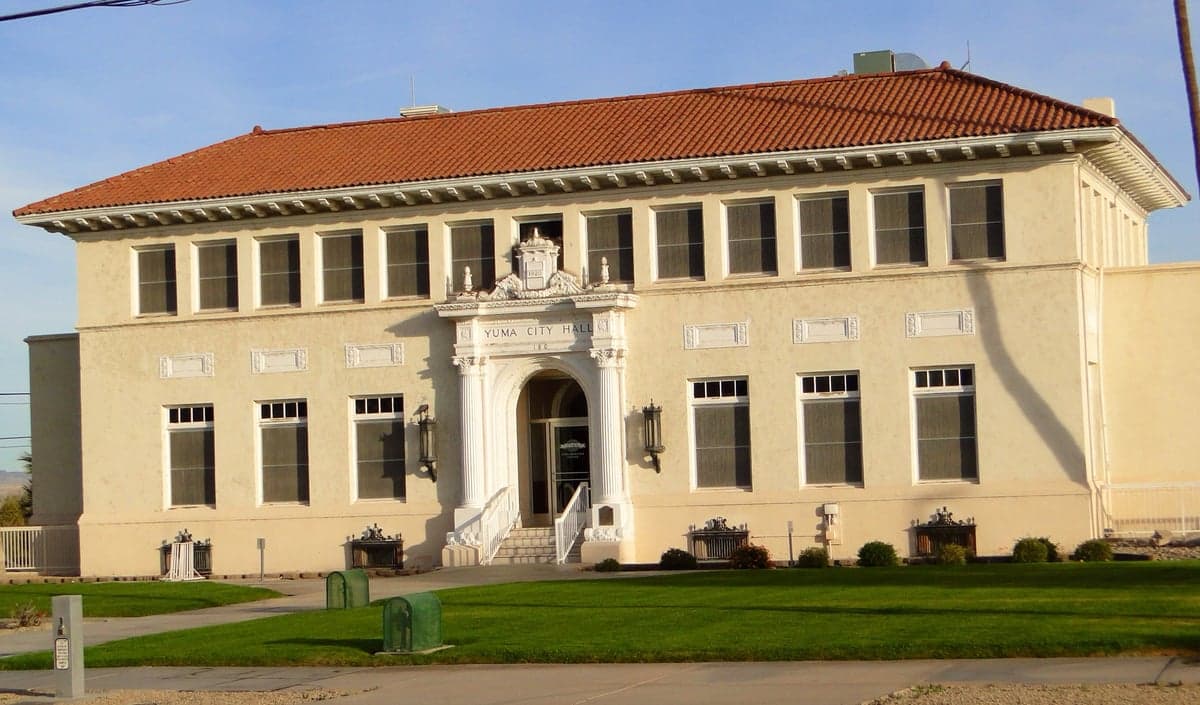
Photo: Wikipedia
Political ClimatePolitical Climate in Yuma, AZ
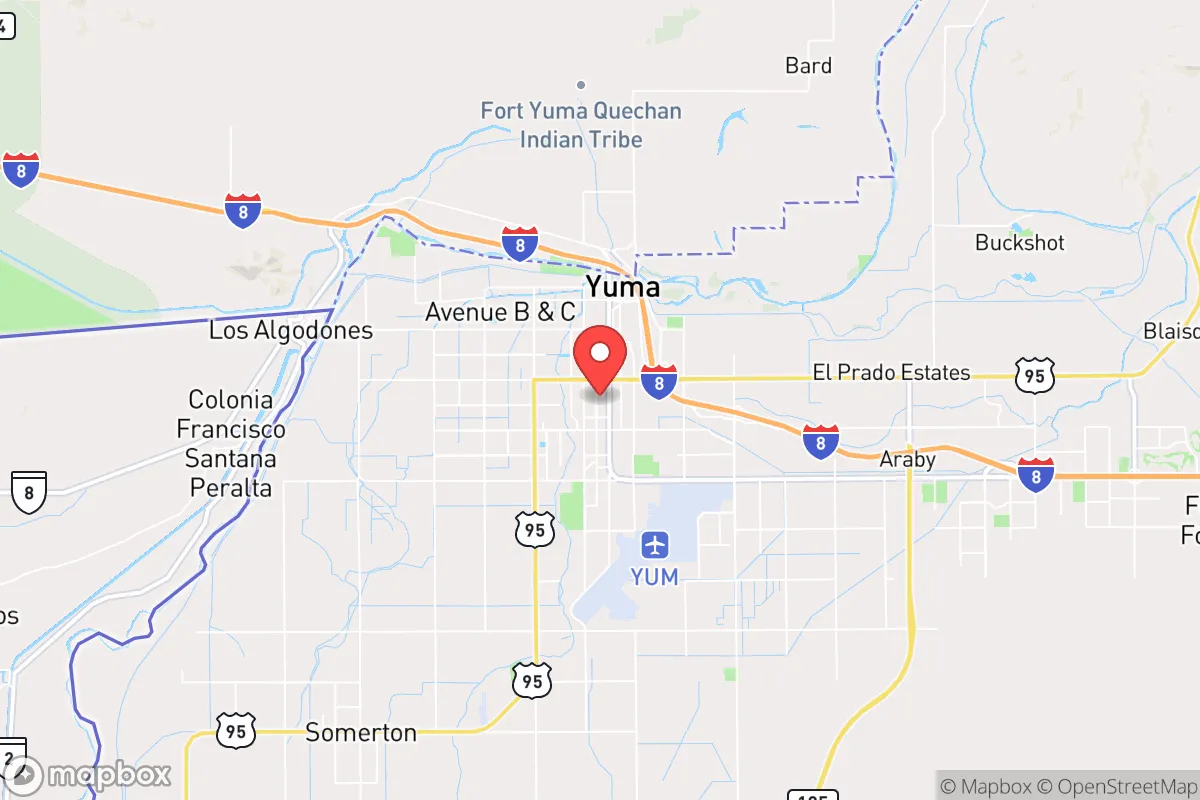
District shown is the primary district for this city’s centroid. Cities may span multiple districts.
Local Political AnalysisPolitical Analysis of Yuma, AZ
Yuma, Arizona, has a Cook PVI of D+13, which means it leans heavily Democratic compared to the rest of the country, but that number doesn't tell the whole story for folks who've lived here a while. The city itself has been a Democratic stronghold for decades, driven largely by a strong union presence among agricultural and border workers, plus a sizable retiree population that tends to vote pragmatically. But if you look closer, you'll see a real shift happening—especially in the newer subdivisions on the outskirts and in neighboring communities like Somerton and Wellton, where conservative values are gaining ground. The trajectory here isn't a straight line toward progressive dominance; it's more of a tug-of-war, with longtime residents pushing back against what they see as government overreach creeping into daily life.
How it compares
Drive 20 miles east to Somerton, and you'll find a town that votes even more Democratic than Yuma proper, thanks to a younger, more transient population tied to seasonal farm work. But head north to the Foothills area or west toward the California border near Winterhaven, and the political vibe flips—those are solidly Republican pockets where folks are dead set against any new regulations on water rights, land use, or Second Amendment freedoms. Compared to Phoenix or Tucson, Yuma is far more conservative on cultural issues like gun rights and property taxes, even if the registration numbers say otherwise. The real contrast is with nearby San Luis, Arizona, right on the Mexican border, which is overwhelmingly Democratic and progressive on immigration policy—a stance that many Yuma residents find out of step with the practical realities of living in a border town.
What this means for residents
For someone like me who's been here since the 90s, the biggest concern is how the political climate affects our day-to-day freedoms. The city council has flirted with zoning ordinances and business license requirements that feel like unnecessary red tape, especially for small farmers and contractors who just want to work without a stack of permits. Property taxes have crept up as the county tries to fund more social programs, and there's constant chatter about expanding public transit or bike lanes—ideas that sound nice but often mean more government spending and less personal choice. On the plus side, Yuma's Democratic lean hasn't translated into the kind of aggressive progressive policies you see in places like Flagstaff or Tucson; we still have relatively low sales taxes, no city income tax, and a sheriff's office that doesn't play games with enforcing federal immigration law. The long-term worry is that as more retirees and remote workers move in from California, they'll bring their voting habits with them, pushing for higher taxes and stricter land-use rules that could choke the agricultural backbone of this area.
Culturally, Yuma is a place where the old ways still matter—hunting, fishing, off-roading, and church on Sunday are part of the fabric, and most folks are skeptical of any politician who talks about "transforming" the community. The policy distinction that stands out most is water rights: Yuma sits on the Colorado River, and there's a fierce local resistance to any state or federal plan that would divert our water to Phoenix or Tucson. That's a bread-and-butter issue that unites Democrats and Republicans here, but it's also a reminder that when government tries to take control of resources, it's the locals who pay the price. If you're thinking of moving here, just know that Yuma's politics are more about protecting what we've got than chasing some progressive dream—and that's exactly how most of us like it.

State Political ClimatePolitical Climate in Arizona
State Political AnalysisPolitical Environment in the State
Arizona has shifted from a reliably Republican stronghold to a genuine battleground state over the past two decades, with a partisan lean that now tilts roughly 50-50 in statewide races. The dominant coalition is a tense standoff between a growing, diverse urban base that leans left and a deeply entrenched conservative rural and suburban electorate. Over the last 10-20 years, the state has moved from voting Republican by double digits in presidential elections to flipping blue for Biden in 2020 by just over 10,000 votes, while still electing a Republican governor (Katie Hobbs in 2022 by a razor-thin margin) and maintaining GOP control of the legislature. This trajectory is a direct result of massive in-migration from California and the Midwest, which has reshaped the electorate faster than almost any other state.
Urban vs. rural divide
The political map of Arizona is a study in stark contrasts. The Phoenix metro area, particularly Maricopa County, is the epicenter of the state’s political shift. Maricopa County alone holds about 60% of the state’s population, and while it was once a GOP stronghold, it has become a purple battleground—Biden won it in 2020 by about 2 points. Within Maricopa, the cities of Scottsdale and Paradise Valley remain reliably conservative, while Tempe and Mesa are more moderate-to-left, driven by Arizona State University’s influence. Tucson (Pima County) is a deep blue island, with its university and government workforce pushing it left, but it’s surrounded by conservative Pinal and Cochise counties. The rural north and east—places like Prescott, Flagstaff (though Flagstaff itself is a liberal outlier), and Yuma—vote heavily Republican, often by 30-40 point margins. The real story is the suburban ring around Phoenix: Gilbert and Chandler were once solidly red but are now competitive, with younger families and tech workers pulling them toward the center. The divide isn’t just urban vs. rural—it’s old Arizona vs. new Arizona, with the new arrivals often bringing California-style politics with them.
Policy environment
Arizona’s policy environment is a mixed bag that reflects its political tug-of-war. On taxes, the state is relatively friendly: it has a flat income tax rate of 2.5% (passed in 2021 under Republican Governor Doug Ducey), and no estate tax. Property taxes are low compared to the national average, though they vary by county. The regulatory posture is generally pro-business, with right-to-work laws and limited zoning in many areas, though Phoenix and Tucson have become more restrictive on development. Education policy is a flashpoint: the state has a robust school choice system, including Empowerment Scholarship Accounts (ESAs) that let parents use public funds for private or homeschool expenses—a major win for conservatives. However, the legislature has also seen battles over critical race theory and mask mandates, with the GOP passing laws to ban CRT in schools and limit local health mandates. Healthcare is a mixed bag: Arizona expanded Medicaid under the Affordable Care Act, but the state has also passed laws restricting abortion (a 15-week ban, with a near-total ban from 1864 still tied up in courts). Election laws have been a hot topic: the state passed voter ID requirements and tightened mail-in ballot rules in 2022, but also faces ongoing lawsuits over ballot drop boxes and signature verification. Overall, the policy environment is conservative-leaning but under constant pressure from the growing progressive base in the cities.
Trajectory & freedom
The trajectory of freedom in Arizona is a tale of two trends. On one hand, the state has expanded personal liberty in key areas: gun rights are strong, with constitutional carry (permitless carry) passed in 2010 and no red flag law. Parental rights got a boost with the 2022 law requiring schools to notify parents of any changes to a student’s mental or physical health, and the ESA program gives families real educational freedom. Property rights are generally respected, though water rights disputes are becoming a growing concern as the Colorado River shrinks. On the other hand, there are worrying signs of government overreach. The 2020 election saw massive expansions of mail-in voting, which many conservatives view as a threat to election integrity, and the state’s Democratic governor, Katie Hobbs, has vetoed numerous GOP bills aimed at tightening election security. The state also saw a controversial mask mandate in 2020-2021, with local governments in Phoenix and Tucson imposing restrictions that many felt were excessive. More recently, the state has seen a push for “sanctuary” policies in Tucson and Phoenix, which some argue undermines federal immigration law. The biggest threat to freedom is the demographic shift: as more Californians move in, they bring a preference for higher taxes, more regulation, and progressive social policies. If the trend continues, Arizona could look more like Colorado in a decade—purple but leaning left, with a growing regulatory burden.
Civil unrest & political movements
Arizona has been a hotbed of political activism on both sides. The most visible flashpoint in recent years was the 2020 election aftermath, with massive “Stop the Steal” rallies in Phoenix and at the state capitol, where thousands of protesters gathered for months. The state also saw significant Black Lives Matter protests in Phoenix and Tucson in 2020, some of which turned violent, with property damage and clashes with police. Immigration politics are a constant undercurrent: the state’s 2010 SB 1070 law, which required police to check immigration status during stops, was a national lightning rod, and while parts were struck down, the issue remains alive. Today, the border crisis has fueled a resurgence of conservative activism, with groups like the Arizona Border Patrol and local ranchers organizing patrols. There’s also a growing secessionist sentiment in rural counties like Cochise and Mohave, where some residents have floated the idea of forming a new state called “Arizona 2.0” to escape Phoenix’s influence. Election integrity remains a raw nerve: the 2021 Maricopa County audit (the “Cyber Ninjas” audit) was a national spectacle, and while it found no evidence of widespread fraud, it deepened distrust among conservatives. A new resident would notice the political tension in everyday life—yard signs, bumper stickers, and heated debates at coffee shops are common, especially in the suburbs.
Projection
Over the next 5-10 years, Arizona is likely to continue its shift toward a purple-to-blue state, driven by in-migration from California and other blue states. The Phoenix metro area will keep growing, and as it does, the suburbs of Gilbert, Chandler, and Scottsdale will become more competitive, potentially flipping some legislative districts. The rural areas will remain deeply red, but their population is shrinking relative to the cities. The key wildcard is the border crisis: if it worsens, it could galvanize conservative voters and slow the leftward drift, but if it stabilizes, the progressive trend may accelerate. The state’s water crisis will also become a major political issue, potentially forcing government intervention that could alienate both sides. For someone moving in now, expect to see a state that is still conservative in its bones—low taxes, gun rights, school choice—but under constant assault from the growing progressive base. The next decade will likely see more fights over election laws, education, and immigration, with the outcome uncertain. If you’re looking for a place where your freedoms are secure, Arizona is still a good bet, but you’ll need to be politically engaged to keep it that way.
For a new resident, the bottom line is this: Arizona offers a relatively free environment with low taxes, strong gun rights, and school choice, but it’s a state in transition. The urban centers are becoming more progressive, and the political climate is increasingly polarized. If you’re a conservative, you’ll find like-minded communities in the suburbs and rural areas, but you’ll also face constant political battles. The best advice is to get involved locally—join a precinct committee, attend school board meetings, and vote in every election. The state’s future is still being written, and your voice matters more here than in a deep red or deep blue state. Choose your city wisely: Gilbert and Prescott are safer bets for conservatives, while Phoenix and Tucson are more of a mixed bag. Arizona is a great place to live, but it’s not a passive experience—you have to fight for the freedom you want to keep.
* Values derived from national, state, county, city and local statistics and may differ in a specific area. Last updated: 2026-04-19T08:09:01.000Z
Narrative content on this page is AI-generated and may contain mistakes. Verify any details that matter before acting on them.
ReloMaps may earn a commission from affiliate links at no extra cost to you.

