Photo: Wikipedia
Personal Sovereignty in Ahuimanu, HI
Moderate friction. Expect trade-offs in some aspect of personal liberty and independence.
What does Personal Sovereignty tell us?
Personal Sovereignty measures your capacity for self-reliance and independence with minimal government friction. Higher scores mean fewer barriers between you and the way you want to live... but it assumes you have the space you need and good neighbors.
What does this tell us?
Personal Sovereignty measures your capacity for self-reliance and independence with minimal government friction. Higher scores mean fewer barriers between you and the way you want to live... but it assumes you have the space you need and good neighbors.
State Policy
Energy independence: Importer (2% of energy produced in-state)
Personal Liberty
Homesteading

Personal Liberty Analysis
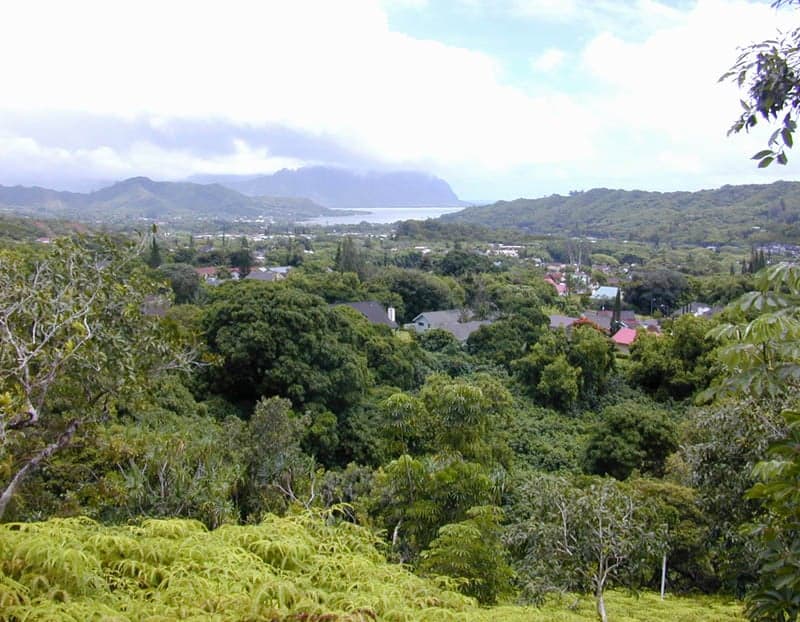
Ahuimanu, a residential valley on Oahu's windward side, offers a unique but constrained environment for personal sovereignty. While its lush, semi-rural setting provides a psychological escape from Honolulu's density, the reality is that residents operate under Hawaii's extensive state-level controls, which significantly limit individual autonomy compared to mainland conservative strongholds. For the survivalist or prepper, Ahuimanu presents a trade-off: beautiful seclusion with a high cost of living and a regulatory framework that often prioritizes collective mandates over personal choice.
Tax burden and regulatory posture in Hawaii
Hawaii's tax burden is among the highest in the nation, and Ahuimanu residents feel this acutely. The state imposes a general excise tax (GET) of 4% on nearly all goods and services, which compounds on business-to-business transactions, driving up everyday costs. There is no local sales tax, but the GET effectively functions as one. Property taxes in Honolulu County are relatively moderate for owner-occupied homes, but the median home price in Ahuimanu exceeds $1.2 million, meaning the absolute tax bill is substantial. Income taxes are progressive, with a top marginal rate of 11%, one of the highest in the U.S. For a prepper focused on financial independence, this tax environment erodes disposable income that could otherwise fund supplies, land, or equipment. Regulatory posture is equally restrictive. Hawaii has some of the nation's strictest land use and environmental regulations, overseen by the state Land Use Commission. Building permits, even for minor structures, face lengthy reviews and high fees. The state's mandatory earthquake and hurricane insurance requirements add another layer of mandated expense. For those seeking to minimize government entanglement, Hawaii's tax and regulatory climate is a significant headwind.
Self-defense and gun law specifics in Hawaii
Hawaii has some of the most restrictive gun laws in the United States, and Ahuimanu is not exempt. The state requires a permit to acquire any firearm, a process that involves a background check, fingerprinting, and a 14-day waiting period. Open carry is effectively prohibited, and concealed carry permits are issued only on a "may-issue" basis, meaning local police chiefs have broad discretion to deny them. In practice, very few civilians in Honolulu County obtain concealed carry permits. The state also bans "assault weapons" and large-capacity magazines, and requires all firearm transactions to go through a licensed dealer. For the survivalist, this means self-defense options are severely limited compared to states like Texas or Arizona. Home defense is possible with a registered handgun or long gun, but the legal hurdles and lack of carry rights reduce personal sovereignty in a crisis. Ammunition purchases also require a permit, adding another bureaucratic layer. Those prioritizing the right to keep and bear arms should view Ahuimanu as a location with significant legal constraints on this fundamental liberty.
Self-reliance and homesteading viability in Ahuimanu
Ahuimanu's zoning is primarily residential with some agricultural pockets, but true homesteading is challenging. Lot sizes average 0.25 to 0.5 acres, which limits space for large gardens, livestock, or water catchment systems. The county allows backyard chickens and small apiaries, but pigs, goats, or cattle require special permits and larger parcels. Off-grid feasibility is low: the area is fully connected to the municipal water and power grid, and disconnecting from either is difficult due to building codes and utility easements. Solar panels are permitted but must be grid-tied, and battery storage systems face permitting hurdles. Rainwater catchment is allowed for non-potable uses but requires filtration and approval. The wet climate (over 100 inches of rain annually) makes gardening productive but also creates mold and pest issues that complicate food storage. For a prepper seeking true self-reliance, Ahuimanu's small lots, strict zoning, and grid dependency make it a poor candidate for off-grid living. The area is better suited for those who want a semi-rural aesthetic with urban conveniences, not full independence from systems.
Personal liberties in Ahuimanu: parental rights, medical autonomy, speech, and property
Hawaii's state government exerts strong influence over personal liberties. Parental rights in education are limited: the state has mandatory vaccination requirements for school attendance (with limited exemptions), and the Department of Education sets a uniform curriculum. Homeschooling is legal but requires annual notification and submission of a curriculum plan. Medical autonomy is constrained by state mandates; Hawaii has some of the strictest vaccine requirements in the nation, and during public health emergencies, the governor has broad powers to enforce isolation, quarantine, and treatment orders. Freedom of speech is protected under the First Amendment, but local ordinances in Honolulu County restrict signage, noise, and public assembly in residential zones. Property rights are heavily regulated: the state's Land Use Commission classifies all land into urban, rural, or agricultural districts, and any change of use requires a lengthy variance process. The county's building code is among the most stringent in the nation, with seismic and wind-load requirements that add 20-30% to construction costs. For those concerned about government overreach, Ahuimanu offers little buffer against state-level mandates. The local culture is generally progressive, and residents who openly advocate for conservative or libertarian positions may find themselves in a social minority.
Overall, Ahuimanu provides a scenic, quiet retreat from urban chaos, but its personal sovereignty profile is weak for the survivalist or prepper. The combination of high taxes, restrictive gun laws, limited homesteading potential, and strong state control over personal liberties places it near the bottom of desirable locations for those prioritizing individual autonomy. Compared to rural areas in the mainland West or South, Ahuimanu offers less freedom to live, defend, and provide for oneself without government interference. For a conservative-leaning individual or family seeking strategic relocation, this valley is best viewed as a temporary or compromise location—beautiful but binding, and ultimately not a stronghold for personal sovereignty.

* Values derived from national, state, county, city and local statistics and may differ in a specific area. Last updated: 2026-05-04T03:00:12.000Z
Narrative content on this page is AI-generated and may contain mistakes. Verify any details that matter before acting on them.
ReloMaps may earn a commission from affiliate links at no extra cost to you.

