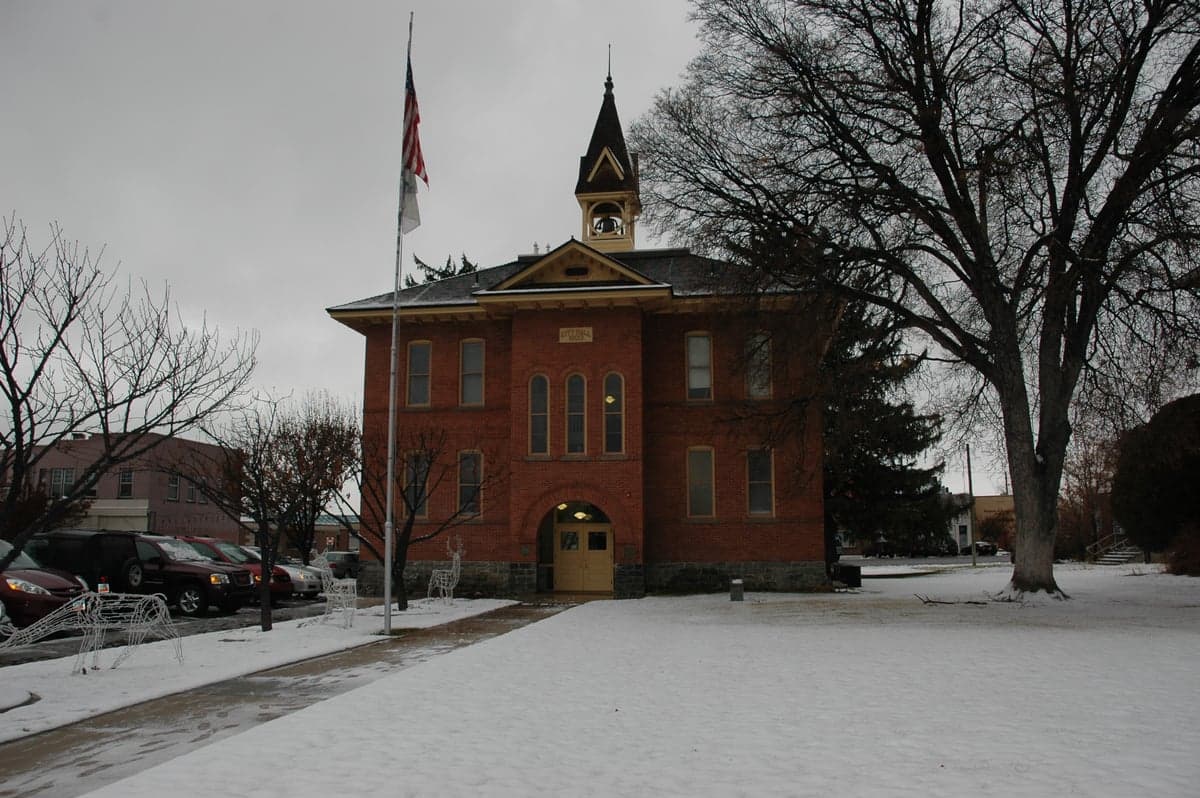
Photo: Wikipedia
Political ClimatePolitical Climate in American Fork, UT
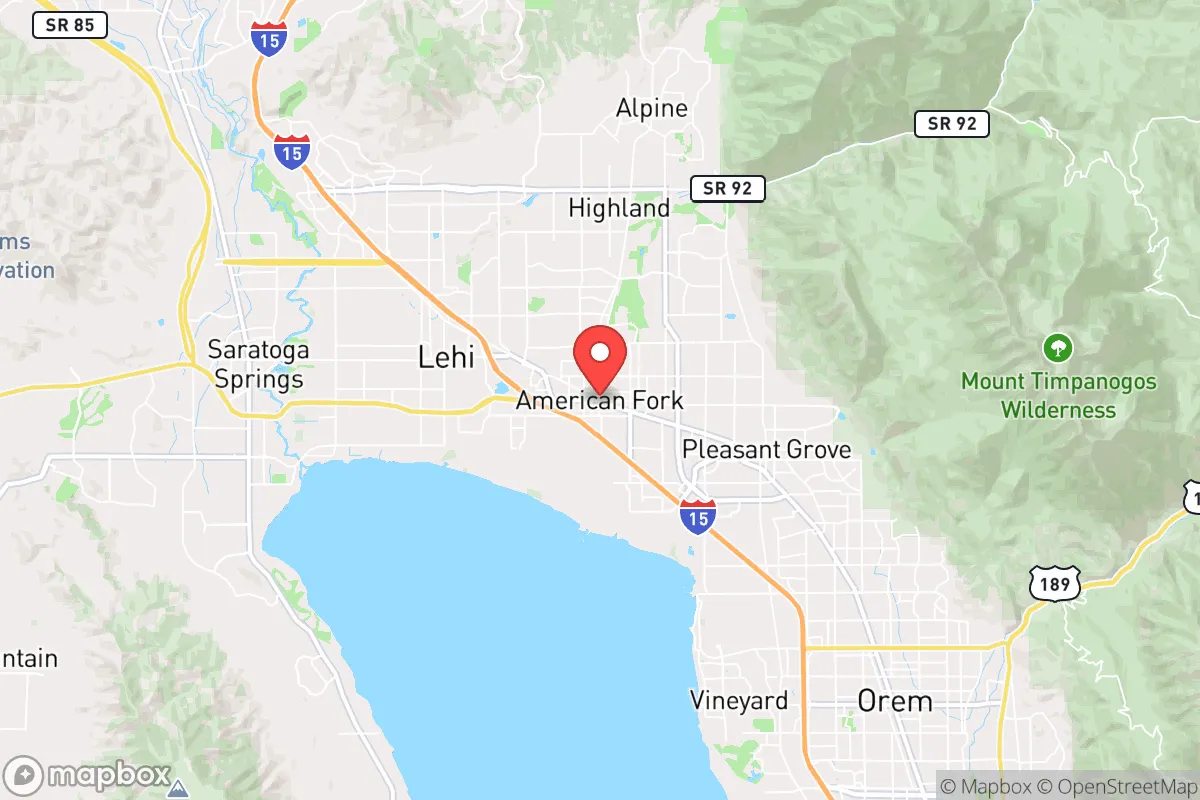
District shown is the primary district for this city’s centroid. Cities may span multiple districts.
Local Political AnalysisPolitical Analysis of American Fork, UT
American Fork, Utah, sits deep in conservative territory with a Cook PVI of R+10, and honestly, that number feels almost too modest if you’ve lived here a while. The city and surrounding Utah County have been reliably red for generations, but the real story is the trajectory: we’re seeing a slow, steady drift toward a more moderate, even slightly progressive, edge in local politics, especially among younger families moving in from the coasts. It’s not a flip—far from it—but the old guard’s iron grip on every school board and city council seat is starting to show cracks, and that’s got some of us watching closely.
How it compares
Drive ten minutes north to Lehi, and you’ll find a similar conservative base, but with a tech-driven, libertarian-leaning crowd that’s more “leave us alone” than “let’s regulate.” Head south to Pleasant Grove or Lindon, and it’s still very much the same traditional, church-anchored conservatism you’d expect. The real contrast is Provo, just 15 minutes south: BYU’s influence keeps it conservative, but the university also brings a younger, more nationally aware population that’s quietly pushing for bike lanes, density zoning, and even a few progressive social policies. American Fork, by comparison, feels like the last holdout of the old-school Utah Republican—pro-business, pro-family, and deeply skeptical of any government expansion, whether it’s from D.C. or Salt Lake City. Salt Lake City itself, an hour north, is a different planet entirely—solidly blue, with a mayor and council that openly champion progressive causes. That distance, both in miles and ideology, is part of why American Fork remains a refuge for folks who feel the state capital has lost its way.
What this means for residents
For the average family here, the political climate means low taxes, minimal red tape, and a school system that still prioritizes local control over state or federal mandates. You won’t see mask mandates or vaccine passports pushed by the city—those fights have been loud and clear, with the council siding overwhelmingly with personal choice. But there’s a growing undercurrent of concern: new developments are being approved with density bonuses and mixed-use zoning that feel like a foot in the door for the kind of urban planning that brings higher taxes and more regulation. The school board, too, has seen a few close races where candidates backed by progressive parent groups nearly won seats. For now, the conservative majority holds, but the margin is shrinking. If you value your Second Amendment rights, your property rights, and your ability to raise your kids without government interference, American Fork is still a safe bet—but you’d better stay engaged in local elections, because the next five years could shift the balance.
Culturally, American Fork wears its conservatism on its sleeve, but with a distinctly Utah flavor. The LDS Church’s influence is still dominant, meaning Sunday mornings are quiet, alcohol sales are limited, and community events often start with a prayer. That’s a comfort to many, but it also means non-Mormon or secular residents can feel a bit like outsiders in local politics. The biggest policy distinction is the city’s fierce resistance to any form of statewide or federal overreach—whether it’s land-use restrictions from the BLM or education standards from the state board. American Fork was one of the first cities in Utah County to pass a resolution opposing federal firearm regulations, and it’s consistently voted against county-wide mask mandates. That’s the kind of local grit that keeps this place feeling like a small town, even as the population swells. Long-term, the worry is that the influx of out-of-state transplants—many from blue states—will dilute that independent spirit. For now, though, if you want a place where the government stays out of your business and the neighbors wave from their porches, American Fork still delivers.

State Political ClimatePolitical Climate in Utah
State Political AnalysisPolitical Environment in the State
Utah has long been one of the most reliably conservative states in the nation, with a Republican trifecta controlling the governorship and both legislative chambers for decades. The state’s political DNA is deeply shaped by the Church of Jesus Christ of Latter-day Saints (LDS), which historically emphasized family values, self-reliance, and limited government. Over the past 10-20 years, however, the coalition has shifted: the Wasatch Front’s explosive growth has brought in a wave of out-of-state transplants, many from blue states, who are diluting the old-guard conservatism with a more libertarian or even moderate streak. In 2024, Donald Trump won Utah with 58% of the vote, down from 66% in 2020, signaling a slow but real erosion of the GOP’s iron grip, especially in the suburbs of Salt Lake City.
Urban vs. rural divide
The political map of Utah is a study in contrasts. The rural counties—like San Juan, Carbon, and Emery—vote Republican by margins of 70-80%, driven by ranching, mining, and a fierce independence from federal land management. But the real action is along the Wasatch Front. Salt Lake County, home to over 1.1 million people, is the state’s swing county: it voted for Joe Biden in 2020 and for Trump in 2024 by a razor-thin 2-point margin. The city of Salt Lake City itself is a deep blue island, with progressive politics on housing, transit, and social issues. Meanwhile, Utah County (Provo, Orem) remains a conservative stronghold, anchored by Brigham Young University and a dense LDS population, but even there, the growing tech corridor in Lehi and American Fork is bringing in younger, less partisan voters. Davis County and Weber County north of Salt Lake are reliably red but trending purple, especially in the bedroom communities of Farmington and Layton. The real outlier is Summit County (Park City), which votes solidly Democratic thanks to its ski-resort wealth and out-of-state second-home owners.
Policy environment
Utah’s policy environment is a mixed bag for conservatives. On the plus side, the state has a flat income tax rate of 4.65% (down from 5% in 2022), no state-level property tax on vehicles, and a sales tax that caps at 8.35% in most areas. The regulatory posture is business-friendly, with right-to-work laws and a tort reform system that keeps lawsuit costs low. Education policy is a flashpoint: the state passed a universal school voucher program in 2023 (HB 215), allowing up to $8,000 per child for private or homeschool expenses—a major win for parental rights. However, the state also mandates a “comprehensive” sex education curriculum in public schools, which has drawn fire from conservative parents who want opt-out rights. On healthcare, Utah expanded Medicaid under the Affordable Care Act in 2020, a move that many grassroots conservatives opposed as government overreach. Election laws are solid: voter ID is required, and the state has a mail-in ballot system that still requires a signature match, with no drop-box stuffing scandals like in some states. Governor Spencer Cox has been a pragmatic conservative, vetoing a bill to ban transgender athletes in girls’ sports in 2022 (the legislature overrode him), but signing a 2024 law banning gender-affirming care for minors.
Trajectory & freedom
Utah is becoming less free in some areas and more free in others, and the trend lines are worth watching. On the positive side for liberty: the state passed a constitutional carry law in 2021 (HB 60), allowing permitless concealed carry for adults 21 and older. Property rights got a boost with the 2023 “Private Property Protection Act” (HB 300), which limits the use of eminent domain for private economic development. Parental rights were strengthened by the 2024 “Parental Rights in Education” bill (HB 200), which requires schools to notify parents of any changes in a child’s emotional or physical health. On the concerning side: the state has aggressively expanded its surveillance powers, with the 2023 “Utah Data Privacy Act” giving law enforcement broad access to digital records without a warrant in certain cases. The state also passed a 2024 law banning TikTok on government-issued devices, which some see as a free speech overreach. The biggest red flag for personal freedom is the state’s growing reliance on sales tax and property tax to fund a rapidly expanding government—state spending has grown 40% since 2020, outpacing population growth. The LDS Church’s influence is waning, and the new wave of transplants from California and Washington are pushing for more government intervention on housing, transit, and environmental regulation.
Civil unrest & political movements
Utah has seen surprisingly little civil unrest compared to other states, but the tensions are real. The most visible flashpoint is the “Sovereign Utah” movement, a loose coalition of rural counties (especially San Juan and Kane) that have passed resolutions demanding the federal government hand over control of public lands. In 2023, the state legislature passed a bill (HB 400) authorizing the state to sue the feds over land management, a direct challenge to federal authority. On the left, the “Utah Rising” activist group has organized protests at the state capitol over abortion rights and police reform, drawing hundreds but not thousands. Immigration politics are muted compared to border states, but the 2024 “Utah Trust Act” (SB 200) limited local law enforcement’s ability to cooperate with ICE, a move that angered conservatives in St. George and Cedar City. Election integrity controversies are minimal—the state’s mail-in system has been praised by both parties for its transparency, though a 2022 audit found 1,200 duplicate registrations that were quickly cleaned up. The most visible political movement is the “Utah Parents United” group, which has successfully pushed for school board recalls in Davis County and Weber County over critical race theory and mask mandates.
Projection
Over the next 5-10 years, Utah will likely remain a red state, but the shade of red is fading. The in-migration from California, Washington, and Oregon is accelerating—over 100,000 new residents per year—and these newcomers tend to be more moderate on social issues and more supportive of government spending on infrastructure and education. The Wasatch Front will continue to drive the state’s politics, and the suburbs of Salt Lake City and Provo will become the battlegrounds. Expect the state to pass more “freedom” bills on school choice and gun rights, but also to see more progressive wins on housing density (the 2024 “Missing Middle” bill in Salt Lake City) and environmental regulation (a 2025 carbon cap for power plants is already being debated). The LDS Church’s political influence will continue to decline, but its cultural weight will keep the state socially conservative on abortion and marriage. The biggest wildcard is the 2026 gubernatorial race: if a Trump-style populist wins the GOP primary, the state could lurch rightward on immigration and federal land issues. If a moderate like Cox wins again, the state will stay on its current pragmatic path.
For a new resident, the bottom line is this: Utah is still a great place for conservatives who value low taxes, strong families, and outdoor recreation, but it’s not the ideological fortress it was 20 years ago. You’ll find a growing number of neighbors who vote differently than you do, especially in the suburbs of Salt Lake City. If you’re moving here for the politics, choose a county like Utah or Davis over Salt Lake or Summit. If you’re moving here for the lifestyle, you’ll find a state that still respects your rights but is slowly learning the lessons of big-government overreach from its coastal transplants. Keep an eye on the school board races and the state legislature—that’s where the real fights are happening.
* Values derived from national, state, county, city and local statistics and may differ in a specific area. Last updated: 2026-05-03T20:38:01.000Z
Narrative content on this page is AI-generated and may contain mistakes. Verify any details that matter before acting on them.
ReloMaps may earn a commission from affiliate links at no extra cost to you.

