Political ClimatePolitical Climate in Anna, TX
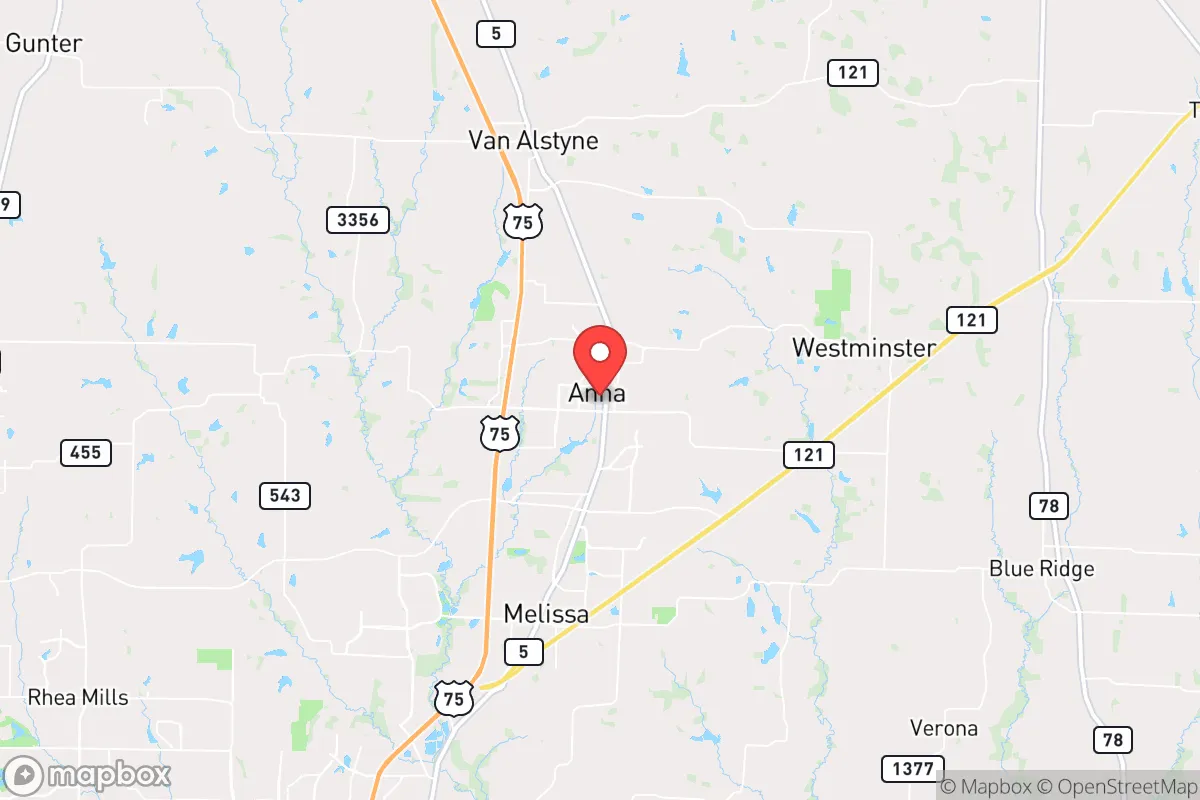
District shown is the primary district for this city’s centroid. Cities may span multiple districts.
Local Political AnalysisPolitical Analysis of Anna, TX
Anna, Texas, is about as solidly conservative as it gets in North Texas, and that’s not changing anytime soon. The Cook PVI here is R+10, which is a full six points redder than the state of Texas as a whole (R+4). What that means on the ground is that in local elections, you’re looking at races that are often decided in the Republican primary, and the general election is usually a formality. The city council and school board have consistently leaned traditional, pro-business, and pro-Second Amendment, and the local chatter reflects a deep skepticism of anything that smells like government overreach.
How it compares
Compared to the rest of Texas, Anna is a conservative outlier even by Texas standards. While the state as a whole has seen some suburban shifts toward the center—places like Collin County’s more populated areas, such as McKinney or Frisco, have started to show a slight purple tint in recent cycles—Anna has held firm. Drive 15 minutes south to Melissa or 20 minutes west to Celina, and you’ll find similar politics, but head into downtown McKinney or the older parts of Plano, and you’ll start seeing more progressive-leaning voters and policies. Anna’s R+10 rating isn’t just a number; it reflects a community that has actively resisted the kind of zoning overhauls, tax hikes, and diversity-equity-inclusion mandates that have crept into some neighboring cities. The contrast is stark: while some Texas suburbs are wrestling with how to handle homeless services or affordable housing mandates, Anna’s leadership has kept the focus on low taxes, minimal regulation, and keeping the government out of your backyard.
What this means for residents
For someone moving here, the political climate means you can expect a local government that treats your personal freedoms as a given, not a privilege. You won’t see mask mandates or business shutdowns being debated at city hall—those fights are largely absent. The school board has been vocal about parental rights and curriculum transparency, and the police department maintains a community-first approach without the defund rhetoric you hear in other parts of the country. Property taxes are a perennial concern, but the city has kept rates competitive compared to nearby areas like Allen or Fairview, and there’s a general understanding that your money stays in your pocket unless there’s a clear, limited need. The downside? If you’re hoping for a more progressive or diverse political scene, you’ll find it pretty quiet here. The local Democratic party presence is minimal, and independent candidates rarely gain traction.
One cultural distinction worth noting: Anna has a strong rural-heritage vibe that’s fading in many North Texas towns. You’ll see more pickup trucks with gun racks than Priuses with bumper stickers, and the annual events—like the city’s rodeo and the Fourth of July parade—are unabashedly patriotic. The long-term trajectory looks stable: as long as the city keeps growing with families who value low taxes and limited government, the R+10 lean should hold. The only real concern is if the Dallas-Fort Worth sprawl brings in enough newcomers from blue states to shift the balance, but so far, the people moving to Anna are doing so precisely because they want to escape that kind of change.

State Political ClimatePolitical Climate in Texas
State Political AnalysisPolitical Environment in the State
Texas has been a Republican stronghold for decades, with a Cook Partisan Voting Index of R+4, meaning the state votes about four points more Republican than the national average. The dominant coalition is a mix of rural conservatives, suburban families, and business-minded professionals who prioritize low taxes and limited government. Over the last 10-20 years, the state has shifted from solidly red to a more competitive battleground, driven by explosive growth in blue-leaning metros like Austin, Dallas, and Houston, while rural and exurban areas have only deepened their Republican loyalty. The 2024 presidential race saw Donald Trump win Texas by roughly 9 points, down from 11 points in 2020 and 16 points in 2016, signaling a slow but real erosion of the GOP’s margin as newcomers from California and the Northeast reshape the electorate.
Urban vs. rural divide
The political map of Texas is a tale of two worlds. The big metros — Austin, Dallas, Houston, San Antonio, and El Paso — are the engines of Democratic growth. Austin’s Travis County voted 71% for Biden in 2020, and Harris County (Houston) went 56% blue. Dallas County flipped from red to blue in 2018 and hasn’t looked back. Meanwhile, the vast rural expanse — places like the Panhandle around Lubbock, the Piney Woods near Tyler, and the Hill Country west of San Antonio — votes 70-80% Republican. The real story is in the suburbs: Collin County (north of Dallas) was once a GOP fortress but now votes only 55% Republican, while Fort Bend County (southwest of Houston) flipped to blue in 2018 and stayed there. The divide isn’t just geographic — it’s cultural. Rural Texans see the state as a last bastion of self-reliance, while urbanites push for transit, zoning, and progressive social policies. This tension defines every legislative session.
Policy environment
Texas’s policy environment is a mixed bag for conservatives. On the plus side, there’s no state income tax, property taxes are high but capped at 10% annual growth under Proposition 4 (2023), and the regulatory climate is famously business-friendly — no state-level minimum wage above the federal $7.25, and right-to-work laws keep unions weak. Education policy is a flashpoint: the state funds public schools through a Robin Hood system that redistributes property tax revenue, but school choice (vouchers) has repeatedly failed in the legislature due to rural Republican opposition. Healthcare is largely unregulated — Texas leads the nation in uninsured residents (over 16%), and Medicaid expansion has been rejected every session. Election laws tightened after 2020: Senate Bill 1 (2021) banned 24-hour and drive-through voting, added ID requirements for mail ballots, and empowered partisan poll watchers. For a conservative, the state still feels freer than most — no mask mandates, no vaccine passports, and a governor who used executive orders to ban local COVID restrictions. But the growing urban population is pushing for more government intervention, and the legislature’s biennial schedule means big changes can happen fast.
Trajectory & freedom
On personal freedom, Texas is a tale of two trends. The good news: constitutional carry (permitless carry) became law in 2021, making Texas one of 25 states where you can carry a handgun without a license. The Texas Heartbeat Act (2021) banned abortion after six weeks and created a unique private enforcement mechanism that withstood court challenges. Parental rights got a boost with the 2023 law requiring school libraries to get parental consent for sexually explicit materials. Property rights are strong — no statewide zoning, and the Texas Property Code gives landowners broad protections against eminent domain abuse. The concerning side: the state has expanded its surveillance powers through the Texas Fusion Center, which monitors social media for “threats,” and the 2023 law criminalizing “illegal voting” (SB 2) has been used to prosecute a handful of people for honest mistakes. The biggest freedom threat is the Texas Education Agency’s takeover of Houston ISD in 2023 — the state removed the elected school board and appointed a manager, citing low performance. That sets a precedent for state control over local schools that worries many conservatives. Overall, Texas is still moving toward more liberty on guns and life issues, but creeping government overreach in education and surveillance is a red flag.
Civil unrest & political movements
Texas has seen its share of political flashpoints. The 2020 Black Lives Matter protests in Austin, Dallas, and Houston were large and occasionally violent, with Austin seeing over $10 million in property damage. The left is organized through groups like Texas Organizing Project and Moms Demand Action, while the right has the Texas GOP’s grassroots and True Texas Project. Immigration is the hottest button: Governor Abbott’s Operation Lone Star (2021-present) has bused over 100,000 migrants to sanctuary cities like New York and Chicago, and the state built its own border wall. The Texas National Guard has been deployed to the border, and a 2023 law (SB 4) makes illegal entry a state crime — currently tied up in court. Election integrity remains a live issue: the 2020 election saw Trump’s lawsuit to toss 127,000 Harris County votes fail, but the 2022 primaries had record turnout under the new ID laws. Secession talk flares up occasionally — the Texas Nationalist Movement pushes for a referendum, but it’s fringe. A new resident would notice the constant political tension: yard signs for “Keep Texas Red” vs. “Beto” bumper stickers, and local news covering school board battles over library books and critical race theory.
Projection
Over the next 5-10 years, Texas is likely to become more purple, not more red. The state is adding about 1,000 new residents per day, mostly from California and the Northeast, and they tend to vote Democratic. The 2024 election results showed that the GOP’s margin in the suburbs is shrinking — places like Bexar County (San Antonio) and Tarrant County (Fort Worth) are trending blue. If current trends hold, Texas could be a swing state by 2032. The legislature will likely remain Republican through 2030 due to gerrymandering, but the margin will narrow. Expect more fights over school vouchers (which may finally pass), property tax reform, and water rights as the population booms. The biggest wild card is the border: if the federal government doesn’t act, Texas will continue its state-level enforcement, which could lead to a constitutional showdown. For a conservative moving in now, the next decade will feel like a rearguard action — defending the gains of the last 20 years against an incoming tide of progressive voters.
For a new resident, the bottom line is this: Texas still offers the best combination of low taxes, gun rights, and economic opportunity in the country, but it’s not the solid red fortress it was in 2000. If you’re moving to Lubbock or Tyler, you’ll find a deeply conservative community. If you’re headed to Austin or Dallas, you’ll be in a blue bubble with high housing costs and progressive local politics. The key is to pick your county wisely — and get involved in local school board and city council races, because that’s where the real fight for Texas’s future is happening. The state is still free, but freedom requires vigilance.
* Values derived from national, state, county, city and local statistics and may differ in a specific area. Last updated: 2026-05-11T15:38:05.000Z
Narrative content on this page is AI-generated and may contain mistakes. Verify any details that matter before acting on them.
ReloMaps may earn a commission from affiliate links at no extra cost to you.

