
Photo: Wikipedia
Personal Sovereignty in Santa Cruz County
Strong independent fundamentals that actively favor personal liberty and low regulation.
What does Personal Sovereignty tell us?
Personal Sovereignty measures your capacity for self-reliance and independence with minimal government friction. Higher scores mean fewer barriers between you and the way you want to live... but it assumes you have the space you need and good neighbors.
What does this tell us?
Personal Sovereignty measures your capacity for self-reliance and independence with minimal government friction. Higher scores mean fewer barriers between you and the way you want to live... but it assumes you have the space you need and good neighbors.
State Policy
Energy independence: Importer (20% of energy produced in-state)
Personal Liberty
Homesteading

Personal Liberty Analysis
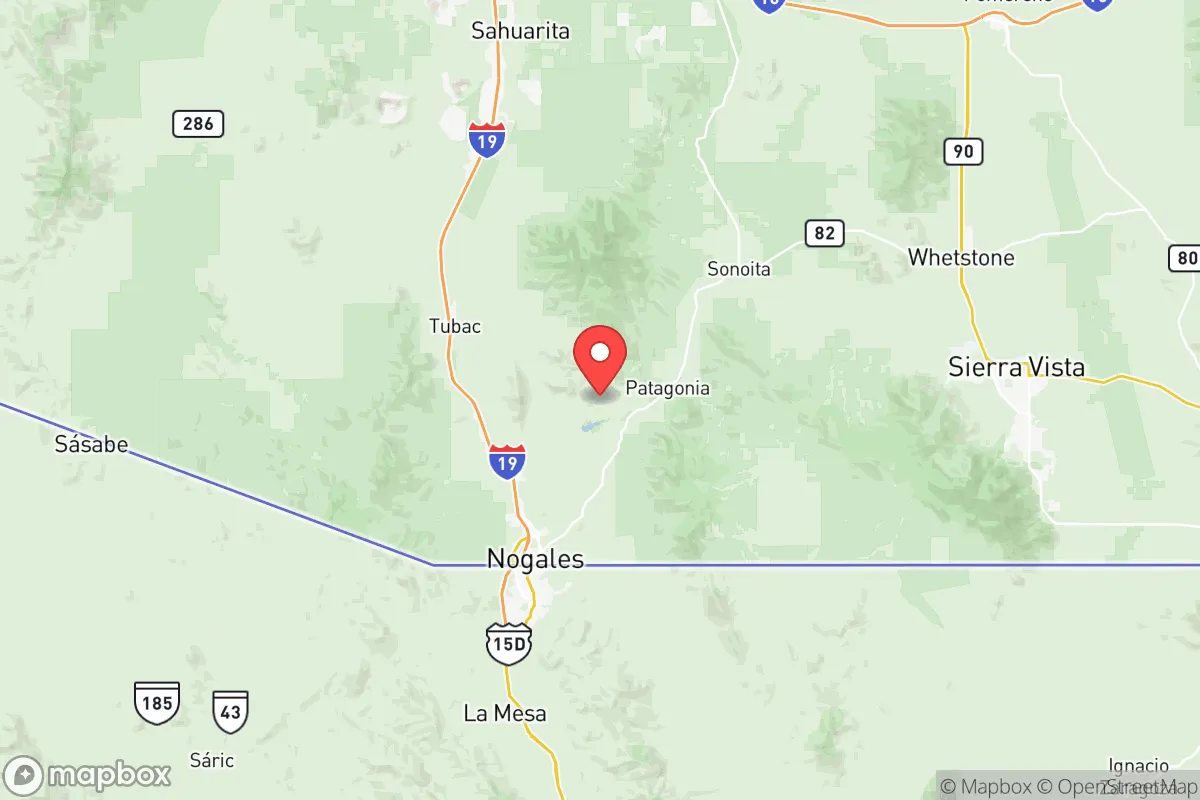
Santa Cruz County, Arizona, offers a notably high degree of personal sovereignty relative to many other parts of the state, particularly the Phoenix and Tucson metro areas, but with important local variations. The county’s regulatory environment is generally light-touch, its gun laws are among the most permissive in the nation, and its rural character supports self-reliance, though the county seat of Nogales and the bedroom community of Rio Rico present a more municipal, less libertarian feel than the unincorporated areas around Patagonia, Sonoita, and Amado. For a relocation-minded individual or family prioritizing personal freedom, the key is understanding where within the county the autonomy you seek is strongest.
Tax burden and regulatory posture: How Santa Cruz County compares to Arizona’s metro areas
Arizona is already a low-tax state, and Santa Cruz County leans further into that posture. The county’s combined sales tax rate (state + county + city) in Nogales is about 8.6%, while unincorporated areas like Amado and the Sonoita-Elgin area sit at the state’s base rate of 5.6% plus a small county portion, often totaling under 7%. Property taxes are low by national standards, with effective rates typically between 0.6% and 0.9% of assessed value, and Arizona’s Proposition 117 caps annual assessment increases at 5% for owner-occupied homes. There is no state or local income tax on wages. The regulatory posture is distinctly light-touch: the county has no county-wide building code for unincorporated areas (though the state’s minimum standards apply), and zoning is minimal outside of incorporated towns. In Nogales and Rio Rico, you will encounter municipal planning departments and stricter subdivision regulations, but in Patagonia, Sonoita, and the vast rural stretches, you can build a home, run a small business, or keep livestock with far less bureaucratic friction than in Pima or Maricopa counties. The county’s small government ethos is reflected in its lean administrative staff and limited code enforcement presence.
Self-defense and gun law specifics: What the Second Amendment landscape looks like here
Arizona is a constitutional carry state, and Santa Cruz County fully reflects that. No permit is required to carry a concealed firearm for anyone 21 or older who can legally possess a firearm. Open carry is legal without a permit. The county sheriff, David Hathaway, is a strong supporter of Second Amendment rights, and the Sheriff’s Office does not maintain a public list of permit holders. There are no county-level magazine capacity restrictions, no assault weapon bans, and no waiting periods beyond the federal background check. The gun culture is robust, particularly in the rural areas around Sonoita and Patagonia, where shooting on private property is common and accepted. In Nogales, the proximity to the border means federal law enforcement presence is higher, but local law enforcement does not enforce federal firearms regulations beyond state law. The county has a "Second Amendment Sanctuary" resolution on the books, though it is largely symbolic. For a self-defense-minded individual, Santa Cruz County offers one of the most permissive legal environments in the country, with the practical caveat that the border region sees occasional smuggling-related activity, making situational awareness prudent.
Self-reliance and homesteading viability: Lot sizes, zoning, and off-grid feasibility
Santa Cruz County is a strong candidate for homesteading and off-grid living, but the feasibility varies sharply by location. In the Sonoita-Elgin area, you can find parcels of 5 to 40 acres with no county zoning restrictions on agricultural use, livestock, or accessory structures. The county does not require a building permit for structures under 200 square feet in unincorporated areas, and there is no county-wide ban on rainwater harvesting or composting toilets. Off-grid solar is common, and the county does not mandate grid connection. In Patagonia, the town’s zoning allows for small-scale agriculture and livestock on lots as small as one acre, but the town does have a building permit process. In Amado and the rural areas west of I-19, parcels of 2.5 to 10 acres are common, and many residents rely on wells and septic systems. The county’s well permitting is straightforward, with no groundwater management area restrictions in most of the county. The biggest constraint is water availability: the Santa Cruz River basin is arid, and well depths can exceed 300 feet in some areas, with drilling costs of $15,000 to $25,000. In Nogales and Rio Rico, lot sizes are smaller (typically under one acre), and homeowners associations are common, which can restrict livestock, solar panels, and outbuildings. For serious homesteading, the Sonoita-Elgin area and the rural corridor between Amado and Patagonia offer the most freedom.
Personal liberties: Parental rights, medical autonomy, speech, and property rights
Santa Cruz County aligns with Arizona’s broader tilt toward personal liberty in several key areas. Parental rights are strong: Arizona law gives parents the right to direct their children’s education, including homeschooling without state approval, and the county has a robust homeschooling community, particularly in the Sonoita and Patagonia areas. Medical autonomy is protected by state law, which allows direct primary care agreements and prohibits county-level mandates for vaccines or medical procedures beyond state requirements. The county does not have any local mask or vaccine mandates on the books. Free speech is protected under the Arizona Constitution, which is more expansive than the federal First Amendment in some areas, and the county does not impose content-based restrictions on signs or public expression. Property rights are reinforced by Arizona’s Private Property Rights Protection Act, which requires the county to compensate landowners if a regulation reduces property value by more than 20%. The county’s planning and zoning department is small and generally responsive, but property owners in unincorporated areas enjoy the most freedom, with no county-wide design review or historic preservation overlay districts. In Nogales, the city’s historic district does impose some design restrictions on exterior modifications, but this is the exception, not the rule.
Overall, Santa Cruz County offers a level of personal sovereignty that is rare even by Arizona’s already freedom-friendly standards. The combination of low taxes, minimal regulation, strong gun rights, and viable off-grid living makes it a standout for those who value autonomy, particularly in the unincorporated areas of Sonoita, Patagonia, and Amado. The trade-off is that the county’s rural character means fewer services, longer travel times to major medical facilities, and a slower pace of life. For a family or individual who wants to live largely on their own terms, with minimal government interference, Santa Cruz County is one of the strongest options in the Southwest, rivaled only by similarly rural counties in eastern Arizona and western New Mexico.

* Values derived from national, state, county, city and local statistics and may differ in a specific area. Last updated: 2026-07-30T07:59:17.000Z
Narrative content on this page is AI-generated and may contain mistakes. Verify any details that matter before acting on them.
ReloMaps may earn a commission from affiliate links at no extra cost to you.

