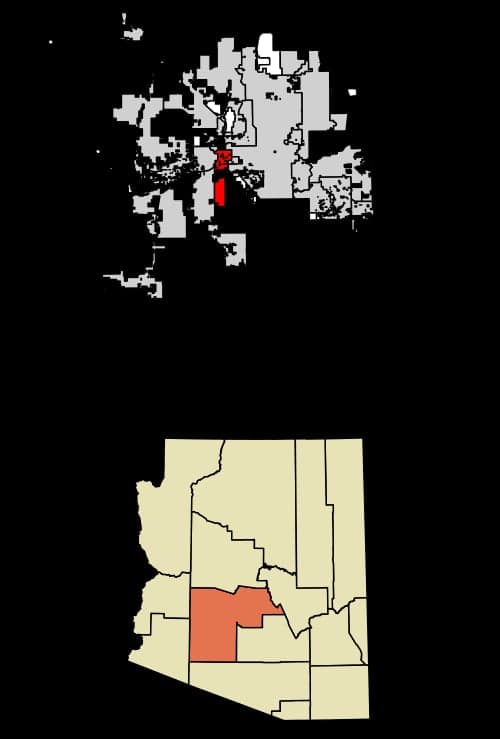
Photo: Wikipedia
Political ClimatePolitical Climate in Avondale, AZ
District shown is the primary district for this city’s centroid. Cities may span multiple districts.
Local Political AnalysisPolitical Analysis of Avondale, AZ
Avondale, Arizona, has shifted hard to the left over the past decade, and if you’ve lived here as long as I have, you’ve felt it. The city’s Cook Partisan Voting Index (PVI) sits at D+13, meaning it votes 13 points more Democratic than the national average. That’s a stark contrast to the Avondale I remember from the early 2000s, when it was a reliably purple working-class town. Today, the local government and school boards are increasingly dominated by progressive voices, and the trend line points further left with each election cycle. It’s not just a blue dot; it’s a deep blue anchor in an otherwise competitive Maricopa County.
How it compares
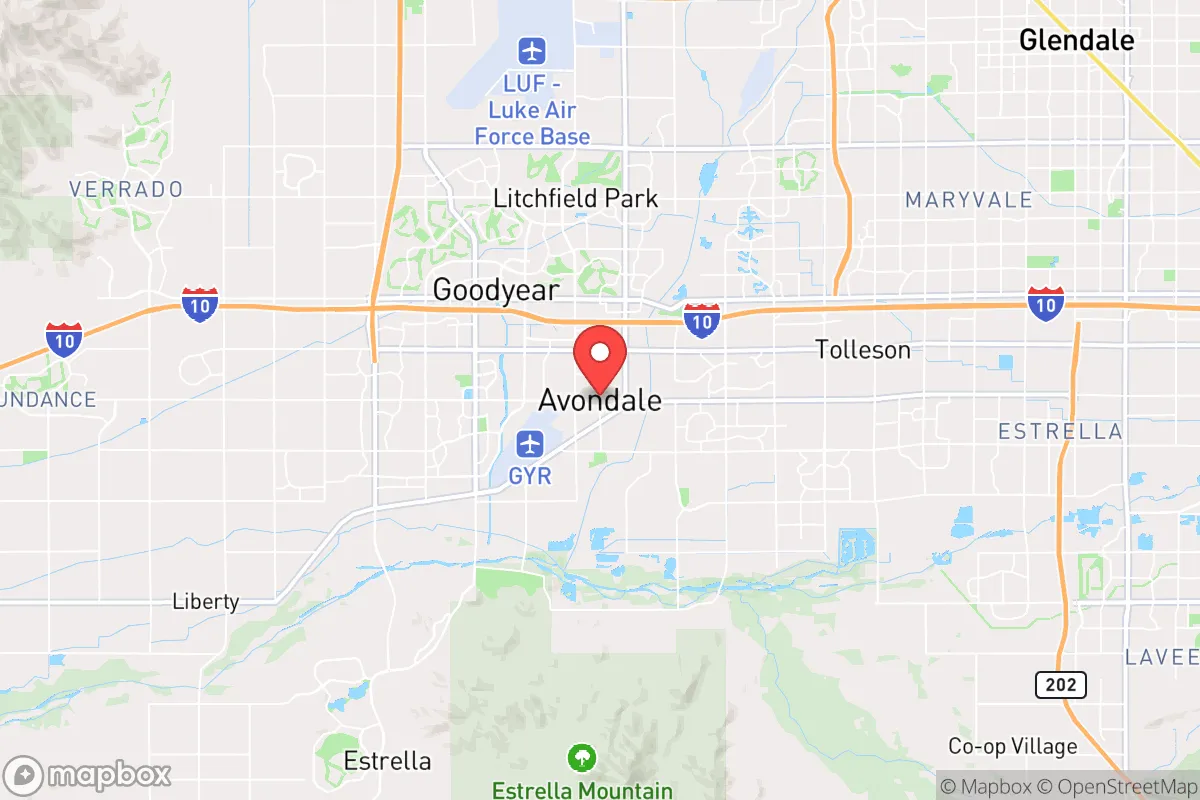
Drive ten miles west on I-10 and you’ll hit Buckeye, which still leans conservative and feels like a different world politically. Head north to Surprise or Sun City, and you’ll find a much older, more Republican-leaning electorate. Even Goodyear, just next door, is more moderate than Avondale these days. The contrast is sharpest when you look at school board races: Avondale’s districts have embraced progressive curriculum shifts and DEI initiatives, while nearby Litchfield Park and parts of Goodyear have fought to keep those out. The state legislature has been gridlocked on education and housing policy in part because Avondale’s delegation consistently votes for more state control over local zoning and school choice—a pattern that rubs many of us the wrong way. It feels like the city is being run by people who see government as the first answer, not the last resort.
What this means for residents
For families and small business owners, the practical effect is a growing list of local regulations that can feel intrusive. The city council has pushed through higher impact fees on new construction, tighter rental inspection rules, and a “just cause” eviction ordinance that makes it harder for landlords to remove problem tenants. Supporters call it tenant protection; I call it government picking winners and losers. Property taxes have crept up faster than inflation, and there’s constant talk of a city sales tax increase to fund light rail extensions and “equity” programs. If you value keeping more of your paycheck and making your own choices about your property, Avondale’s trajectory is concerning. The local police department is still professional and responsive, but the council has flirted with “reimagining public safety” proposals that worry longtime residents who remember when the city was safer and quieter.
On the cultural side, Avondale has become a hub for large-scale events like the NASCAR race and spring training games, which bring in crowds and revenue. But the city’s leadership has also leaned into symbolic progressive gestures—like renaming streets and flying pride flags on city buildings—that feel more about signaling than substance. The school district has moved toward ethnic studies requirements and social-emotional learning curricula that some parents see as ideological overreach. If you’re looking for a place where local government stays out of your business and lets you live your life, Avondale is moving in the opposite direction. I still love the desert sunsets and the proximity to Phoenix, but I’m keeping a close eye on the ballot box. The next few elections will decide whether this city becomes a model of overreach or a cautionary tale.

State Political ClimatePolitical Climate in Arizona
State Political AnalysisPolitical Environment in the State
Arizona has transformed from a reliably Republican stronghold into a genuine battleground state over the past two decades, with its partisan lean now hovering around a razor-thin margin. The state’s political coalition is a volatile mix of fast-growing suburban independents, a deeply conservative rural base, and a rapidly expanding Latino and out-of-state transplant population that leans left. Over the last 10-20 years, the trajectory has been a slow but steady shift from solid red to purple, with Democrats winning the presidency in 2020 and both Senate seats in 2018 and 2020, while Republicans still hold the governorship and a narrow legislative majority as of 2026.
Urban vs. rural divide
The political map of Arizona is a tale of two worlds. Maricopa County, home to Phoenix and its sprawling suburbs, is the decisive battleground—it contains about 60% of the state’s voters and has flipped from deep red to purple. Within Maricopa, the city of Phoenix itself is a Democratic stronghold, while suburbs like Mesa and Gilbert remain reliably conservative, though their margins are shrinking. Scottsdale and Chandler are classic swing suburbs, trending left as educated professionals move in. Meanwhile, Tucson (Pima County) is a solidly blue urban center, driven by the University of Arizona and a younger, more liberal population. The rural counties tell a different story: Yavapai County (Prescott), Mohave County (Kingman), and Pinal County (Casa Grande) are deeply red, often voting 65-70% Republican. The Flagstaff area (Coconino County) is a blue island in the north, thanks to Northern Arizona University. The divide is stark: drive 30 minutes outside any metro, and you’re in Trump country.
Policy environment
Arizona’s policy environment is a mixed bag for conservatives. On the plus side, the state has a flat income tax rate of 2.5% (passed in 2021), one of the lowest in the nation, and no state-level estate or inheritance tax. Property taxes are relatively low, averaging about 0.6% of home value. The regulatory posture is generally business-friendly, with right-to-work laws and limited zoning in rural areas. However, education policy is a flashpoint: the state has a robust school choice program (Empowerment Scholarship Accounts) that conservatives love, but public school funding remains a perennial fight, with teacher strikes in 2018 forcing a 20% pay raise. Healthcare is a mixed bag—Arizona expanded Medicaid under Obamacare (Arizona Health Care Cost Containment System), which many conservatives see as government overreach, but the state has not imposed a state-level individual mandate. Election laws have been a rollercoaster: the state passed voter ID requirements and tightened mail-in ballot rules in 2022 (HB 2492), but also has permanent early voting lists that many on the right view as ripe for fraud. The bottom line: tax policy is solid, but the regulatory and education landscapes are contested.
Trajectory & freedom
On personal freedom, Arizona is a mixed picture trending in a concerning direction for conservatives. The state has strong gun rights—constitutional carry was signed into law in 2010, and preemption laws prevent local governments from enacting their own restrictions. However, in 2022, the state passed a “red flag” law (HB 2111) that allows courts to temporarily seize firearms from individuals deemed a threat, which many see as a slippery slope. Parental rights saw a win with the 2022 law requiring schools to notify parents of curriculum changes (HB 2161), but the same year saw a controversial “parental rights” bill (SB 1456) that critics say could be used to discriminate against LGBTQ+ students. Medical autonomy took a hit in 2024 when the state supreme court upheld a near-total abortion ban from 1864, but the legislature quickly repealed it, leaving a 15-week ban in place—a compromise that satisfies neither side. Property rights are generally strong, with no statewide rent control and limited eminent domain abuse. The biggest freedom concern is the growth of government: the state budget has doubled in the last decade, and new regulations on short-term rentals (SB 1168 in 2023) have upset property owners. Overall, Arizona is still freer than California or New York, but the trend line is not encouraging.
Civil unrest & political movements
Arizona has been a hotbed of political activism on both sides. The most visible flashpoint is immigration: the state was ground zero for the 2010 SB 1070 “show me your papers” law, which sparked massive protests and boycotts. Today, the border crisis remains a live issue, with Yuma and Nogales seeing high traffic and local governments clashing with the Biden administration over enforcement. On the left, the “Red for Ed” teacher walkout in 2018 was one of the largest labor protests in state history, shutting down schools for a week. On the right, the “Stop the Steal” movement was strong in 2020, with armed protests at the state capitol and a controversial audit of Maricopa County ballots that dragged on for months. Election integrity remains a sore spot: the 2022 gubernatorial race was decided by just 17,000 votes, and both sides accuse the other of cheating. You’ll see “Trump Won” flags flying alongside “Biden Harris” signs in equal measure. The political temperature is high, but actual violence has been rare—most activism is loud but legal.
Projection
Over the next 5-10 years, Arizona is likely to continue its slow drift leftward, driven by in-migration from California and other blue states. The Phoenix suburbs that were once safe red—places like Surprise and Buckeye—are filling up with younger, more diverse families who lean independent or Democratic. The Latino population, which is about 30% of the state, is trending more Democratic as younger voters register. However, the rural counties are not shrinking, and the state’s electoral map could remain a toss-up for a decade. The wild card is the border: if the crisis worsens, it could galvanize conservative voters and flip the state back red. For a conservative moving in now, expect to live in a purple state where your vote matters but your values are constantly under pressure. The state will likely remain a battleground for the foreseeable future, with no clear majority for either party.
Bottom line for a new resident: Arizona offers low taxes, strong gun rights, and a business-friendly climate, but you’ll be living in a state where the political future is uncertain. If you’re moving from a deep blue state, you’ll find more freedom here, but don’t expect a conservative utopia. The culture wars are real, and you’ll need to be engaged to protect the liberties that remain. Choose your county wisely—Yavapai or Pinal will feel like a different country than Maricopa or Pima.
* Values derived from national, state, county, city and local statistics and may differ in a specific area. Last updated: 2026-04-19T19:47:23.000Z
Narrative content on this page is AI-generated and may contain mistakes. Verify any details that matter before acting on them.
ReloMaps may earn a commission from affiliate links at no extra cost to you.

