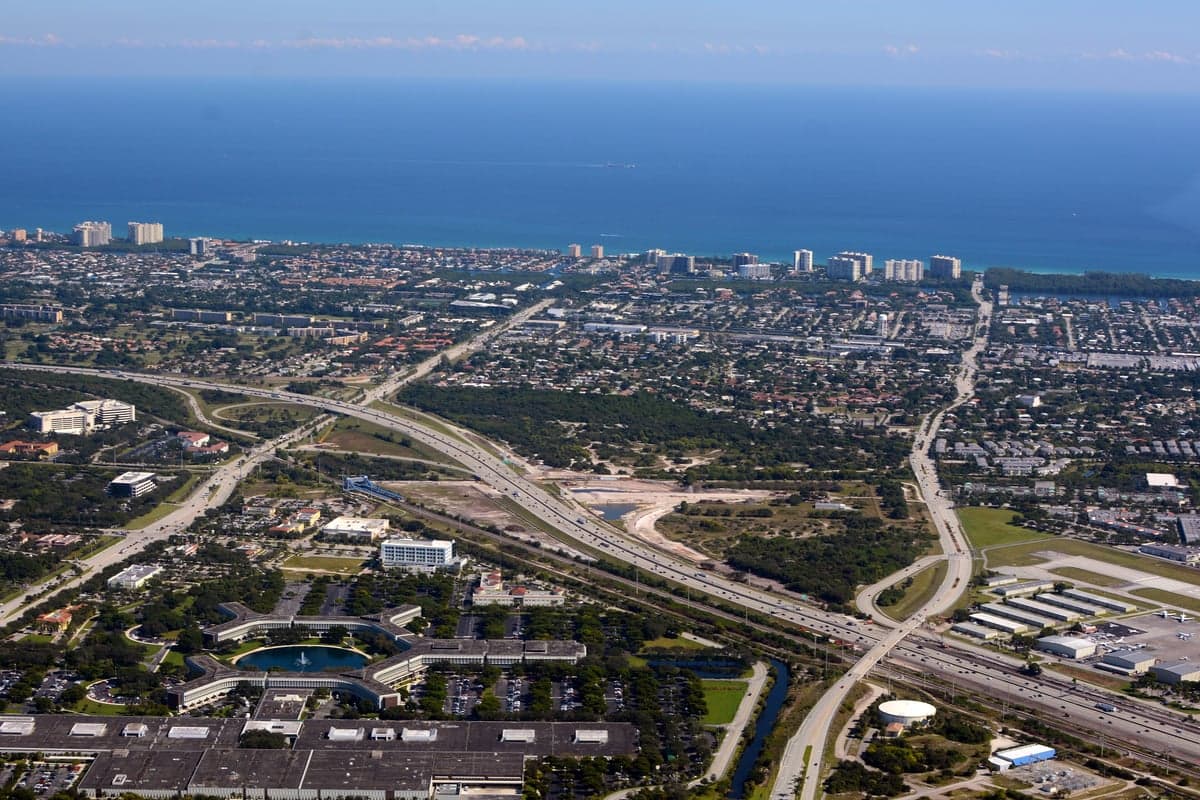
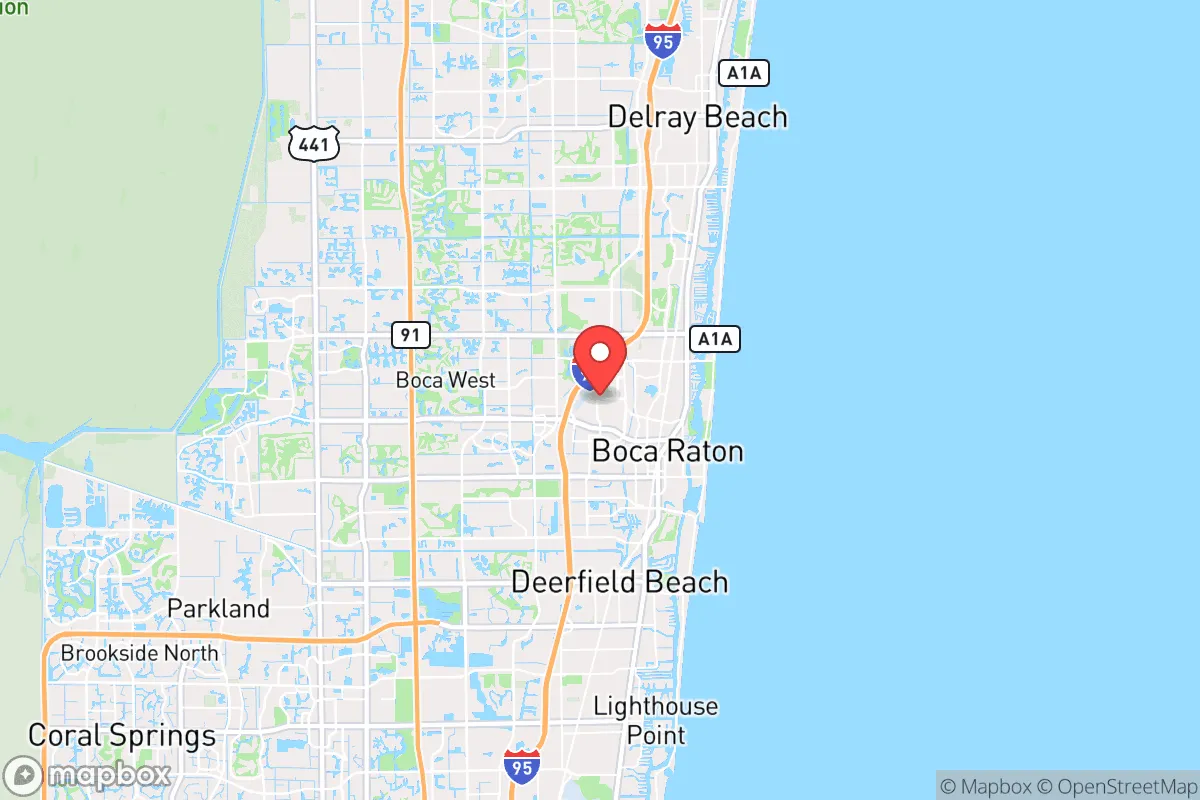
Photo: Wikipedia
Demographics of Boca Raton, FL
Affluence Level in Boca Raton, FL
An upper-middle-class area. Household wealth, education levels, and homeownership run ahead of national benchmarks.
People of Boca Raton, FL
Boca Raton’s 98,833 residents form a highly educated, predominantly white-collar population, with 60.4% holding a bachelor’s degree or higher—nearly double the national average. The city is 71.9% white, 15.4% Hispanic, 5.4% Black, 1.7% East/Southeast Asian, and 1.2% Indian (subcontinent), with only 8.1% foreign-born, reflecting a mature, largely domestic in-migration pattern. Its identity is defined by planned communities, gated enclaves, and a strong corporate presence, making it a magnet for professionals, retirees, and families seeking low-crime, high-amenity suburban life.
How the city was settled and grew
Boca Raton is a post-1900 creation, with no colonial or 19th-century settlement of note. The city’s modern history begins in 1925, when architect Addison Mizner launched the Boca Raton Resort & Club and a planned luxury community, drawing wealthy Northerners and land speculators. The 1926 hurricane and the Great Depression stalled growth, but the area rebounded after World War II as a winter retreat for snowbirds. The original population was almost entirely white, Protestant, and affluent, settling in the Old Floresta neighborhood (Mizner’s original 1920s enclave) and along the Lake Rogers corridor. The 1950s and 1960s brought a second wave: middle-class families from the Northeast and Midwest, drawn by IBM’s 1967 decision to locate its research and manufacturing campus in Boca Raton. These newcomers filled the Boca Del Mar and Boca Pointe subdivisions, which remain predominantly white, upper-middle-class areas today.
Modern era (post-1965)
The 1965 Hart-Cellar Act had a modest effect on Boca Raton compared to Miami or Fort Lauderdale. The foreign-born share (8.1%) is low for South Florida, and the city’s growth has been driven primarily by domestic in-migration—professionals transferring with corporations, retirees from the Northeast, and families seeking top-rated schools. The Hispanic population (15.4%) is concentrated in the Mission Bay area (west of I-95) and parts of Boca Raton West, with many residents tracing roots to Cuba, Colombia, and Venezuela. The Black population (5.4%) is largely settled in the Pearl City neighborhood, a historic African-American enclave dating to the 1910s that has seen gradual gentrification. East/Southeast Asian communities (1.7%) are dispersed but visible in the University Park area near Florida Atlantic University, while the Indian-subcontinent population (1.2%) clusters in newer developments west of the Turnpike, such as Loggers’ Run. The city’s white population remains dominant but has aged: many original IBM-era families have retired in place, while younger white professionals move into luxury condos downtown or into Royal Palm Yacht & Country Club.
The future
Boca Raton’s population is trending older and more affluent, with little room for explosive growth—the city is nearly built out. The Hispanic share is rising slowly (up from 12% in 2010), driven by second-generation families moving west into suburban Palm Beach County, but the foreign-born rate is unlikely to spike given high housing costs (median home price above $600,000). The Black population is stable, with Pearl City facing redevelopment pressure. East/Southeast Asian and Indian communities are growing modestly, fueled by tech and finance jobs at companies like Office Depot (headquartered in Boca) and Modernizing Medicine. The city is not tribalizing into distinct ethnic enclaves; rather, it is homogenizing around income and education. The next decade will likely see a continued influx of remote workers and semi-retirees from high-tax states, reinforcing the city’s character as a wealthy, white-collar suburb. For a conservative-leaning mover, this means a stable, low-crime environment with excellent schools and a politically moderate-to-conservative electorate (Palm Beach County voted +13 R in 2024 outside the coastal strip).
Boca Raton is becoming a mature, high-cost, low-diversity suburb where demographic change is slow and incremental. The population is not diversifying rapidly; instead, it is solidifying around a core of affluent, college-educated professionals and retirees. For someone moving in now, the city offers predictability, safety, and a strong sense of place—but little of the ethnic dynamism found in Miami or West Palm Beach.

* Values derived from national, state, county, city and local statistics and may differ in a specific area. Last updated: 2026-04-24T08:03:41.000Z
Narrative content on this page is AI-generated and may contain mistakes. Verify any details that matter before acting on them.
ReloMaps may earn a commission from affiliate links at no extra cost to you.

