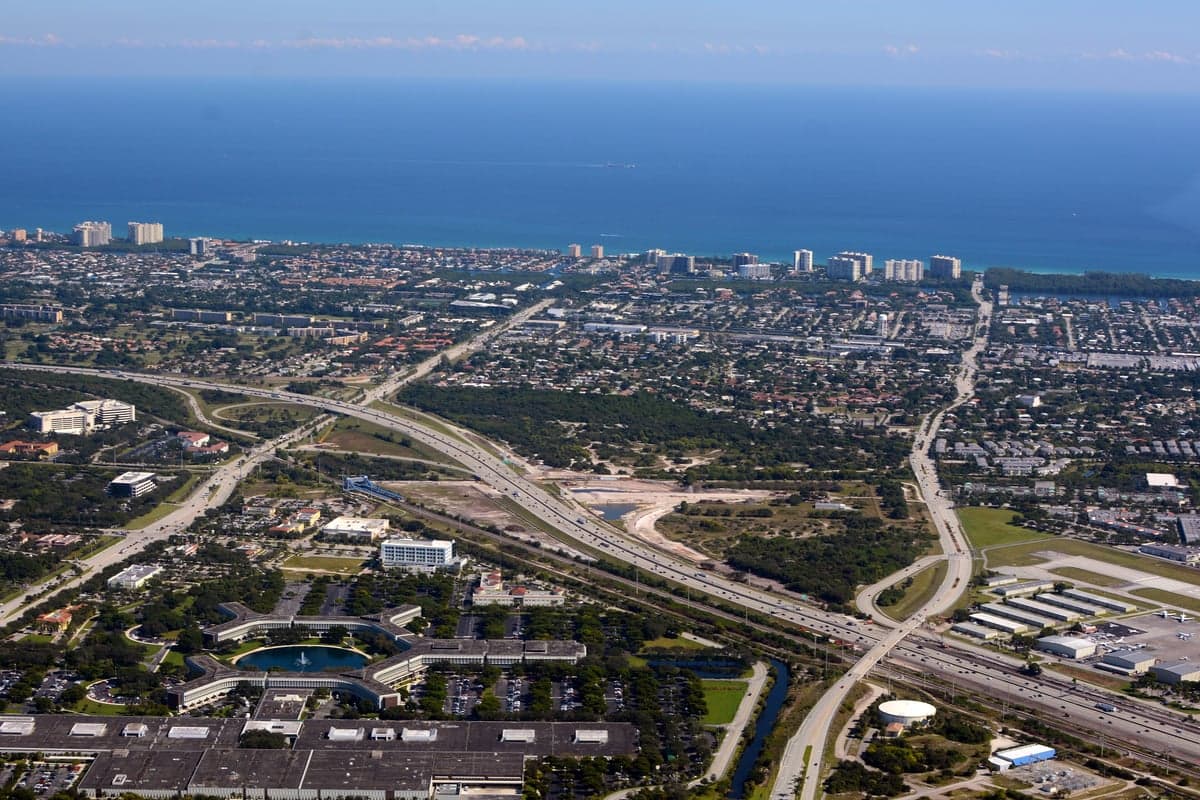
Photo: Wikipedia
Political ClimatePolitical Climate in Boca Raton, FL
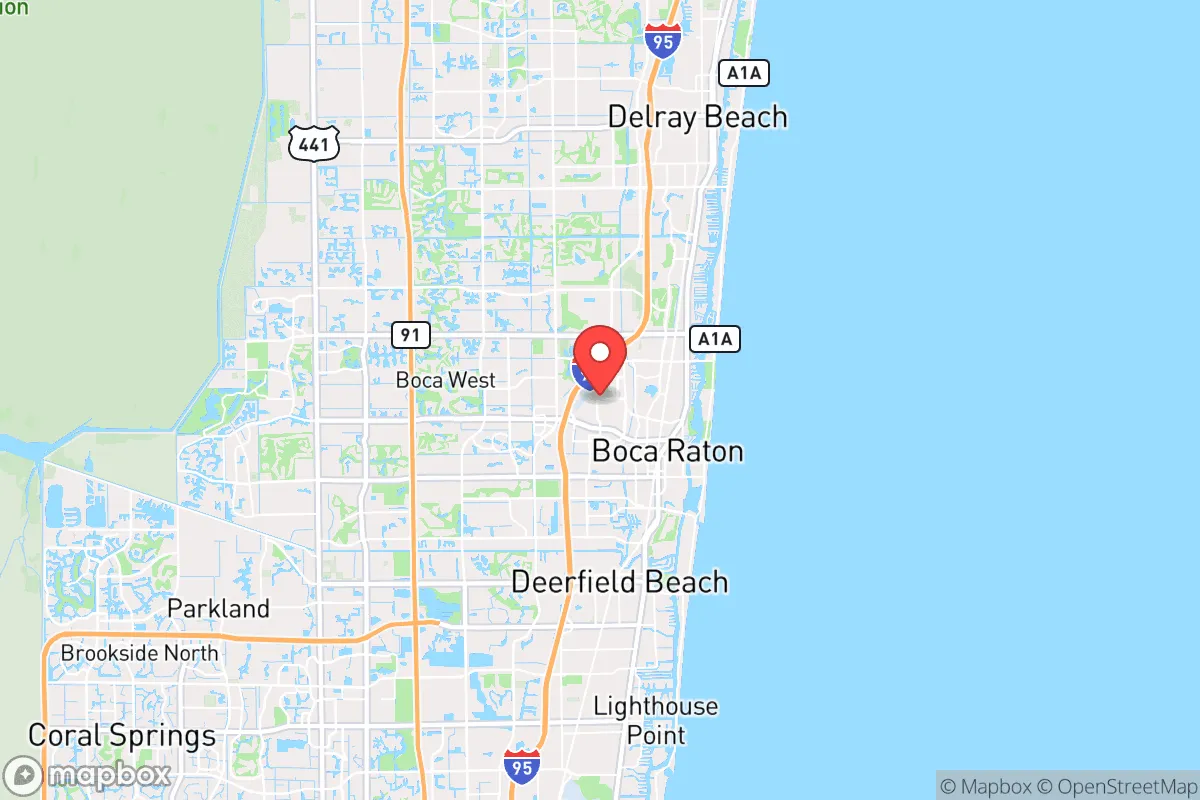
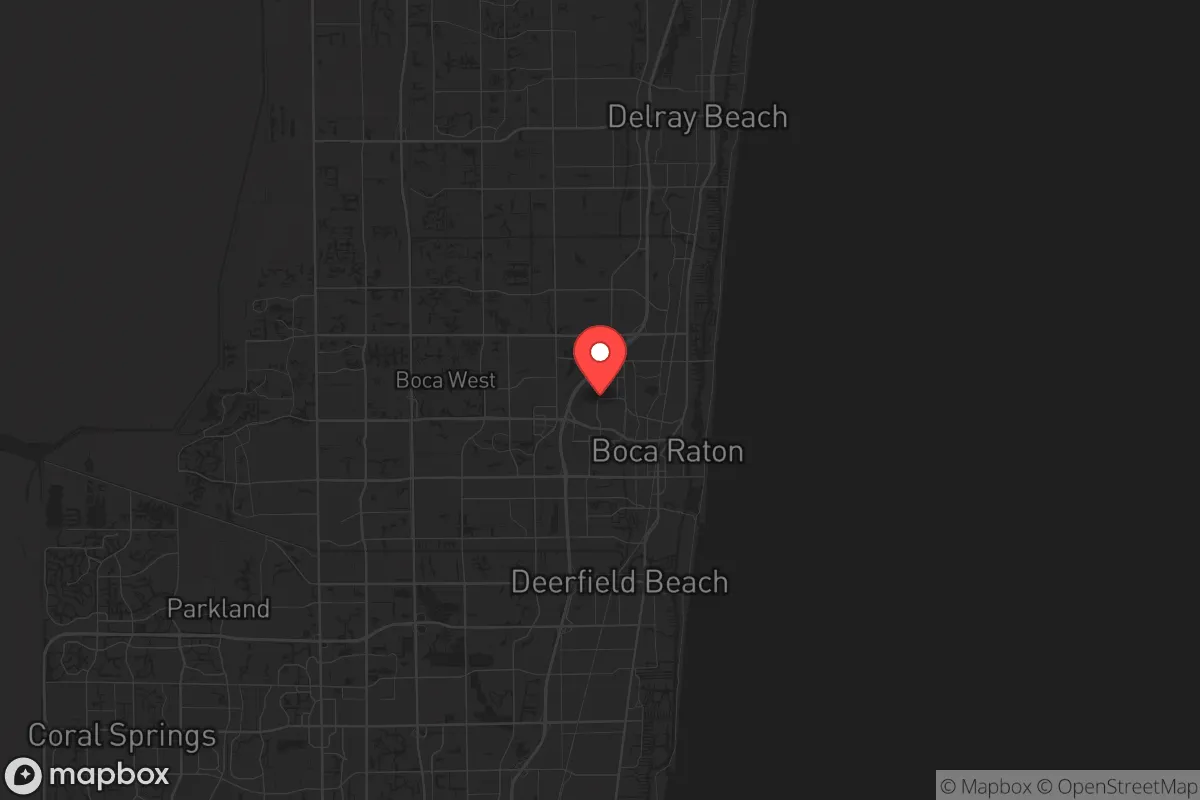
District shown is the primary district for this city’s centroid. Cities may span multiple districts.
Local Political AnalysisPolitical Analysis of Boca Raton, FL
Boca Raton has historically been a moderate-to-conservative stronghold in South Florida, but the political winds have shifted noticeably over the past decade. The city now carries a Cook Partisan Voting Index (PVI) of D+2, meaning it leans two points more Democratic than the national average—a stark contrast to the reliably red Palm Beach County of the 1990s and early 2000s. If you’ve lived here as long as I have, you’ve watched the local GOP club meetings shrink while progressive activism fills the town square. The trajectory is clear: Boca is trending left, and it’s happening faster than many longtime residents are comfortable with.
How it compares
Drive 15 minutes west to Delray Beach, and you’ll find a similar D+2 to D+4 lean, but the vibe is different—more openly progressive, with a younger, transplant-heavy population. Head north to West Palm Beach, and you’re in solidly blue territory (D+7 or higher), where city council meetings often feature loud debates over rent control and police funding. The real contrast is south to Fort Lauderdale and Broward County, which are deep blue (D+12 to D+15) and have embraced policies like sanctuary city status and heavy business regulation. Boca Raton still holds onto some of its old-school conservative DNA—lower property taxes than Broward, a strong homeowners’ association culture, and a city council that’s historically been skeptical of new density—but the margin is razor-thin. In the 2024 presidential race, the city’s precincts split almost evenly, with the coastal, older neighborhoods leaning red and the newer, younger developments near Florida Atlantic University tipping blue.
What this means for residents
For those who value personal freedoms and limited government, the shift is troubling. Boca Raton’s city council has already flirted with rent control ordinances and mandatory affordable housing quotas for new developments—policies that sound compassionate but often backfire by discouraging construction and raising costs for everyone. The school board, once a reliably conservative body, now has a progressive majority that has pushed for critical race theory-inspired curriculum changes and gender identity policies that override parental notification. If you’re a parent, you’ve probably noticed the school district’s new “equity” initiatives that prioritize group outcomes over individual merit. The police department, while still professional, faces increasing calls from activist groups to “reimagine public safety,” which in practice means fewer traffic stops and less proactive enforcement. Property taxes have crept up as the city expands its social services budget, and new “climate resilience” fees are being discussed—another layer of government overreach that hits homeowners directly in the wallet.
On the cultural front, Boca Raton still feels more traditional than its neighbors. You won’t see the same level of street-level activism or rainbow flags on every corner that you’d find in Wilton Manors or downtown West Palm. But the annual Boca Pride festival has grown larger each year, and the city’s arts district now hosts events that openly promote progressive causes. The real estate market tells the story: homes in the older, gated communities west of I-95 (where retirees and families have lived for decades) sell slower than the trendy, walkable condos near Mizner Park, which attract younger professionals who vote blue. If the trend continues, expect Boca Raton to mirror Delray Beach within five to ten years—a place where conservative voices are tolerated but rarely heard in city hall. For now, the best advice is to get involved in local elections and HOA boards, because the small battles are where the big changes start.

State Political ClimatePolitical Climate in Florida
State Political AnalysisPolitical Environment in the State
Florida has transformed from a classic swing state into a solidly Republican-leaning powerhouse over the past two decades, driven by a massive influx of conservative-leaning transplants from the Northeast and Midwest. The state now boasts a Republican voter registration advantage of over 500,000 as of 2025, a dramatic reversal from the near-even split of the 2000s. This shift is most visible in the I-4 corridor, where once-purple counties like Hillsborough (Tampa) and Seminole (Orlando suburbs) have trended right, while the Panhandle and Southwest Florida remain deeply red strongholds.
Urban vs. rural divide
The political map of Florida is a tale of three distinct regions. The Miami-Dade and Broward metro area remains the state's Democratic anchor, but even here, the party's grip is slipping—Miami-Dade flipped to Trump in 2020 and 2024, a seismic shift driven by Cuban-American and Venezuelan voters who are viscerally anti-socialist. Orlando (Orange County) is the last major blue urban holdout, buoyed by a young, diverse, and transient population. Meanwhile, the Panhandle from Pensacola to Tallahassee is deeply conservative, with rural counties like Liberty and Lafayette routinely voting 80%+ Republican. The real story is the suburban explosion: places like St. Johns County (south of Jacksonville) and Lee County (Fort Myers) have seen explosive growth of families fleeing high-tax states, and they vote reliably red. The I-4 corridor's Polk County (Lakeland) has shifted from purple to deep red as retirees and logistics workers move in.
Policy environment
Florida's policy environment is a deliberate counterweight to states like New York and California. There is no state income tax, a massive draw for high-earners and retirees. The regulatory climate is business-friendly, with a right-to-work law and minimal red tape for construction and development. On education, Governor DeSantis signed the Parental Rights in Education Act (HB 1557) in 2022, which prohibits classroom instruction on sexual orientation and gender identity in K-3, and the Stop WOKE Act (HB 7) in 2022, which restricts critical race theory training in schools and workplaces. The state has also expanded school choice dramatically, with the Family Empowerment Scholarship program now serving over 400,000 students. Election integrity is a top priority: Florida passed SB 90 in 2021, adding voter ID requirements, limiting drop boxes, and banning ballot harvesting. The state also enacted a six-week abortion ban (HB 5) in 2023, with exceptions for rape, incest, and life of the mother. Healthcare policy is mixed—Florida did not expand Medicaid under the ACA, but it has a robust private insurance market.
Trajectory & freedom
Florida is unequivocally trending more free in the areas that matter most to conservatives. The Constitutional Carry law (HB 543), signed in 2023, allows law-abiding residents to carry a concealed firearm without a permit—a major expansion of Second Amendment rights. Property rights were strengthened by the Live Local Act (SB 102) in 2023, which preempts local zoning to allow affordable housing development, though some conservatives worry it infringes on local control. On medical freedom, Florida banned vaccine passports (SB 2006) in 2021 and prohibited mask mandates in schools (HB 1557). The Individual Freedom Act (HB 7) protects against compelled speech in workplaces and schools. However, there are concerns: the state's growth management laws have been weakened, leading to unchecked development that strains infrastructure and raises property taxes. The property insurance crisis is a growing threat to personal freedom, with premiums skyrocketing due to litigation abuse and hurricane risk—the state has had to step in as the insurer of last resort through Citizens Property Insurance.
Civil unrest & political movements
Florida has seen relatively little civil unrest compared to blue states, but there are flashpoints. The 2020 George Floyd protests in Miami, Tampa, and Orlando were largely peaceful, though there were isolated incidents of looting. The Moms for Liberty movement, founded in Florida in 2021, has become a national force, organizing school board takeovers and pushing back on CRT and LGBTQ+ curriculum. Immigration politics are intense: Governor DeSantis has bused migrants to Martha's Vineyard and California, and the state passed SB 1718 in 2023, which requires businesses with 25+ employees to use E-Verify and bans local governments from issuing IDs to undocumented immigrants. There is no sanctuary city movement—Florida law (HB 9, 2019) actually bans sanctuary policies. Election integrity remains a hot topic: the Office of Election Crimes and Security was created in 2022, and over 20 people have been arrested for voter fraud since. The state's secessionist rhetoric is mostly performative, but the "Free Florida" movement is real—a coalition of conservatives who want to push the state even further right, often clashing with the more moderate business wing of the GOP.
Projection
Over the next 5-10 years, Florida will likely become more conservative, not less. The in-migration from blue states shows no signs of slowing—over 300,000 net new residents per year, mostly from New York, California, and Illinois. These transplants are not moderates; they are fleeing high taxes and progressive policies, and they vote accordingly. The Hispanic vote is the wild card: Cuban-Americans and Venezuelans are solidly Republican, but Puerto Ricans and Mexican-Americans in Central Florida lean Democratic. If the GOP can continue to win 40-45% of the Hispanic vote, Florida will remain red for a generation. The climate change issue is a growing concern, but it's not a voting issue for most Floridians—they care more about insurance costs and flood maps. The biggest risk to the conservative trajectory is overdevelopment: if infrastructure collapses and property taxes spike, the libertarian-leaning base could sour on the GOP establishment. But for now, the state is on a clear path toward becoming the national model for conservative governance.
For a conservative family or individual moving to Florida, the bottom line is this: you are moving to a state that actively protects your rights—to keep and bear arms, to direct your children's education, to keep more of your paycheck, and to be free from government overreach. The culture is one of personal responsibility and limited government, and the political leadership is aligned with those values. The trade-offs are real: you'll pay more for homeowners insurance, deal with brutal summer heat, and navigate a state that is growing faster than its infrastructure can handle. But if you value freedom over convenience, Florida is the best bet in the country right now. Just be prepared for the traffic—everyone else had the same idea.
* Values derived from national, state, county, city and local statistics and may differ in a specific area. Last updated: 2026-04-24T08:03:41.000Z
Narrative content on this page is AI-generated and may contain mistakes. Verify any details that matter before acting on them.
ReloMaps may earn a commission from affiliate links at no extra cost to you.

