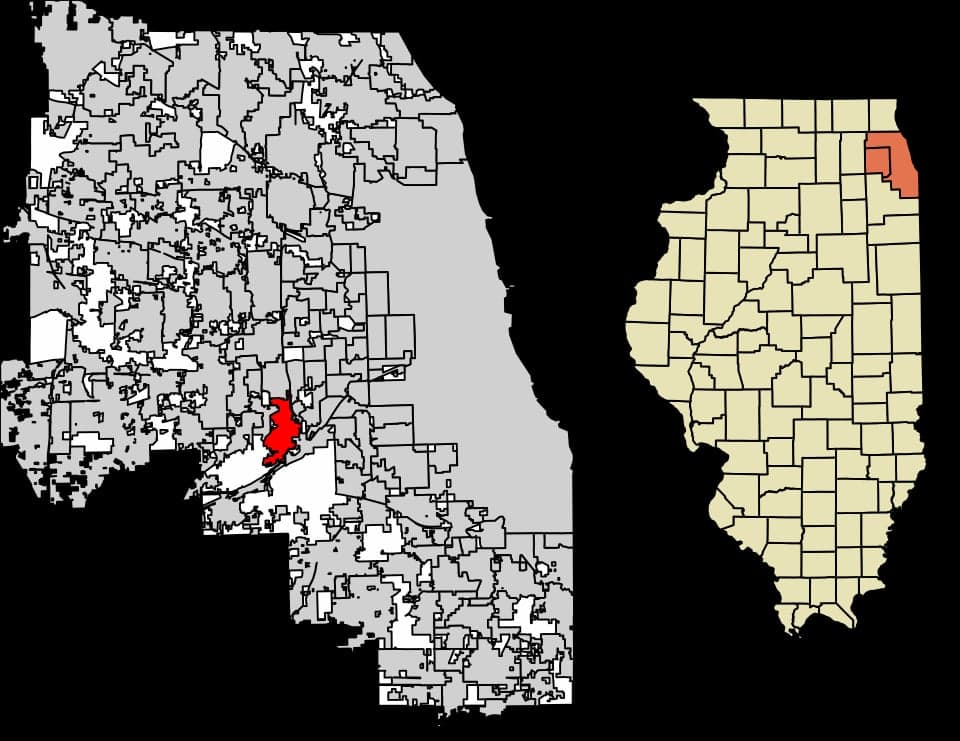
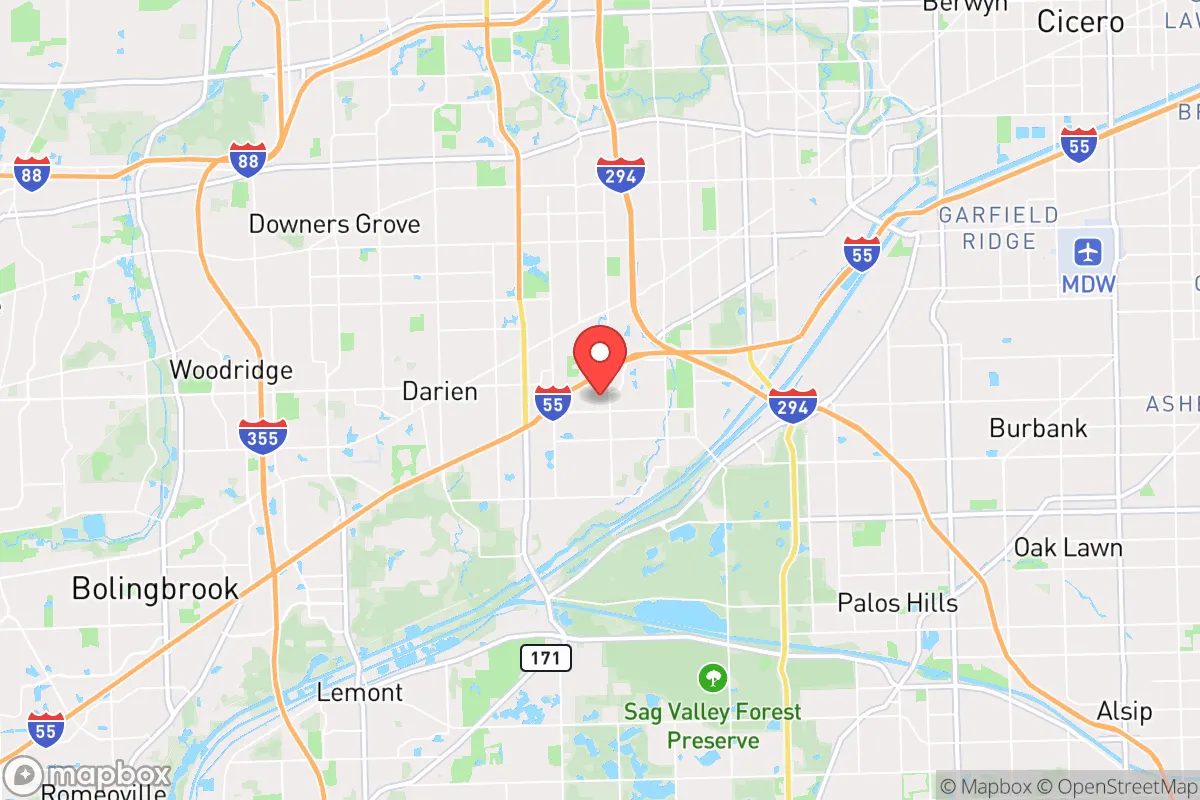
Photo: Wikipedia
Political ClimatePolitical Climate in Burr Ridge, IL
District shown is the primary district for this city’s centroid. Cities may span multiple districts.
Local Political AnalysisPolitical Analysis of Burr Ridge, IL
Burr Ridge has always been a bit of a political island in DuPage and Cook Counties, but the tide is shifting in a way that should give any freedom-loving resident pause. The area’s Cook Partisan Voting Index (PVI) now sits at D+3, meaning the district leans three points more Democratic than the national average—a far cry from the solidly conservative, live-and-let-live community I remember moving into twenty years ago. While the village itself still has a strong independent streak, the surrounding precincts have been trending blue, and that’s starting to show up in local policy debates over property rights, school curriculum, and even how the village handles small business regulations.
How it compares
To really understand Burr Ridge’s political climate, you have to look at the neighbors. Drive ten minutes east to Hinsdale, and you’ll find a town that still votes reliably Republican—often by double digits in local races. Head west to Darien or Willowbrook, and you’re in more traditional conservative territory, where tax caps and Second Amendment support are still the norm. But Burr Ridge sits right on the border of Cook County’s progressive machine, and that proximity is a problem. The village itself has managed to keep a relatively low tax levy and a business-friendly zoning code, but the county-level government—with its ever-expanding health mandates, environmental restrictions, and push for “equity” initiatives—is a constant threat to that autonomy. Meanwhile, neighboring Oak Brook has seen its own board flip to a more moderate stance, and that’s a warning sign: once the county apparatus gets its hooks in, it’s hard to pull back.
What this means for residents
For the average Burr Ridge homeowner, the D+3 PVI translates directly into pocketbook and lifestyle concerns. The most immediate issue is property taxes. Cook County’s progressive assessor has been pushing for more frequent reassessments and higher valuations, which hits Burr Ridge’s large-lot estates hard. Then there’s the school board dynamic: while District 86 and 181 have historically been moderate, recent elections have seen candidates backed by teachers’ unions and progressive PACs win seats, pushing for things like “culturally responsive” curriculum and DEI training that many parents see as government overreach into what their kids are taught. On the plus side, the village council has so far resisted calls for rent control or new business mandates, and the police department remains well-funded and community-oriented. But the trend line is clear: every election cycle brings more pressure to adopt county-level progressive policies, from mask mandates to “climate action plans” that add red tape to home renovations.
If you value personal freedom—the right to build a fence without a dozen permits, to send your kid to school without ideological indoctrination, to keep more of your own money—Burr Ridge is still a decent bet, but it’s no longer a sure thing. The old guard of fiscal conservatives and small-government Republicans is aging out, and the new wave of transplants from Chicago and the East Coast bring a different set of priorities. The village’s strong home-rule status is the last line of defense against Cook County’s overreach, but that status only holds if residents stay engaged and vote in local elections. If the next few cycles follow the current trajectory, Burr Ridge could look a lot more like a western suburb of Chicago than the independent-minded enclave it used to be.

State Political ClimatePolitical Climate in Illinois
State Political AnalysisPolitical Environment in the State
Illinois has been a reliably blue state for decades, but its political climate is far more complex than a simple partisan label suggests. The Democratic stronghold is powered almost entirely by Chicago and its inner suburbs, while the rest of the state—from the Mississippi River towns to the southern tip—votes overwhelmingly Republican. Over the last 20 years, the state has shifted leftward on social and fiscal policy, driven by Chicago’s growing population and influence, while downstate voters have grown increasingly frustrated and alienated. For a conservative considering relocation, the key question isn’t whether Illinois is red or blue—it’s whether the state’s trajectory aligns with your values on taxes, personal freedom, and local control.
Urban vs. rural divide
The political map of Illinois is a textbook example of the urban-rural chasm. Cook County, home to Chicago, casts roughly 40% of the state’s votes and delivers margins of 70-80% for Democrats. The collar counties—DuPage, Lake, Kane, and Will—were once reliably Republican but have trended blue over the past decade, especially in presidential elections. In 2020, Joe Biden won DuPage County by 10 points, a county that voted for George W. Bush in 2004. Meanwhile, downstate counties like Williamson, Effingham, and Macoupin routinely vote 70-80% Republican. The divide is stark: drive 90 minutes southwest of Chicago to Joliet or Peoria, and you’ll find working-class communities that lean conservative on economics and culture, but still get outvoted by the Chicago metro. The most politically distinct suburbs are Naperville and Elgin, where moderate Republicans used to thrive but now face an uphill battle in local races. For conservatives, the best bet is to look at exurbs like Yorkville or Oswego, where the GOP still holds local offices and the school boards are more balanced.
Policy environment
Illinois’s policy environment is a mixed bag that leans heavily toward government intervention. The state has a flat income tax rate of 4.95%, but that’s after a 2017 temporary increase from 3.75%—and there’s no constitutional cap, so the legislature can raise it again with a simple majority. Property taxes are among the highest in the nation, averaging over 2% of home value, which hits homeowners hard in counties like Lake and DuPage. The regulatory posture is business-friendly in name only: the state has a $15 minimum wage (phased in by 2025), strict environmental rules, and a strong union presence that drives up construction and labor costs. On education, Illinois spends heavily—over $17,000 per student—but Chicago Public Schools remain chronically underfunded and plagued by corruption. The state also passed the Healthcare Protection Act in 2024, which codifies abortion access and gender-affirming care as fundamental rights, a move that alarms many conservative families. Election laws are permissive: same-day registration, no-excuse mail-in voting, and automatic voter registration are all in place. For a conservative, the policy environment feels like a slow squeeze—more taxes, more mandates, and less local control over schools and healthcare.
Trajectory & freedom
On the freedom front, Illinois is moving in a concerning direction for conservatives. The most significant recent legislation is the Protect Illinois Communities Act of 2023, which banned the sale of many semi-automatic rifles and high-capacity magazines, and raised the purchasing age for firearms to 21. This was a direct response to the Highland Park parade shooting, but it’s seen by gun owners as a sweeping infringement on Second Amendment rights. The law is currently being challenged in federal court, but it remains in effect. On parental rights, the state passed the Keeping Youth Safe and Healthy Act in 2021, which requires schools to teach comprehensive sex education, including LGBTQ+ topics, without a parental opt-out for the curriculum itself (parents can opt out of specific lessons). This has sparked backlash in conservative towns like Effingham and Quincy, where school boards have tried to resist. On medical autonomy, Illinois expanded Medicaid coverage for gender-affirming care and abortion, and the state has a sanctuary law that limits cooperation with federal immigration enforcement. Property rights are relatively strong—there’s no statewide rent control—but local governments in Cook County have imposed tenant protections that make it harder for landlords to evict. The overall trend is clear: the state is becoming less permissive on guns, more prescriptive on education, and more protective of progressive social policies.
Civil unrest & political movements
Illinois has seen its share of political flashpoints. The 2020 George Floyd protests in Chicago were among the largest and most destructive in the country, with looting and property damage that cost hundreds of millions. The city’s response—or lack thereof—fueled a suburban exodus and a lasting distrust of the Cook County State’s Attorney’s office, which has been criticized for being soft on crime. On the right, the Illinois State Rifle Association and Awake Illinois have organized large rallies against the gun ban and school curriculum mandates. Immigration politics are a constant source of tension: Chicago is a sanctuary city, and the state has sent buses of migrants to Republican-led towns like Murphysboro and Carbondale as a political statement, sparking local backlash. Election integrity remains a hot-button issue: the 2020 election saw widespread use of mail-in ballots, and while no major fraud was proven, many downstate Republicans remain skeptical of the process. The most visible flashpoint for a new resident would be the constant political advertising—Illinois is a battleground for statewide offices, and the airwaves are saturated with attack ads from both sides.
Projection
Over the next 5-10 years, Illinois is likely to become more polarized and more Democratic at the statewide level. Chicago’s population is stabilizing after a post-COVID dip, and the collar counties are trending blue as younger, more diverse families move in. Downstate will continue to lose population and political clout, meaning rural conservatives will have even less say in state government. The state’s fiscal situation is precarious—pension debt exceeds $140 billion—and that will likely force either major tax hikes or service cuts, both of which will accelerate out-migration of middle-class families. For a conservative moving in now, expect to see more gun restrictions, more progressive education mandates, and higher property taxes. The best-case scenario is that a Republican governor is elected in 2026 or 2030, providing a veto check on the legislature, but the Democratic supermajority in Springfield makes that a long shot. The practical reality is that Illinois will remain a blue state with deep red pockets, and your quality of life will depend heavily on which county you choose to live in.
For a conservative relocating to Illinois, the bottom line is this: you can find a good life here if you pick the right location and are willing to fight for local control. Stick to exurban counties like Kendall or Grundy, where property taxes are lower and school boards are more responsive. Be prepared for high taxes and a state government that often works against your values. But if you value the Midwest’s strong communities, affordable housing (outside Chicago), and access to world-class amenities, Illinois can still work—as long as you know what you’re signing up for.
* Values derived from national, state, county, city and local statistics and may differ in a specific area. Last updated: 2026-04-27T14:43:14.000Z
Narrative content on this page is AI-generated and may contain mistakes. Verify any details that matter before acting on them.
ReloMaps may earn a commission from affiliate links at no extra cost to you.

