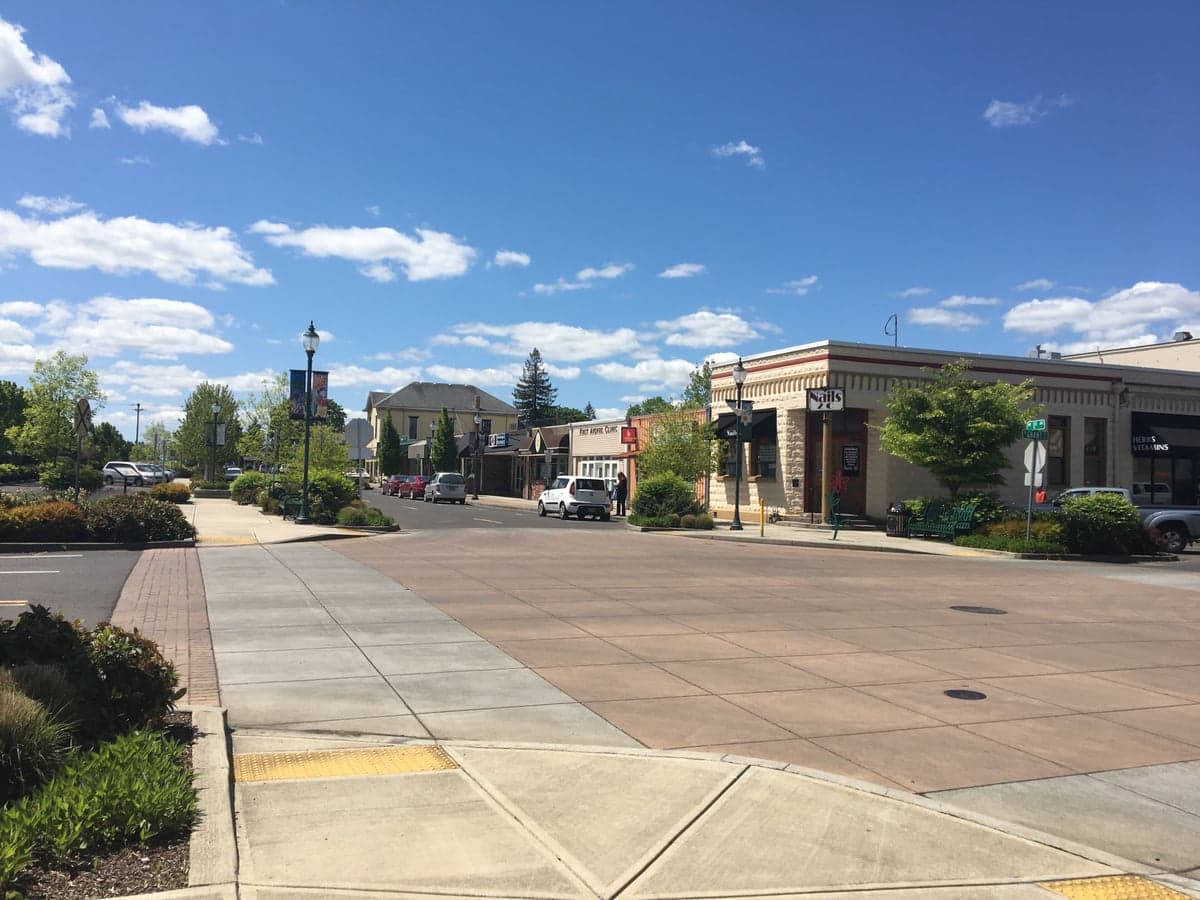
Photo: Wikipedia
Political ClimatePolitical Climate in Canby, OR
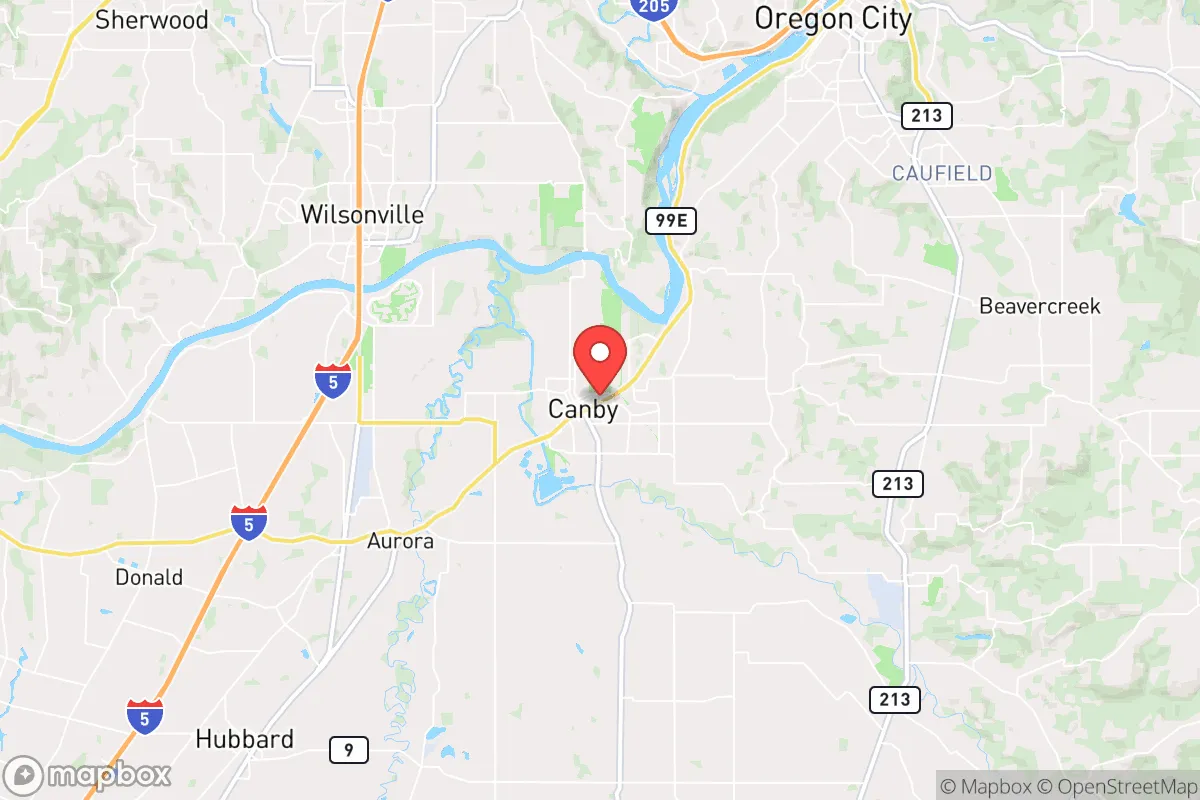
District shown is the primary district for this city’s centroid. Cities may span multiple districts.
Local Political AnalysisPolitical Analysis of Canby, OR
Canby, Oregon, has long been a quiet pocket of conservative common sense in a state that’s been drifting further left, and that’s still the case today—though the pressure is mounting. The city sits in Clackamas County, which has a Cook PVI of D+4, meaning it leans Democratic but is far more balanced than the state as a whole, which sits at D+8. In practical terms, that means Canby’s voters have historically been able to hold the line on things like property rights, Second Amendment freedoms, and local control, even as Portland and Salem push harder on progressive policies. But I’ve lived here long enough to see the shift: more folks moving in from the metro area, more pressure on our small-town way of life, and a creeping sense that the state government is less interested in what we want and more interested in telling us how to live.
How it compares
Compared to the rest of Oregon, Canby is a relative island of moderation—and that’s saying something. Drive 20 minutes north to Oregon City or 30 minutes to Lake Oswego, and you’ll find communities that have fully embraced the progressive agenda, with higher taxes, stricter land-use regulations, and a general acceptance of government overreach into personal freedoms. Head south to Woodburn or east to Estacada, and you’ll find towns that share Canby’s skepticism of Salem’s one-size-fits-all approach. The difference is stark: in Canby, you can still have a conversation about property rights without someone calling you a radical. The state’s D+8 rating means that statewide elections are almost always a foregone conclusion for the left, but locally, Canby’s voters have consistently rejected ballot measures that would expand government control—like the recent push to weaken Measure 110 or impose new gun restrictions. That’s not to say we’re immune; the 2022 redistricting carved Canby into a more competitive state House district, and we’ve seen closer races since. But for now, the city remains a place where a conservative can still feel heard, even if the way they used to be everywhere in Oregon.
What this means for residents
For the people who live here, this political climate means you have to be more vigilant than ever. The state government in Salem doesn’t care that Canby voted against the latest tax hike or the new land-use mandate—they’ll pass it anyway, and we’re left to deal with the consequences. It means your property taxes keep climbing, your ability to build a shop on your own land gets more restricted, and your kids’ schools are forced to adopt curriculum that doesn’t reflect your values. The silver lining is that Canby’s city council and school board have been slower to cave to the pressure than neighboring towns, but that’s only because enough of us show up to meetings and vote in local elections. If you’re thinking of moving here, “I’ll just mind my own business,” that’s exactly how we lose what we’ve got left.
The cultural and policy distinctions here are real, and they’re worth paying attention to. Canby still has a strong agricultural base, a robust 4-H and FFA presence, and a general distrust of Salem’s environmental regulations that treat farmers like polluters. You won’t find the same enthusiasm for bike lanes and density mandates that you see in Portland. The local paper still runs letters to the editor about property rights and school choice, not just climate activism. But the long-term trend is concerning: as more people flee the chaos of Portland and bring their politics with them, Canby’s conservative character is under threat. If you value personal freedom, local control, and a government that stays out of your life, this is still one of the better spots in Oregon—but don’t expect it to stay that way without a fight.

State Political ClimatePolitical Climate in Oregon
State Political AnalysisPolitical Environment in the State
Oregon has a Cook PVI of D+8, meaning it leans about eight points more Democratic than the national average, but that single number hides a deeply fractured political landscape. The state’s progressive tilt is almost entirely driven by the Portland metro area—Multnomah, Washington, and Clackamas counties—which together cast roughly half the state’s votes and have shifted hard left over the past two decades. Meanwhile, the rest of Oregon, from the Willamette Valley’s mid-sized towns to the vast rural counties east of the Cascades and along the coast, has moved just as aggressively in the opposite direction, creating one of the most pronounced urban-rural divides in the country. For a conservative considering relocation, the key question isn’t whether Oregon is red or blue—it’s which Oregon you’ll actually live in.
Urban vs. rural divide
The political map of Oregon is essentially two different states. The Portland tri-county area (Multnomah, Washington, Clackamas) is the engine of Democratic dominance, routinely delivering 70-75% of its vote to Democratic presidential candidates. Portland itself is a national epicenter of progressive activism, with city council races often decided by who can promise the most aggressive housing or policing reforms. Just 30 miles south, Salem and Eugene follow similar patterns, though with slightly less intensity. But drive 20 minutes outside any of these cities and the landscape flips. Bend, in Deschutes County, was reliably red as recently as 2016 but has become a competitive swing area as California transplants flood in—it voted for Biden in 2020 by a slim margin, though local races remain tight. Medford and Ashland in Jackson County show the same split: Ashland is a liberal college town, while Medford and the surrounding Rogue Valley lean conservative. Grants Pass, Roseburg, and Klamath Falls are solidly red, with Trump winning those counties by 20-30 points. The eastern third of the state—places like Pendleton, Baker City, and Ontario—is deep red, often voting 70%+ Republican, but those counties have so few people that their votes barely register statewide. The coastal counties (Tillamook, Lincoln, Coos) are mixed, trending slightly blue in tourist towns but red in timber and fishing communities.
Policy environment
Oregon’s state-level policy is a mixed bag that leans heavily progressive, but with some notable exceptions. There is no state sales tax, which is a genuine advantage for residents—property and income taxes are higher to compensate, but the lack of a sales tax means big-ticket purchases are cheaper. The income tax is steep: top marginal rate hits 9.9% on income over $125,000 for single filers, and the corporate activity tax (CAT) passed in 2019 adds a layer of cost for businesses. Property taxes are capped by Measure 5 Measure 50 (1997), which limits annual increases to 3%, so longtime homeowners pay far less than newcomers—a hidden cost for anyone buying in now. Education policy is dominated by the teachers’ unions; Oregon consistently ranks near the bottom nationally in graduation rates and test scores despite above-average per-pupil spending. Healthcare is heavily regulated under the Oregon Health Plan, a Medicaid expansion that covers about one in four residents, but private insurance costs are high. Election laws are among the most liberal: Oregon was the first state to vote entirely by mail (1998), and automatic voter registration at the DMV means turnout is high but so is the potential for registration errors. There is no voter ID law, which concerns many conservatives. Gun laws are restrictive: a 2023 law (Measure 114) requires a permit to purchase, bans magazines over 10 rounds, and mandates a background check for every sale, though it’s currently tied up in court. The state also has a “sanctuary” law (1987) that limits local police cooperation with federal immigration enforcement.
Trajectory & freedom
Oregon has become less free across-the-board free over the past decade, particularly in personal liberty areas that matter to conservatives. The 2023 gun control measure (Measure 114) is the most obvious example—it passed by a narrow 50.7% and is being challenged in court, but if upheld, it will effectively end the private sale of handguns and standard-capacity magazines. Parental rights have been eroded by the 2019 by the Student Success Act, which allows schools to withhold information about a child’s gender identity from parents if the school deems it necessary. In 2021, the state passed a law (HB 257 (HB 2573) that prohibits schools from notifying parents when a child requests a name or pronoun change—a direct blow to parental authority. Medical autonomy took a hit with the 2023 passage of a law requiring COVID-19 vaccine mandates for healthcare workers, though that has since been partially rolled back. On the property rights front, Oregon’s 1973 land-use laws (SB 100) remain the most restrictive in the nation, limiting where you can build and effectively capping housing supply—a major driver of the state’s housing crisis. The 2019 “cap-and-trade” bill (HB 2020) failed after a Republican walkout, but a weaker version (HB 2021) passed, mandating a 100% clean electricity grid by 2040, which will raise energy costs. The only bright spot for conservatives is that Oregon has no state-level income tax on Social Security benefits, and the 2023 tax rebate (the “kicker”) returned $5.6 billion to taxpayers—a rare pro-taxpayer moment.
Civil unrest & political movements
Oregon has a long history of political volatility, and recent years have been no exception. The 2020 Portland protests were among the longest and most destructive in the nation, with over 100 consecutive nights of demonstrations, arson, and clashes between protesters and federal agents. The city’s decision to defund the police by $15 million in 2020 led to a surge in homicides (a record 92 in 2022) and a subsequent partial reversal. The “Greater Idaho” movement has gained real traction in eastern Oregon—12 counties have voted to explore seceding from Oregon to join Idaho, citing cultural and political alienation. While unlikely to succeed, it reflects deep frustration. Immigration politics are a flashpoint: the sanctuary law means Portland and other cities refuse to hold detainees for ICE, and in 2023, the state passed a law (HB 2002) that prohibits local law enforcement from asking about immigration status. Election integrity remains a concern for conservatives: Oregon’s mail-only voting system has no voter ID requirement, and in 2022, a ballot harvesting scandal in Clackamas County (where a candidate collected and submitted ballots for others) led to a criminal conviction but no systemic reform. The 2023 legislative session saw a six-week Republican walkout over bills on abortion, transgender care, and gun control—the longest in state history—which forced Democrats to pass a ballot measure (Measure 113) that now disqualifies lawmakers with 10 or more unexcused absences from reelection, effectively ending the walkout as a tactic.
Projection
Over the next 5-10 years, Oregon will likely become more polarized, not less. The Portland metro area continues to grow, driven by tech and remote workers from California, which will deepen the Democratic majority statewide. But the rural exodus is real: eastern Oregon counties are losing population, while the Willamette Valley and Bend are gaining. The “Greater Idaho” movement will remain a symbolic protest but won’t succeed without a constitutional amendment. Housing costs will continue to rise due to land-use restrictions, pushing more middle-class families out of Portland and into suburbs like Beaverton, Hillsboro, and Tualatin Gresham, which are becoming more conservative as they grow. The state’s budget is structurally strained: the 2023-25 budget relies on $1.5 billion in one-time federal funds, and a recession would force painful cuts. Gun rights will likely be further restricted if Measure 114 survives court challenges fail, and parental rights will remain under pressure as the legislature considers bills to expand “gender-affirming care” access without parental consent. The 2026 gubernatorial race will be a bellwether—if a moderate Democrat wins, expect incrementalism; if a progressive wins, expect more aggressive policies on housing, energy, and education. For a conservative moving in now, the realistic expectation is that state-level politics will continue to drift left, but local control in rural and suburban counties offers some buffer.
Bottom line for a new resident: If you’re a conservative moving to Oregon, choose your location carefully. The state government in Salem will likely be hostile to your values on guns, parental rights, and taxes, but counties>counties like Deschutes (Bend), Jackson (Medford), and Douglas (Roseburg) offer strong conservative communities and local governments that push back. You’ll pay high income taxes but no sales tax, and property taxes are predictable. The housing market is tight and expensive in desirable areas, but rural land is still affordable. The political climate is tense and likely to get more so, but more so, but Oregon’s natural beauty and outdoor lifestyle remain unmatched. Just know that you’ll be living in a state where your vote for president or governor will almost certainly be in the minority, and your voice will matter most at the county and city level. If that trade-off works for you, Oregon can still be a great place to live—just don’t expect the state to change its stripes anytime soon.
* Values derived from national, state, county, city and local statistics and may differ in a specific area. Last updated: 2026-05-19T08:57:48.000Z
Narrative content on this page is AI-generated and may contain mistakes. Verify any details that matter before acting on them.
ReloMaps may earn a commission from affiliate links at no extra cost to you.

