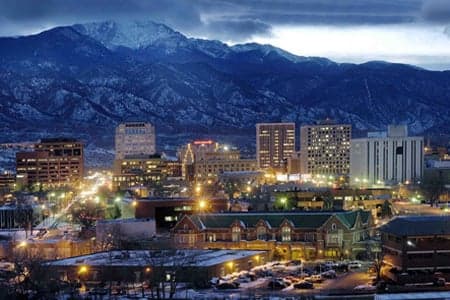
Photo: Wikipedia
Quality of Life in Colorado Springs, CO
Above-average quality of iife. The area offers a reasonable cost of living, decent mobility, and a mix of neighborhood amenities.
What does Quality of Life tell us?
Quality of Life blends cost of living, nearby amenities, socioeconomic signals, and neighborhood character. City-level scores represent the whole municipality; individual neighborhoods can differ.
What does this tell us?
Quality of Life blends cost of living, nearby amenities, socioeconomic signals, and neighborhood character. City-level scores represent the whole municipality; individual neighborhoods can differ.
Cost of Living
40% above national average
The Real Cost of Living in Colorado Springs, CO for 2026
| Tier | Individual | Family (4) |
|---|---|---|
| Survival | $25k | $47k |
| Comfortable | $82k | $120k |
| Luxury | $141k+ | $219k+ |
| Elite (Top 5%) | $166k+ | $258k+ |
69%
The Area Signal
A metric tracking the socioeconomic signals of the area.
Hobbies
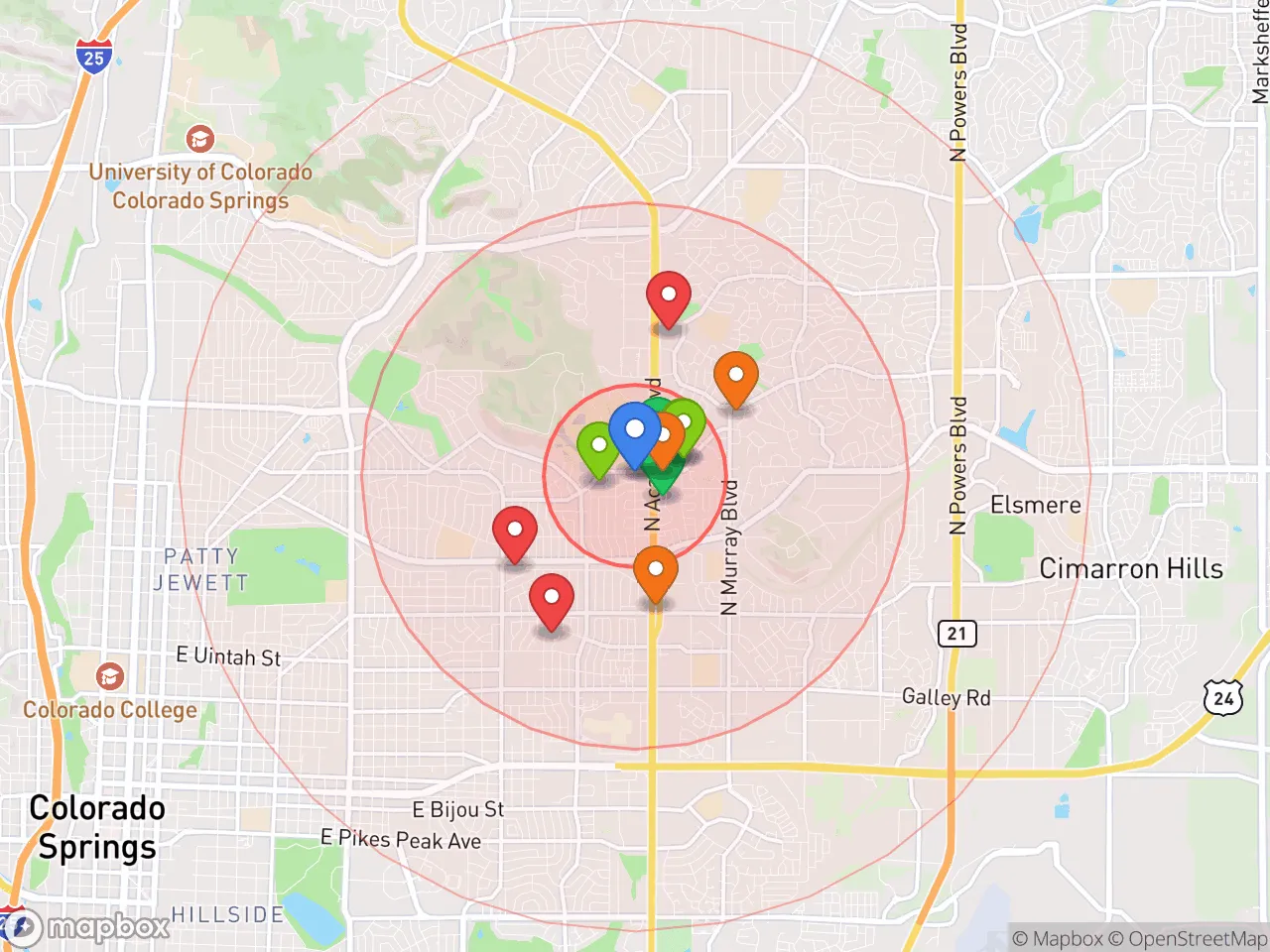
Explore the areaGroceries
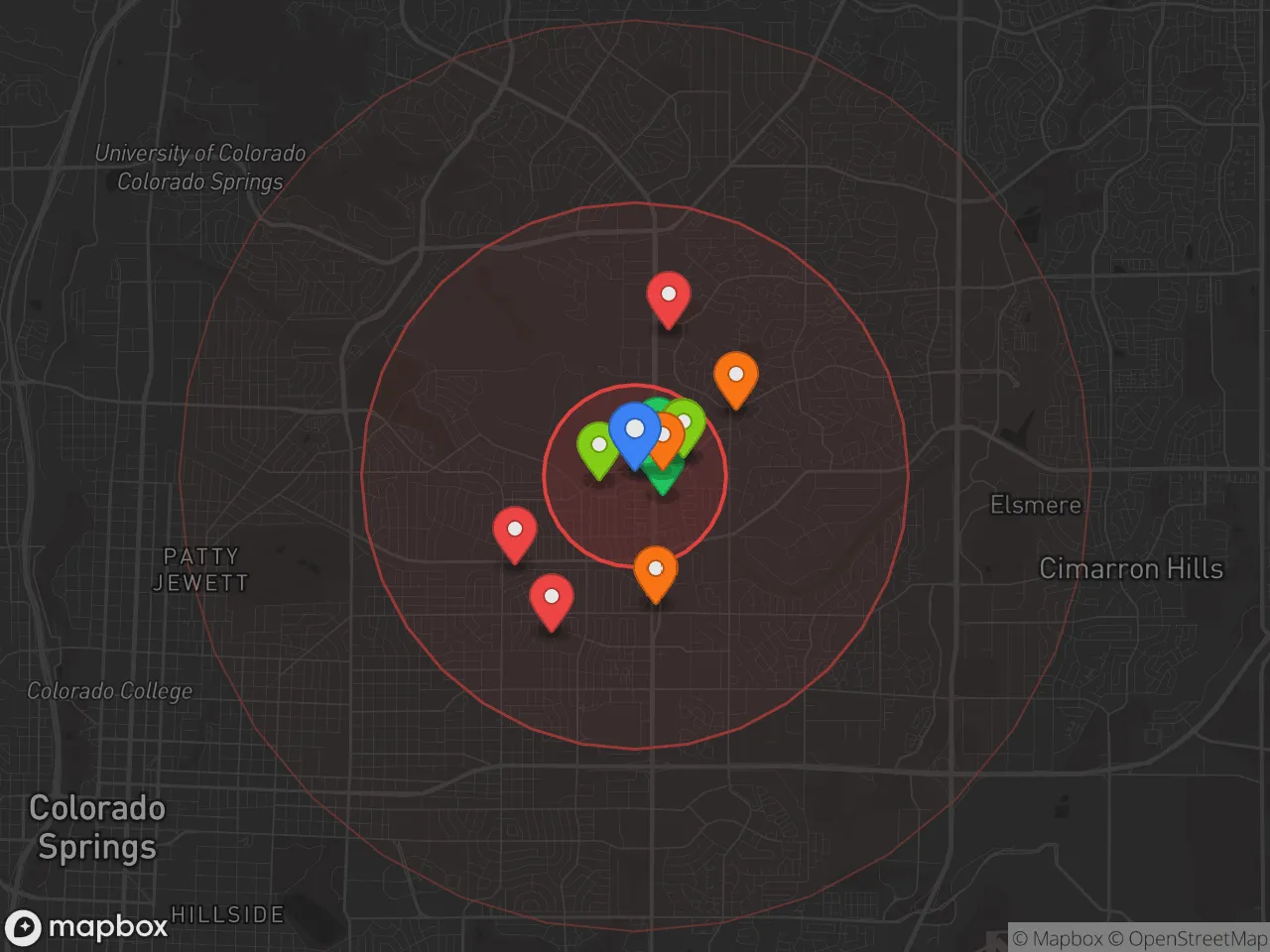
6 within 10 miles
Gas
20 within 10 miles
Hospital
13 within 20 miles
Airport
DEN — Denver International
Post Office
USPS — Colorado Springs, CO
Critical Amenities
Quality-of-Life Analysis
Colorado Springs presents a quality-of-life profile that blends above-average affluence with a distinctly active, outdoors-oriented culture. The city's cost of living index of 140 (100 = U.S. average) signals a premium compared to the national baseline, yet it remains notably more affordable than Denver, attracting a demographic mix of military families, tech professionals, and outdoor enthusiasts who prioritize mountain access over urban density. The median household income hovers around $80,000, supporting a population that values both career opportunity and recreational lifestyle.
Cost of living, housing, and affordability compared to Denver and the Front Range
Housing is the primary driver of Colorado Springs' elevated cost of living. The median home value sits at $420,700, which is roughly $200,000 less than the Denver metro median, making the Springs a popular alternative for buyers priced out of the capital. Median rent of $1,562 is similarly lower than Denver's average of around $1,800, though it has risen 15% since 2020. For context, a household earning the area median income can afford the typical mortgage without being cost-burdened, but entry-level workers and service employees often struggle, as the city lacks sufficient housing under $300,000. Utilities and groceries are slightly above national averages, while transportation costs are moderated by the relatively short average commute of 22.8 minutes — significantly less than Denver's 30-minute average. Property taxes remain low by national standards (roughly 0.5% of assessed value), which partially offsets the higher home prices for long-term owners.
What daily life is like for families: schools, amenities, and outdoor access
Daily life in Colorado Springs revolves around its extraordinary natural setting and a slower pace than Denver. The city is home to Academy School District 20 and Cheyenne Mountain School District 12, both consistently ranked among Colorado's top public school systems, with D20's Pine Creek High School posting a 94% graduation rate. Amenities are anchored by the U.S. Olympic & Paralympic Museum, the Garden of the Gods park, and the 13,000-acre Pike National Forest immediately west. The city's 300+ days of sunshine enable year-round hiking, cycling, and rock climbing, with popular trails like the Manitou Incline and Barr Trail drawing residents daily. The downtown core along Tejon Street offers a compact mix of breweries, farm-to-table restaurants, and the Colorado Springs Fine Arts Center. Commute patterns are notably relaxed: the average drive time of 22.8 minutes means most residents can reach work, school, or recreation within a quarter-hour, reducing the time-crunch common in larger metros. However, public transit via Mountain Metro is limited, and car dependency is near-universal.
Colorado Springs is best suited for individuals and families who value outdoor recreation, career stability in defense or tech, and a lower-stress alternative to Denver. Military personnel and veterans find strong community support through Fort Carson and Peterson Space Force Base, while remote workers and entrepreneurs are drawn to the lower housing costs and reliable internet infrastructure. Those seeking a vibrant nightlife or extensive cultural institutions may find the city subdued, but for residents who prioritize mountain access, good schools, and a manageable commute, the Springs delivers a balanced, high-quality lifestyle at a relative discount to the Front Range's pricier hubs.

Crime in Colorado Springs, CO
Higher crime rates than 69% of comparable U.S. locations.
Violent CrimeViolent Crime Analysis
Property CrimeProperty Crime Analysis
Crime Analysis
Colorado Springs reports a violent crime rate of 679.1 per 100,000 residents and a property crime rate of 3,019.8 per 100,000, placing it above national averages for both categories. While the city benefits from a strong military and conservative political presence, its justice system has increasingly reflected progressive policies that prioritize offender rehabilitation over public safety, a trend that directly correlates with higher recidivism and more victims. Prospective residents should weigh these crime statistics against the city's otherwise strong economy and quality of life.
Crime in context
Colorado Springs' violent crime rate is roughly 85% higher than the national average of approximately 367 per 100,000, while its property crime rate exceeds the national figure by about 60%. Compared to the state of Colorado, which has a violent crime rate near 480 per 100,000, the Springs is significantly more dangerous. The city's property crime rate also outpaces the Colorado average of roughly 2,500 per 100,000. These elevated numbers are not simply a function of population growth; they reflect systemic issues within the local criminal justice system, including the election of district attorneys who have implemented progressive prosecution policies such as reduced bail, deferred sentencing for repeat offenders, and a reluctance to charge certain property crimes as felonies. This approach, while well-intentioned, has resulted in more criminals remaining on the streets and a corresponding increase in victimization, particularly for property owners and small businesses.
What residents experience
For daily life, the most tangible impact is property crime. Vehicle break-ins, package theft, and home burglaries are common complaints, especially in areas near major corridors like I-25 and Academy Boulevard. Residents report that police response times for non-violent property crimes have lengthened as resources are diverted to more serious incidents. Violent crime, while less frequent, is concentrated in specific neighborhoods and often involves domestic disputes or gang-related activity. The progressive judicial philosophy in El Paso County has led to shorter sentences for repeat offenders, meaning individuals with multiple prior arrests for theft or assault are frequently back on the street within months. This cycle erodes public trust and forces residents to invest in private security measures—alarms, cameras, and neighborhood watch programs—as a routine part of homeownership.
Neighborhood-level variation is significant. Areas like the Broadmoor, Rockrimmon, and northern Colorado Springs near the Air Force Academy report crime rates well below the city average, often comparable to safer suburbs. In contrast, the central corridor along Platte Avenue and the southeast side near Fountain experience the highest concentrations of both violent and property crime. Residents in these higher-crime zones face a daily reality of increased risk, with property crime rates that can exceed 5,000 per 100,000. For families and retirees, choosing a neighborhood with a strong homeowners' association and active community policing is not optional—it is essential for safety.
* Values derived from national, state, county, city and local statistics and may differ in a specific area. Last updated: 2026-04-21T10:26:08.000Z
Narrative content on this page is AI-generated and may contain mistakes. Verify any details that matter before acting on them.
ReloMaps may earn a commission from affiliate links at no extra cost to you.

