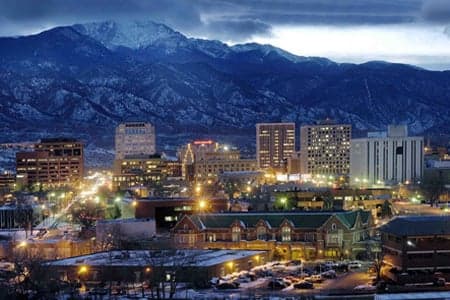
Photo: Wikipedia
Personal Sovereignty in Colorado Springs, CO
Viable for self-reliance. Generally workable, though some barriers may limit total independence.
What does Personal Sovereignty tell us?
Personal Sovereignty measures your capacity for self-reliance and independence with minimal government friction. Higher scores mean fewer barriers between you and the way you want to live... but it assumes you have the space you need and good neighbors.
What does this tell us?
Personal Sovereignty measures your capacity for self-reliance and independence with minimal government friction. Higher scores mean fewer barriers between you and the way you want to live... but it assumes you have the space you need and good neighbors.
State Policy
Energy independence: Net exporter (110% of energy produced in-state)
Personal Liberty
Homesteading

Personal Liberty Analysis
Colorado Springs offers a notably higher degree of personal sovereignty than most of the Front Range, but it operates within a state government that has become increasingly assertive on taxation, regulation, and social policy. For the survivalist-minded individual or family, the city itself provides a strong local culture of self-reliance, gun rights, and property freedom, yet you must navigate a state-level landscape that is trending toward higher taxes, stricter environmental mandates, and a more interventionist approach to parental and medical autonomy. The net result is a mixed sovereignty environment: excellent for those who can leverage local conservative governance and a prepper-friendly community, but requiring constant vigilance against state-level overreach.
Tax burden and regulatory posture: what you actually keep and control
Colorado's state income tax is a flat 4.4% as of 2025, which is moderate nationally but higher than zero-income-tax states like Texas or Florida. Property taxes in El Paso County are relatively low, with a residential assessment rate of 6.7% and a mill levy that typically lands around 0.5% to 0.7% of actual value — meaning a $500,000 home might carry an annual tax bill of roughly $2,500 to $3,500. That is significantly lower than Denver or Boulder. Sales tax in Colorado Springs is 8.2% (state + city + county), which is noticeable but not crushing. The bigger sovereignty concern is regulatory creep: the state has aggressively pursued electric vehicle mandates, building energy codes that push toward all-electric construction, and water-use restrictions that limit rainwater harvesting (though a 2016 law now allows limited collection). For the prepper, this means you can own land and build a home, but you will face state-level hurdles if you want to go fully off-grid with solar panels, battery storage, or a well — permits and utility interconnection rules are real obstacles. The city itself is business-friendly relative to the rest of Colorado, but the state's regulatory posture is unmistakably trending toward more control, not less.
Self-defense and gun law specifics: what you can carry and where
Colorado Springs is arguably the strongest gun-rights city in a state that has become a battleground on the issue. Colorado law requires a background check for all firearm sales (including private transfers) and has a 10-round magazine limit for rifles and handguns — both passed after the 2012 Aurora theater shooting. However, Colorado Springs is a "Second Amendment Sanctuary" city, with the El Paso County Sheriff's Office publicly stating it will not enforce state-level magazine bans or red-flag laws that it deems unconstitutional. In practice, this means you can openly carry a handgun without a permit (state law allows open carry for anyone 18+ not otherwise prohibited), and concealed carry requires a permit that is issued on a shall-issue basis with a 90-day processing time. The permit is recognized in 30+ states. Stand-your-ground laws apply in Colorado, and there is no duty to retreat in any place you have a legal right to be. For the survivalist, the key takeaway is that while state law has become more restrictive, local enforcement in Colorado Springs is lax to hostile toward those restrictions. You can own AR-15s, suppressors (with federal tax stamp), and standard-capacity magazines purchased before the ban, and the local culture strongly supports defensive firearm ownership. The biggest risk is a future state-level push for universal registration or a ban on certain firearms — something that is politically plausible as Denver's influence grows.
Self-reliance and homesteading viability: lot sizes, zoning, and off-grid feasibility
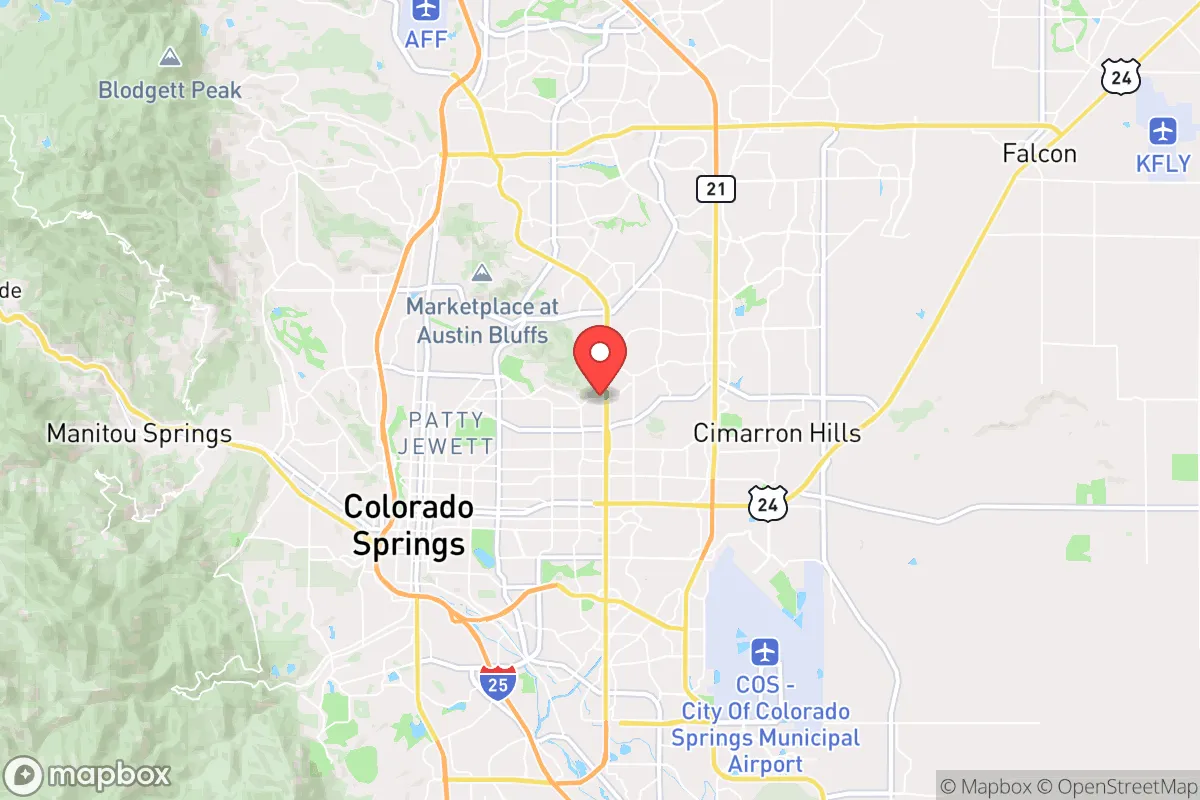
For those looking to live with a degree of self-sufficiency, Colorado Springs offers a range of options, but the city itself is not a homesteading paradise. Within city limits, standard residential lots are 6,000 to 10,000 square feet, and zoning codes restrict livestock (chickens are allowed in most zones with a permit, but goats and larger animals are generally prohibited). The real opportunity lies in the unincorporated areas of El Paso County, particularly to the north and east — places like Black Forest, Peyton, and Falcon. There, you can find 1-to-5-acre parcels with agricultural zoning that allows horses, goats, chickens, and even small-scale farming. Off-grid feasibility is limited by Colorado's water rights system: you cannot simply drill a well without a permit, and the state strictly regulates rainwater collection (you can collect up to 110 gallons per property per year, but only from a rooftop, and only if you have a well or are on a municipal water system). Solar panels are legal and common, but net metering rules have become less favorable — Xcel Energy, the dominant utility, has reduced the credit for excess power. For the serious prepper, the best strategy is to buy land in El Paso County's rural areas, drill a permitted well (costing $15,000–$30,000), install a septic system, and use solar with battery storage. You will not achieve full off-grid independence without significant investment and state compliance, but the county's zoning is far more permissive than anything on the Front Range north of Denver.
Personal liberties: parental rights, medical autonomy, speech, and property
Colorado Springs is a stronghold for parental rights in a state that has moved aggressively in the opposite direction. Colorado law mandates that schools cannot withhold information about a student's gender identity or sexual orientation from parents — a direct contrast to states like California. However, the state has also passed laws that allow minors to consent to certain medical treatments (including mental health care and substance abuse treatment) without parental notification, which is a concern for conservative parents. Medical autonomy is a mixed bag: Colorado has legalized recreational marijuana (which some preppers view as a personal liberty issue), but it has also imposed strict vaccine mandates for school attendance and healthcare workers. The state's public health powers were expanded significantly during the COVID-19 pandemic, and those powers remain on the books — a red flag for anyone concerned about future lockdowns or mandates. Free speech is protected under the First Amendment, and Colorado Springs has a robust culture of political activism, including large conservative rallies and church-based political organizing. Property rights are generally strong, but the state's "just compensation" laws for regulatory takings are weaker than in Texas or Florida — meaning a future zoning change or environmental regulation could reduce your property's value without compensation. For the survivalist, the most concerning trend is the state's willingness to use health and safety powers to override individual choice, which makes Colorado Springs a place where you must be politically active to preserve your liberties.
Overall, Colorado Springs offers a level of personal sovereignty that is rare in the blue-trending West, but it is not a libertarian paradise. The city and county provide a strong local buffer against state overreach on guns, property use, and parental rights, but you will still pay moderate taxes, navigate state-level water and energy regulations, and face the risk of future mandates from Denver. Compared to areas like rural Idaho or Montana, Colorado Springs is more constrained; compared to Denver, Portland, or Seattle, it is a fortress of individual freedom. For the strategic relocator who values self-defense, self-reliance, and local control, this is one of the best urban options in the Rocky Mountain region — but you must buy land in the county, stay politically engaged, and accept that full sovereignty requires constant defense.

* Values derived from national, state, county, city and local statistics and may differ in a specific area. Last updated: 2026-04-21T10:26:08.000Z
Narrative content on this page is AI-generated and may contain mistakes. Verify any details that matter before acting on them.
ReloMaps may earn a commission from affiliate links at no extra cost to you.

