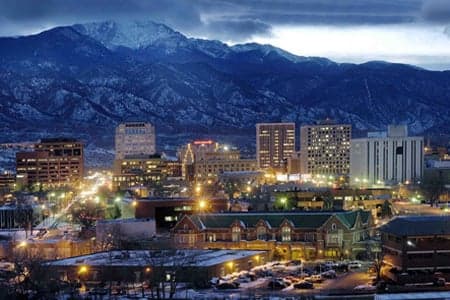
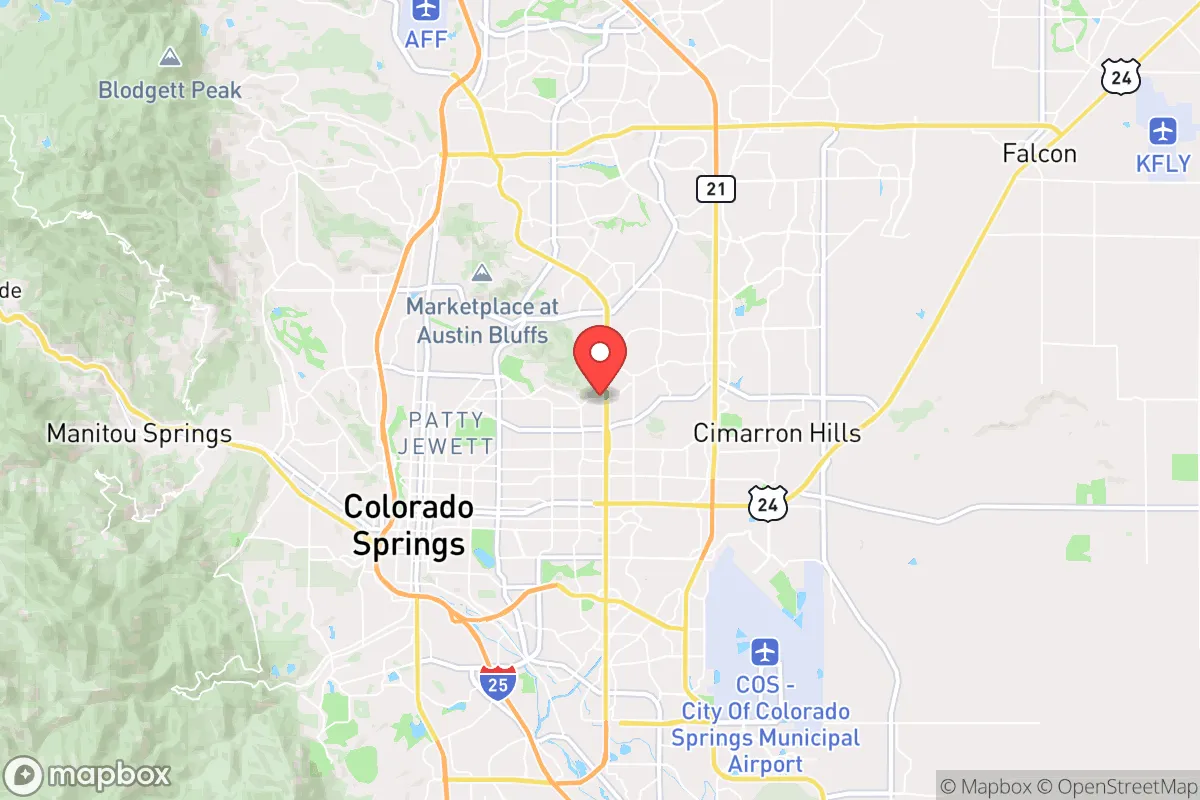
Photo: Wikipedia
Strategic Assessment of Colorado Springs, CO
Multiple tactical vulnerabilities. Population density, target proximity, or disaster risk are likely compounding. A retreat property and exit planning is required.
What does the Strategic Assessment tell us?
Our Strategic Assessment grades tactical survivability of an area. Major population centers, military targets, fallout zones, natural disasters, and border exposure all drive risk — lower exposure means a more defensible position in a crisis.
This is heavily inspired by Joel Skousen's Strategic Relocation book. Highly recommended you checkout the book ($)What does this tell us?
Our Strategic Assessment grades tactical survivability of an area. Major population centers, military targets, fallout zones, natural disasters, and border exposure all drive risk — lower exposure means a more defensible position in a crisis.
This is heavily inspired by Joel Skousen's Strategic Relocation book. Highly recommended you checkout the book ($)Strategic Pillars

Key Distances
Regional Safe Places
Below is our recommended "safe zones" in Colorado and the surrounding area based on our strategic heuristics. For most people, it's unrealistic to live in a “safe zone” full-time due to work, family or other personal reasons. They tend to be more rural. However, many of these areas are perfect for second homes and retreat properties that double as a vacation home or even a short-term rental.
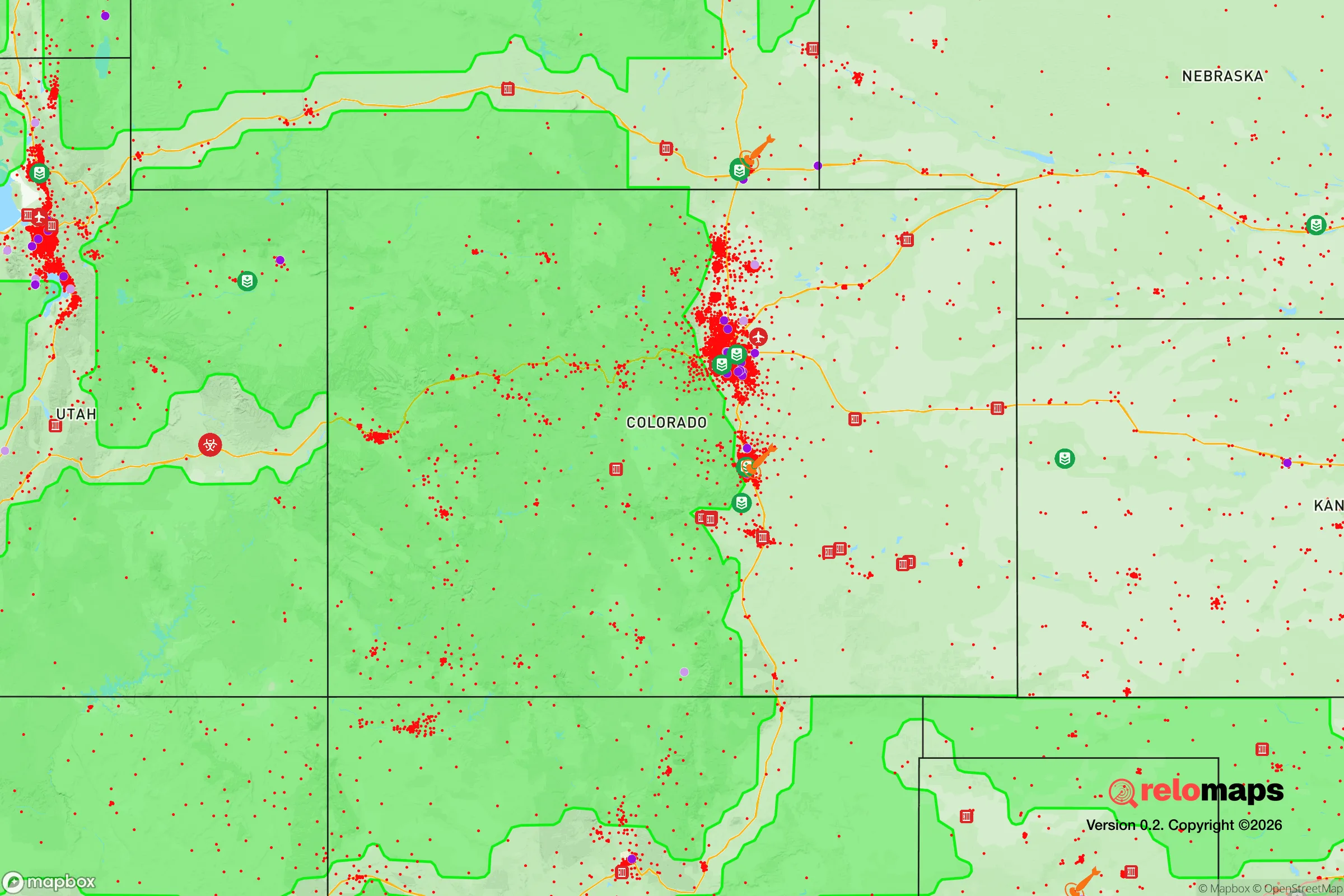
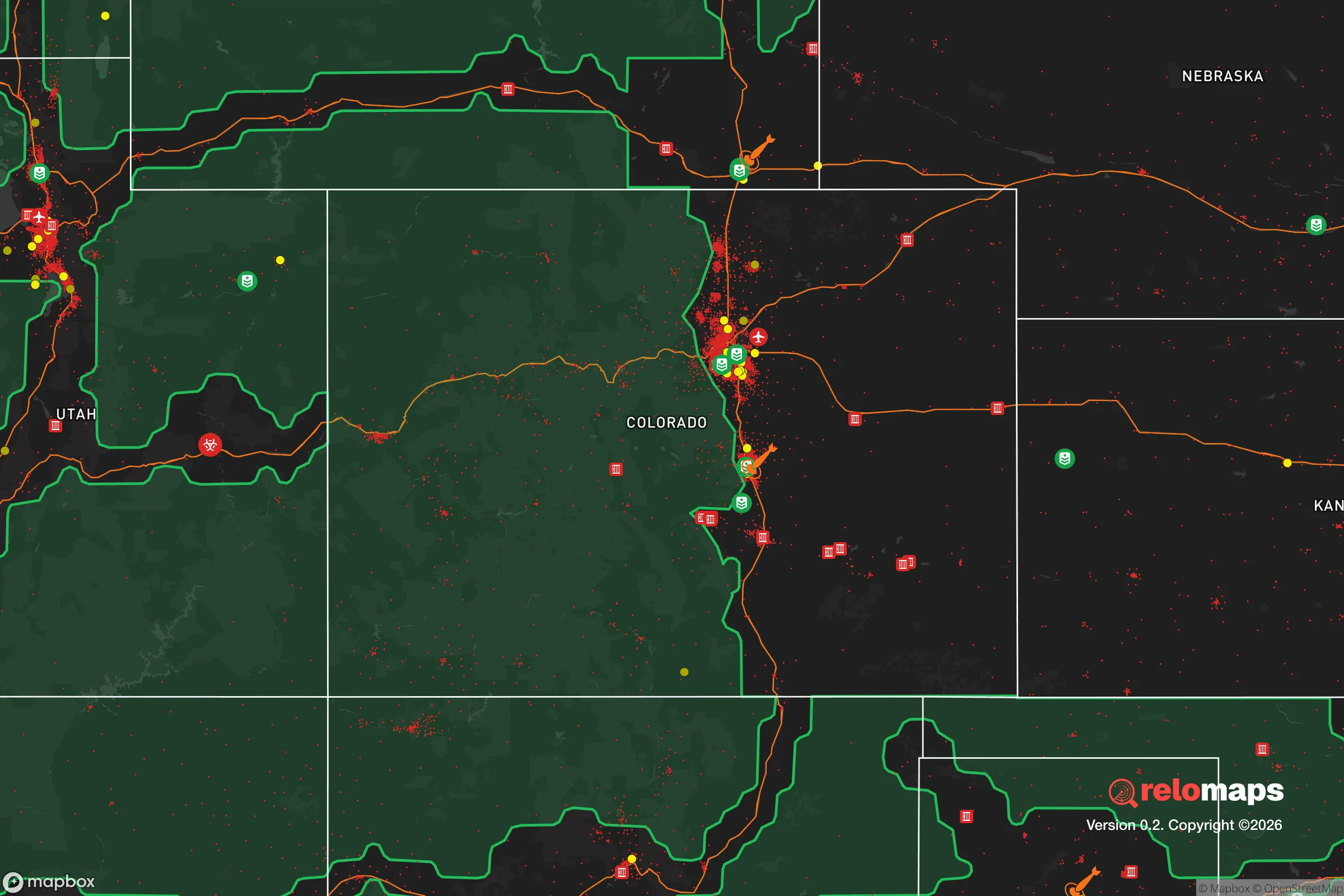


Important Note: For informational purposes only. This does not mean nothing bad ever happens in the green zones. Please use common sense. This is based on public data and modeled with AI. We tried to take a conservative approach but mistakes happen. We update this regularly as new information becomes available.
Solar Generator Recommendations
Backup power matters more here than in safer locations. We've picked three solar generators across budgets and capacity tiers — start with the budget unit if you only need a few essentials, or step up if you want to run a fridge and HVAC for days at a time.

Jackery Portable Power Station Explorer 300
Budget OptionPower on the Go: Weighing only 11 lbs, it's convenient to set up and store with book-sized foldable solar panels

BLUETTI Portable Power Station AC180
Designed for both indoor and outdoor scenarios, AC180 is highly capable as it has a robost capacity and continuous output power.

EF ECOFLOW DELTA Pro Ultra Power Station
Upgraded PickEcoFlow DELTA Pro Ultra is a whole-home energy system designed to grow with your family. Integrated with the Smart Home Panel 2, it scales to meet your evolving energy needs — keeping your home powered, intelligent, and secure through every stage of life.
We earn a commission, at no additional cost to you.
Strategic Assessment Analysis
Colorado Springs offers a compelling mix of strategic depth and practical resilience for those prioritizing long-term security and self-sufficiency. Positioned at the eastern edge of the Rocky Mountains, the city sits roughly 70 miles south of Denver, placing it close enough to access major infrastructure but far enough to avoid the worst fallout of a major urban collapse. The region’s high altitude (over 6,000 feet), dry climate, and natural barriers—including Pikes Peak and the Front Range—create a defensible pocket that has historically attracted military installations, defense contractors, and a population with a higher-than-average inclination toward preparedness. For a relocator thinking in terms of decades, not just years, Colorado Springs presents a rare combination of geographic isolation, institutional stability, and community mindset that aligns with a conservative, self-reliant worldview.
Geographic position and natural advantages for long-term security
The Springs sits in a natural bowl formed by the Front Range to the west and the high plains to the east, giving it a degree of topographic shielding that flatland cities lack. The city’s elevation—roughly 6,035 feet at the downtown core—means cooler summers, less humidity, and fewer vector-borne diseases than lower-elevation alternatives. The nearby Pike National Forest and San Isabel National Forest provide vast, sparsely populated buffer zones to the west, while the eastern plains stretch hundreds of miles with minimal population density. This geography makes ingress and egress relatively easy to control: major routes like I-25 (north-south) and US-24 (east-west) are choke points that could be monitored or blocked if needed. The presence of Fort Carson, Peterson Space Force Base, and Schriever Space Force Base means the area has a dense concentration of active-duty and retired military personnel—a population that tends to be armed, trained, and community-oriented. For a prepper, this isn’t just a comfort; it’s a force multiplier in a crisis scenario where mutual aid networks matter more than government response.
Risks, exposures, and proximity to fallout-relevant landmarks
No location is without vulnerabilities, and Colorado Springs has several that a strategic relocator must weigh. The most obvious is its proximity to Denver—a major metropolitan area of nearly 3 million people. In a scenario involving civil unrest, grid collapse, or a pandemic, Denver could become a source of refugee flow south along I-25. The Springs sits directly in that path, meaning a relocator needs a plan for filtering or deterring unwanted movement. Additionally, the city is within 100 miles of the Rocky Flats National Wildlife Refuge (a former nuclear weapons plant) and roughly 150 miles from the Cheyenne Mountain Complex—a hardened NORAD facility that, while a potential target, is also a stabilizing presence. The area’s dry climate and pine forests create a significant wildfire risk; the 2012 Waldo Canyon Fire and 2013 Black Forest Fire destroyed hundreds of homes and demonstrated that even suburban neighborhoods are not immune. Water is another concern: the region relies on snowmelt from the mountains, and prolonged drought or upstream contamination could stress supplies. The city’s water system is managed by Colorado Springs Utilities, a municipal entity, but a relocator should plan for independent water storage and filtration regardless.
Practical resilience for a relocator: food, water, energy, and defensibility
For someone serious about self-sufficiency, Colorado Springs offers a workable baseline but requires deliberate upgrades. The growing season is short—roughly 120 days between frosts—and the alkaline soil and low humidity make traditional gardening challenging without amendments, hoop houses, or hydroponic setups. That said, the region has a strong network of local farms, farmers’ markets, and a growing homesteading community, particularly in the surrounding unincorporated areas like Falcon, Peyton, and Black Forest. Water rights are a serious legal matter in Colorado; a relocator should research whether a property has a well permit or is on municipal water, and understand that rainwater collection is legal but regulated. Energy is relatively stable: Colorado Springs Utilities provides electricity from a mix of coal, natural gas, and renewables, but grid failures during winter storms (like the 2021 Texas-style freeze that hit the Front Range) are a real risk. Solar panels with battery backup are a wise investment, and the area’s 300+ days of sunshine per year make that feasible. Defensibility varies by neighborhood: the west side (Old Colorado City, Manitou Springs) offers rugged terrain but narrow roads and limited egress; the north end (Briargate, Interquest) is newer and more suburban but closer to the Air Force Academy and major hospitals; the east side (Falcon, unincorporated El Paso County) provides larger lots, lower density, and better options for off-grid living. For a relocator prioritizing security, the eastern plains or the foothills west of town are the strongest bets, provided wildfire mitigation is addressed.
The overall strategic picture for Colorado Springs is one of high potential with manageable trade-offs. It is not a bug-out location in the remote wilderness sense—it is a mid-sized city with a strong military and conservative culture, decent infrastructure, and a population that is, on average, more prepared and less dependent on government than in many other parts of the country. The risks—wildfire, drought, proximity to Denver—are real but can be mitigated with property selection, water storage, and community building. For a relocator who values institutional stability (the military bases aren’t going anywhere) and wants a base of operations that can function both in normal times and in crisis, Colorado Springs deserves serious consideration. It is not a perfect fortress, but it is one of the few places in the continental U.S. where geography, culture, and infrastructure align in a way that makes long-term resilience genuinely achievable for a prepared individual or family.

* Values derived from national, state, county, city and local statistics and may differ in a specific area. Last updated: 2026-04-21T10:26:08.000Z
Narrative content on this page is AI-generated and may contain mistakes. Verify any details that matter before acting on them.
ReloMaps may earn a commission from affiliate links at no extra cost to you.

