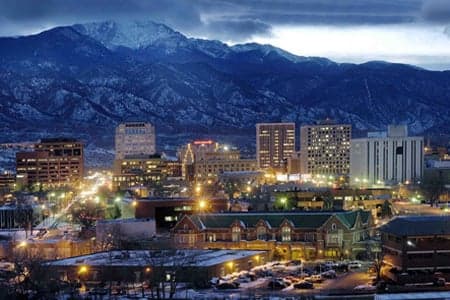
Photo: Wikipedia
Political ClimatePolitical Climate in Colorado Springs, CO
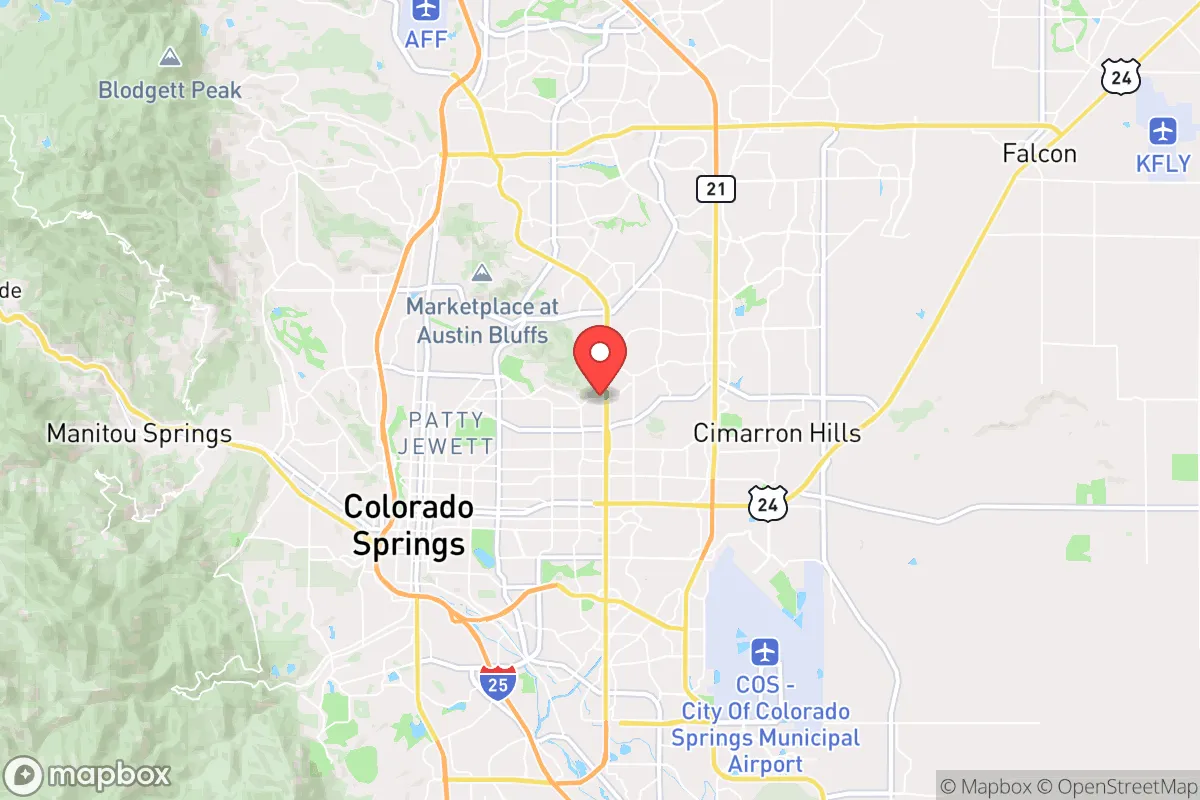
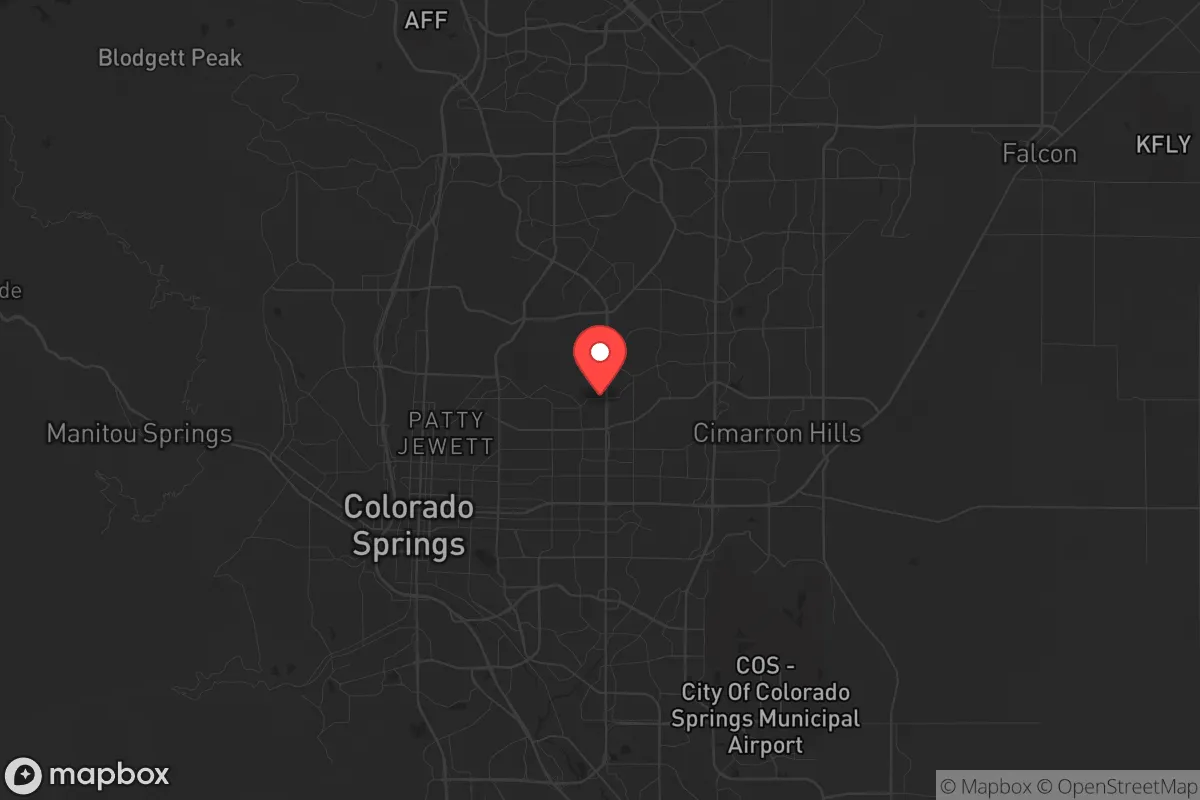
District shown is the primary district for this city’s centroid. Cities may span multiple districts.
Local Political AnalysisPolitical Analysis of Colorado Springs, CO
Colorado Springs has long been a conservative stronghold in Colorado, with a Cook PVI of R+5 that reflects its reliably Republican voting patterns. For decades, this area was a place where folks could count on local leaders to prioritize personal freedoms, limited government, and a hands-off approach to daily life. But if you’ve been here as long as I have, you’ve noticed the political winds shifting—not enough to flip the city blue, but enough to make you pay attention. The trajectory is toward a slow, steady drift leftward, especially in the city core, while the surrounding El Paso County remains a bulwark of traditional values.
How it compares
Compared to the rest of Colorado, Colorado Springs stands out as a red island in a sea of blue. Drive an hour north to Denver or Boulder, and you’re in a completely different world—one where progressive policies on taxes, zoning, and public safety have taken hold. Even nearby towns like Manitou Springs, just a few miles west, lean heavily left, with a vibe that feels more like a college town than a conservative foothold. In contrast, communities like Monument and Falcon, just north and east of the Springs, are even more conservative, often voting +15 to +20 points more Republican. The Springs itself is a mixed bag: the military bases (Fort Carson, Peterson, Schriever) and the Air Force Academy keep a strong libertarian-leaning conservative presence, but the influx of out-of-state transplants—many from California and the Northeast—has started to nudge local elections toward more moderate or even progressive candidates. It’s not a revolution, but it’s a slow erosion of the principles that made this area a refuge for those who value personal responsibility over government mandates.
What this means for residents
For those of us who moved here to escape the overreach we saw in other states, the changes are subtle but real. Property taxes remain relatively low compared to the Front Range, but city council debates over zoning reform and “affordable housing” mandates hint at a future where government tells you what you can do with your own land. The school board elections have become battlegrounds, with progressive groups pushing for curriculum changes that prioritize ideology over academics. And while the county sheriff still refuses to enforce certain state gun laws—a win for Second Amendment supporters—there’s growing pressure from state-level Democrats to strip local control. If you’re a longtime resident, you’ve seen the city’s character shift from “live and let live” to a place where every new ordinance feels like another inch of freedom lost. The near-term outlook is more of the same: a slow creep toward progressive policies, especially if the city continues to grow with newcomers who don’t share the local values. Long-term, the risk is that Colorado Springs becomes another Boulder—a place where the government knows what’s best for you.
Culturally, the Springs still holds onto its distinct identity as a hub for military families, evangelical Christians, and outdoor enthusiasts who value independence. You’ll find more “Don’t Tread on Me” flags than rainbow banners in most neighborhoods, and the local gun culture is alive and well. But the policy distinctions are where the rubber meets the road: the city has resisted light-rail expansion (a win for those who see it as a tax grab), but it has also adopted plastic bag bans and energy efficiency mandates that feel out of step with its conservative roots. The biggest red flag is the growing influence of state-level mandates from Denver—things like electric vehicle quotas and rent control proposals that bypass local votes. If you’re considering a move here, know that the Springs is still a better bet than most of Colorado for those who value freedom, but keep an eye on the city council races. The fight to keep this place from turning into another progressive experiment is far from over.

State Political ClimatePolitical Climate in Colorado
State Political AnalysisPolitical Environment in the State
Colorado has shifted from a classic purple swing state to a solidly blue-leaning state over the past two decades, with Democrats now controlling the governorship, both chambers of the legislature, and all statewide offices. The state voted for Hillary Clinton by 5 points in 2016, Joe Biden by 13 points in 2020, and Kamala Harris by roughly 11 points in 2024, reflecting a durable leftward tilt driven almost entirely by explosive growth in the Denver-Boulder-Aurora metroplex. For a conservative considering relocation, the state’s political trajectory is a cautionary tale of how rapid in-migration can transform a once-balanced state into a one-party progressive laboratory.
Urban vs. rural divide
The political map of Colorado is a stark study in geographic polarization. The Denver metro area, including Denver County (Biden +74 in 2020), Boulder County (Biden +72), and Jefferson County (Biden +18), produces roughly 60% of the state’s votes and is the engine of Democratic dominance. The I-25 corridor from Fort Collins (Larimer County, Biden +14) down through Colorado Springs (El Paso County, Trump +14) is a mixed bag: Colorado Springs remains a conservative stronghold thanks to the military and evangelical presence, but it’s increasingly surrounded by blue-leaning suburbs. The Western Slope, including Mesa County (Grand Junction, Trump +20) and Montrose County (Trump +38), and the Eastern Plains, like Weld County (Greeley, Trump +18) and Elbert County (Trump +42), are deeply red but lack the population to counterbalance the Front Range. The 2022 gubernatorial race saw Republican Heidi Ganahl lose by 20 points statewide, winning only 19 of 64 counties — all rural. The divide isn’t just urban vs. rural; it’s the Front Range urban core vs. everything else, and the core keeps growing.
Policy environment
Colorado’s policy environment has become aggressively progressive under unified Democratic control. The state income tax rate was cut from 4.63% to 4.55% in 2020 via Proposition 116, but that’s cold comfort given the broader regulatory creep. The Taxpayer’s Bill of Rights (TABOR) still limits revenue growth and requires voter approval for tax increases, but Democrats have found workarounds, like the 2022 fee-for-service bill that raised vehicle registration fees by $50-100 annually without a vote. On education, Colorado adopted the READ Act and expanded full-day kindergarten, but also passed the 2019 “red flag” law (HB19-1177) allowing courts to seize firearms from individuals deemed a risk — a law conservatives view as a due-process end-run. Healthcare is dominated by the Colorado Option, a 2021 law mandating insurers offer a standardized, state-regulated plan, which critics argue drives up costs for private plans. Election laws have shifted left: Colorado was an early all-mail voting state (2013), and in 2021, Democrats passed SB21-250, which automatically registers voters from DMV data and mandates same-day registration — moves that reduce election integrity safeguards. The state also legalized recreational marijuana in 2012, which remains a cultural and regulatory reality, though conservatives note it’s created a black market and increased youth access.
Trajectory & freedom
Colorado is becoming less free by any conservative measure. The 2019 red flag law (HB19-1177) was the first major gun restriction, and it was followed by a 2021 law raising the purchasing age for all firearms to 21 (HB21-1106) and a 2023 law banning so-called “assault weapons” (SB23-169) — the latter of which is currently tied up in court but signals the legislature’s intent. On parental rights, Colorado passed the 2023 “Jared Polis” bill (SB23-195) that codified protections for gender-affirming care for minors, overriding parental consent in some cases — a flashpoint for conservative families. Medical freedom took a hit with the 2021 repeal of the state’s religious and philosophical exemption for childhood vaccines (HB21-1188), though a 2024 court ruling partially restored it. Property rights are under pressure from the 2023 “land use” bill (SB23-213), which preempts local zoning to force higher-density housing near transit — a move that reduces local control and property values in single-family neighborhoods. The state’s energy policy is a major freedom issue: the 2019 “Green New Deal” bill (HB19-1261) set a 100% renewable energy target by 2040, effectively phasing out natural gas and coal, which raises utility costs and limits consumer choice. The trajectory is clear: more mandates, less local control, and a shrinking sphere of personal liberty.
Civil unrest & political movements
Colorado has seen its share of political flashpoints. The 2020 George Floyd protests in Denver turned violent, with property damage and looting in the downtown area, and the city’s defund-the-police movement led to a 2021 budget cut of $8 million from the police department, though some was later restored. The 2022 election saw a coordinated effort by left-wing groups to target moderate Democrats in primaries, pushing the legislature further left. On the right, the Colorado Republican Party has fractured into establishment and populist wings, with the 2023 election of Dave Williams as party chair signaling a more combative, Trump-aligned direction. Immigration is a live issue: Denver has been a sanctuary city since 2019, and the 2023-2024 surge of migrants from the southern border overwhelmed city shelters, leading to a $100 million emergency spending bill and visible encampments near the state capitol. Election integrity remains a sore point: the 2020 election saw no major fraud in Colorado, but the 2021 SB21-250 law that expanded mail voting and same-day registration has fueled ongoing distrust among conservatives. The “Colorado Project” — a left-wing donor network modeled on the Koch brothers — has poured millions into state races since 2018, cementing Democratic control. For a new resident, the visible signs are the homeless encampments in Denver, the “Defund the Police” graffiti that still lingers, and the constant political yard signs in suburban neighborhoods.
Projection
Over the next 5-10 years, Colorado will likely become more progressive, not less. The state’s population growth is concentrated in the Denver metro area and along the Front Range, with in-migration from California, Texas, and the Midwest — and the newcomers tend to be younger, more educated, and more left-leaning. The 2024 election results showed Democrats gaining ground in once-competitive Jefferson County and even in parts of Colorado Springs. The state’s Republican Party is too weak and divided to mount a serious statewide challenge before 2030. Expect further gun restrictions, a potential state-level “assault weapons” ban that survives court challenges, more mandates on energy and housing, and a continued erosion of parental rights in education and healthcare. The one wild card is the state’s independent streak: TABOR still exists, and a 2024 ballot measure to repeal it failed, suggesting voters still have some appetite for fiscal restraint. But on social and cultural issues, the legislature will keep pushing left. For a conservative moving in now, the realistic expectation is that Colorado will be a blue state with a few red islands — Colorado Springs, Grand Junction, and the Eastern Plains — but the state government will be hostile to traditional values and personal freedoms.
For a conservative family or individual considering Colorado, the bottom line is this: the state offers stunning natural beauty and a strong economy, but the political climate is actively hostile to gun rights, parental authority, and local control. If you’re willing to live in a red enclave like Colorado Springs or Grand Junction, you can find like-minded neighbors and a decent quality of life, but you’ll still be subject to state-level laws that feel like they came from California. The state’s trajectory is clear — it’s becoming a progressive laboratory, and the only question is how fast. If you value personal liberty and limited government, Colorado is a place to visit, not to put down roots.
* Values derived from national, state, county, city and local statistics and may differ in a specific area. Last updated: 2026-04-21T10:26:08.000Z
Narrative content on this page is AI-generated and may contain mistakes. Verify any details that matter before acting on them.
ReloMaps may earn a commission from affiliate links at no extra cost to you.

