
Photo: Wikipedia
Personal Sovereignty in El Paso County
Viable for self-reliance. Generally workable, though some barriers may limit total independence.
What does Personal Sovereignty tell us?
Personal Sovereignty measures your capacity for self-reliance and independence with minimal government friction. Higher scores mean fewer barriers between you and the way you want to live... but it assumes you have the space you need and good neighbors.
What does this tell us?
Personal Sovereignty measures your capacity for self-reliance and independence with minimal government friction. Higher scores mean fewer barriers between you and the way you want to live... but it assumes you have the space you need and good neighbors.
State Policy
Energy independence: Net exporter (110% of energy produced in-state)
Personal Liberty
Homesteading

Personal Liberty Analysis
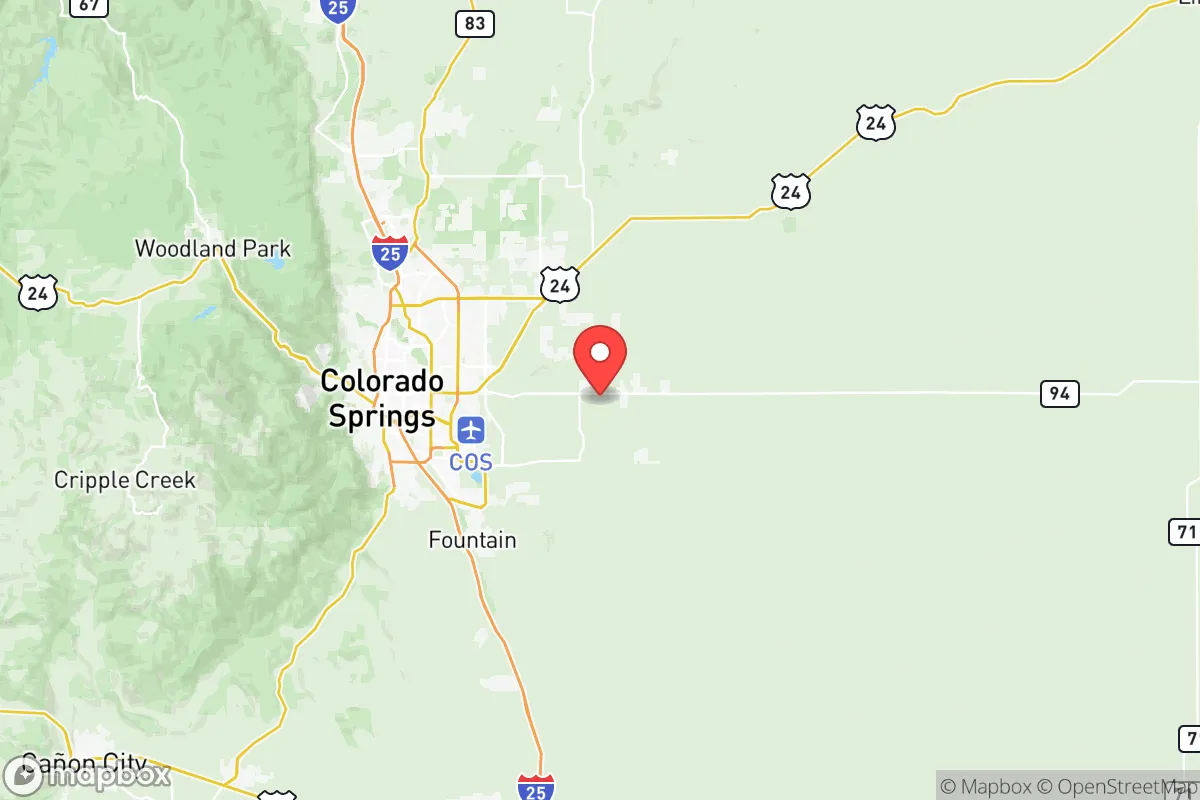
El Paso County, Colorado offers a notably higher degree of personal sovereignty than much of the Front Range, but it is not a libertarian free zone. The county’s political culture, anchored by Colorado Springs, leans conservative, but state-level preemptions from Denver—on gun control, energy policy, and land use—create a constant tension between local autonomy and state overreach. For a survivalist or prepper evaluating relocation, the key question is not whether El Paso County is a sovereign enclave, but how far you can push self-reliance before bumping into regulatory limits that vary significantly between the city limits of Colorado Springs, the unincorporated county, and smaller towns like Monument, Falcon, and Calhan.
Tax burden and regulatory posture: how Colorado compares to surrounding states
Colorado’s state-level tax burden is moderate by national standards, but El Paso County’s local posture is more favorable than Denver or Boulder. The state income tax is a flat 4.4% (as of 2025), and sales tax in Colorado Springs is 8.2% (state + county + city), while unincorporated areas like Falcon or Peyton can be as low as 6.4%. Property taxes are a standout advantage: El Paso County’s effective rate hovers around 0.55% of assessed value, roughly half the national average. However, Colorado’s Gallagher Amendment repeal in 2020 removed a key check on residential property tax increases, so long-term projections are less certain. On the regulatory side, El Paso County is more permissive than the state’s coastal counties—building permits in unincorporated areas are processed faster, and there is no countywide plastic bag ban or energy code mandate for existing homes. But the state’s 2022 “30 by 30” land conservation executive order and ongoing efforts to restrict oil and gas development near residential areas signal a growing regulatory creep that could affect rural properties near the county’s eastern edge, such as those in Yoder or Rush.
Self-defense and gun law specifics: what the state preempts and what the county preserves
This is the most contentious sovereignty issue in El Paso County. Colorado is a “shall-issue” state for concealed carry permits, and El Paso County’s sheriff, Joe Roybal, has historically been a strong supporter of the Second Amendment. The county issues permits to residents who pass a background check and complete a training course, with no discretionary denial. However, the state legislature in Denver has passed several preemptive restrictions that apply everywhere, including El Paso County: universal background checks (2013), a 15-round magazine capacity limit (2022), and a three-day waiting period for firearm purchases (2023). The county has declared itself a “Second Amendment Sanctuary” via resolution, but that carries no legal weight against state law. For preppers, the practical impact is that you cannot buy standard-capacity magazines in-state, and private firearm transfers must go through a licensed dealer. Open carry is legal without a permit in most of the county, but Colorado Springs city ordinance prohibits open carry in city parks and public buildings. Towns like Monument and Palmer Lake are more permissive in practice, with fewer local restrictions and a stronger gun culture. If you want to avoid the magazine limit entirely, you must either buy out of state (legally, via private transfer in a free state) or build your own magazines from kits—a gray area that the state has not yet explicitly banned. The bottom line: El Paso County is the best place in Colorado for gun rights, but it is not Texas or Wyoming.
Self-reliance and homesteading viability: lot sizes, zoning, and off-grid feasibility
Homesteading viability varies dramatically across El Paso County’s 2,158 square miles. Inside Colorado Springs, residential lots average 0.15 to 0.25 acres, and the city enforces strict zoning that prohibits livestock, outdoor storage of materials, and non-permitted structures. The city also requires connection to municipal water and sewer in most areas, making true off-grid living illegal. Move east to Falcon or Peyton, and the picture changes: minimum lot sizes in unincorporated El Paso County are 2.5 acres in most agricultural zones, and you can keep chickens, goats, and up to two horses per acre without a special permit. Calhan, about 30 miles east of Colorado Springs, offers even larger parcels—5 to 40 acres are common—with minimal building code enforcement beyond septic and well permits. Off-grid solar is legal statewide, but Colorado’s net metering rules require grid-tied systems to have utility approval; fully off-grid systems with battery storage are unregulated and straightforward. Rainwater collection is legal for outdoor use (Colorado lifted its ban in 2016), but indoor potable use requires a well permit. The county’s well permitting process is the main bottleneck: new wells in the Denver Basin aquifer system are subject to strict augmentation requirements, and drilling costs have risen to $15,000–$25,000 for a 400-foot domestic well. For serious homesteaders, the eastern plains around Yoder and Rush offer the best combination of cheap land ($3,000–$6,000 per acre), minimal zoning, and a community of like-minded preppers, but you must budget for well drilling and septic installation.
Personal liberties: parental rights, medical autonomy, speech, and property
El Paso County is a relative stronghold for parental rights compared to the rest of Colorado. The county’s school districts—particularly Academy District 20 and Falcon District 49—have resisted state mandates on curriculum transparency and gender identity policies, though they are not immune to state pressure. Colorado’s 2023 “Jake’s Law” requires schools to allow students to use names and pronouns matching their gender identity without parental notification, a direct infringement on parental authority that El Paso County districts have challenged in court. On medical autonomy, Colorado’s state-level vaccine mandates for school attendance (including COVID-19 for healthcare workers) apply countywide, but El Paso County has the highest rate of non-medical vaccine exemptions in the state. The county’s Board of Health has been more resistant to public health orders than Denver’s, though it cannot override state law. Free speech is robust: Colorado Springs has a history of protecting political expression, and the county’s large military and evangelical populations create a culture where conservative viewpoints are mainstream. Property rights are the weakest link: Colorado’s 2019 “Just Transition” law and the 2022 land-use reform bill (SB22-200) give the state power to override local zoning for affordable housing, and the county’s own comprehensive plan pushes for higher density near transit corridors. For a prepper, this means that a rural parcel you buy today could face future state-imposed density increases or conservation easements, especially if it borders a designated “priority area.”
Overall, El Paso County offers a higher degree of personal sovereignty than anywhere else on Colorado’s Front Range, but it is a defensive position, not a sanctuary. The state government in Denver is actively eroding local control on guns, education, and land use, and the county’s ability to resist is limited by state preemption. Compared to rural counties in Wyoming, Idaho, or Montana, El Paso County is more constrained by state law and closer to a major city (Colorado Springs) that brings urban regulatory pressure. For a prepper who values self-reliance and wants to be within a few hours of Denver’s resources while maintaining a conservative lifestyle, the eastern half of the county—Falcon, Calhan, Yoder—is the best bet. But if total sovereignty is the goal, look farther east to Kansas or south to Texas. El Paso County is a compromise: better than the coasts, but not yet free.

* Values derived from national, state, county, city and local statistics and may differ in a specific area. Last updated: 2026-05-12T01:29:57.000Z
Narrative content on this page is AI-generated and may contain mistakes. Verify any details that matter before acting on them.
ReloMaps may earn a commission from affiliate links at no extra cost to you.

