
Photo: Wikipedia
Political ClimatePolitical Climate in El Paso County
Showing district-level results — no local-only data available.
Local Political AnalysisPolitical Analysis of El Paso County
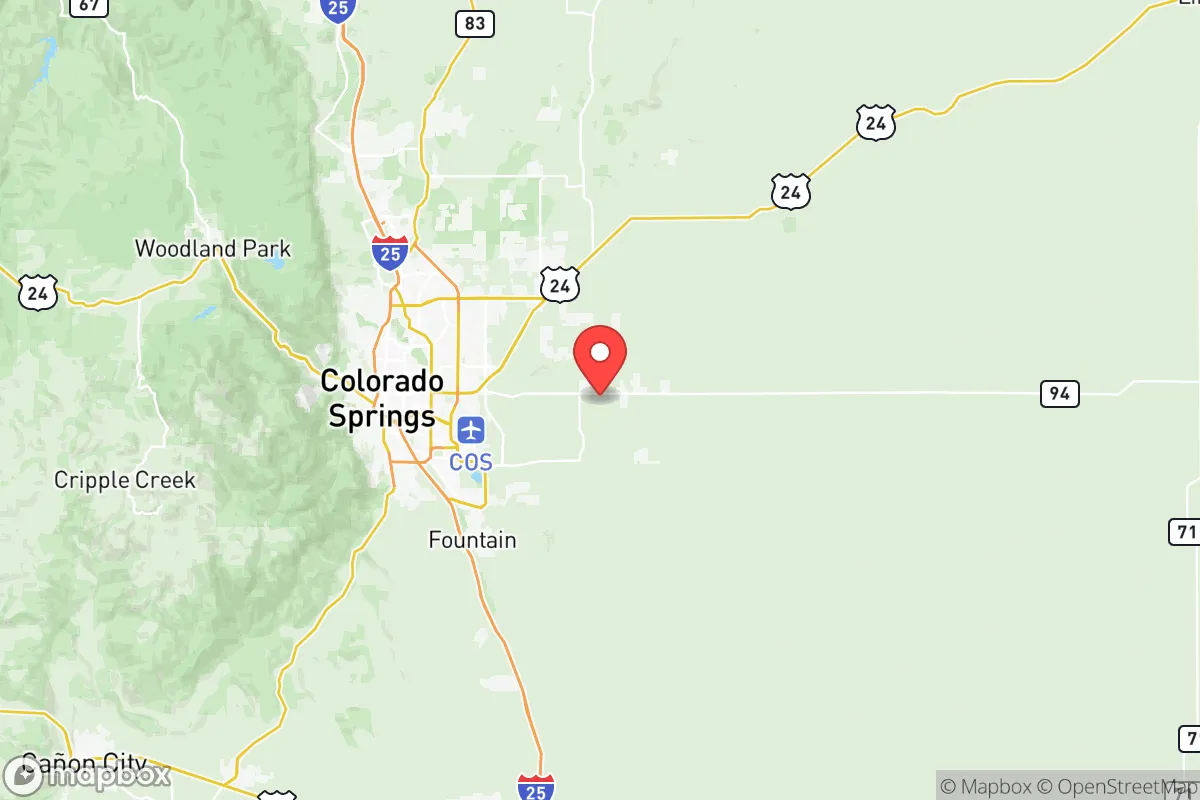
El Paso County, Colorado, has long been a conservative stronghold in a state that’s shifted dramatically blue, and that’s not changing anytime soon. With a Cook PVI of R+5, it’s one of the few places in Colorado where you can still find a reliably Republican vote, especially when you compare it to the state’s overall D+6 rating. But the political landscape here isn’t a monolith—there’s real variation from town to town, and that’s worth understanding if you’re thinking about moving here.
How it compares
Colorado as a whole has been trending left for years, driven by the Denver-Boulder corridor and the Front Range’s urban centers. El Paso County stands as a clear counterweight. In the 2024 presidential election, the county went for the Republican candidate by a comfortable margin, while the state voted blue. That gap—R+5 locally versus D+6 statewide—means you’re living in a place that’s politically out of step with the rest of Colorado, and that’s exactly why many residents choose it. Within the county, the variation is stark. Colorado Springs, the county seat, leans conservative overall, but its downtown and older neighborhoods near the colleges show more purple tendencies. Meanwhile, towns like Monument and Woodland Park are reliably red, with strong turnout for conservative candidates. On the flip side, Manitou Springs is a notable outlier—a small, artsy town that votes blue consistently, almost like a liberal island in a sea of red. The swing precincts tend to cluster around the military bases, like Fort Carson and Peterson Space Force Base, where active-duty and veteran populations often split tickets but still lean right on national security and fiscal issues.
What this means for residents
For someone who values limited government and personal freedoms, El Paso County is a breath of fresh air compared to the rest of Colorado. You won’t see the same level of progressive overreach here—no sweeping gun control measures that go beyond state mandates, no aggressive environmental regulations that stifle property rights, and a local government that generally pushes back against Denver’s one-size-fits-all policies. The county commissioners have been vocal about resisting state-level mandates on everything from energy to land use, which matters if you’re worried about government creeping into your daily life. That said, the state’s blue tilt does create friction. You’ll see it in things like housing policy, where state-level rent control proposals get fought hard locally, or in education, where school boards in places like Academy District 20 have become battlegrounds over curriculum transparency. It’s a constant tug-of-war, but the county’s conservative majority means you’ve got a fighting chance to keep things local.
The cultural and policy distinctions here are real. El Paso County has a strong military and veteran presence, which reinforces a sense of duty and self-reliance. You’ll find fewer of the progressive social experiments that have taken hold in Boulder or Denver—no defund-the-police movements, no sanctuary city policies. Instead, there’s a focus on public safety, property rights, and keeping taxes low. The county’s growth has brought some tension, though, as newcomers from blue states sometimes try to import their politics. Longtime residents watch that trend warily, knowing that the county’s character depends on staying grounded in conservative values. If you’re looking for a place where your voice still counts and the government isn’t trying to micromanage your life, El Paso County is one of the last stands in Colorado. Just keep an eye on those swing precincts—they’ll tell you where the fight is headed next.

State Political ClimatePolitical Climate in Colorado
State Political AnalysisPolitical Environment in the State
Colorado has shifted from a classic purple swing state to a solidly blue one, carrying a Cook PVI of D+6, meaning it votes about six points more Democratic than the national average. The transformation has been dramatic over the past two decades: George W. Bush narrowly won the state in 2004, but by 2020, Joe Biden carried it by over 13 points. The dominant coalition is now a mix of Denver metro progressives, suburban swing voters who have moved left, and a growing Hispanic population in the Front Range, while rural and mountain counties remain deeply red but are losing population share.
Urban vs. rural divide
The political map of Colorado is a tale of two states. The Denver-Aurora-Lakewood metro area, home to roughly 60% of the state’s population, is the engine of Democratic power. Denver County itself votes about 80% Democratic, with Boulder County not far behind. The suburban ring—places like Jefferson County (Jeffco), Arapahoe County, and Adams County—have flipped decisively blue over the last decade. Jeffco, once a bellwether, now reliably votes Democratic by double digits. Meanwhile, the Eastern Plains, the Western Slope, and the San Luis Valley are Republican strongholds. El Paso County (Colorado Springs) is the largest red county, home to military and evangelical voters, but even there, the city of Colorado Springs has been trending purple as younger professionals move in. The mountain resort counties like Pitkin County (Aspen) and Summit County are deep blue due to wealthy transplants, while the rural ranching counties like Moffat County and Baca County vote 80%+ Republican. The divide isn’t just urban vs. rural—it’s also elevation: the high country resorts are blue, the low-elevation ranchlands are red.
Policy environment
Colorado’s policy environment has become increasingly progressive, with a few notable exceptions. The state income tax is a flat 4.4%, which is moderate by national standards, but property taxes are relatively low thanks to the Gallagher Amendment (repealed in 2020) and TABOR (Taxpayer’s Bill of Rights), which still limits revenue growth. However, voters have repeatedly approved tax increases for education and transportation. The regulatory posture is business-friendly in some sectors (tech, aerospace, outdoor recreation) but hostile to oil and gas, with strict methane rules and local fracking bans. Education policy is dominated by the teachers’ union; school choice exists via charter schools, but funding per pupil is below the national average. Healthcare is heavily regulated, with a state-run insurance exchange and Medicaid expansion. Election laws are among the most liberal in the country: universal mail-in ballots, same-day registration, and no voter ID requirement at the polls (though ID is needed to register). This has raised concerns about election integrity among conservatives, especially after the 2020 election saw record mail-in turnout with minimal verification.
Trajectory & freedom
Colorado is moving decisively less free on multiple fronts, particularly for conservatives. On gun rights, the state has passed some of the strictest laws in the West: a 2013 magazine capacity ban (15 rounds), universal background checks, and a 2023 “red flag” law allowing courts to temporarily seize firearms from individuals deemed a risk. In 2024, a new law raised the purchase age to 21 for all firearms. On parental rights, the state passed a 2023 law requiring schools to notify parents if a student changes their gender identity or pronouns—but only if the school deems it “safe,” effectively giving schools discretion to withhold information. This has sparked fierce debate. On medical autonomy, Colorado legalized assisted suicide in 2016 and has some of the most permissive abortion laws in the nation, with no gestational limits. Property rights have been eroded by strict land-use regulations, especially in the Front Range, where local governments can block development. The Taxpayer’s Bill of Rights (TABOR) remains a bulwark against runaway taxation, but progressives have chipped away at it by asking voters to “de-Bruce” (exempt) specific revenue streams. The overall trajectory is toward more government control over personal choices, from guns to medical decisions to what you can build on your land.
Civil unrest & political movements
Colorado has seen its share of political flashpoints. The 2020 George Floyd protests in Denver turned violent, with property damage and clashes with police, and the city’s “defund the police” movement led to a temporary $15 million cut to the police budget (later partially restored). On the right, the Colorado Springs area has been a hub for conservative activism, including the “Liberty in Colorado” movement and the “Colorado Project” aimed at flipping the state legislature. Immigration politics are heated: Denver is a sanctuary city, and the state has a “Safe Haven” law limiting cooperation with ICE. In 2023, the influx of migrants from the southern border overwhelmed Denver’s shelters, leading to a public backlash and a shift in tone from the mayor. Election integrity remains a sore point: the 2020 election saw widespread use of mail-in ballots, and while no widespread fraud was proven, many conservatives remain skeptical of the system. Secession talk is mostly rhetorical—the “State of Jefferson” movement in rural Colorado has fizzled—but there is a palpable cultural divide between the Front Range and the rest of the state.
Projection
Over the next 5-10 years, Colorado will likely become more blue and more regulated. In-migration is dominated by younger, college-educated professionals from California and the Northeast, who tend to vote Democratic and support progressive policies. The rural population is aging and shrinking, meaning the political balance will continue to shift toward the Denver metro area. Expect more gun control, more environmental regulation (including a possible ban on new oil and gas permits), and more state-level mandates on housing and land use. The parental rights battles will intensify, especially around school curriculum and gender issues. The one wild card is the cost of living: if housing prices continue to skyrocket, it could slow in-migration and potentially shift the political calculus. But for now, anyone moving to Colorado should expect a state that is increasingly comfortable with government intervention in personal freedoms, from what you can own to how you raise your kids.
Bottom line for a new resident: If you value low taxes, gun rights, and local control, Colorado is a tough sell—especially in the Front Range. The rural areas and Colorado Springs offer more breathing room, but you’ll still be subject to state-level laws that are increasingly restrictive. The state is beautiful and economically vibrant, but the political climate is trending in a direction that many conservatives will find uncomfortable. If you’re moving here, be prepared to engage politically just to hold the line.
* Values derived from national, state, county, city and local statistics and may differ in a specific area. Last updated: 2026-05-12T01:29:57.000Z
Narrative content on this page is AI-generated and may contain mistakes. Verify any details that matter before acting on them.
ReloMaps may earn a commission from affiliate links at no extra cost to you.

