
Photo: Wikipedia
Demographics of El Paso County
Affluence Level in El Paso County
A middle-class area roughly in line with national averages across income, home values, education, and employment.
People of El Paso County
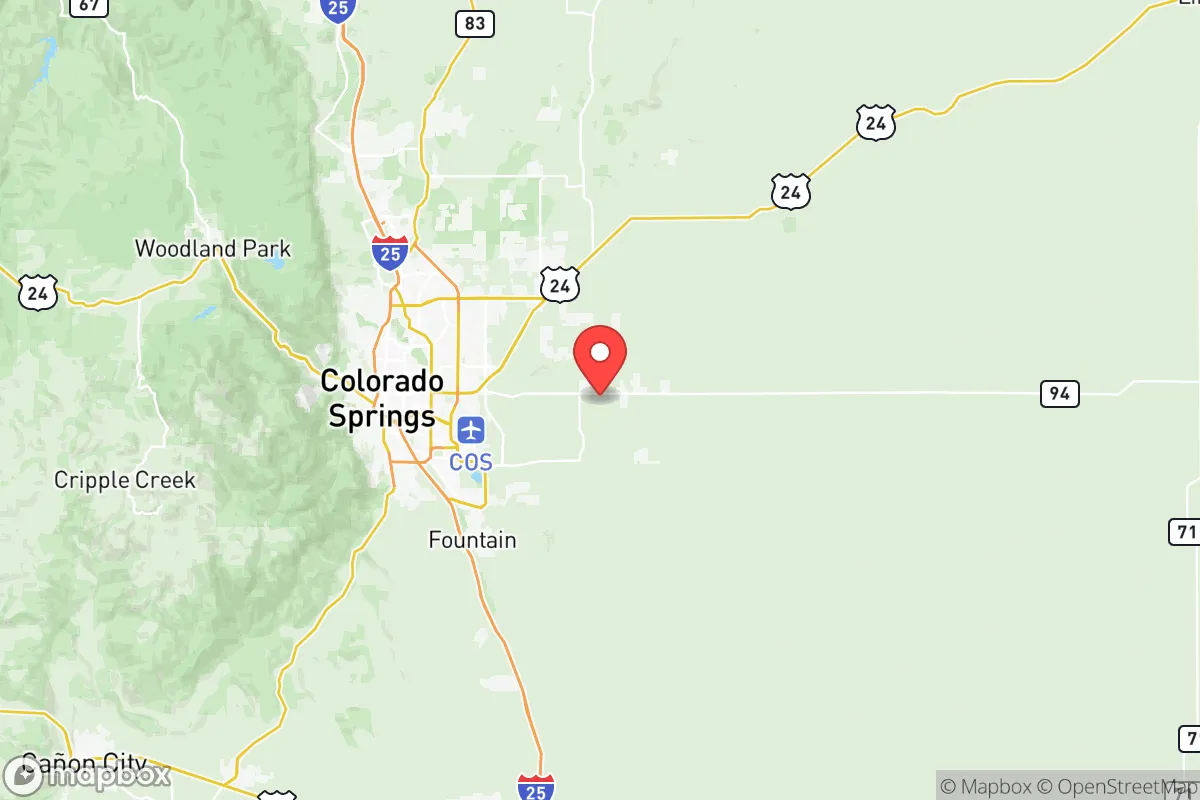
El Paso County, Colorado, is home to 736,008 residents who form a distinctive blend of military-connected families, conservative-leaning transplants, and a growing Hispanic population centered on Colorado Springs. The county is notably less diverse than the national average, with a foreign-born population of just 2.7% and a white population of 66.4%, yet it has absorbed significant domestic migration from California and the Rust Belt since the 1980s. Its identity is shaped by the presence of five military installations, a strong evangelical Christian community, and a political culture that leans heavily Republican—El Paso County voted +16 points for Donald Trump in 2020. For a conservative-leaning audience, this is a place where traditional family structures, gun rights, and low taxes are the norm, but the demographic currents are slowly shifting toward greater Hispanic and Asian representation.
Settlement & growth (pre-1960)
The area now known as El Paso County was originally inhabited by the Ute, Cheyenne, and Arapaho nations, who used the region for seasonal hunting and trade along the Front Range. Spanish explorers passed through in the 1700s, but no permanent European settlement occurred until the Pike’s Peak Gold Rush of 1858-1859, which drew tens of thousands of fortune seekers—mostly Anglo-Americans from the Midwest and Upper South—to the Pikes Peak region. The city of Colorado Springs was founded in 1871 by railroad magnate William Jackson Palmer as a resort and health destination, attracting wealthy Easterners and British investors who built the Broadmoor Hotel and the Antlers Hotel. The county’s early economy was driven by mining in nearby Cripple Creek (though that town lies in Teller County), agriculture along Fountain Creek, and the railroad hub at Fountain.
From the 1870s through the 1910s, German and Irish immigrants arrived to work on the railroads and in the mines, settling in working-class neighborhoods like Old Colorado City (now part of Colorado Springs) and the farming community of Peyton. A smaller wave of Italian immigrants came to work in the stone quarries and vineyards around Penrose and Florence (the latter in Fremont County, but closely tied to El Paso County’s early economy). The Dust Bowl of the 1930s pushed thousands of “Okies” and “Arkies” from Oklahoma and Arkansas into the county, where they found work in agriculture and construction, settling in Security and Widefield south of Colorado Springs. By 1940, the county’s population was roughly 90% white, with a small Black community centered around the Knob Hill neighborhood in Colorado Springs, formed by railroad workers and later by soldiers stationed at Camp Carson (established 1942).
World War II transformed El Paso County. The establishment of Fort Carson (1942), Peterson Field (1942), and the U.S. Air Force Academy (1954) brought a massive influx of military personnel and their families, many of whom stayed after retirement. This military migration was overwhelmingly white and Midwestern, reinforcing the county’s conservative, patriotic character. The 1950s also saw the first wave of suburban development, with Manitou Springs becoming a tourist destination and Monument emerging as a bedroom community for Colorado Springs workers.
Modern era (post-1965)
The 1965 Hart-Cellar Act had a muted effect on El Paso County compared to coastal regions, but it did open the door for a gradual increase in Hispanic and Asian immigration. The county’s Hispanic population grew from roughly 8% in 1980 to 18.3% today, driven primarily by domestic migration from Texas, New Mexico, and California, rather than direct immigration from Mexico. These Hispanic families settled in Fountain, Security-Widefield, and the Southeast Colorado Springs neighborhoods, where they work in construction, landscaping, and the service industry. The Asian population—primarily East and Southeast Asian communities (Chinese, Korean, Vietnamese, Filipino)—rose to 2.4%, concentrated in the Briargate and Powers Boulevard corridor, often in professional and tech roles tied to the military and aerospace sectors.
The post-1965 era also saw a dramatic domestic migration shift. Beginning in the 1980s, California transplants—many of them conservative-leaning families fleeing high taxes and housing costs—began moving to El Paso County in large numbers. This “California exodus” accelerated after 2000, with Colorado Springs becoming a top destination for retirees and remote workers from Orange County and the Bay Area. The county’s Black population, at 5.5%, is largely military-connected, with families stationed at Fort Carson and Peterson Space Force Base, and is concentrated in Fort Carson housing and the Northeast Colorado Springs area. The Indian subcontinent population (0.4%) is small but growing, primarily in tech and medical roles, with clusters in Briargate and Rockrimmon.
Suburbanization reshaped the county after 1980. The northern suburbs—Monument, Woodmoor, and Palmer Lake—became affluent, predominantly white enclaves for professionals commuting to Denver or working at the Air Force Academy. The eastern corridor along Powers Boulevard saw explosive growth of master-planned communities like Stetson Hills and Powers Ranch, attracting families from across the country. Meanwhile, the rural eastern plains—Calhan, Ramah, Yoder—remained overwhelmingly white and agricultural, with little demographic change.
The future
El Paso County’s population is projected to grow to roughly 850,000 by 2035, driven by continued domestic in-migration from California, Texas, and the Midwest. The Hispanic share is expected to rise to 22-24% by 2040, as younger Hispanic families have higher birth rates and continue to move from the Southwest. The Asian and Indian populations will likely grow modestly, reaching 3-4% combined, as the tech and aerospace sectors expand. However, the county is not becoming a melting pot in the traditional sense—instead, it is tribalizing into distinct enclaves: white conservative suburbs in the north and east, Hispanic working-class neighborhoods in the south and southeast, and military-connected communities that are more racially diverse but transient.
The foreign-born population will remain low (likely under 5%) because the county lacks the immigrant-heavy industries (agriculture, manufacturing, hospitality) that drive immigration in other parts of Colorado. The cultural identity of El Paso County is likely to remain conservative and military-oriented, but with a growing Hispanic influence in local politics and business. The California transplants are being absorbed into the existing conservative culture rather than liberalizing it, as most move specifically for the political and cultural alignment.
For someone moving in now, El Paso County offers a stable, family-oriented environment with strong schools in the northern suburbs, a robust military economy, and a political climate that favors low taxes and gun rights. The demographic changes are gradual and unlikely to disrupt the county’s core character in the next decade. The main tension will be between the growing Hispanic population in the south and the predominantly white northern suburbs, but this is a slow, generational shift rather than a rapid transformation. The county is becoming slightly more diverse, but it remains one of the whitest and most conservative major counties in the United States—a fact that is likely to persist for the foreseeable future.

* Values derived from national, state, county, city and local statistics and may differ in a specific area. Last updated: 2026-05-12T01:29:57.000Z
Narrative content on this page is AI-generated and may contain mistakes. Verify any details that matter before acting on them.
ReloMaps may earn a commission from affiliate links at no extra cost to you.

