Photo: Wikipedia
Personal Sovereignty in Huerfano County
Viable for self-reliance. Generally workable, though some barriers may limit total independence.
What does Personal Sovereignty tell us?
Personal Sovereignty measures your capacity for self-reliance and independence with minimal government friction. Higher scores mean fewer barriers between you and the way you want to live... but it assumes you have the space you need and good neighbors.
What does this tell us?
Personal Sovereignty measures your capacity for self-reliance and independence with minimal government friction. Higher scores mean fewer barriers between you and the way you want to live... but it assumes you have the space you need and good neighbors.
State Policy
Energy independence: Net exporter (110% of energy produced in-state)
Personal Liberty
Homesteading

Personal Liberty Analysis
Huerfano County, Colorado, offers a notably high degree of personal sovereignty relative to the Front Range urban corridor, with a regulatory environment that leans heavily toward individual autonomy and self-reliance. The county’s small population—roughly 7,000 residents spread across a vast, mountainous landscape—creates a de facto low-touch governance atmosphere where local officials are accessible and enforcement of state-level mandates is often pragmatic. For a relocation-minded reader prioritizing freedom from overreach, the key trade-off is between the county’s permissive local culture and Colorado’s increasingly assertive state-level policies on taxation, gun control, and land use.
Tax burden and regulatory posture: How Huerfano County compares to Colorado’s urban centers
Huerfano County’s tax burden is among the lightest in Colorado, a state already known for moderate taxation compared to the coasts. The county’s property tax rate is roughly 0.45% of assessed value, well below the state average of 0.55% and dramatically lower than Denver’s 0.62% or Boulder County’s 0.68%. Sales tax is a combined 7.9% (state plus county), with no additional city-level sales tax in unincorporated areas—though the town of Walsenburg adds 2.5% for a total of 10.4%, and La Veta adds 1% for 8.9%. Income tax is flat at Colorado’s 4.4% rate, with no local income tax. The regulatory posture is best described as “hands-off by necessity.” The county has no building codes in unincorporated areas, no zoning in most rural zones, and a planning department that processes permits with minimal friction. However, state-level regulations—particularly on oil and gas, water rights, and short-term rentals—still apply. The county’s small government ethos means that most interactions with the county assessor or clerk are direct and personal, a stark contrast to the bureaucratic layers of Pueblo or Colorado Springs.
Self-defense and gun law specifics: What the Second Amendment landscape looks like in Huerfano County
Colorado’s state-level gun laws have tightened in recent years, but Huerfano County remains a stronghold for Second Amendment advocates. The county is a “Second Amendment Sanctuary” jurisdiction, with a 2019 resolution declaring that county resources will not be used to enforce state laws deemed infringements on the right to keep and bear arms. This means that while state laws—such as the 2023 ban on “large-capacity” magazines (over 15 rounds) and the 2024 requirement for a 3-day waiting period on all firearm purchases—are technically in effect, local enforcement is minimal. Open carry is legal without a permit, and concealed carry requires a Colorado permit (issued by the county sheriff, typically with a 30-day turnaround). The sheriff’s office in Walsenburg is known for a pro-2A stance; deputies rarely inquire about magazine capacity during routine stops. For context, the towns of Gardner and Cuchara have particularly strong gun cultures, with local shooting ranges and minimal public opposition to firearm ownership. The nearest gun stores are in Walsenburg and La Veta, with a wider selection available in Pueblo (45 minutes north). Self-defense law in Colorado follows the “Make My Day” statute, which presumes a homeowner’s right to use deadly force against an intruder—no duty to retreat in one’s home. Outside the home, Colorado is a “stand your ground” state, though the burden of proof for self-defense claims rests on the defendant.
Self-reliance and homesteading viability: Lot sizes, zoning, and off-grid feasibility across the county
Huerfano County is one of the most homestead-friendly areas in Colorado, particularly for those seeking off-grid living. In unincorporated areas, no building permits are required for structures under 200 square feet, and there are no county-wide zoning restrictions on tiny homes, yurts, or container homes. Minimum lot sizes vary: in the rural agricultural zones (most of the county), parcels as small as 5 acres can be developed, while the mountain subdivisions near Cuchara and La Veta often require 35-acre minimums to preserve viewsheds. Off-grid feasibility is high—solar is the dominant power source in remote areas, with average insolation of 5.5 kWh/m²/day (better than Denver). Well drilling is common, with average depths of 200-400 feet and costs around $15,000-$25,000. Septic systems are required for any habitable structure, but the county health department’s approval process is straightforward (typically 2-4 weeks). The towns of Walsenburg and La Veta have municipal water and sewer, but most rural residents rely on wells and septic. There are no county-level restrictions on rainwater collection, though Colorado state law limits it to 110 gallons per property. The Gardner area is particularly popular for homesteaders due to its lower elevation (7,000 feet) and longer growing season (120 days), compared to the higher mountain zones near Cuchara (9,000 feet, 60-day growing season). Zoning for livestock is permissive: chickens, goats, and up to 5 cattle are allowed on parcels under 35 acres without special permits.
Personal liberties: Parental rights, medical autonomy, speech, and property rights in practice
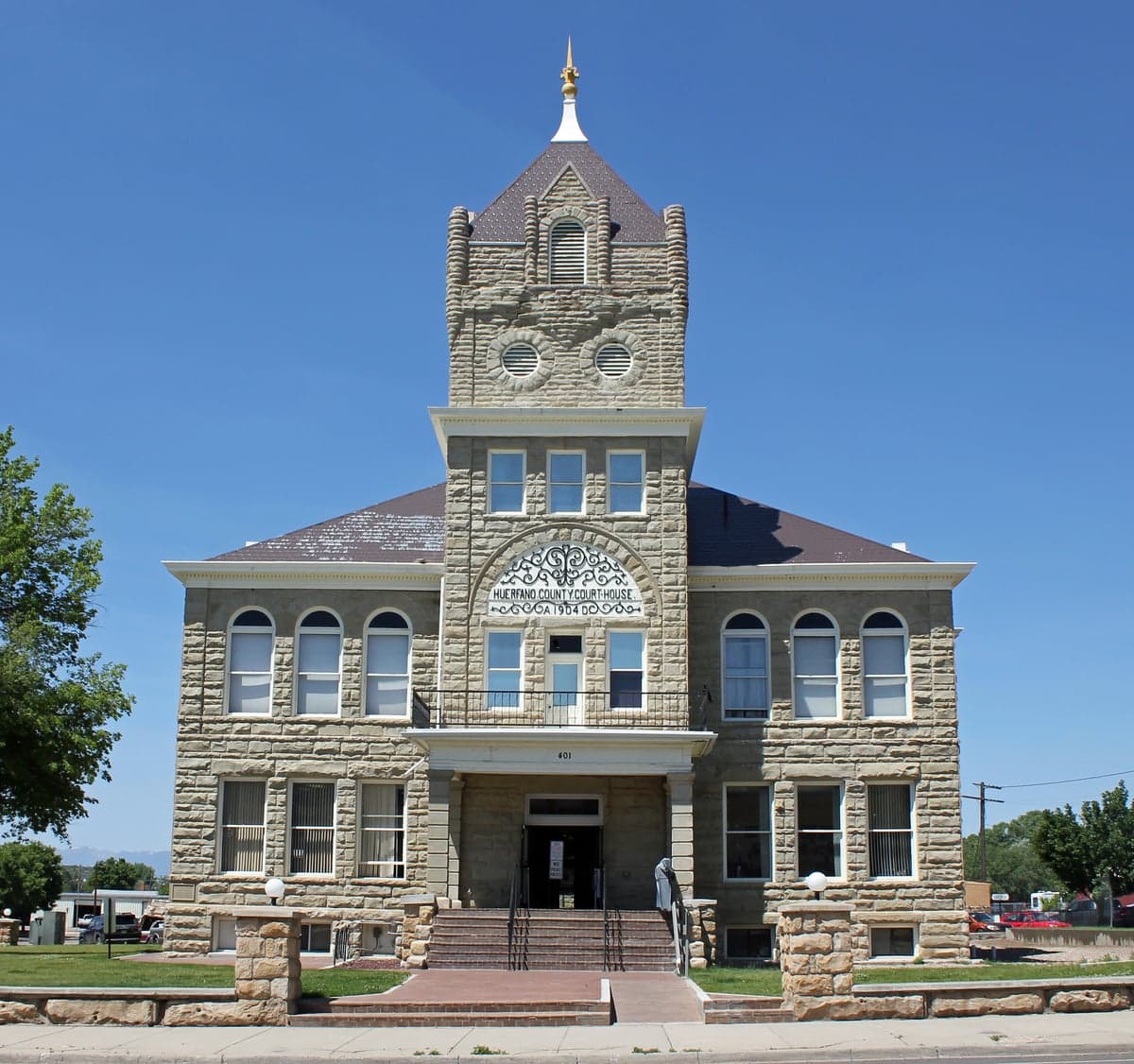
Personal liberties in Huerfano County are shaped by a combination of state law and local culture. Parental rights are strong: Colorado’s “Parental Bill of Rights” (passed in 2023) grants parents the right to direct their children’s education, medical care, and religious upbringing. The county’s two school districts—Huerfano RE-1 (Walsenburg) and La Veta RE-2—have conservative school boards that have resisted state-level mandates on curriculum transparency and gender identity policies. Homeschooling is common, with a robust local co-op network in the La Veta and Cuchara areas. Medical autonomy is more constrained by state law: Colorado has no religious or philosophical exemption to vaccine mandates for school attendance, and the state’s “Right to Try” law for terminal patients is on the books but rarely invoked locally. However, the county has no local health department that enforces state mandates aggressively—enforcement is handled by the state health department in Denver, which has limited reach in rural areas. Speech and assembly are fully protected, with no local ordinances restricting political signage or public gatherings. The county courthouse in Walsenburg is a common site for protest and petition drives. Property rights are robust: Colorado’s “Worthless Land” law (CRS 38-30-101) protects landowners from liability for recreational use of undeveloped land, and the county has no rent control or landlord licensing. Eminent domain is rarely exercised, and the county’s comprehensive plan explicitly prioritizes private property rights over government acquisition.
Overall, Huerfano County offers a level of personal sovereignty that is increasingly rare in Colorado. While state-level mandates on guns, vaccines, and land use create a ceiling on autonomy, the county’s low population density, permissive local governance, and strong property rights culture make it one of the most freedom-friendly areas in the state. For a conservative-leaning individual or family seeking a place where self-reliance is not just tolerated but expected—and where the nearest city’s regulatory reach feels distant—Huerfano County ranks favorably against alternatives like Costilla County (more remote but less infrastructure) or Fremont County (more developed but higher taxes). The trade-off is access: the nearest major hospital is in Pueblo (45 minutes), and the nearest international airport is Denver (2.5 hours). For those willing to accept that distance, the county delivers a genuine low-regulation environment where personal responsibility is the default.

* Values derived from national, state, county, city and local statistics and may differ in a specific area. Last updated: 2026-09-11T12:01:15.000Z
Narrative content on this page is AI-generated and may contain mistakes. Verify any details that matter before acting on them.
ReloMaps may earn a commission from affiliate links at no extra cost to you.

