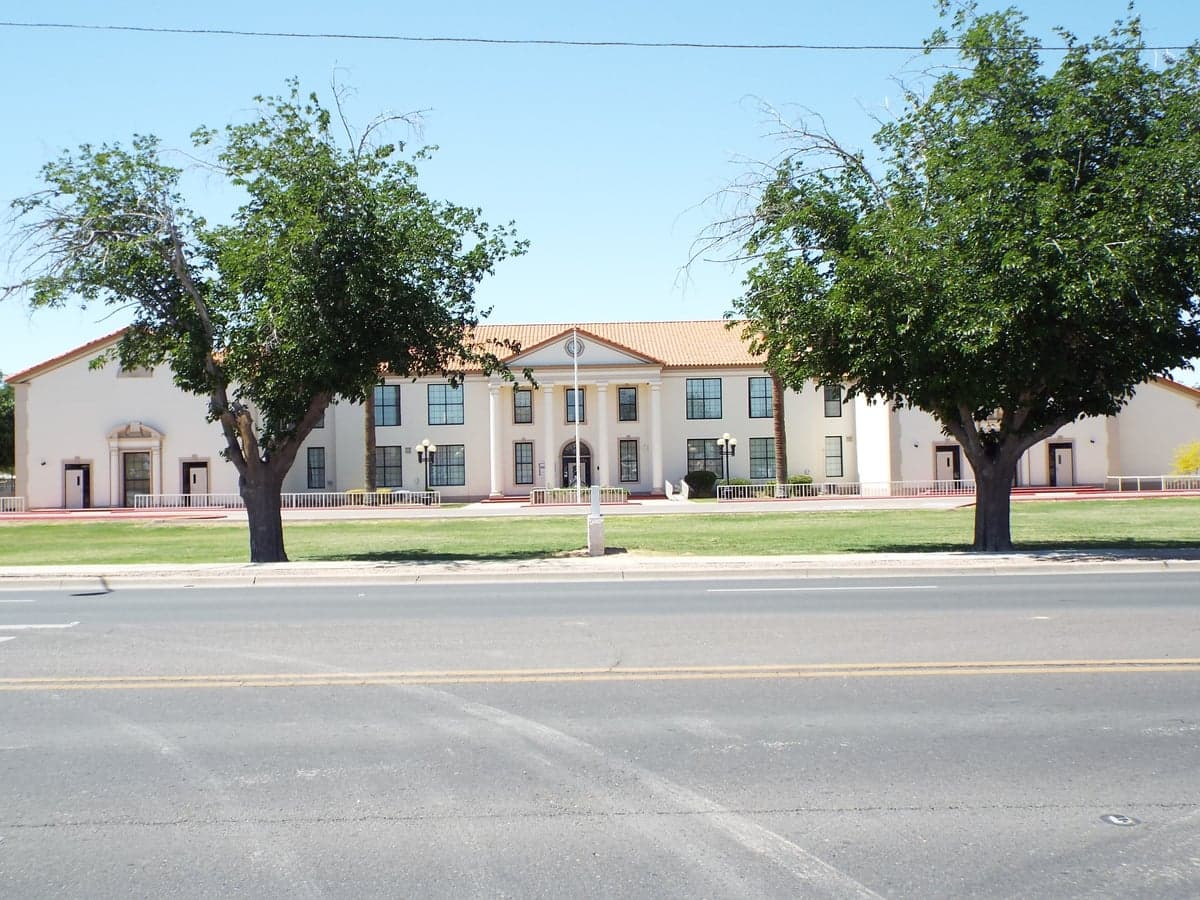
Photo: Wikipedia
Political ClimatePolitical Climate in Coolidge, AZ
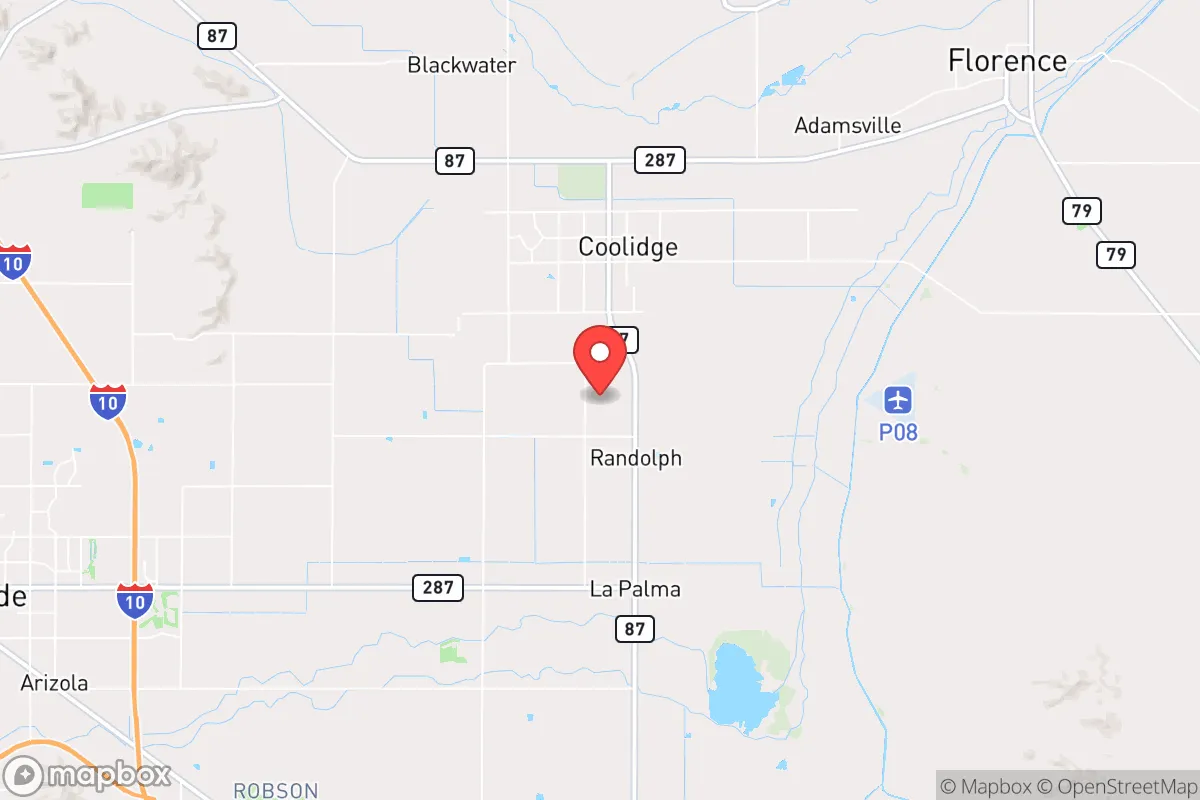
District shown is the primary district for this city’s centroid. Cities may span multiple districts.
Local Political AnalysisPolitical Analysis of Coolidge, AZ
Coolidge, Arizona, has long been a solidly conservative community, and that hasn't changed much even as the state's population has boomed. The Cook PVI of R+7 tells you the basics—this is a place where Republican candidates can reliably count on winning by a comfortable margin, and that's held true in recent cycles. But if you've lived here a while, you know the real story is about how the town's character has held up against the tide of progressive influence creeping in from places like Phoenix and Tucson. It's not that Coolidge is becoming liberal; it's that the pressure is there, and folks here are paying close attention to keep things on the right track.
How it compares
Drive twenty minutes west to Casa Grande, and you'll notice a different vibe—more transplants, more chain stores, and a political scene that's starting to split along suburban lines. Coolidge, by contrast, feels like the last bastion of old-school Arizona values. Head north to Florence, and you're in a county seat that's reliably conservative too, but with a heavier law-and-order presence. The real contrast is with Tempe or Tucson, where you see city councils pushing things like sanctuary policies and higher taxes. Coolidge residents tend to see those places as cautionary tales—examples of what happens when government overreach gets a foothold. The R+7 rating here isn't just a number; it's a reflection of a community that votes against that kind of expansion of government into personal lives and local businesses.
What this means for residents
For the people who call Coolidge home, the political climate translates into a few concrete realities. First, you're less likely to see the kind of zoning fights or business regulations that choke small enterprises in more progressive areas. Second, local law enforcement generally gets strong support, and there's little appetite for defunding or reimagining public safety. Third, and maybe most important, the school board and city council elections tend to attract candidates who prioritize parental rights and local control over state or federal mandates. That's a big deal when you see other districts getting caught up in curriculum battles or mask mandates. The long-term concern here is that as the Phoenix metro area expands, more people will move into Pinal County looking for affordable housing, and not all of them will share the local values. That's why staying engaged in local elections matters more than ever.
Culturally, Coolidge still has that small-town feel where neighbors know each other and the Fourth of July parade is a bigger deal than any political ad. There's a strong sense that government should stay out of your business—whether that's how you run your farm, what you teach your kids, or how you choose to protect your home. The biggest policy distinction you'll notice is the lack of the kind of progressive social experiments you see in Maricopa County's urban core. No plastic bag bans, no sanctuary city declarations, no heavy-handed rental regulations. It's a place where the default answer from the city council is usually "no" to new taxes and "yes" to property rights. If that starts to shift, you'll know the character of the town is changing. For now, Coolidge remains a place where conservative values aren't just tolerated—they're the norm, and people intend to keep it that way.

State Political ClimatePolitical Climate in Arizona
State Political AnalysisPolitical Environment in the State
Arizona has transformed from a reliably Republican stronghold into a true battleground state over the past two decades, with its political lean now hovering around a 50-50 split in statewide races. The state voted for Joe Biden in 2020 by just 10,457 votes—the first time it backed a Democrat since Bill Clinton in 1996—and then saw Donald Trump lose again in 2024 by a similarly narrow margin. This shift is driven by explosive growth in Maricopa County (metro Phoenix) and an influx of voters from California and other blue states, while rural counties like Mohave, Yavapai, and Cochise remain deeply conservative. For a conservative considering relocation, the key question is whether Arizona’s libertarian streak can hold against the progressive tide washing in from the West Coast.
Urban vs. rural divide
The political map of Arizona is a tale of two worlds. Maricopa County alone holds about 60% of the state’s population and has become the epicenter of the swing—suburbs like Mesa, Chandler, and Gilbert are now purple battlegrounds where elections are won or lost. Phoenix proper leans left, but the real blue surge comes from Tucson (Pima County), which reliably delivers Democratic margins of 15-20 points. Meanwhile, the rural north and east are rock-ribbed Republican: Mohave County (Kingman, Lake Havasu City) voted +38 points for Trump in 2024, and Yavapai County (Prescott, Sedona’s outskirts) runs +25 R. Cochise County (Sierra Vista, Douglas) along the border is also deep red, though its proximity to Mexico makes immigration a top concern. The urban-rural split is stark: drive 30 minutes outside any metro and you’re in Trump country, but the metros themselves are increasingly competitive or left-leaning.
Policy environment
Arizona’s policy landscape is a mixed bag for conservatives. On the plus side, the state has a flat income tax rate of 2.5% (down from 4.5% in 2021 thanks to a 2022 tax cut package), and no estate or inheritance tax. Property taxes are moderate, averaging about 0.6% of home value. The regulatory climate is business-friendly, with right-to-work laws and minimal zoning restrictions in most rural areas. However, education policy is a flashpoint: the state’s Empowerment Scholarship Account (ESA) program, which lets parents use public funds for private or homeschool, was expanded in 2022 to all students—a major win for school choice. But the 2024 election saw a ballot measure (Prop 313) that would have weakened ESAs fail, and the legislature remains divided on further expansion. Healthcare is largely market-driven, though Medicaid expansion under the Affordable Care Act was adopted in 2013 and remains popular. Election laws have tightened: SB 1260 (2022) requires proof of citizenship for voter registration, and voter ID is mandatory at the polls. Still, mail-in voting is widespread—over 80% of ballots are cast by mail—which some conservatives view as a vulnerability.
Trajectory & freedom
Arizona’s trajectory on personal freedom is a tug-of-war. On the positive side, constitutional carry (permitless concealed carry) was signed into law in 2010 and remains intact, with no recent attempts to roll it back. The state also passed a parental rights bill (HB 2161) in 2022 that requires schools to notify parents of any curriculum involving sexuality or gender identity—a strong win for family autonomy. Property rights are generally respected, with no statewide rent control and limited eminent domain abuse. However, there are concerning trends. In 2023, Governor Katie Hobbs (a Democrat) used executive orders to ban “conversion therapy” for minors and expand transgender medical access—moves that bypassed the legislature and angered many conservatives. The state also has a renewable energy mandate (HB 2776, 2021) requiring utilities to get 100% of power from carbon-free sources by 2070, which critics say drives up energy costs and government overreach. On medical freedom, Arizona did not impose COVID-19 vaccine mandates on private businesses, but mask mandates were enforced in schools and government buildings during the pandemic—a sore spot for many. The overall trend is that rural and suburban areas are becoming more libertarian, while Phoenix and Tucson are drifting left on social issues.
Civil unrest & political movements
Arizona has seen its share of political flashpoints. The border crisis is the most visible: Cochise and Santa Cruz counties have experienced record illegal crossings, leading to frequent protests and counter-protests in towns like Nogales and Douglas. The state legislature passed SB 1070 in 2010 (the “show me your papers” law), which was partially struck down by the Supreme Court but remains a symbol of the state’s tough-on-immigration stance. More recently, Operation Secure Arizona (2023) deployed National Guard troops to the border—a move supported by conservatives but criticized by progressives. On the left, Indivisible Arizona and Moms Demand Action are active in Phoenix and Tucson, organizing against gun rights and for abortion access. The 2020 election integrity controversy was intense here: the Arizona Senate’s “audit” of Maricopa County ballots in 2021 (led by Cyber Ninjas) became a national spectacle, with both sides accusing the other of fraud. While no widespread fraud was found, the audit deepened distrust. Today, you’ll see “Stop the Steal” flags in rural areas and “Defend Democracy” signs in urban ones—the divide is real and visible.
Projection
Over the next 5-10 years, Arizona is likely to become more competitive, not less. In-migration from California, Illinois, and New York continues at a pace of about 100,000 net new residents per year, many of whom are moderate or left-leaning. The Phoenix suburbs (Gilbert, Chandler, Scottsdale) are filling with tech workers and remote employees who bring blue-state voting habits. Meanwhile, rural counties are aging and losing population, which could dilute their electoral weight. The state’s 11 electoral votes will remain a top target for both parties. For conservatives, the best-case scenario is that the state’s libertarian streak—low taxes, gun rights, school choice—holds the line, but the social agenda will likely shift left. Expect more fights over transgender policies, abortion access (currently protected up to 15 weeks), and election laws. The 2026 gubernatorial race will be a bellwether: if a Republican can win back the governor’s office, the trajectory might slow; if Hobbs is reelected, expect more executive overreach.
Bottom line for a new resident: If you’re a conservative moving to Arizona, pick your location carefully. The rural areas (Prescott, Kingman, Sierra Vista) offer a solid red environment with low taxes and strong gun rights. The Phoenix suburbs are a mixed bag—you’ll find like-minded neighbors but also growing progressive influence. Avoid Tucson and central Phoenix if you want to avoid the culture war battles. The state’s freedom is still intact on paper, but the fight to keep it that way is intensifying. Come for the weather and the economy, but be ready to vote in every election—your voice matters here more than ever.
* Values derived from national, state, county, city and local statistics and may differ in a specific area. Last updated: 2026-05-01T07:27:53.000Z
Narrative content on this page is AI-generated and may contain mistakes. Verify any details that matter before acting on them.
ReloMaps may earn a commission from affiliate links at no extra cost to you.

