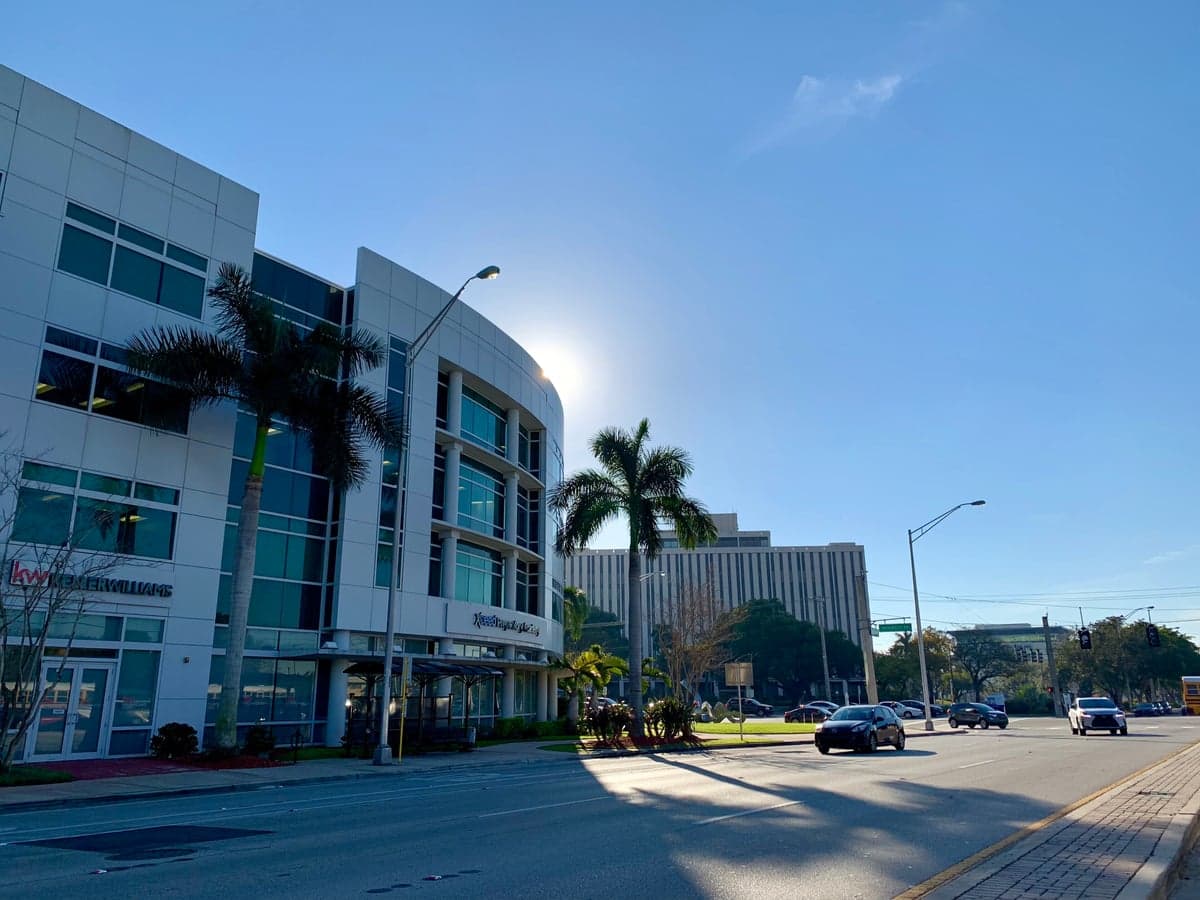
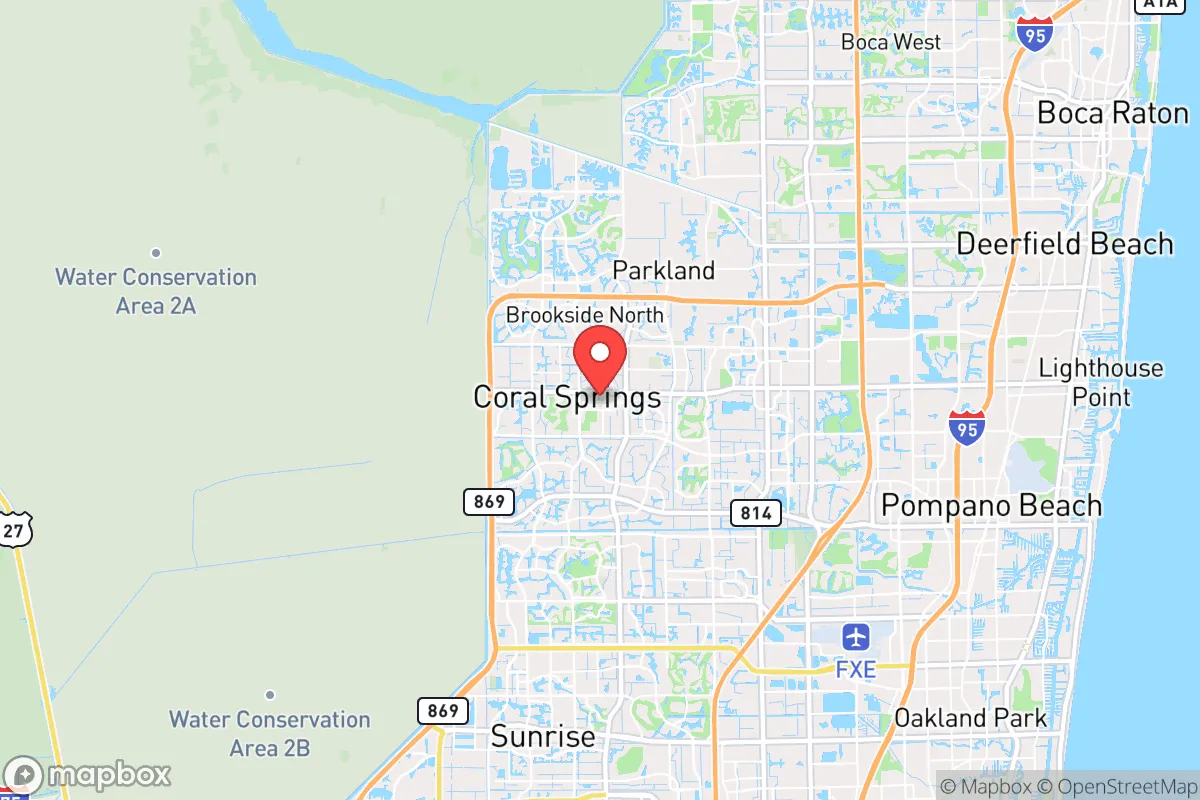
Photo: Wikipedia
Demographics of Coral Springs, FL
Affluence Level in Coral Springs, FL
A middle-class area roughly in line with national averages across income, home values, education, and employment.
People of Coral Springs, FL
Coral Springs, Florida, is a planned suburban city of 133,962 residents characterized by its striking ethnic diversity, with no single group holding a majority. The city is 35.1% White, 30.4% Hispanic, 23.5% Black, 2.9% Indian (subcontinent), and 2.1% East/Southeast Asian, creating a multiethnic middle-class environment distinct from the older, more polarized cities of Broward County. With 39.7% of adults holding a college degree, the population is well-educated and family-oriented, anchored by a strong sense of civic identity that traces back to its carefully designed origins in the 1960s.
How the city was settled and grew
Coral Springs has no pre-20th century history; it was a planned community carved from pine flatlands and farmland. The city was incorporated in 1963, developed by Coral Ridge Properties (a subsidiary of Westinghouse) as a master-planned, middle-class suburb for white families fleeing the congestion of Fort Lauderdale and Miami. The original settlers were predominantly white, non-Hispanic professionals and their families, drawn by affordable new homes, good schools, and a carefully curated suburban lifestyle. The first neighborhoods — Kensington, Mullins Park, and the original Westchester section — were built in the mid-1960s and filled with young couples, many of them Jewish and Catholic transplants from the Northeast and Midwest. These early residents established the city's civic DNA: strong homeowners' associations, high volunteerism, and a focus on youth sports and public safety.
Modern era (post-1965)
The 1980s and 1990s brought the first major demographic shifts. As South Florida's Hispanic and Caribbean populations grew, Coral Springs began attracting upwardly mobile Cuban, Colombian, and Puerto Rican families. They settled primarily in the Ramblewood and Wyndham Lakes neighborhoods, drawn by the same school quality and safety that had attracted the original white residents. By 2000, the Hispanic share had risen to roughly 15%, and the city's white share had begun a steady decline. The 2000s and 2010s saw an accelerating influx of Black families, many of them second- and third-generation Floridians from Miami-Dade and Broward, as well as Afro-Caribbean immigrants from Jamaica, Haiti, and Trinidad. They concentrated in the Heron Bay and Savanna areas, where larger homes and golf-course communities offered a suburban lifestyle previously less accessible to Black homebuyers in the region. The Indian subcontinent community, now 2.9% of the population, grew rapidly after 2010, with families settling in Forest Hills and the newer developments near the Sawgrass Expressway, drawn by the city's strong school system and proximity to tech and healthcare employers in Parkland and Boca Raton. The East/Southeast Asian community (2.1%) is smaller but visible, with Vietnamese and Filipino families concentrated in the Westchester and Ramblewood East sections.
The future
Coral Springs is not homogenizing; it is becoming more ethnically layered. The white share has dropped from over 80% in 1980 to 35.1% today, and that decline is likely to continue as older white residents age in place or move to retirement communities elsewhere. The Hispanic and Black shares are both growing, but not at the expense of each other — both groups are expanding through natural increase and continued in-migration from other parts of Broward and Miami-Dade. The Indian community, while small, is growing faster than any other group, driven by tech and medical professionals seeking good schools and safe neighborhoods. The city is not tribalizing into hostile enclaves; rather, neighborhoods are becoming more mixed, with the exception of a few older, predominantly white sections like Kensington. The next 10-20 years will likely see Coral Springs become a majority-minority city where no group holds a majority — a stable, multiethnic, middle-class suburb that reflects the broader demographic future of South Florida. The foreign-born share (10.6%) is moderate and stable, suggesting that the city is more a destination for domestic movers and second-generation families than for new immigrants.
For a conservative-leaning mover today, Coral Springs offers a rare combination: a safe, well-run, family-oriented suburb with strong schools and low crime, but also a genuinely diverse population where no single ethnic group dominates. The city is becoming more Hispanic and Black, but it is doing so without the racial tension or economic stratification seen in older cities. The bottom line: Coral Springs is a stable, multiethnic, middle-class community that is likely to remain desirable for families who prioritize safety, schools, and civic order over ethnic homogeneity.

* Values derived from national, state, county, city and local statistics and may differ in a specific area. Last updated: 2026-05-03T14:15:03.000Z
Narrative content on this page is AI-generated and may contain mistakes. Verify any details that matter before acting on them.
ReloMaps may earn a commission from affiliate links at no extra cost to you.

