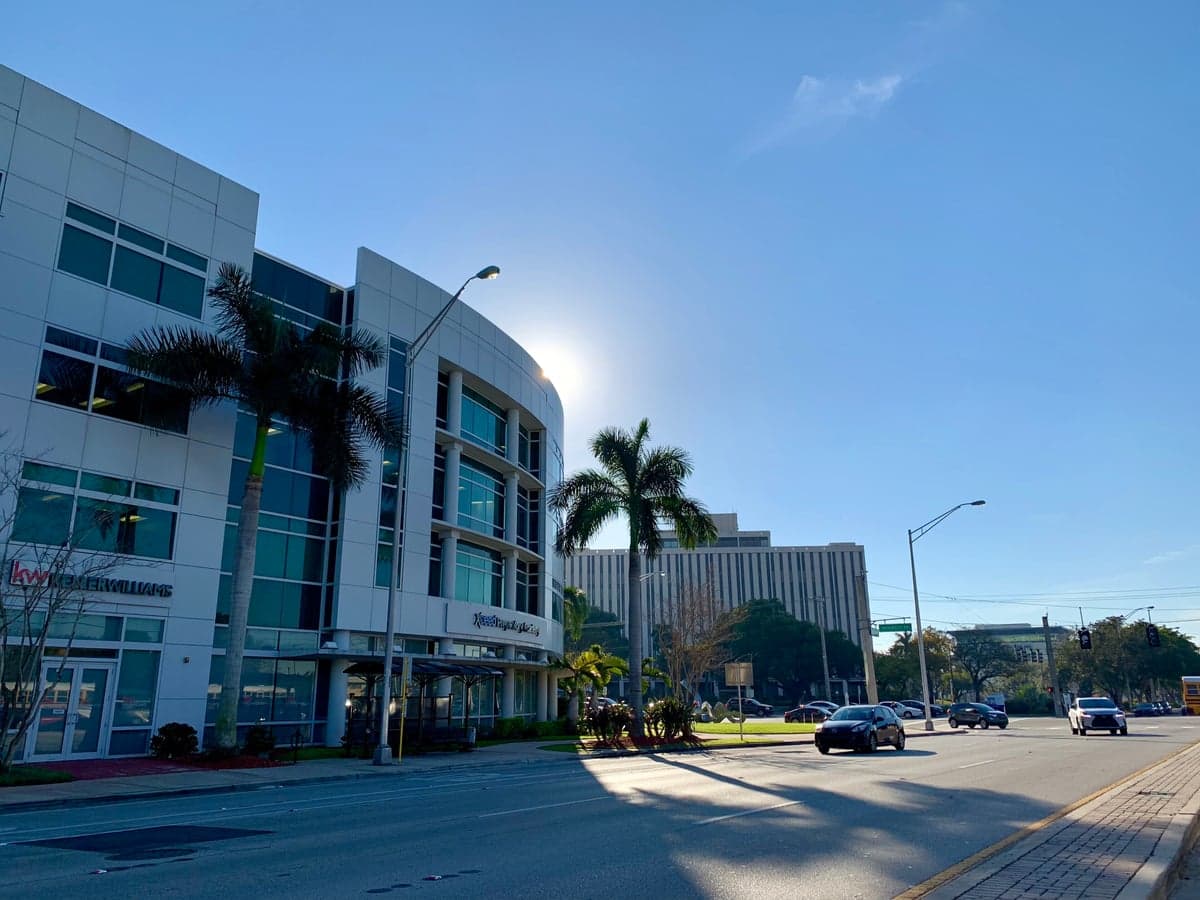
Photo: Wikipedia
Political ClimatePolitical Climate in Coral Springs, FL
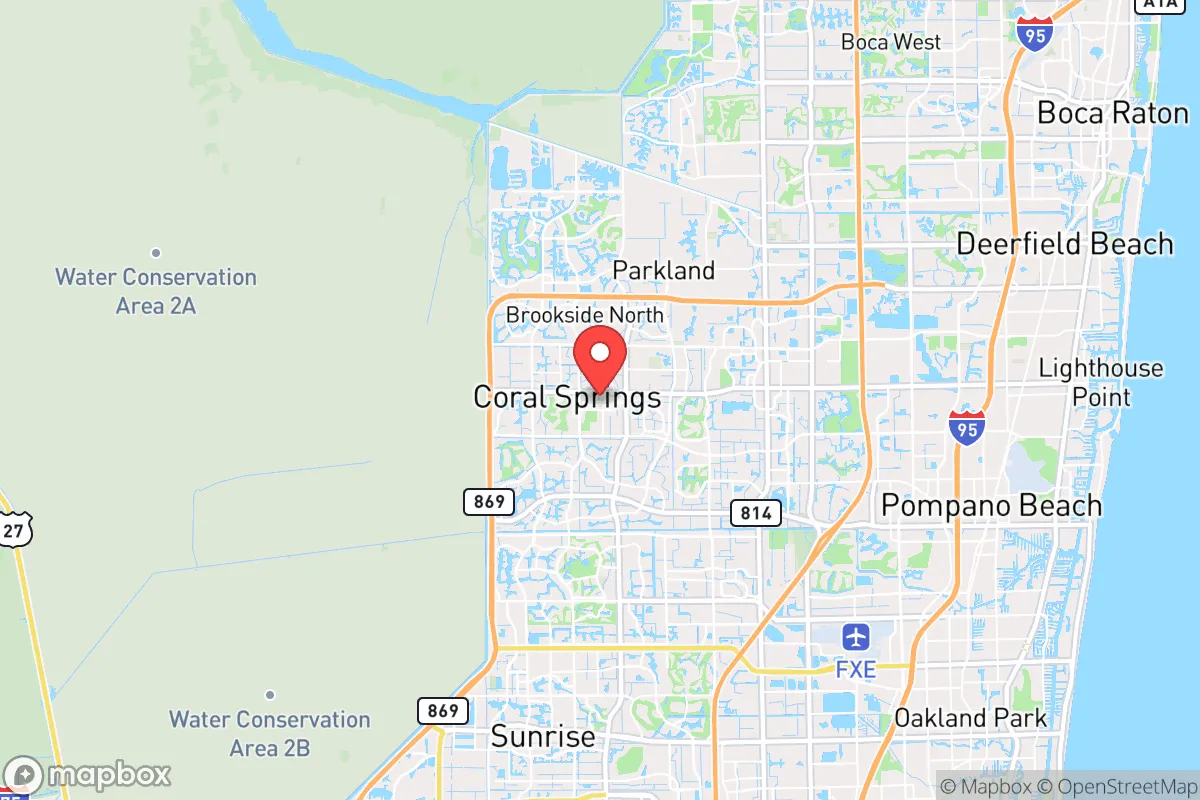
District shown is the primary district for this city’s centroid. Cities may span multiple districts.
Local Political AnalysisPolitical Analysis of Coral Springs, FL
Coral Springs, Florida, sits in a politically interesting spot. Officially, it leans Democratic with a Cook PVI of D+2, but that number doesn't tell the whole story for a long-time resident like me. This used to be a solidly conservative, family-oriented community where folks kept to themselves and the government stayed out of your business. Over the last decade or so, you’ve seen a slow but steady shift leftward, especially as younger families and transplants from blue states have moved in. The city council and local school board have become more progressive, and that’s something that gives me pause—it feels like the old Coral Springs, where personal freedoms and local control were paramount, is fading.
How it compares
To really understand Coral Springs, you have to look at its neighbors. Head west to Parkland, and you’re in a much more conservative stronghold—bigger lots, lower taxes, and a city council that fights hard to keep regulations light. Up north in Boca Raton, you get a similar D+2 vibe, but with a much wealthier, more establishment-Democrat flavor. The real contrast is with places like Fort Lauderdale or Wilton Manors, which are deeply progressive and openly push social engineering agendas. Coral Springs is caught in the middle: it’s not as red as Parkland, but it’s not as blue as the coastal cities. That used to mean a healthy balance, but lately, the progressive influence from the county level in Broward is seeping in—things like zoning overrides and school curriculum changes that feel like they’re coming from Tallahassee or Washington, not from your neighbors.
What this means for residents
For a resident who values personal liberty, the biggest concern is the slow creep of government overreach. The city has gotten more aggressive with code enforcement—things like strict limits on home businesses, noise ordinances that feel arbitrary, and a push for “complete streets” policies that prioritize bike lanes over car traffic, even when most people here drive. The school board has also shifted, with more emphasis on DEI initiatives and less on academic rigor and parental rights. If you’re a conservative, you’ll find yourself increasingly on the defensive, having to show up at every city commission meeting just to keep things from sliding further. The property taxes aren’t outrageous, but they’re not low either, and you get the sense that the money is going toward programs you didn’t ask for. The real red flag is the trajectory: if you look at the voting patterns in the last two presidential cycles, the margin has tightened, but the cultural momentum is clearly with the progressives.
On the cultural side, Coral Springs still has some of its old character. You’ll find plenty of churches, a strong sense of community in the older neighborhoods, and a lot of families who’ve been here for 20+ years. But the new developments are all mixed-use, high-density projects that bring in a younger, more transient crowd. The city’s annual events, like the Festival of the Arts, have become more politicized, with booths pushing voter registration and climate activism. If you’re looking for a place where you can live your life without the government breathing down your neck, Coral Springs is still okay—for now. But if the current trend continues, I’d expect it to look a lot more like Fort Lauderdale in ten years: higher taxes, more regulations, and a lot less room for traditional values. Keep an eye on the local elections—that’s where the real fight is.

State Political ClimatePolitical Climate in Florida
State Political AnalysisPolitical Environment in the State
Florida has transformed from a quintessential swing state into a solidly Republican-leaning powerhouse over the past two decades, with the GOP now holding a voter registration advantage of over 600,000 and dominating every statewide elected office. The coalition driving this shift is a potent mix of conservative-leaning retirees from the Midwest and Northeast, a growing population of Hispanic voters (especially in the Miami-Dade area who have moved right), and a surge of domestic migrants from high-tax blue states like New York and California. This isn't your father's Florida anymore—the state has undergone a deep, structural realignment that began around 2010 and accelerated dramatically after 2020, making it arguably the most politically consequential state in the nation for conservative policy.
Urban vs. rural divide
The political map of Florida is a study in stark contrasts. The major urban centers—Miami-Dade County, Broward County (Fort Lauderdale), and Orange County (Orlando)—remain Democratic strongholds, though their margins have shrunk. The real story is the suburban and exurban explosion. Counties like St. Johns (St. Augustine) and Collier (Naples) are now deep red, while Pasco County north of Tampa has flipped from purple to solid red. The I-4 corridor, which runs from Tampa through Lakeland to Daytona Beach, is the state's political battleground, but even there, the GOP has made steady gains. The Panhandle—places like Panama City, Pensacola, and Tallahassee's surrounding counties—is as red as any place in the country. The rural north and central interior are overwhelmingly conservative, while the coastal urban cores are the last bastions of blue. The key shift: Miami-Dade, once a Democratic lock, voted for Trump in 2020 and again in 2024, driven by Cuban-American and Venezuelan-American voters who see the Democratic Party as too far left on socialism and crime.
Policy environment
Florida's policy environment is a conservative's dream, and it's been deliberately engineered that way. There is no state income tax, a massive draw for high-earners and retirees. The regulatory climate is business-friendly, with a right-to-work law and minimal red tape for small businesses. On education, Governor Ron DeSantis pushed through the Parental Rights in Education Act (HB 1557), which prohibits classroom instruction on sexual orientation and gender identity in early grades, and the Stop WOKE Act, which restricts critical race theory in schools and workplace training. School choice is robust, with the Family Empowerment Scholarship program giving tens of thousands of students vouchers for private or religious schools. On healthcare, Florida did not expand Medicaid under the Affordable Care Act, and the state has strict laws on medical marijuana (no smokable flower initially, though that's loosened). Election integrity was overhauled with SB 90 (2021), which tightened drop box rules, required ID for mail-in ballots, and limited third-party ballot collection. The state also passed a 15-week abortion ban (HB 5) in 2022, later tightened to six weeks in 2023, with exceptions for rape, incest, and life of the mother. Property taxes are relatively moderate, but homeowners insurance has skyrocketed due to litigation and hurricane risk—a growing policy headache.
Trajectory & freedom
On the trajectory of freedom, Florida is a clear outlier—it is becoming more free in the areas that matter most to conservatives. The Constitutional Carry law (HB 543), signed in 2023, allows law-abiding adults to carry a concealed firearm without a permit, a major expansion of Second Amendment rights. The Parental Rights in Education Act and the Stop WOKE Act represent a pushback against federal and corporate overreach into classrooms and workplaces. The state also passed the Individual Freedom Act, which prohibits employers and schools from forcing employees or students to endorse specific political ideologies. On medical autonomy, Florida banned gender-affirming care for minors (SB 254) and restricted puberty blockers, a move that has drawn legal challenges but remains in effect. The state also passed a vaccine passport ban during COVID and has resisted federal vaccine mandates for state employees. However, there are areas of concern for libertarians: the state has a strict anti-squatting law that some say goes too far, and the Florida Realtors' Association has fought against short-term rental regulations that some local governments want. On balance, the trend is toward expanding personal liberty in the traditional conservative sense—less government in your wallet, your child's education, and your right to self-defense.
Civil unrest & political movements
Florida has seen its share of political flashpoints, but the character of unrest has shifted. The 2020 George Floyd protests in cities like Miami, Tampa, and Orlando saw some property damage and looting, but the state's response was notably aggressive—DeSantis declared a state of emergency and deployed the Florida National Guard early. The "Defund the Police" movement never gained traction here; instead, the state passed the Combating Violence, Disorder and Looting and Law Enforcement Protection Act, which enhanced penalties for rioting and protected officers from frivolous lawsuits. Immigration politics are a constant flashpoint, especially in Miami-Dade, where the Sanctuary City ban (SB 168) was passed in 2019, prohibiting local governments from adopting sanctuary policies. The state has also bused migrants to Martha's Vineyard and California as a political statement. Election integrity remains a hot-button issue: the 2020 election in Florida was widely seen as smooth, but the state's Office of Election Crimes and Security was created in 2022 to investigate voter fraud, leading to high-profile arrests. The Moms for Liberty movement, which started in Florida, has been a powerful force in school board elections, pushing back on critical race theory and LGBTQ curriculum. You'll see more "Don't Tread on Me" flags than BLM banners in most of the state outside of downtown Miami and Orlando.
Projection
Looking ahead 5-10 years, Florida's political trajectory is likely to continue its rightward shift, but with caveats. The in-migration from blue states is overwhelmingly conservative-leaning, but a significant minority of new arrivals are moderate or liberal, especially in the Tampa Bay area and Orlando suburbs. The Hispanic vote, particularly among Cuban-Americans, Venezuelan-Americans, and Nicaraguan-Americans, is likely to remain Republican-leaning, but the growing Puerto Rican population in Central Florida leans more Democratic. The climate change issue could become a political liability as insurance costs rise and flooding worsens, potentially driving some moderate voters toward Democrats who promise more aggressive action. However, the state's constitutional amendment process (60% threshold) makes it hard for progressive ballot initiatives to pass. The 2026 gubernatorial election will be a key test: if DeSantis's successor is a mainstream conservative, the trajectory holds; if a more moderate Republican wins, the state could soften. Realistically, expect Florida to remain a lean-Republican state for the next decade, with the GOP holding a structural advantage in the state legislature and congressional delegation. The wildcard is whether the housing affordability crisis and insurance crisis will drive out the very voters who made the state red.
For a new resident, the bottom line is this: Florida offers a political environment that actively protects conservative values—low taxes, school choice, Second Amendment rights, and parental authority—and shows no signs of reversing course. You'll find a state where your vote actually counts in a meaningful way, where the governor and legislature are aligned with your priorities, and where the culture war is being fought and won on your side. The trade-offs are real: skyrocketing homeowners insurance, traffic congestion in the metros, and summer heat that can be oppressive. But if you're looking for a state that respects your freedom to live your life without government interference, Florida is arguably the best bet in the country right now. Just be prepared for the humidity—and the political arguments at the dinner table if you have liberal relatives visiting.
* Values derived from national, state, county, city and local statistics and may differ in a specific area. Last updated: 2026-05-03T14:15:03.000Z
Narrative content on this page is AI-generated and may contain mistakes. Verify any details that matter before acting on them.
ReloMaps may earn a commission from affiliate links at no extra cost to you.

