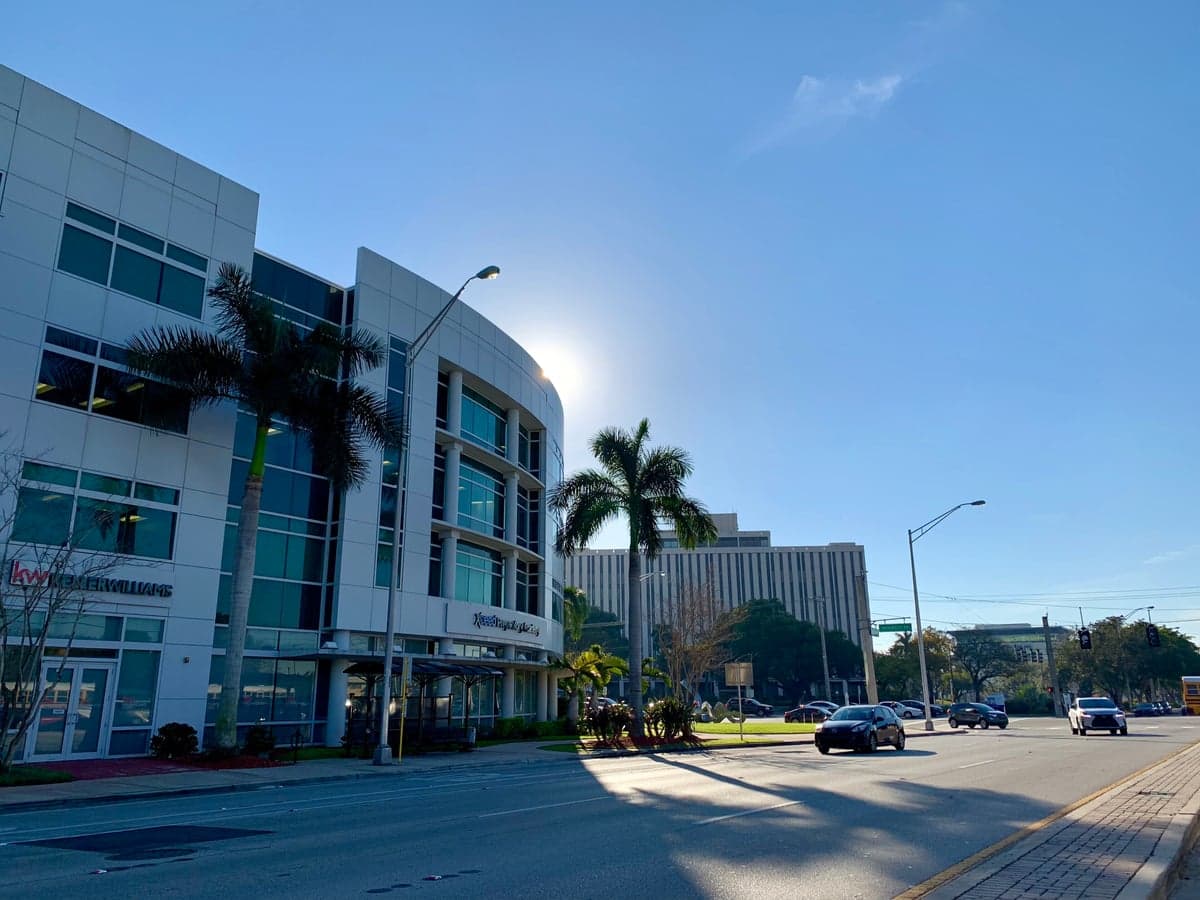
Photo: Wikipedia
Personal Sovereignty in Coral Springs, FL
Viable for self-reliance. Generally workable, though some barriers may limit total independence.
What does Personal Sovereignty tell us?
Personal Sovereignty measures your capacity for self-reliance and independence with minimal government friction. Higher scores mean fewer barriers between you and the way you want to live... but it assumes you have the space you need and good neighbors.
What does this tell us?
Personal Sovereignty measures your capacity for self-reliance and independence with minimal government friction. Higher scores mean fewer barriers between you and the way you want to live... but it assumes you have the space you need and good neighbors.
State Policy
Energy independence: Importer (10% of energy produced in-state)
Personal Liberty

Personal Liberty Analysis
Coral Springs, Florida, sits within a state that has aggressively positioned itself as a bastion of personal sovereignty relative to the rest of the country, but the reality on the ground in this Broward County suburb is more nuanced. While Florida’s constitutional and statutory framework provides a strong baseline for individual autonomy—no state income tax, robust preemption of local gun laws, and a governor who has publicly championed parental rights—Coral Springs itself is a blue dot in a red state, governed by a city commission that leans progressive on certain regulatory issues. For a survivalist or prepper mindset, the key question isn't whether Florida respects your sovereignty in theory, but whether Coral Springs’ local ordinances and enforcement culture will let you live that sovereignty in practice. The short answer: the state gives you a powerful shield, but you’ll need to be vigilant about local overreach, particularly on property use and emergency powers.
Tax burden and regulatory posture: How Florida’s framework protects your wallet and choices
Florida’s lack of a state income tax is the single most powerful tool for personal sovereignty in Coral Springs. Every dollar you earn stays in your pocket, not the state’s coffers, which directly reduces the leverage government has over your financial decisions. The state’s overall tax burden is among the lowest in the nation, ranking 4th lowest according to the Tax Foundation’s 2025 analysis. Coral Springs itself adds a property tax rate of roughly 5.5 mills (county and city combined), which is moderate for Broward County but higher than rural Florida counties. For a prepper, this means you can allocate more resources to self-reliance—food storage, land improvements, training—without the state taking a cut. On the regulatory side, Florida has strong preemption laws that prevent local governments from enacting their own wage, benefit, or rental control ordinances, which limits Coral Springs’ ability to micromanage economic transactions. However, the city does enforce a strict code on property maintenance and landscaping, including mandatory irrigation and lawn height limits, which can conflict with a homesteading or "natural" property aesthetic. The state’s regulatory posture is generally pro-business and pro-property rights, but you’ll need to navigate local HOA covenants (common in Coral Springs subdivisions) and city code enforcement if you want to keep a low profile or run a home-based business.
Self-defense and gun law specifics: What Florida’s preemption means for Coral Springs residents
Florida is a "shall issue" state for concealed carry, and as of 2023, it became a permitless carry state for law-abiding residents 21 and older. This means you can carry a concealed firearm without a government-issued permission slip, a direct affirmation of the Second Amendment as a personal right, not a privilege. Coral Springs is subject to Florida’s strong preemption statute (F.S. 790.33), which explicitly prohibits local governments from passing their own gun control ordinances. This is critical: even though Coral Springs’ city council might lean left, they cannot legally ban open carry, restrict magazine capacities, or impose waiting periods beyond state law. The city’s police department does have a history of proactive enforcement, including "gun violence" task forces, but these focus on illegal possession and straw purchases, not lawful carry. For a survivalist, the practical takeaway is that your right to keep and bear arms is legally protected from local interference, but you should be aware that Broward County’s political climate means you may face social friction or scrutiny from neighbors if you’re visibly armed. Stand-your-ground laws apply statewide, and Florida’s "Castle Doctrine" gives you the legal presumption of reasonable fear if you use deadly force against an intruder in your home or occupied vehicle. No local ordinance can override that.
Self-reliance and homesteading viability: Lot sizes, zoning, and the limits of off-grid living
This is where Coral Springs presents the biggest challenge for a prepper or homesteader. The city was master-planned in the 1960s with uniform suburban lots, typically ranging from 6,000 to 10,000 square feet—enough for a pool and a garden, but not for serious self-sufficiency. Zoning is predominantly single-family residential with strict prohibitions on keeping livestock, chickens, or bees in most neighborhoods. The city’s code enforcement actively pursues complaints about "unruly" vegetation, outdoor storage, and non-permitted structures, which means a visible prepper setup—rain barrels, solar panels, a large garden, or a shed that looks like a bunker—will likely draw attention and fines. Off-grid living is effectively illegal: the city requires connection to municipal water and sewer, and solar panels must be grid-tied with utility approval. For a survivalist, Coral Springs is a place to live in society, not apart from it. If you want acreage for a homestead, you’ll need to look north to Palm Beach County or west to the rural areas around Lake Okeechobee. That said, the city’s proximity to the Everglades (20 minutes west) does offer opportunities for bug-out locations or secondary property, and Florida’s lack of state income tax makes it easier to save for that land. The trade-off is clear: Coral Springs offers strong state-level sovereignty on taxes and guns, but local zoning and HOA rules will constrain your ability to live off the grid within city limits.
Personal liberties: Parental rights, medical autonomy, speech, and property protections
Florida has become a national leader on parental rights in education, with the Parental Rights in Education Act (HB 1557) and subsequent laws that give parents explicit authority over their children’s medical decisions, curriculum access, and school records. Coral Springs’ public schools (Broward County Public Schools) are among the largest in the nation, and while the district has historically been progressive, state law now requires parental notification for any health or wellness services and prohibits classroom instruction on sexual orientation or gender identity in K-3. For a conservative parent, this means your child’s school cannot bypass your authority on sensitive matters. On medical autonomy, Florida has banned COVID-19 vaccine mandates for most employers and schools, and the state’s emergency powers were significantly curtailed after 2021, preventing local governments from imposing lockdowns or mask mandates without legislative approval. This is a direct check on government overreach during crises. Free speech is protected under the Florida Constitution, which explicitly guarantees the right to assemble and petition, and the state has passed laws protecting individuals from "deplatforming" by social media companies—though enforcement is contested. Property rights are strong: Florida’s "Bert J. Harris Jr. Private Property Rights Protection Act" allows landowners to sue if a government regulation reduces property value by more than 50%, which acts as a deterrent against aggressive zoning or environmental restrictions. In Coral Springs, this means you have legal recourse if the city tries to downzone your property or impose onerous conditions on development. The city’s code of ordinances does include noise restrictions and sign regulations, but these are typical suburban limits, not targeted infringements on speech.
Overall, Coral Springs offers a solid foundation for personal sovereignty thanks to Florida’s state-level protections on taxes, guns, parental rights, and emergency powers. The city itself is not hostile to individual liberty, but its suburban DNA—HOAs, code enforcement, uniform zoning—creates friction for anyone seeking true self-reliance or a low-profile prepper lifestyle. Compared to cities in California, New York, or Illinois, Coral Springs is a clear win for autonomy. Compared to rural Florida counties like Okeechobee or DeSoto, it’s a compromise. For a strategic relocation, the smart play is to treat Coral Springs as a base of operations where your financial and legal sovereignty is secure, while securing secondary property in a less regulated area for the hardcore self-sufficiency work. The state gives you the tools; the city just asks you to keep the lawn mowed.

* Values derived from national, state, county, city and local statistics and may differ in a specific area. Last updated: 2026-05-03T14:15:03.000Z
Narrative content on this page is AI-generated and may contain mistakes. Verify any details that matter before acting on them.
ReloMaps may earn a commission from affiliate links at no extra cost to you.

